Trakm8 clears the way for fleet improvements at Autoglass

Operating a fleet of over 1,000 vehicles the length and breadth of the UK, Autoglass is the UK’s favourite vehicle glass repair, replacement and recalibration company. As part of a drive to enhance driver safety and efficiency fleet-wide, Autoglass partnered with Trakm8, the UK’s foremost vehicle technology solutions specialist, to implement cohesive telematics solutions across its estate of technician vans.

Serving over one million motorists every year, the fleet at Autoglass transverses the country 24/7, providing an essential, world-class service. With a reputation for excellence, Autoglass decided to partner with Trakm8 in 2018 in a drive to further pursue high quality in its fleet of vehicles.

Trakm8 provides market-leading telematics products that address common problems faced by fleet managers. Products such as the Trakm8 Connect 330 help prevent expensive downtime by alerting managers to minor faults before they develop into major ones, encourages safer driving practices and can save dozens of work hours lost to byzantine route management systems and spreadsheets. Trakm8’s discreet Roadhawk dashcam can help protect businesses from reputational and financial damages caused by accidents.

For Autoglass, whose skilled technicians are the heartbeat of the company, driver behaviour and performance is directly linked to reputation. Telematics provides a simple and cost-effective way to help drivers drive more safely, thereby protecting the reputation held by Autoglass for excellence in every aspect of its business.

The Results

Trakm8 telematics products were the perfect solution for Autoglass, offering the data needed to drive improvements in driver behaviour in a cost-effective package.

Andrew Ertl, Fleet Manager at Autoglass, said: “It’s no exaggeration to say our collaboration with Trakm8 has been transformative for our fleet. Our technicians travel the country every day and as the customer-facing part of our business, it’s paramount that they maintain their great reputation for customer service while on the road, too.”

Enabled by Trakm8’s comprehensive data, Autoglass designed a scheme to recognise and reward drivers that consistently achieve perfect scores in driving behaviour, speed limit compliance and idling time, contributing to an even greater improvement in driver behaviour. Since 2018, Autoglass has:

  • Reduced speeding events fleet-wide
  • Reduced average idle time per vehicle by over 50%
  • Markedly improved driver behaviour from an already excellent starting point
  • Improved insurance claim handling with the use of dash camera evidence

Autoglass achieved these impressive results through the use of two Trakm8 products – the Connect 330 and the RoadHawk Dash Cam.

The Connect 330 is a device you can fit in the palm of your hand, but one that packs a powerful technological punch. Designed and manufactured in the UK by Trakm8, the plug-in device is easily fitted into a vehicle’s OBD (on board diagnostics) port, and streams tracking, CANbus and driver behaviour data to enable fleet managers to act even sooner.

The Trakm8 devices provide drivers with a number of indicators that will help them drive safely and more efficiently. In just two years since the partnership began, Autoglass has consistently improved and has now achieved a speed limit compliance score of 98%. Overspeeding, however, is far from the only indicator for the need to improve fleet performance. Vehicle idle time is another important metric to consider when a fleet is aiming to cut costs and decrease carbon emissions.

Using the data provided by the Trakm8 telematics system, Autoglass have cut their average vehicle idling time by 50%.

The Trakm8 Connect 330 also makes it easy for Autoglass to ensure that only those drivers authorised to use their vehicles personally do so. The Connect 330 has given Autoglass the ability to enforce their policy.

Dashcam benefits

The other side of the collaboration with Autoglass and Trakm8 is the RoadHawk Dashcam. The Roadhawk range of dashcams are proven to cut fleet at fault accident rates by up to 20% and reduce insurance premiums by up to 10%, providing positive ROI in a matter of months.

They are also a flexible range of products able to provide only the data needed by fleet managers. Autoglass did not require the Dash Cam’s audio capabilities, so this was disabled, providing reassurance to drivers while still providing crucial video footage in the event of accidents and insurance claims.

Andrew continued: “The Trakm8 Connect 330 has helped our fleet make gains in many areas. We’ve improved our fleets’ overall driving score to an industry-leading level, while reducing costs accrued from accidents, insurance claims and vehicle idle time. We’ve been highly impressed with how these products have worked and with their high ROI and we’re looking intensely at how we can further integrate Trakm8 telematics into our wider fleet management systems.”

Peter Mansfield, Group Sales and Marketing Director at Trakm8, said: “We’re really proud that Trakm8 products have had such a transformative impact on an established and well-regarded fleet operator, proving that telematics can have a significant positive impact on fleets of every size and shape.

“Our teams worked with Autoglass every step of the way on their recent drive to improve fleet standards and were in constant contact during the initial stages of installation to provide advice and guidance. We look forward to working with them in future as they bring the latest technology to bear in their drive to increase standards.”
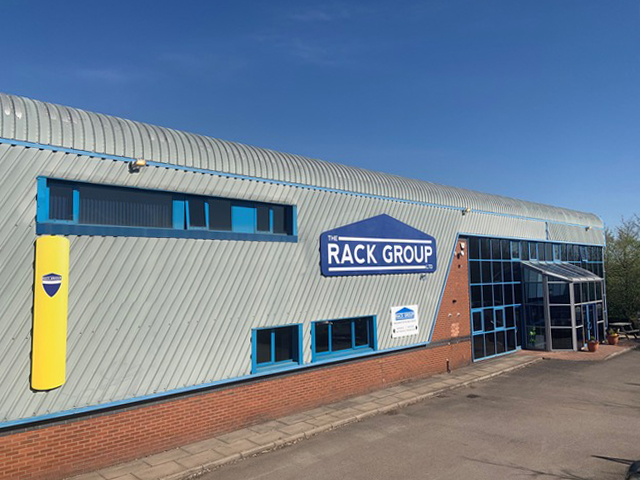
The Rack Group acquired by IWS 

IWS Group, The Industrial Workspace Specialists, has acquired The Rack Group, a leading provider of pallet racking safety, inspection, repair and maintenance solutions.

The move will see The Rack Group become part of a growing family of specialist, market-leading businesses that currently includes impact protection solutions provider, Brandsafe, and visual communication solutions supplier, Beaverswood.

IWS Group provides essential services and supplies to the logistics, warehousing and material handling sectors in the UK, across Europe and beyond. The acquisition will further strengthen its position in core markets, extend the scope of the existing offering and open up opportunities to provide customers with additional product solutions and services.

Established for over 40 years and based in Barnsley, The Rack Group supplies its innovative racking protection products, such as Rack Armour, and its racking inspection, repair and maintenance services to some of the largest brands in retail, warehousing, logistics and material handling.

Management of both businesses believe that there is a uniquely complementary fit between the companies in terms of product ranges, services, people and expertise. Under the terms of the deal, The Rack Group will continue to trade as usual under its existing brand.

Jeroen van den Berge, CEO of IWS Group, said: “We are excited to welcome The Rack Group to the IWS family. We have known The Rack Group for some time and, as a business that has built a market-leading reputation for quality and expertise in racking safety, with a long-standing, multi-site customer base, it represents a strong and natural strategic fit for IWS Group.

“The warehousing, logistics and materials handling sectors have seen unprecedented growth due to new shopping behaviours and IWS Group is bringing together businesses built on specialist expertise and customer centricity to serve these sectors with essential products and services. The addition of The Rack Group provides further opportunity to broaden the scope of services and solutions each of the IWS Group companies can offer their customers. We look forward to a bright, prosperous and successful future together.”

Jenny Charlton, director at The Rack Group, said: “This is an extremely positive development for both organisations, bringing new opportunities to add greater value to customers in terms of product solutions, technical capabilities and enhanced customer service.

“Our market presence will remain as strong as it has always been. Indeed, an attraction of linking up with IWS Group means that we can benefit from the additional resources, infrastructure, and product offering that it brings, without loss of brand identity or the core values that have contributed to our success over four decades.”

Menzies joins Transaid in bid to improve road safety

Menzies Distribution Group has become the latest supporter to show its commitment to improving global road safety standards by becoming corporate members of international development organisation Transaid.

Menzies has pledged its support for an initial three-year period, just months after it acquired one of Transaid’s founding members Bibby Distribution (now Menzies Distribution Solutions).

The partnership will see Menzies contribute time, expertise, and resources to help Transaid deliver professional driver training programmes, transport management systems and provide rural access to transport in sub-Saharan Africa.

Alice Broster, Group Health & Safety Manager at Menzies, has also committed to joining Transaid’s Road Safety Advisory Board.

Greg Michael, Chief Executive Officer of Menzies, welcomed the news, saying: “Our colleagues from Menzies Distribution Solutions (MDS) did a fantastic job supporting Transaid for more than two decades, and we are excited to be continuing this strong association.

Transaid’s commitment to global road safety is an issue close to our hearts at Menzies. With almost 5,000 employees and 4,000 vehicle assets operating across the UK, we recognise the huge value training plays in keeping our drivers and other road users safe. We firmly believe all drivers around the world should have the opportunity to build the skills they need to transform their future.”

The vital unrestricted funds provided by corporate members allows Transaid  to test and implement new projects, which have allowed it to develop longstanding HGV and PSV driver training programmes in both Tanzania and Zambia.

As a direct result of these projects, Transaid recently secured significant external funding to take its HGV training into West Africa for the first time, with a new three-and-a-half-year project starting in Ghana.

Caroline Barber, Chief Executive of Transaid, explains: “The support we receive from our corporate members means a huge amount, and is crucial to ensuring we can deliver many of our life-saving projects on the ground.

“Knowing we have the strength and support of Menzies and its nearly two centuries of supply chain experience behind us is amazing. We are really excited about the opportunities to work closely together.”

woom digitises supply chains for faster availability

Austrian children’s bike producer woom, based in Klosterneuburg near Vienna, has commissioned German company Setlog to set up and implement its OSCA cloud-based supply-chain-management software. The goal is to achieve secure procurement of products and managing rapidly growing procurement volume due to accelerating business growth at woom.

The abbreviation OSCA stands for Online Supply Chain Accelerator. The staff in Klosterneuburg is relying on this software to speed up procurement processes and slash procurement times. Moreover, the solution will make all of the procedures along global supply chains more transparent and efficient.

“I am convinced that OSCA will give us major support as we tackle the current challenges in the supply chain,” says Guido Dohm, Managing Director of woom. “The cloud-based technology will improve the reliability of statements about the availability of the bikes. Real-time information and more efficient communication will cut procurement times.”

“We are pleased that the young and innovative company, woom, is relying on OSCA to manage their value chain.” says Ralf Duester, Managing Director of Setlog: “The focus of the implementation will be to create transparency along the entire supply chain and accelerate processes through collaborative work on a single platform between all of the partners involved.”

Over the coming months, departments at woom will be networked with suppliers, factories, warehouses, freight forwarders, shipping lines and quality assurance personnel through the platform of its German partner. Order tracking, including document exchange, will be fully automated and paperless – container transport will be optimised. All communication will be handled directly through the dialogue function of the platform.

The woom supply-chain team in Klosterneuburg can centrally manage and control all procurement procedures – from supplier selection to price negotiations and allocation of production orders, through to production and shipping management.

“The new digital supply-chain management not only means cutting procurement times and better service quality for our customers, but it also encourages the steady integration of social standards into our operational procurement activities and will help us to be more conscientious in our use of resources,” says Dohm.

The digitalisation of supply-chain management is just one of a range of measures designed to improve reliability in procurement and raise sustainability at woom. Another measure is a gradual shift of production for the European market to Europe. Since the beginning of this year, at a factory owned by the German company Sprick Cycle GmbH located in the southern Polish town of Świebodzin, woom Original bikes – the classic woom 1 through 6 children’s bikes – have been rolling off the production line.

Bicycle Association addresses logistics challenges

The Bicycle Association (BA) is working across the industry to find a solution to the rising logistics costs and quality issues faced by the cycling trade. Over the past year cycling has experienced unprecedented growth, with the BA projecting £1bn increase in the UK cycling market.

The cycling industry has worked hard to ensure that prices across all categories remain accessible to anyone who wants to cycle. Unfortunately, along with the sector growth there have also been rising transport and logistics costs and quality issues.

To find a solution and ensure cycling remains accessible to everyone, the BA has sought advice from members and appointed specialist procurement firm JMCL Consulting.

Jonny Michael, CEO of JMCL Consulting commented: “We’re using our Enlightened Procurement approach to build for the short, medium and long term. We’re involving Logistics & Transport industry providers, in collaboration with BA Members and other key stakeholders, to develop a creative and sustainable solution. This is a classic yet complex procurement challenge. We consider that the eventual solution will not only yield significantly improved value for the cycling industry, but also provide social and environmental benefits.”

“Covid has added £1bn to the cycling market, accelerating the re-emergence of cycling as a strategic industry for transport, health and environment,” says Steve Garidis, Bicycle Association Executive Director. “We know that this growth is set to continue so we need to find efficient solutions to ensure bikes and components get where they need to be for people to access them.”

Logistics & Transport providers who would like to be involved should contact JMCL via email at: j.*******@************ng.com.

Current cycling market snapshot (figures from BA’s Market Data Service):

  • UK cycling market valued at £2.31bn in 2020, an increase of 45% vs 2019
    E-bike sales share to nearly double by 2023
    Major online shift in cycling sales, from 60:40 to 40:60 (retail:online) over last 12 months
    Double-digit growth maintained across all main cycling categories throughout 2020 and into early 2021

GreyOrange appoints global CFO

GreyOrange, a global software provider that leverages artificial intelligence, robots and machine learning to modernise fulfilment operations, has appointed Alex Carvalhal as Chief Financial Officer with effect from 1st May 2021.

Vartul Jain, who has led GreyOrange financial operations since 2016 as Vice President, Finance and then Senior Vice President and Chief Financial Officer, will transition to a strategic business growth role at that time.

Carvalhal is based at GreyOrange’s global headquarters in the greater Atlanta area of the US, and will draw on his extensive experience in key financial and global business strategy roles at leading enterprises such as SAP, Lenovo and Motorola to help shape the company’s global growth strategy and performance.

“Alex is an executive finance leader with more than 30 years of experience driving global growth for SaaS technology operations of all sizes,” said GreyOrange Chief Executive Officer, Samay Kohli. “His proven record of growing revenue, developing successful financial strategies and serving as an advisor and partner to business executives and board leadership makes him a valuable addition to our team as we continue to gain customers and revolutionise fulfilment through our unique combination of AI-driven software and advanced robotics.”

Before joining GreyOrange, Carvalhal served as the Chief Financial Officer and Senior Vice President of Finance for Customer Experience at SAP where he identified and led opportunities to expand profitability, including revamping the organisational structure to improve efficiency and deploying a new business model to enhance financial decision-making.

During his 11-year career at SAP, Carvalhal led a variety of key growth initiatives in Latin America and Asia, including serving three years as CFO and Vice President of Finance and Representative Director of SAP Japan. There, he led strategies that triggered more than 30% growth in on-premise business and more than 90% growth in cloud business while also improving profitability and customer Net Promoter scores.

“As companies continue to navigate through significant change in the wake of COVID-19, leaders are looking to GreyOrange to provide automation, artificial intelligence and advanced robotics to modernise their operations,” said Carvalhal. “I look forward to adding my expertise in innovative financial strategies to the advantages GreyOrange brings to its customers as we accelerate our global growth,” he added.

Prior to SAP, Carvalhal provided financial leadership and direction at Lenovo and Motorola. In 1999, he became Motorola’s Corporate Treasurer and spent the next 10 years steering finance in Latin America. He advanced through a series of fast-track promotions, culminating in his role as the Senior Director for the Key Account Team in Sales.

In 2009, Carvalhal was hired by Lenovo to spearhead all aspects of finance as its Chief Financial Officer and Executive Director. He mapped a five-year growth plan that paved the way for a subsidiary’s evolution into a hub for new investments, growing profitability by 12% in just one year and improving cash flow.


Packaging firm invests in sustainable products

As part of its continued focus on product innovation for the sustainability market, one of Europe’s leading packaging suppliers, Southgate, is developing a range of new, eco-friendly packaging solutions.

The investment is part of the company’s ongoing, pioneering activity to lead the industry in developing sustainable packaging products. In the past year, Southgate has launched several new sustainable products including another Paper Tape Dispenser and Void Fill, with many more innovations to come.

As an industry leader, Southgate is committed to developing a line of alternative products to expand its current range and significantly reduce packaging waste and plastic content.

For example, its Carbon Neutral Air Cushions already use 53% of recycled content and its Water Activated Tape product reduces the amount of tape needed compared to standard packaging tape. Southgate’s Air Pillow Void Fill also uses less material than other void fill alternatives, consisting of 98% air, reducing wastage.

Craig Turner, Managing Director at Southgate, said: “With the increase in demand for packaging supplies having a knock-on effect on the supply chain, we are already starting to see industry restrictions on items such as corrugated boxes. In addition, there is also a need for warehouse space and fulfilling daily order quotas.

“With such a huge increase in demand, we are taking responsibility by giving our customers sustainable packaging solutions, reducing waste and plastic content, whilst feeding into the consumer shift for more eco-friendly packaging products.

“Currently we are re-focusing on our most sought-after sustainable products, whilst developing new product innovations, with plans to have a suite of eco-friendly options available for every product.”

With the Plastic Packaging Tax coming into effect in April 2021, which will apply to plastic packaging produced in or imported into the UK, that does not contain at least 30% recycled plastic, Southgate’s plans will continue to expand its range whilst reducing plastic content and increasing users’ productivity and profitability.

Highlighting its focus on sustainability, Southgate was recently awarded a bronze certificate by EcoVadis, the ratings platform to assess corporate social responsibility and sustainable procurement, and recently launched a Sustainability E-edition brochure to showcase its latest sustainable product line.

Cyber security and attacks in the logistics industry

Cyber security services company BlueVoyant has published a new report on cyber security in the logistics industry. Its analysis of 20 worldwide shipping and logistics companies overviews why many organisations in the supply chain sector urgently need to look at how they can become more resilient against cyber threats, given the sensitivity of distribution networks to disruption and the global reliance on supply chain firms.

Global health is unequivocally dependent upon the immediate, safe, and effective distribution of the Covid-19 vaccine. As world economies operate by the grace of the global shipping sector, logistics firms are quite literally responsible for carrying the world through this current crisis, making timely and secure operations paramount. So much so that on February 24, 2021, the Biden administration signed into effect an Executive Order on securing America’s supply chain.

Highly sensitive to disruption, logistics firms are especially vulnerable to ransomware; malware that can bring operations to a frightening standstill. Four years following the NotPetya supply chain attack, and with the vaccine supply chain in the global spotlight, logistics firms still have much to learn from one of the most devastating cyberattacks in history.

This report outlines:

The dramatic number of supply chain and logistic companies that still have unsecured remote desktops (the No. 1 ransomware attack vulnerability), and the equally dramatic number of companies lacking the most basic protections against email phishing attacks – despite the devastating example of the WannaCry ransomware attack against Maersk in 2017.

The dramatic increase in the number of ransomware attacks on supply chain and logistics companies in the last two years alone.

The alarming number of supply chain and logistics companies targeted by attackers with some form of inbound attack and the equally alarming number of targeted attempts on login or portal pages.

The cyber security and risk standards and frameworks that are an immediate imperative to secure the readiness of the sector and protect the global supply chain.

In order to manage these complicated, high-volume networks, supply chain, and logistics companies are increasingly reliant on highly automated systems that ensure “just-in-time” delivery across roads, ports, airports, and via rail, air, and maritime freight. These systems make the supply chain and logistics sector incredibly vulnerable to cyberattacks.

Click here to download the report and to learn what this sector can do to bolster the American supply chain and secure this critical sector against future cyberattacks.


Radnor Hills gains efficiency with robotic palletisers

Robotics and automation specialist RMGroup has installed three of its end-of-line robotic palletisers for award-winning soft drinks business Radnor Hills. The move has enabled the manufacturer to benefit from process efficiencies throughout its production.

Manufacturing a wide range of spring waters, flavoured waters, functional waters, school compliant drinks, premium sparkling pressés, fruit juices and own-label brands, Radnor Hills first approached RMGroup in 2018 to investigate automating an end-of-line palletising operation with a robot arm.

On the line, packs of bottles needed to be palletised at a rate of 14 packs per minute. Given the throughput and pallet stack formats, RMGroup needed to ensure that the robotic solution could multi pick packs up to four at any one time, and then place them onto a pallet in ones, twos, threes or fours, to keep up with the production line throughput.

By using ABB robot studio, RMGroup’s mechanical design and technical department recommended the use of a bespoke gripper, thereby enabling the robot to stack the packs onto pallets at the desired rate. Robot studio also helped RMGroup to decide which ABB robot would be best suited for the project, thereby optimising the ROI.

Following the success of the initial installation, RMGroup has since supplied another two ABB end-of line palletisers at the site. A second was installed on Radnor’s tetra pack line, the requirement being to palletise cardboard cartons from dual production lines at a rate of six cases per minute; a third line was installed on Radnor’s canning line, involving a much higher output of 24 packs, 12 of which needed to be palletised on euro pallets, at 20 cases per minute.

“The benefits of working with RMGroup and what we feel they particularly do well, is first and foremost they listen to us,” said David Pope, Radnor Hills’ general manager. “They take on board our requirements – they don’t tell us what we should be doing, they listen and come back with us with solutions to make it happen. The whole team has been a pleasure to work with, especially the engineers, who have been extremely knowledgeable and helpful throughout the whole process.”

William Watkins, Radnor Hills’ managing director, added: “I think RMGroup’s experience, their backup and the fact that they have a very conscientious team, means that they really make sure that they don’t leave you until you are absolutely 100% happy that the machinery they’ve installed is working absolutely as you expect it to.”

Covid pandemic puts spotlight on automation and robots

The global pandemic has placed a spotlight on the fragility of modern supply chains and manufacturing processes. Tenuous links in the supply chain were quickly fractured with global shutdowns and the grounding of all travel.

Already stressed relationships with international suppliers, overburdened transport systems, a lack of end-to-end supply chain visibility, and outdated processes for monitoring and responding to demand, collapsed in February 2020.

Suddenly people were told to stay home – everything closed – stores, restaurants, schools, theatres, gyms, and office buildings. And with that, everything moved online, from seniors buying their groceries with a mobile app to kids attending virtual school through to the continual scheduling of Zoom meetings.

The demand on ecommerce was staggering. If it could be bought online, people were buying it and expecting same-day delivery. Companies were left scrambling, trying to figure out how to meet this heightened demand, keep their employees safe, and continue to operate without their usual supply chain networks.

Suddenly, overnight the how and where of manufacturing and distribution changed. Every link in the supply chain needed a makeover.

How could companies meet demands while keeping their employees safe and maintaining their bottom line? Conversations about infrastructure, reshoring, last-mile delivery, regionalisation, automation, staffing, and ecommerce were happening across every industry.

And now, a little over a year later, many companies have the processes, people, and technology to respond to sudden change and interruptions.

Whether it’s autonomous mobile robots (AMRs) moving pallets instead of human-operated forklifts or reshoring manufacturing and distribution or taking advantage of 3D printing of parts and cobots, companies are finding new ways to remain viable and successful.

In this article, authored by AutoGuide Mobile Robots, we discuss how COVID-19 has turned challenge into opportunity, giving companies the motivation to change how they think about creating, making, assembling, and delivering parts and products.

COVID-19 Exposes Challenges in Manufacturing, Warehousing, and Distribution

In 2020 we saw the largest global manufacturing and factory shutdown since the 1940s. Starting with closures in China and quickly spreading throughout the world, manufacturing and supply chain operations came to a full stop by April 2020.

While definitive numbers on the impacts of these closures on sales, employment, profit, and long-term financial viability are not yet available we do know that the damages of the 2020 shutdown run deep. For example, Accenture highlights these numbers in its State of Supply Chains report:

  • 94% of Fortune 1000 companies saw supply chain disruptions from COVID-19
  • 75% of companies have had negative or strongly negative impacts on their businesses
  • 55% of companies plan to downgrade their growth outlooks (or have already done so)

The global pandemic has exacerbated long-standing supply chain challenges and created new ones for all companies regardless of size and industry:

Lack of skilled employees: with stay-at-home orders and universal concerns about workplace health and safety, the pre-pandemic labour shortage became a deal breaker for companies. When manufacturing and warehouses did reopen, it’s been very difficult to hire skilled employees and to keep them healthy and safe while maintaining profitable operations.

Social distancing mandates: maintaining 6 feet between employees in any business is an expensive challenge. Installing plexiglass dividers, acquiring enough PPE for employees, refactoring assembly lines to ensure safe distancing, and managing staffing levels required to meet customer demand forced a change in almost every process.

Global supply chain dependence: relying on offshore manufacturing and production collapses when ships, planes, and people are grounded. Pre-pandemic orders could not be filled, container ships packed with goods were left stranded at ports, assembly lines stopped mid-production, warehouses were locked with in-demand product lingering on the shelves, and companies had zero ability to respond to new customer orders.

Ecommerce boom: the acceleration in ecommerce purchasing caught many companies by surprise. With people told to stay-at-home, stores closed and even with the slow reopening of retail in some areas, ecommerce has remained the shopping medium of choice. Both B2B and B2C customers prefer to do their research and purchasing online with expectations for same- or next-day delivery. This puts focus squarely on rethinking how manufacturing and distribution can become more efficient.

Customer purchasing demands: pre-pandemic, companies relied on traditional product forecasts based on historical purchasing data. But with the pandemic, people realised there was a shortage of goods and materials, and quickly started buying in bulk and changing when they purchased seasonal goods – causing manufacturers and distributors to scramble to meet orders for everyday items from toilet paper through to bicycles and lumber.

Lack of supply chain transparency and insight: a remote supply chain footprint meant many companies lacked clear visibility into production and delivery timetables. This was further exacerbated by deep dependencies on and poor communication with Tier 1 suppliers.

Employee health and safety: pre-pandemic, concerns over employee safety on factory and warehouse floors was a growing concern. With 34,900 people per year suffering severe injuries in forklifts accidents, moving materials was already a risky business. Couple this with the unknowns around coronavirus transmission and people’s fears over losing their jobs due to sickness or time off – health and safety became a key focus in manufacturing, warehouses, and factories.

These challenges are heightened further by the unknowns around how and when we will return to business as normal.

Will consumers return to in-person shopping and traditional buying habits? What is the most effective way to move goods from manufacturing to the customer? Who will staff new regionalised manufacturing and distribution centres? How can companies affordably build resiliency into operations? What is the best way to bring technology and automation into manufacturing and warehousing?

Trends in Manufacturing, Distribution, and Supply Chain Management

The COVID-19 pandemic has forced a wholesale change in how companies operate. This is a good thing. While change at any level is difficult, the changes spurred by the global pandemic have added stability to a precarious supply chain and allowed companies to strengthen their operations at all levels from design, production, packaging, and distribution.

Ideas or processes that were in the periphery pre-pandemic have now become key benchmark trends for companies who recognise that returning to the before times is not a viable option:

Additive manufacturing: 3D printing or additive manufacturing makes it easier for companies to affordably produce and deliver parts on an as-needed basis. This shift in manufacturing can decrease warehouses stocked with outdated parts and reduce dependencies on suppliers to manufacture and deliver parts.

Automation, robots, and AMRs: people are seeing first-hand how AMRs and automation can alleviate labour shortages, mitigate workplace health and safety concerns, and reliably manage same-day delivery expectations. AMRs give companies the freedom to reallocate skilled workers to more value-added tasks while reducing safety liabilities and increasing throughput efficiency.

Reshoring: while domestic manufacturing was moved offshore in an effort to combat production and labour costs, this has ultimately proved to be a costly strategy. Reshoring of manufacturing not only protects against future shutdowns, but it also allows companies to meet consumer demands for buying local. The ease-of-access to technologies such as AMRs, automation, and robots means companies can return to domestic manufacturing while keeping costs down and increasing skilled jobs for employees.

Co-located manufacturing and distribution: the essence of business is quick, accurate and efficient operations. And this speed and accuracy of material transport and storage is even more critical with the shift to ecommerce and same-day delivery. Companies who can bring manufacturing and distribution together and bring 3PL to distribution centres can adjust their business models to meet production volumes and delivery demands.

Diversified supply chains: continuity, flexibility, and agility are not buzz words for companies who want to remain in business – they underscore the need for change in supply chains. A diversified supply chain takes advantage of the latest in automation, IoT technologies, digital communication, omnichannel purchasing and sales, and AI to maximise efficiency and resiliency.

AMRs, Automation, and the Continuity of Business

COVID-19 reminded us of the importance of business continuity and recovery. New business demands require new ways of operating and thinking about how work gets done.

And this is where and how AMRs help companies adjust to the new normal, and remain prepared for what comes next.

Mitigating labour shortages: AMRs allow you to free employees from repetitive and risky tasks, allocating them to value-added and more interesting roles, thereby improving job satisfaction, reducing injury risk, and creating a more efficient workplace.

Improving workplace health and safety: AMRs mean fewer vehicles, predictable paths, robust safety features, easier-to-manage social distancing, and less human error.

Increasing throughput efficiency: eliminate delays in replenishing raw materials, prevent costly bottlenecks, and increase operational and throughput efficiency.

Better material transport and storage: optimise how you move materials from manufacturing to distribution and delivery with intelligent AMRs designed to automate high payload material movement and work collaboratively with employees,

Improved product quality: eliminate human errors that cause damaged goods, unnecessary waste, and misplaced inventory.

AMRs and automation alone do not solve the very real-world challenges in supply chains, manufacturing, and distribution.

However, robots and technology do make it easier for companies to react, respond, and remain viable in the face of new business demands, economic uncertainty, and shifting consumer expectations.

Your operational needs today are very different from what they were in January 2020.

One of the core principles of an effective AMR deployment is remaining flexible and being able to grow and adapt as needed. And this holds true for every aspect of your manufacturing, distribution, and supply chains operations.

Click here to learn how AMRs and automation can help you build a more resilient and responsive operation for today and tomorrow.

Subscribe

Get notified about New Episodes of our Podcast, New Magazine Issues and stay updated with our Weekly Newsletter.