They are sweet, salty or sour and a real taste experience – the liquorice, sweets and fruit gums of one of the largest Dutch confectionery manufacturers, for whom bekuplast, manufacturer of reusable plastic transport containers, developed a special container. The container is used for transport, storage and preservation and is designed to meet the high demands of in-house confectionery logistics. 50,000 of these industry-specific bekuplast boxes are in circulation at the company.
The confectionery manufacturer, which is known for liquorice and wine gums, has invented a technology to produce sweets with a liquid filling as well as a combination of chocolate and liquorice in a drop. Several million kilograms of the treats leave the factory in the Dutch-Frisian town of Jirnsum every year. Quality is the top priority.
To catch the still warm fruit gums and liquorice when they come out of the moulding press and drying line onto the conveyor belt, the confectionery producer needed new transport boxes. They also had to support the drying process and be suitable both for safe transport and for storing and preserving the confectionery. The transport container specialists from bekuplast analysed the requirements and designed a new container for the company. The container, made of food-safe HDPE, is robust, lightweight, hygienic and recyclable to boot.
Container design for smooth handling
Clever ventilation and storage: the side walls of the containers are finely perforated – large enough to ventilate the confectionery well and dry it evenly, but small enough that the fine grid does not leave any marks on the confectionery and the drops cannot fall out. The containers hold 10kg of sweets each. The soft products are stacked in only a few layers to keep their shape.
Safe stacking: The stable corners and feet enable safe stacking on top of each other during transport and storage. The containers are filled with around 10kg of confectionery. Even the bottom box reliably carries the largest load. Due to the stacking corners, the containers stand slightly raised on top of each other – this creates a slot for air circulation to maintain the defined temperature range for drying and preservation.
Perfectly fitting shape: With dimensions of 570 x 370 x 140mm, the containers are precisely matched to the confectionery manufacturer’s transport lines. They are handy and ergonomically designed so that employees can easily take them off the conveyor belt.
Sustainable material: The bekuplast solution with reusable containers is sustainable, and the boxes are also made of extremely durable plastic. Even if the life cycle of the box should end after many years, it is 100% recyclable – the recyclable material can be processed into new containers.
Meili Robots says it is on a mission to elevate the traditional supply chain and logistics industry by eliminating interoperability pain points. Its universal fleet management system – Meili FMS – opens up new levels of automation in warehouses and manufacturing spaces by bridging the gap between different types and brands of robots. Its solution is easy to integrate with any ERP-type system and ensures that robots that operate in the same environment can communicate with each other and work collectively.
Thanks to tremendous growth in the robotics industry, supply chains are becoming more aware of the benefits of automation – especially in warehouses. As a result, more users are diversifying their fleets to serve different operational processes. Manufacturers currently supply their robots with their own fleet manager, which means that robots in diverse fleets cannot communicate with each other. This leads to collisions and delays in operations, which, in turn, creates an inefficient, costly, and unsafe work environment. That is why there is a need for a universal, third-party solution like Meili FMS that can tackle the pain points of interoperable robot fleets.
The Top Supply Chain Projects (formerly known as SDCE 100) spotlights successful and innovative transformation projects that deliver bottom-line value to small, medium and large enterprises across a range of supply chain functions. These projects show how supply chain solutions and service providers help their customers and clients achieve supply chain excellence and prepare their supply chains for success.
“The supply chain industry has been challenged with a host of supply chain disruptions over the last year. Yet, the winners on this list continued to re-tool and innovate,” says Marina Mayer, editor for Supply & Demand Chain Executive and Food Logistics. “Whether it be moving a customer to a cloud-based solution or implementing a more sustainable shipping option, these top supply chain projects reflect the supply chain industry’s strength and resilience to overcome disruptions and work better, smarter and more efficiently in the years ahead.”
On 22nd June, Robopac and OCME will host a new Digital Event on the TECH HUB+ platform, where visitors will learn in detail the Group’s automatic solutions dedicated to logistics through the voice of managers and presentations of success stories and related technologies.
Register at https://www.tech-hub.aetnagroup.com/user/signup to view the latest technological innovations of Aetna Group, with the aim of promoting an exclusive dialogue with customers and suppliers, even remotely.
Various interesting contents will be on the programme, which will be narrated by experts, starting with handling and internal logistics solutions such as OCME laser-guided vehicles (LGV) and integrated control and management logistics systems. The event will also analyse plants with a high level of automation to understand how goods, pallets and raw materials can be handled with automatic systems managed by software that constantly monitor the operating parameters and define the tasks of each unit, maintaining a very high level of management and traceability.
In addition, products that are particularly difficult to manage, both in terms of handling and stretch wrapping applications, will be examined. The participants will talk about the Empty Containers sector and Robopac System response to the criticalities faced by both producers of empty plastic containers and producers of empty aluminium cans and containers. That will be followed by a presentation of the characteristics of all the arm and ring wrappers that allow to contain very light products without damaging them and without dropping. This is the case of Cube Technology and Genesis Thunder.
To certify the value of the products, important customers in the sector who have chosen Robopac and OCME brands as their ideal technological partners will testify their experience with the consulting service offered by the TechLab. The research and development laboratory created to optimise load stabilisation, customising it to the customer’s particular product through advanced testing machines and tailor-made instrumentation.
These and many other topics will be discussed during this exciting online event that combines concrete cases of success and the skills of the most qualified personnel, through a dynamic and engaging narrative. An initiative strongly supported by Robopac and Ocme, always ready to seize new opportunities to be close to their customers and stakeholders, ensuring all the quality and reliability of a One Global Company that strongly believes in the future as the best guarantee of the innovative evolution of the packaging world.
The online event will have simultaneous translation in Italian, English, German, Spanish, Portuguese and French.
Globalia Logistics Network’s member-exclusive TMS FreightViewer will henceforth allow users to send quote requests to non-members via an interactive link.
In the ever-evolving scene of the logistics sector, it is now more important than ever to increase the accessibility of online tools and extend the opportunities of logistics software to as many users as possible. In this context, Globalia Logistics Network has decided to open up FreightViewer for access by non-members. Globalia agents will now be able to send and receive quote requests to any partner both inside and outside the network. This quote request comes in the form of an interactive link that needs to be clicked on and filled up by the recipient.
Despite the fact that collaborating with the network partners is a fool proof way to work in a safe and secure environment, many members have already successfully partnered with several external companies before becoming a Globalia member. For this reason, Globalia’s FreightViewer Department deemed it essential to open up the platform to external agents. This has immensely promoted communication even with freight forwarders who are not part of the network alongside the trustworthy Globalia agents.
Most importantly, the primary advantage of this new feature is that from now GLB agents can store the rates from independent freight forwarders outside the Network in FreightViewer software. Simply put, the addition of this new feature has enabled the agents to accelerate the quote generation process and even allowed them to store all quotations provided by any freight forwarder on this unique platform.
The digitisation of the logistics industry has highlighted several challenges for independent freight forwarders. One such challenge is the ability to consolidate and store all the data and exchange of information on one single platform. This where a software like FreightViewer becomes relevant. It not only allows GLB members to create instant, accurate door-to-door quotations but also streamlines the steps to request quotes from overseas agents.
As a result, it makes the daily operations of freight forwarders much more efficient. No matter whether the agent is a Globalia member or not, all users can now send and receive quotations from this platform.
Over the last couple of years, the freight forwarding industry has witnessed several changes including globalization and the rise in e-commerce trends. These changes have irreversibly transformed the landscape of this sector creating a more globalised and multimodal form of business involving a large number of components.
Furthermore, the pandemic and the ensuing lockdown have also considerably influenced and affected the operations of the logistics companies. The pandemic has made international travel extremely difficult. In this situation, freight forwarders can no longer consider travelling to a different country to meet their partner. This is why, now more than ever, it’s even more vital for freight forwarders networks to provide their members with efficient tools that encourage the easy exchange of data.
The software house Setlog has always seen the area of Corporate Social Responsibility (CSR) and Supplier Relationship Management (SRM) as part of the entire end-to-end supply chain. The Bochum-based company therefore developed the SCM software OSCA years ago for these areas.
Structurally, the tool has now been adapted to the new market situation as well as to the Supply Chain Act passed by the German parliament on 11th June. The goal is to enable companies to find more precisely fitting digital solutions for their processes, to connect their third-party systems to OSCA more easily and to bring even deeper transparency into the chain. OSCA stands for “Online Supply Chain Accelerator” and is used by more than 150 brands worldwide.
Setlog replaced the previous OSCA SCM and VCM software with five solutions: Procurement, SRM, Global Logistics, Quality Control and CSR. “Globally active companies cannot avoid setting themselves up digitally in their supply chain management. Those who have done their homework also do not have to fear additional costs or increased bureaucracy due to the introduction of the Supply Chain Act,” emphasises Ralf Duester, member of the board at Setlog.
He also points out that users of digital SCM tools need not worry about failing due to the complexity of environmental and human rights compliance regulations. “Users of OSCA already have very good tools at hand to manage the complexity both in the area of CSR, and also in the topics of purchasing, supplier management, logistics and quality control,” Duester explains.
For the further development of their software, Setlog’s experts have been in contact with relevant industry associations and many customers, including KiK Textilien und Non-Food, Galeria Karstadt Kaufhof, Adler and Woom. Numerous companies have been using OSCA for CSR issues for years to ensure compliance with social standards and to manage their suppliers and supply chain partners.
Duester advises companies to use the time until the German Supply Chain Act comes into action, at the beginning of January 2023, to digitize their supply chains: “Every importer should put the topic on its agenda – sooner rather than later.”
Duester does not see the new supply chain law as a cost driver for the domestic economy. For one thing, the European Union is working on a draft law which includes that due diligence obligations in the future will apply to all importers and companies that sell their products on the European market. A digital solution would create the transparency in supply chains that companies need, so that the requirements do not necessarily lead to higher prices. “For many companies, however, it is certainly necessary to set themselves up in a modern way,” says the SCM expert.
The goal of the Supply Chain Act is to give millions of families, especially in developing countries, better working conditions and opportunities for the future. The new regulations are initially to apply only to companies with more than 3,000 employees from 2023 – and to companies with more than 1,000 employees from 2024.
In this context, Duester emphasises that medium-sized companies that supply large corporations should also look into the Supply Chain Act now. “Corporations will secure in new contracts that not only large, but all suppliers comply with the law and that their supply chains are transparent,” he explains.
Euro 2020 is here and despite the easing of Covid-19 restrictions with pubs finally allowed to open their doors, many fans are expected to cheer on their nation from the side-lines at home, prompting the first ‘stay-at-home’ tournament in a generation.
With fans shunning the pub in favour of the patio, data-driven supply chain company C.H. Robinson is predicting a boom in BBQs and a frenzy in football memorabilia resulting in an upturn in the home delivery market.
But how do sport-related consumables reach consumers’ front doors?
Chris Mills, director of account management, transportation at C.H. Robinson Europe, said: “The sports industry, like any other, is dependent on supplies and deliveries aided by intuitive supply chains that can get goods from A to B. Not dislike professional footballers, supply chains have been in training for months ahead of Euro 2020 as they gear up for the spike in demand from armchair supporters for electrical goods, garden furniture, BBQs and frozen foods.
“With some consumers reluctant to visit the high street, online has increasingly become the convenient way to shop. Harnessing historical data and intelligence, we’ve helped suppliers, manufacturers and retailers prepare for a huge surge in online purchases and warned about the potential for them to be concentrated in a small timeframe ahead of the tournament.”
C.H. Robinson’s alliance with the Microsoft Corporation combining the power of its Navisphere multi-modal transportation management platform with the multinational technology company’s Azure cloud platform and Internet of Things can create a logistics solution that supports the need for enhanced real-time insights and visibility. It incorporates machine learning and artificial intelligence to support predictive analytics, IOT device monitoring for greater intelligence on products whilst in transit, premier data security and increased application speed.
Added Mills: “Collaborations such as these are critical to adapt to the abnormal strains that are placed on supply chains caused by major surges for goods online, like the situation that’s occurred pre-Euro 2020.
“Our predictive analytic technologies mean we have the capability to see things and act on them before they happen. This helps supply chains deal with the unpredictable and takes supply chain management from real time to prior time, from ‘track and trace’ to ‘predict and prevent’ to enable supply chains to respond to ever changing market conditions before they occur.
“Access to data allows us to predict trends and notify customers before issues things occur, and this foresight will ensure this is a tournament to remember for all the right reasons.”
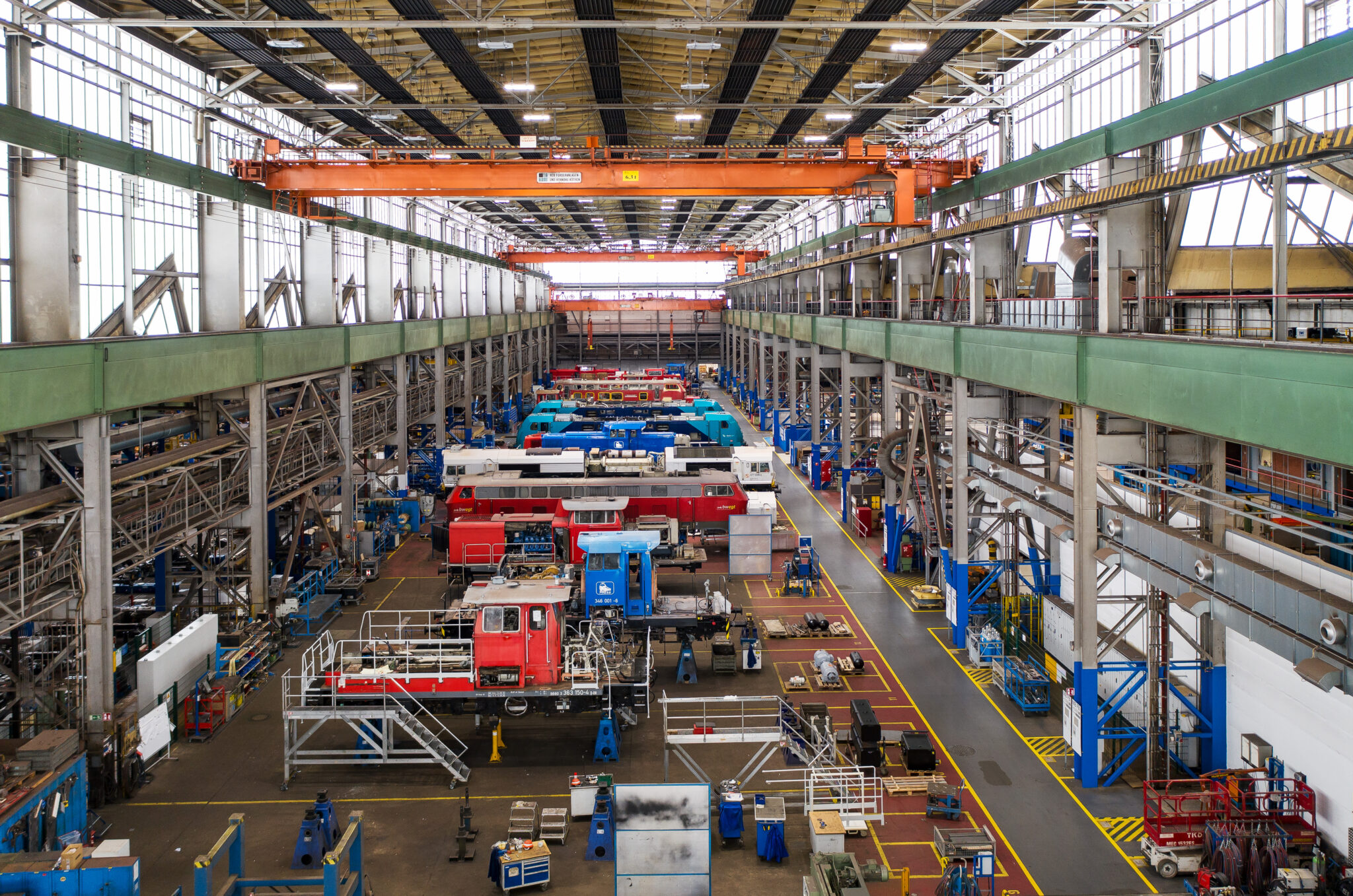
At 12 locations throughout Germany, DB Fahrzeuginstandhaltung GmbH ensures that rail vehicles are revised, repaired, and modernised on time. It reconditions around 198,000 brake components and 58,000 wheelsets every year. To make the workshop transports required for this more transparent and efficient, the company implemented the cloud-based version of the SYNCROTESS transport control system from the Aachen-based optimisation specialist, INFORM, as the central controller.
Intending to establish trouble-free processes for internal transport, DB Fahrzeuginstandhaltung has therefore chosen the solution of INFORM as its future standard system for order processing. The workshop in Cottbus made the initial start after a four-week test of the system. This was followed by the sites at Kassel, Dessau, and Neumünster.
Together, around 5,000 transports per month are already handled there via SYNCROTESS and delivered in an optimised order. Implementation has also begun at the Nuremberg, Fulda, and Bremen workshops, and Paderborn and Krefeld will soon be connected. The transport control system is intended to work as a company-wide new standard for internal transport.
“In the past, each DB Fahrzeuginstandhaltung site used its own systems and heterogeneous solutions for booking transport orders,” says Lasse Paulsen, senior consultant, warehouse & logistics at DB Fahrzeuginstandhaltung. “As a result, we had poor transparency concerning the number of transports and the utilisation of our forklift fleets.“
With SYNCROTESS, the company standardised the control of its transport logistics and now plans orders much more efficiently. Among other things, customers benefit from shorter workshop stopovers and turnaround times. In addition, the company succeeded in reducing costs for training and forklift leasing through optimised transport logistics.
“The whole process is now smoother and more reliable. We have achieved higher material availability, but at the same time we have been able to reduce our fleet size of internal transport resources, as well as unladen and orientation trips, by at least 30%,” Paulsen added.
“Lack of transparency about forklifts, materials, or other resources is a common reason for using a transport control system,” says Matthias Wurst, head of business development, industrial logistics at INFORM. “But transparency is not everything. Intelligent optimisation algorithms can, on an ad hoc basis, derive from specific situations which conveyors should carry out which order next so that, as a whole, the entire order network is optimally served. As a result, logistics departments are less busy putting out fires, but contribute to on-time and speedy delivery for production.”
To create a transport order, production employees enter it in a web interface. The system then immediately includes the order in the optimisation, taking into account all other orders. Likewise, drivers can create orders themselves if, for example, they discover material along the way that has not yet been processed. The next order is communicated to the drivers via a mobile device that they carry with them. The order can then be confirmed and completed in the same app. This was particularly easy to implement at DB Fahrzeuginstandhaltung, as employees were already equipped with suitable devices as part of a company-wide project.
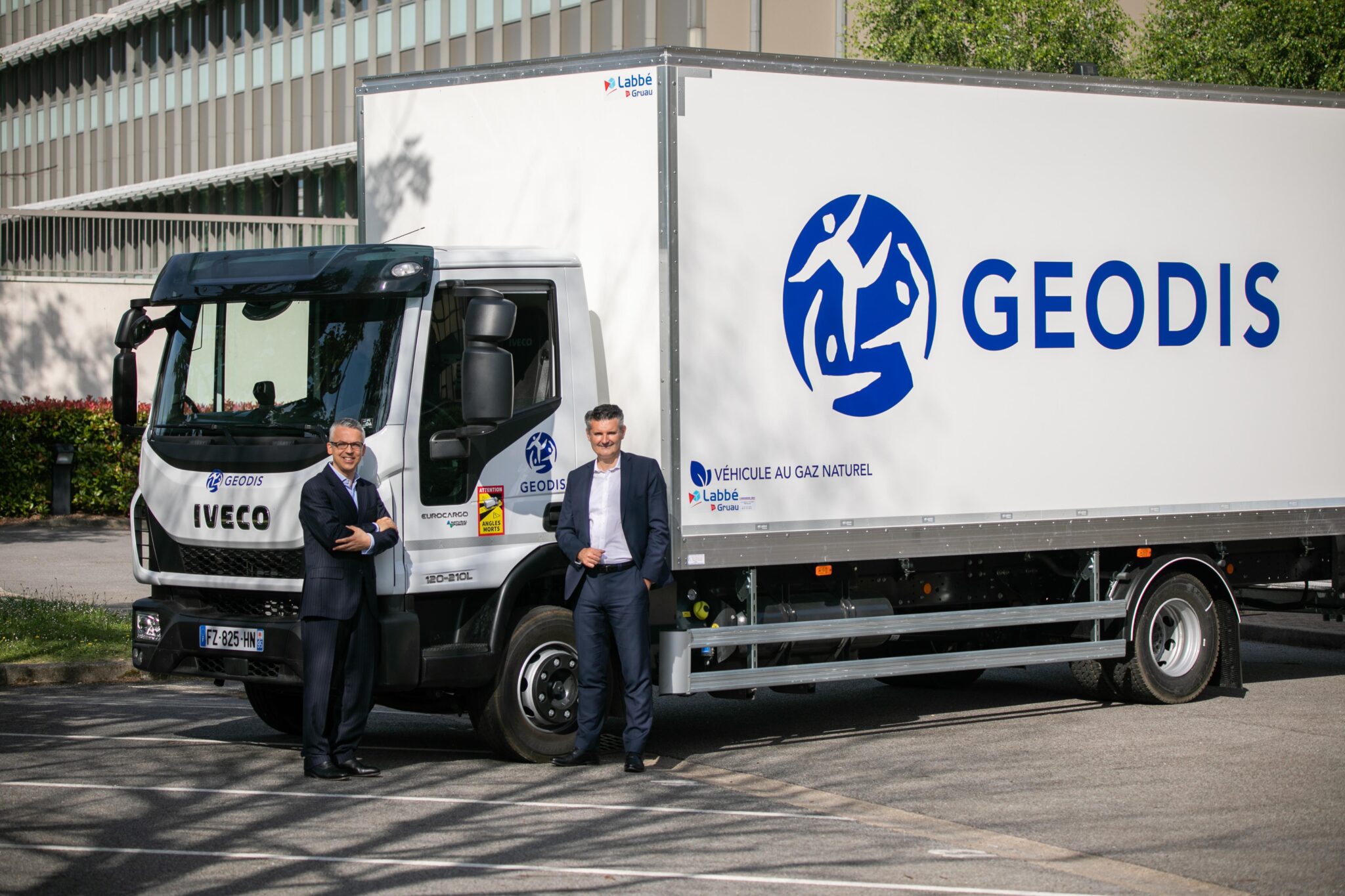
GEODIS is investing in a “green” fleet for urban delivery in France. The aim is to reduce pollution and noise disturbance. Stéphane Cassagne, GEODIS Executive Vice President of Distribution & Express Line of Business, and Emilio Portillo, Managing Director of IVECO France, signed an agreement that includes an order for 200 CNG vehicles that will be fuelled with biogas. Delivery is scheduled for the end of 2021.
“This investment marks another new step for GEODIS in reducing the impact of its activities on the environment and combating climate change,” says Marie-Christine Lombard, CEO of GEODIS. “In particular, by greening road transport in the last mile we will contribute to decarbonising the sector. Urban logistics is at the heart of our actions.”
GEODIS‘ goal is to achieve 100% carbon-free transport to the city centres of France’s 35 largest cities (with populations of more than 150,000 inhabitants) within three years. The proactive strategy initiated several years ago has reached a new level with the signing of this order with IVECO, a leader in alternative energies with nearly 60% of the French market.
GEODIS chose 107 IVECO Daily and 93 Eurocargo vehicles powered by BioGNV, a fuel that reduces CO2 emissions by up to 95% while offering the same performance as a diesel vehicle. Compared to a Euro VI-E diesel vehicle, fine particle emissions are reduced by 95% and nitrogen dioxide (NO2) emissions by 90%. These vehicles fall into the Crit’Air 1 category. Certified by Pieck Quiet Truck 71 dB, they are able to make silent deliveries by day and night.
“The increased use of new energies is a lever for action to reduce the emissions linked to our distribution activities,” said Stéphane Cassagne, Executive Vice President of GEODIS‘ Distribution & Express line of business. “This order for 200 vehicles is a major step that marks our commitment to reducing CO2 emissions. It positions us as a major player in clean delivery in France, an ambition that brings yet more benefits to our customers.”
“We welcome GEODIS‘ commitment and the trust placed in our brand,” said Emilio Portillo, Managing Director of IVECO France. “IVECO believed very early on in the natural gas solution, for which demand is growing steadily in France and in Europe. With this solution, which meets the triple objective of protecting our health, the climate and the quality of life in the city, our vehicles have become the benchmark for transporters who are already committed to the ecological transition.”
CEVA Logistics has transformed its Somaglia logistics park into an open-air, urban art gallery. As part of the Prologis PARKlife initiative, eight internationally renowned Italian urban artists used 40,000 sq m of building facades and water tanks as canvases to create works of art inspired by a series of keywords, including innovation, future, diversity and inclusion, integrity, passion and sustainability.
Starting in September, guided tours will be open to the public, available by reservation free of charge. PARKlife represents a paradigm shift in the development of logistics parks. With PARKlife, the site is transforming into a small urban centre, where it will be possible to find a series of benefits to enrich the working day, including public transport, general services, activities and open space for free time.
The PARKlife initiative considers additional elements within the space, including sustainability, usability and liveability. The green spaces will be redeveloped to include larger, more diverse trees and perennial flowerbeds, with varying colours to create a natural dialogue with the works of art in the logistics park. The redesign of the green areas will ensure greater shading and the creation of wellness paths, which will be accompanied by bicycle paths.
The project also includes new relaxation and refreshment areas with vending machines to allow for lunch and coffee breaks in a welcoming environment for all on-site workers and also for drivers. Completion of the project is expected in September 2021.
Christophe Boustouller, managing director, Italy, CEVA Logistics, says: “The PARKlife initiative is a perfect example of our commitment to our employees as they work to deliver responsive logistics solutions for our customers. People are key to our business, and at CEVA, we want to create an environment where our employees can thrive. Today’s artistic unveiling is an important step in supporting current employees and attracting new ones to the industry.”
In response to the question “Do I automate my existing warehouse process or do I change my process altogether?”, Alexander Glazunov, Delivery Director, Logistics at First Line Software offers Logistics Business readers his exclusive thoughts.
There are countless quotes from across the globe and time about ‘change’. I’ll spare you my favourites as we’ve all heard them before, but fundamentally we all accept the one constant in our lives is change. Without becoming too philosophical in an article about Warehouse Management Solutions, understanding change and how it applies to the decision-making process of automating your warehouse is what I’ll be sharing with you in this article.
Alexander Glazunov is a Manager & Delivery Director for First Line Software. In addition to helping provide Warehouse Management Solutions, Alexander enjoys making documentary films about travelling, geography, and culture.
People are conservative by nature and changing the way we’ve been doing things never comes easily. This might especially be true in your company where the decision to automate your warehouse has been made. You’ve recognised the efficiencies that automation brings to your organisation, and demonstrated due diligence to the powers-that-be that the investment is sound. However, as much those reasons for automation makes sense, it’s still likely to come with its own set of challenges such as, HR issues, the financial expense, and the actual change to processes that automation brings with it.
Embrace change
Even though it’s in our nature is to minimise change, let me explain how embracing change when it comes to automating your warehouse can pay off in ways you may not have considered before.
It starts with the ever-difficult task of looking within your company to define your business processes. This comprehensive front-end business introspection combined with a careful WMS (Warehouse Management Solution) partner selection will help determine the optimal configuration of your space, and the necessary equipment to make it work.
Statistically speaking, your warehouse is likely to be mostly manually operated; research shows that 80% of current warehouses are still manually operated with little to no supporting automation. Just 5% of existing warehouses are fully automated-meaning completely roboticised. Therefore, people are the primary movers of goods and materials throughout the facility, perhaps with some equipment and systems to help the process along.
This “process” is where you need to begin your analysis. For some clients, the underlying premise might be that in their manual warehouse, the daily execution and regulation of the process is their strength. Other clients may come to the conclusion that their existing process is a weak point and needs redoing.
People, unlike automated technology, can work relatively efficiently under somewhat structured guidelines. In a manual warehouse, processes are more often than not invented on-the-fly with circumstances dictating the immediate need of an action. This is essentially a creative attempt to control chaos in the warehouse by finding optimal solutions to various problems at specific points in time.
How to automate?
Once this basic premise is accepted, the in-depth analysis of your current situation should begin by asking two very important questions:
1. Do you fully automate your warehouse based on the existing processes? Or
2. Do you implement current automation industry standardised processes?
Let’s cut to the chase here and state that the preferred approach in most cases will be to implement current automation industry standardised processes whenever possible. In many European countries and elsewhere in the world, there are certain benchmarks or standardized criteria to be met when implementing a WMS. However, this may not always be feasible or practical for a variety of reasons as we’ll see shortly. In the meantime, let’s review some of the Pros and Cons for each of the two approaches:
Do you fully automate your warehouse based on the existing processes?
Pros:
The specific problem that exists gets solved;
No significant additional changes need to be made to the workflow;
Integrating with existing systems is easier by being more compatible with the existing processes implemented in those systems;
There is no paradigm shift – Remaining employees learn more easily with less resistance, and training is less expensive.
Cons:
With this approach, we keep both explicit and latent problems in the existing business processes. Moreover, they become less obvious, while retaining their negative impact on the overall performance of the system;
Lock-in in such a system is much higher. Problems arise not only when switching to a fundamentally new WMS, but even upgrading to a new version of the same system can be expensive and difficult since it’s usually now a proprietary WMS solution;
The qualifications of easily accessible people who can support the system must be high;
Over time, institutional knowledge of this proprietary system will become lost either through staff attrition or lack of documentation making repairs or upgrades difficult;
This kind of customisation (actually creating a new system) is expensive, since you’re basically paying to develop a new, bespoke system which is ultimately more expensive than starting with a standardised solution.
Do you implement current automation industry standardized processes?
Pros:
This approach will almost always be faster and cheaper to implement since there is less custom development involved;
Any updates will also be faster and cheaper to put into place;
It will be easier and less expensive to integrate with new external systems and equipment since standard solutions are more likely to have built-in functionality to integrate with standard processes of other systems (ERP, MES, etc.);
If there is a need to replace one WMS for another, standardization makes it much easier;
Modifying the current process in order to comply with industry standards may resolve latent problems, in-turn embracing world-accepted best practices.
Cons:
There will be significant breaks in established processes that will deviate from the ‘usual way of doing things’;
A potentially more expensive training process and possible personnel resistance;
There are conceivable risks of complex integration with existing specific legacy or self-written systems. When replacing one proprietary system, there is a chance that other non-standard systems integrated with it will also need to be replaced or modified.
Everything is a Compromise
As I mentioned earlier, the preferred approach should be to implement current automation industry standardised processes whenever possible. However, this may not always be feasible and in reality, it’s often necessary to find optimal compromise solutions when existing warehouse automation is partial, or a simplified accounting process for goods is being implemented.
Compromises such as these are due to the fact that sometimes when you’re simulating a full automation scenario in your warehouse (which you should always do) it may reveal the emergence of complex, ineffective processes, without which the final system significantly benefits.
If you try to fully automate everything, it might be less efficient than not automating a process. The simulations your WMS vendor creates and runs may prove not to be the most efficient based on what’s really happening in your facility. Real processes in real warehouses still differ from the mathematical models of these simulations. This is why compromises will always exist.
Let’s examine one example of this compromise keeping in mind that there can be many processes which under certain circumstances may not allow for 100% automation.
A real-world situation of a WMS compromise can be seen in the warehousing putaway process.
Putaway refers to the physical act of moving incoming inventory from the receiving zone to an optimal location for storage. This process often requires customisation, which may not always improve efficiency if not properly approached since it can’t usually be fully automated or standardised.
As Delivery Director for First Line Software; here’s an actual account of that particular scenario that I’ve run across.
A client had a fully automated warehouse process that had a complicated accounting system for tracking goods, which included integration with several manual processes; this further caused numerous errors and slowed down the entire process by 3-4 times. As a solution, we recommended abandoning the tracking of goods at intermediate points. The goods were initially registered upon receipt, and then finally when they appeared on the warehouse shelf. This task was placed under the responsibility of the team managing the putaway process as opposed to trying to integrate it into the automation flow.
Where Do You Begin Automating Your Warehouse?
Now that I’ve shown you the pros and cons of both approaches to WMS implementations and the inevitable compromises they might bring, let’s review a few key strategies to guide you in planning a comprehensive warehouse automation makeover.
Don’t make a hasty decision to preserve your existing business processes without first analysing and comparing them with other world-accepted best practices.
Choose a system that has a standardised functionality that completely covers the business processes of your warehouse and is recognised in the industry.
If a decision is made to customie within your existing WMS, you need to assess how much this customisation changes the architecture of the system. If the underlying architecture does not change, then it is easy to connect or disconnect the custom features. Excessive customisation can complicate maintenance and further upgrades.
If you think about it, the decision to automate your warehouse becomes an opportunity to increase the efficiency of your organisation as a whole by standardising processes. The introspection about change regarding how you have done things vs. how you want to do things becomes very important. You’ll likely find untapped efficiencies when each business process is considered sequentially and systematically. When these steps are all carefully documented, you’ll find it much easier to evaluate whether to keep the existing processes, or change and adopt new, standardised methodology when automating your warehouse.
About First Line Software
First Line Software provides a wide range of services for the development, testing, implementation and maintenance of custom and specialised software solutions for the European and world markets. FLS has a Certified Solution Development Department and a Certified Implementation Department. Since 2003, FLS has maintained a strategic partnership with viastore systems – a leading international provider of solutions in the field of warehouse intralogistics. Together they have completed more than 30 WMS projects in Europe and the USA.
Subscribe
Get notified about New Episodes of our Podcast, New Magazine Issues and stay updated with our Weekly Newsletter.