Trainer completes record fourth secondment

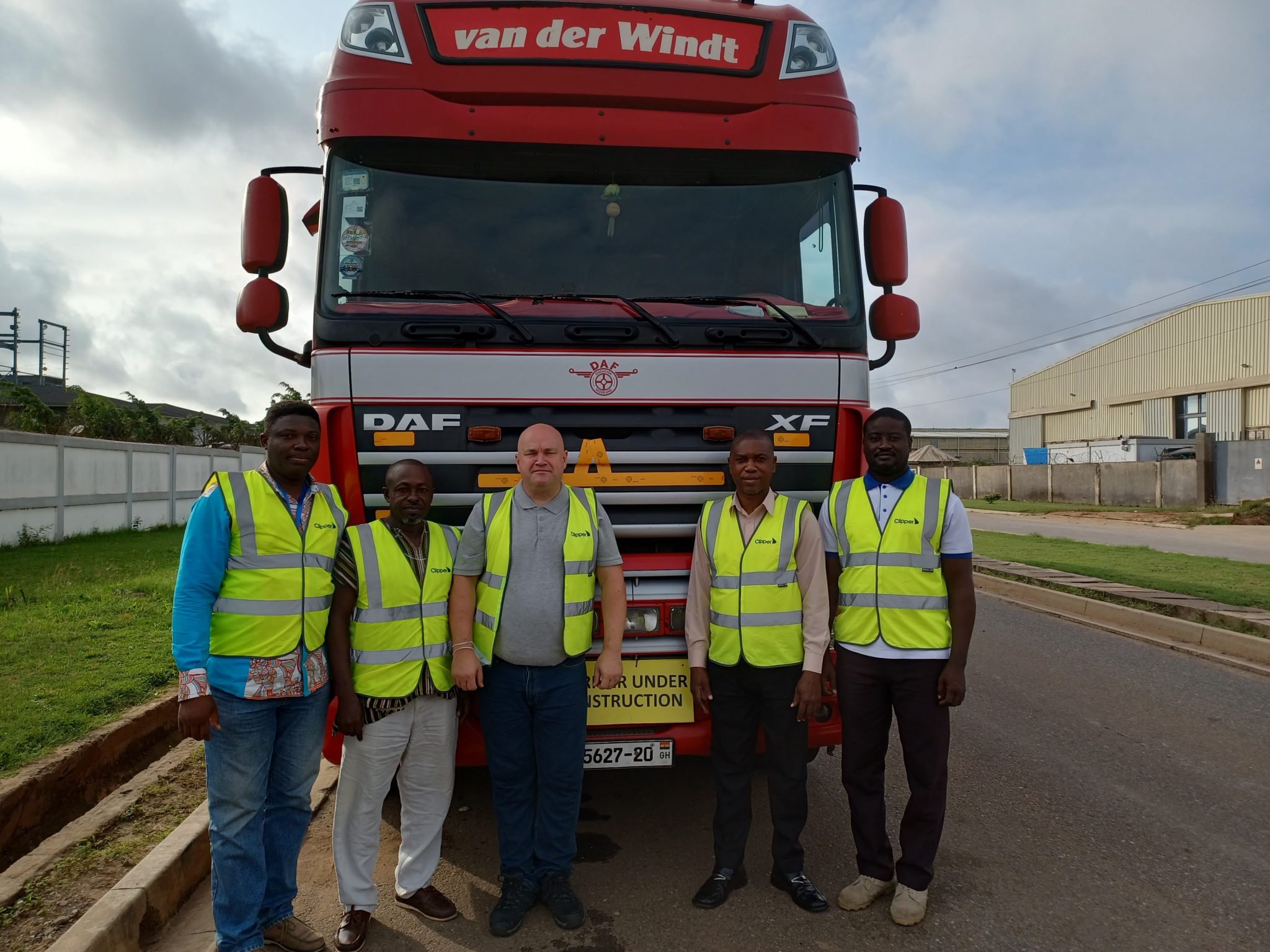
Jon Aspden, Head of Driver Training at Clipper Logistics, now part of GXO, has completed his fourth overseas secondment for international development organisation Transaid, spending two weeks working with professional driver trainers on Transaid’s road safety project in Ghana.

His trip follows earlier inputs in Tanzania and Zambia, in 2009, 2012 and 2020, and saw him working closely with four trainers based in the country’s capital, Accra.

Commenting on his experience, Aspden says: “The group had completed a lot of theory training before I arrived, so my remit was to focus on teaching practical training skills, delivered in a structured manner and in accordance with the new and enhanced HGV driver training standard developed for Ghana.

“The trainers settled into the training rhythm quickly, gaining confidence with their in-cab instruction techniques and working hard to create an environment where self-development was encouraged. I saw a fundamental change in their driving styles and coaching abilities, and when the time came for me to fly home, I left feeling I’d had the biggest positive impact to-date.”

Despite this being his first experience delivering training in a left-hand drive vehicle, Jon quickly acclimatised to the 16-speed manual DAF XF, noting in his report that it was the first time in his career that a training session had been halted by cows on the road!

Commenting on his input, Sam Clark, Head of Programmes and Acting Co-Chief Executive at Transaid, said: “Support from corporate members is paramount to the success of our driver training programmes. The calibre of the trainers we have access to in the UK is unmatched, and their inputs are key to us being able to build local skills which ensure sustainable and lasting change.

“A huge thank you as well to Jon for his longstanding commitment to Transaid; we are fairly sure that four secondments from one individual sets a new industry record!”

Transaid’s work in Ghana forms part of a three-and-a-half-year project, funded by Puma Energy Foundation, to raise training standards and expand training capacity for HGV drivers. The aim is to reduce road traffic fatalities and injuries, in a country where the World Health Organisation estimates around 7,000 people lost their lives on the road in 2016.

Transaid secured its involvement in the project through its proven track record working with local partners to improve the driving standards of more than 50,000 mostly HGV and PSV drivers in sub-Saharan Africa since 2008.
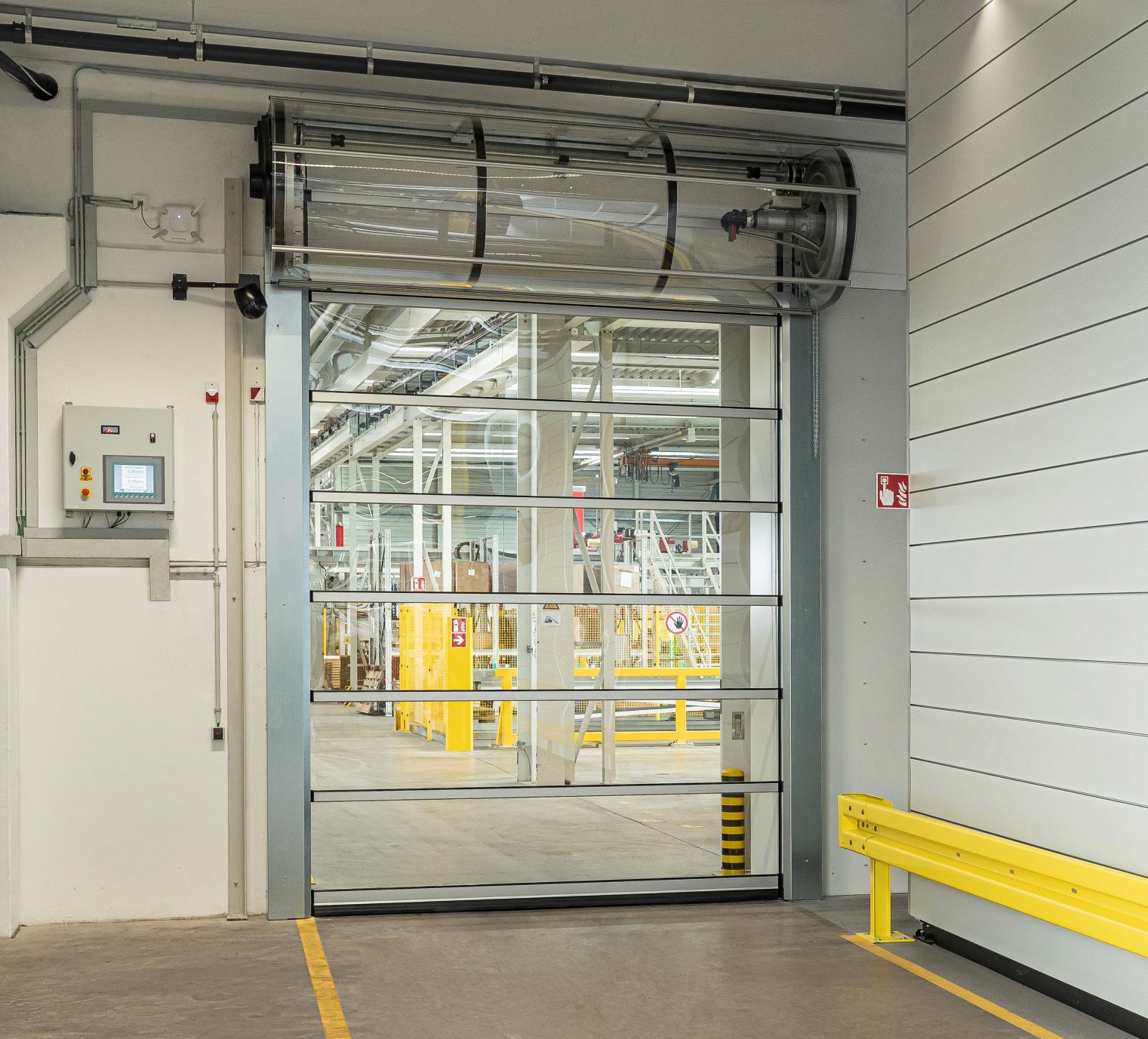

Spiral doors bring clear benefits

Hörmann UK has launched two new transparent, high-speed spiral doors, the HS5040 TurboLux and Turbolux S. With a market-leading opening speed of up to 4m/s, Hörmann says the TurboLux range combines high speed operation with optimised transparency, strength, and durability, making them ideal for demanding applications where efficiency and visibility are key.

The TurboLux range offers a pleasingly symmetrical and compact design, with transparent door laths manufactured from a clear, high-grade polycarbonate which provides high impact and breakage resistance. Providing 90% transparency, the door has been designed to maximise light and visibility, helping to reduce accidents, ensure smooth and efficient transport processes, and provide brighter working environments to improve operator conditions.

With TurboLux doors providing impressive opening speeds of up to 4m/s and closing speeds of 1m/s, operator safety is paramount. Situated within the side panels of the door is a light grille which monitors the door closing zone up to a height of 2500mm whilst a gentle soft-stop function stops the door in the event of an obstacle being detected.

Standard door sizes of up to 5000mm x 5000mm are achievable and offer an optional wind load resistance of Class 4, speeds of up to 133km/h, making the Turbolux door suitable for both external and internal installation. Narrow side panels of 250mm result in a door that offers installation flexibility as it can be fitted into confined spaces, and to aid fast and efficient installation key components are supplied pre-assembled.

Commenting on the introduction of the TurboLux range, Phil Thorpe, Industrial Division Manager at Hörmann UK, says: “We are excited about the launch of the Hörmann TurboLux, our new high-speed, transparent spiral door – a door that has been designed using high-quality materials to ensure a long service life and the ability to stand up to the wear and tear of challenging working environments.

“Together with industry-leading opening speeds and maximum visibility, TurboLux offers the market the chance to further speed-up workflow processes and reduce energy costs. Once again Hörmann are supplying the market with a real difference, and we think we have produced a clear winner.”


Digital twinning is key to supply chain transformation

Digital twins are becoming big business, says Toby Mills, CEO of Entopy. But there is still a lot of confusion about what they are, what they do – and why they matter.

A digital twin is a virtual representation of an object or system that spans its lifecycle, is updated from real-time data, and uses simulation, machine learning and reasoning to help decision-making. It acts as a bridge between the physical and digital worlds. Businesses use digital twins in a variety of ways – from product development to operational performance improvements. Increased digitisation is making it easier to build accurate digital twins and drive adoption of the technology.

For the logistics industry, digital twins open the door to a new way of keeping track of goods moving between different organisations and physical locations. Data from multiple supply chain systems can be captured and combined to create a ‘digital twin’ of a consignment – providing a single data product from which all stakeholders can get the visibility they need.

This novel approach has been made possible by the latest ‘data mesh’ technology, based on distributed architecture for analytical data management. It enables end users to easily access and query data where it lives – without first transporting it to a data lake or data warehouse. Leveraging data across the supply chain enables a much fuller picture to be achieved at a granular level. And using data from existing systems used in the day-to-day running of the organisations involved means the data is of high quality, can be trusted and the systems are well maintained.

The digital twin concept is central to the work of supply chain visibility pioneer Entopy – providing the backbone for the company’s unique intelligent data orchestration technology, which is the secret of success for the supply chain. Just like in a traditional orchestra, a ‘conductor’ takes centre stage and synchronises all the various data inputs. Each separate system communicates directly and only to the conductor platform – removing the need for numerous discrete connections and maintaining data integrity.

As each digital twin is created, proprietary algorithms define and assign policies to it to ensure only relevant data is captured from each connected system. Data from order management and transport management systems is combined with more real-time data sources from other systems present across the supply chain. For example, consignment and inventory data can be combined with transport schedules and allocated transport.

Digital twinning

The telematics system of the associated transport vehicle provides real-time location and condition data from the consignment which, when combined with analytics, generates detailed consignment lifecycle records, capturing key events throughout. These events can be communicated across the supply chain, improving communication and paving the way to automation of processes.

Research suggests that businesses with optimal supply chains can halve their inventory holdings, reduce their supply chain costs by 15% and triple the speed of their cash-to-cash cycle. Yet the increasing complexity of supply chains is making optimisation more challenging than ever, while the cost of inefficiencies is growing. Digital twins and intelligent data orchestration are now providing a new route to unlock supply chain value and deliver competitive advantage.

read more

Industry View: The Age of the Digital Twin


Calor wins industry award

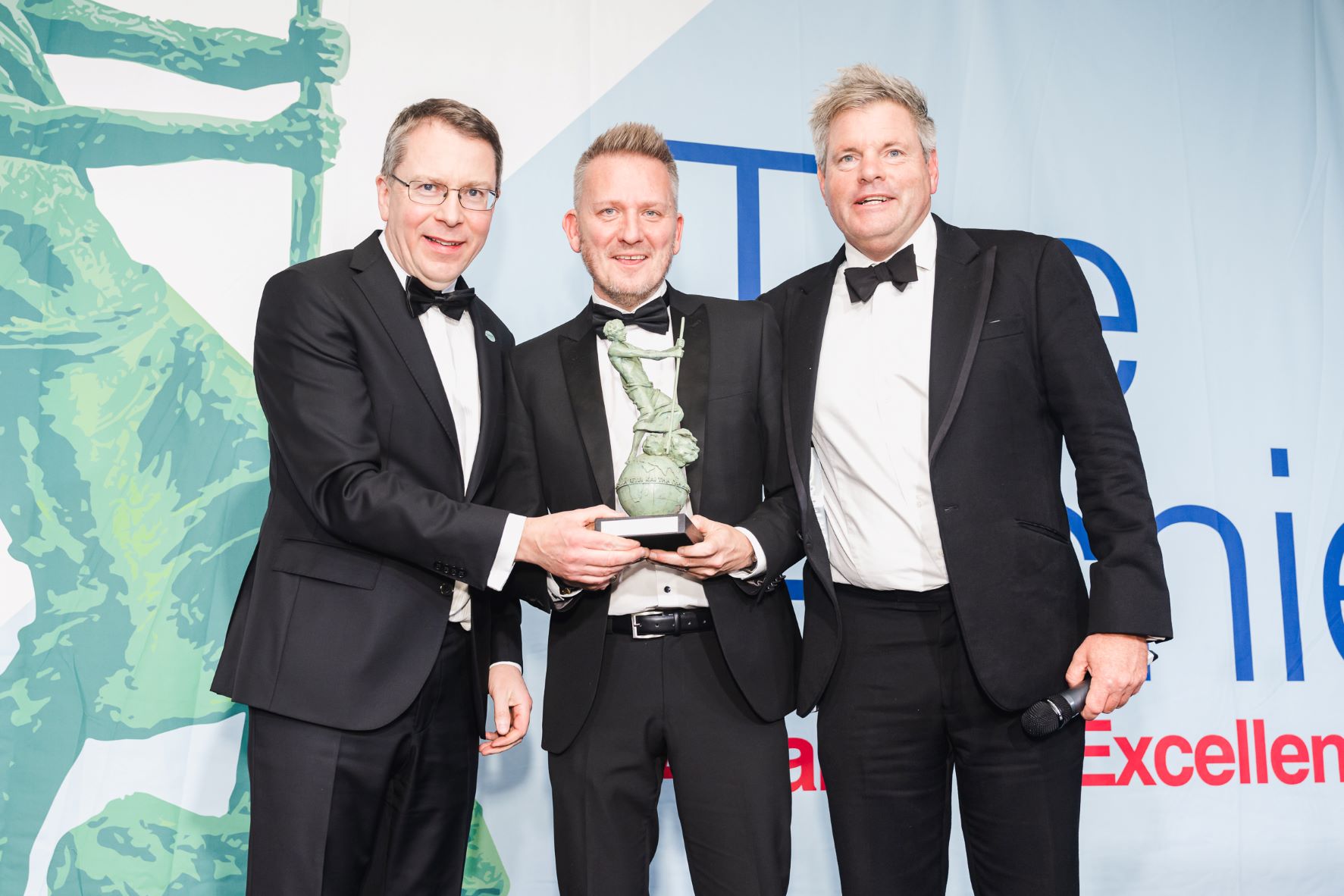
Calor has been awarded Supplier of the Year at the UK Material Handling Association (UKMHA) Awards for Excellence – The Archies. Chosen by the membership of UKMHA for the quality of its support for the industry, the Award was presented at a special evening held at the Hilton Metropole in Birmingham.

The Archies celebrates the best and brightest in the forklift industry, recognising teams and individuals that have innovated, raised standards and helped forklift truck operators work more effectively and safely.

The Archie was awarded to Calor for delivering the highest quality of services and products over the course of the year, as voted for by the UKMHA’s members.

With a commitment to safety and best practice, Calor continued to set the standard in 2022 by regularly sharing safety guidance, videos, and other safety training materials for the forklift truck industry through its own channels.

Stuart Viney, National Account Manager for FLTs at Calor, said: I’m delighted and incredibly proud of the Calor FLT team for achieving this accolade from the UKMHA. We have a fantastic group of colleagues at Calor who are constantly innovating and pushing for the highest standards in our industry, so it’s great to be recognised for that.”

As part of its commitment to a sustainable future, Calor has pledged to offer 100% renewable energy solutions to all customers by 2040. In 2018, it introduced Futuria Liquid Gas (previously BioLPG) – a sustainable fuel made from a blend of waste, residues, and sustainably sourced materials.

Using a mix of 40% Futuria Liquid Gas and 60% conventional LPG, FLT businesses can reduce carbon emissions by up to 48% (kgCO2e/kWh) compared to using diesel and 33% when compared to conventional LPG.

New AMR for odd-sized payloads

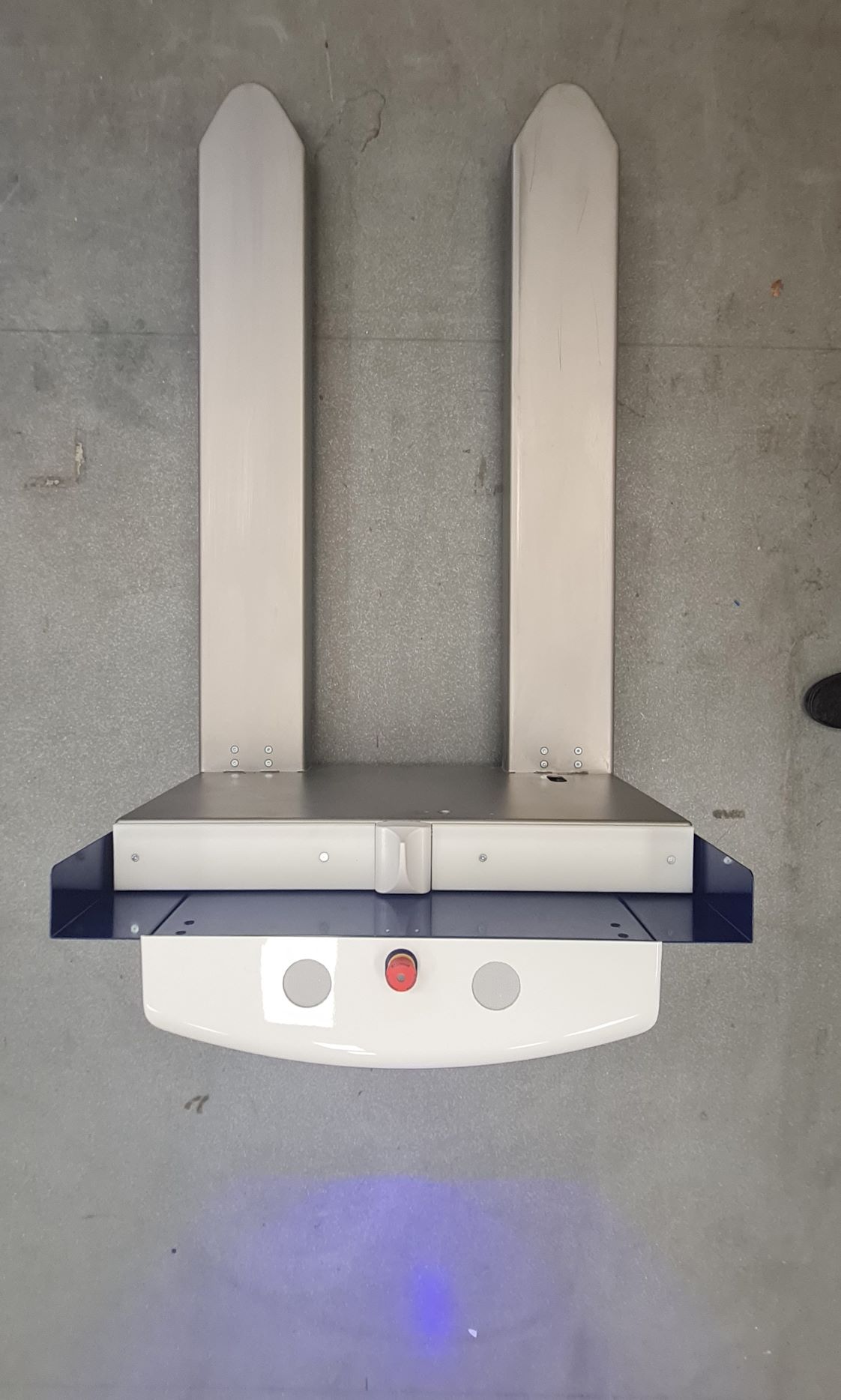
MoviĜo Robotics has introduced the Ŝharko10 Wide Body, an AMR designed to transport payloads of non-standard gauges.

Pallets are standardised carriers, but some factories use odd-sized pallets because it suits their products better. For example, a South African plastic injection moulding company created its own plastic pallets that suited its process better. A problem arose when it wanted to automate internal transport, because standard Autonomous Mobile Robots (AMR) didn’t fit under its custom pallets.

Very few companies are capable and willing to build a custom AMR for a limited number of robots. But there is a company in the Netherlands that can, and the result is the Ŝharko10 Wide Body.

“We sell AMR solutions and the vehicles are only part of the solution. So if a customer needs some alterations to the vehicle because it benefits their process, we can do that,” says MoviĜo’s Managing Director Paul van der Hulst.

The Ŝharko10 Wide Body’s main difference is the bodywork. The forks of the vehicle are further apart, which enables it to lift non-standard loads. “From the day we started with the design of the vehicle, we’ve encountered several applications for the Wide Body,” explains van der Hulst. “For example, wide payloads like doors and larger-sized heat pumps, but also payloads with a high centre of gravity. The Ŝharko10 Wide Body enables us to transport a larger variety of carriers.”

The new Ŝharko10 Wide Body is built on the MoviĜo platform, so the Wide Body has the same cleverness as all the other robots built by the Dutch manufacturer. It can be used as an industrial IoT device in factories, which means it can be fully integrated in the factory. It communicates with software systems like ERP and WMS, but also with third-party hardware devices like doors, wrappers, palletisers, production lines etc.

But it can be used as a stand-alone system as well. Then tasks are generated via virtual buttons or MoviĜo’s revolutionary camera system. This camera system automatically generates a task when it detects a pallet on a certain location. It can even detect that a pallet is empty and automatically generate a replenishment task.

AI essential to supply chain transformation

In our connected and digital world, using artificial intelligence (AI) across the supply chain enables companies to maximise productivity by reducing uncertainties. It also helps to speed up decision-making, reduce cycle times and contribute to continuous improvement. By increasing the expectations of improved efficiencies between suppliers and customers it highlights the need to use the capabilities of AI wherever possible across the entire supply chain.

The use of AI is helping to deliver some of the most powerful optimisations required for accurate capacity planning, improved productivity, higher quality and lower costs – all whilst creating safer working conditions. The COVID-19 pandemic had a devastating impact on companies and showed just what effect global events can have on the supply chain, highlighting that companies need to invest more and plan more effectively to deal with any future uncertainties.

Here, Jean-Baptiste Clouard, CEO at Flowlity, innovative AI-based supply chain planning and forecasting solution, highlights the benefits for businesses using AI, as well as the challenges businesses face, and why ultimately, it is essential to transform the future of supply chains.

Four benefits of using AI in supply chains

1. Accurate Inventory Planning

When companies can manage and plan their inventory, it can ensure accurate flow of items in and out of a warehouse. Supply chain management considers the different variables such as order processing, and the time taken to pick and pack any orders – which can be time-consuming. Inventory planning will prevent any overstocking or unexpected stock-outs.

2: A more efficient warehouse

An efficient warehouse is integral to the supply chain, as it supports a smooth product journey from component parts to the warehouse and all the way to the customer. By using an AI system, it can solve issues quickly and accurately while simplifying the processes and speeding up the work. It will save time by freeing up capacity in the warehouse which can in turn allow staff to better use the time to upskill.

3: Reduce operational costs

The reduction of operational costs is one of the best benefits from using AI in the supply chain for many companies. Automated intelligence operations offer longer periods of error-free time by reducing workplace errors, and incidents.

4: On-time delivery

AI systems can reduce any dependency on manual inputs and make delivery times faster, safer, and smarter. Smarter systems can help facilitate timely deliveries to customers and automation will support traditional warehouse systems to remove any potential bottlenecks.

Variety of challenges

As with all new systems and processes, the introduction of a new way of working can present a variety of challenges across many different areas of the business. But by understanding the challenges that might be faced, supply chain leaders can address them.

Most AI and cloud-based systems like Flowlity are very scalable – meaning that no matter how much a business grows, supply chain executives always have the systems to support it. What is worth knowing at the start of the process is how it can be difficult to assess the initial number of users and systems that might be needed across a business to make any new investments have an impact and be effective. Before supply chain managers start looking for a new system, it is important to realise that all systems are unique, and requirements must be discussed to ensure the right one is chosen.

Whether it be the costs of training, or the operational costs involved, with any new system, there is a requirement for investment – both in terms of time and money. Good supply chain business partners will have a thorough onboarding process, and a rigorous training program to ensure everyone is aware of what they need to do. AI systems are usually cloud-based and can require a lot of processing power and bandwidth. Specialised hardware may also be required, and it takes time to gather data and build working algorithms. But initial investments must be offset by potential long-term savings.

Investments in smart technology and the use of AI, can capture huge amounts of data that was previously disaggregated. Supply chain managers need to be able to cut through the sheer volume of real time data that is available, make decisions and be able to identify where any potential bottlenecks occur.

Recent studies have suggested that artificial intelligence (AI) can deliver value throughout the supply chain and logistics operations. Everything from reducing operational redundancies, risk mitigation and cost savings, to enhancing forecasting and reducing the time for delivery through a more optimised route, AI in the supply chain is preferred by manufacturers and retailers across Europe and the UK.

read more

Supply Chain Optimisation Key to Retail


First Hydrogen unveils green vans

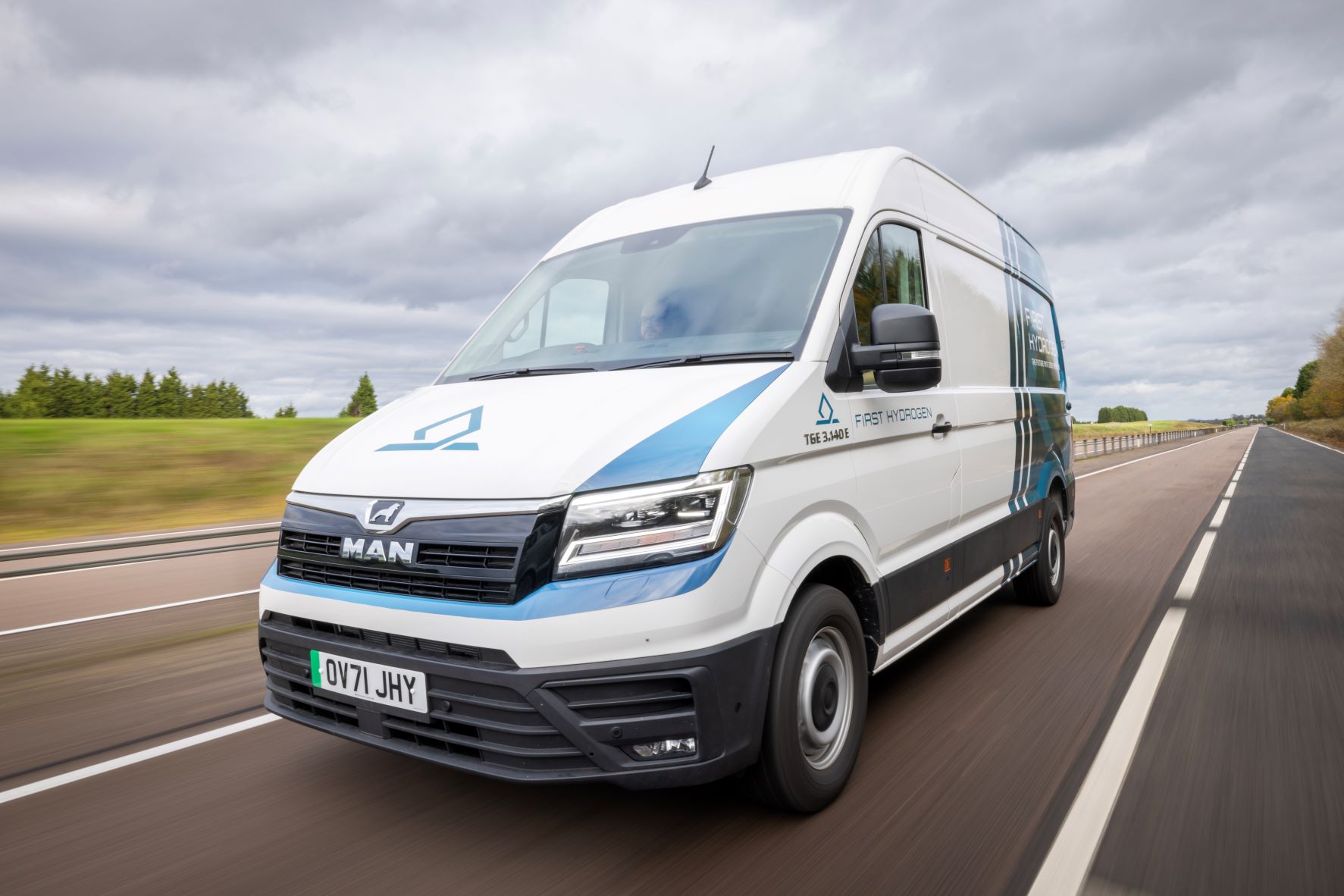
First Hydrogen, an automotive and energy developer, has revealed its first zero emission light commercial vehicles (LCVs) after commencing track-based testing.

The First Hydrogen fuel cell-powered vans (FCEV) have commenced performance tests at the HORIBA MIRA Proving Ground, located near Birmingham, UK. These track tests will confirm the safety and performance of the LCVs prior to handover from powertrain specialists AVL to First Hydrogen. In October 2022, the vehicles were certified for UK road use ahead of a series of road trials with major UK operators, which start in January 2023. The vehicles will undertake final testing designed to fine tune operational performance, before they will be available for fleet operator trials to commence in the New Year.

The company’s inaugural vehicles have more than five times more range capability than their battery electric equivalent – achieving 400-600km range on a single fuelling compared to the 115km range of the battery electric van running at the same maximum speed. With a refuelling time of approximately five minutes, the time required to power First Hydrogen’s FCEVs dramatically undercuts the five hours it takes to recharge a battery electric van.

Created to encourage adoption and whet the market appetite, the company’s vehicle demonstrator program will inform development for future vehicle trials in European Union, United States and Canada. Feedback and high-level purchase commitments will also support the design and development of First Hydrogen’s next generation of vehicles, which it plans to bring to market in the next few years. The global light commercial vehicle market is projected to reach $786.5bn by 2030. These vehicles, together with First Hydrogen’s complete Hydrogen-as-a-Service (HaaS) solution, which supplies green hydrogen fuel, distribution and complementing vehicle management services, will help the sector meet zero emission targets.


Subscribe

Get notified about New Episodes of our Podcast, New Magazine Issues and stay updated with our Weekly Newsletter.