Product Longevity Improves Commercial Sustainability

Whilst the effects of global warming have long been hitting the headlines, the number of devastating, large scale environmental incidents are only accelerating. From record-breaking fires sweeping our most protectable climate change buffer, the Amazon rainforest, to the unprecedented flooding of Death Valley, these climate crises must propel businesses across the globe to drive change.

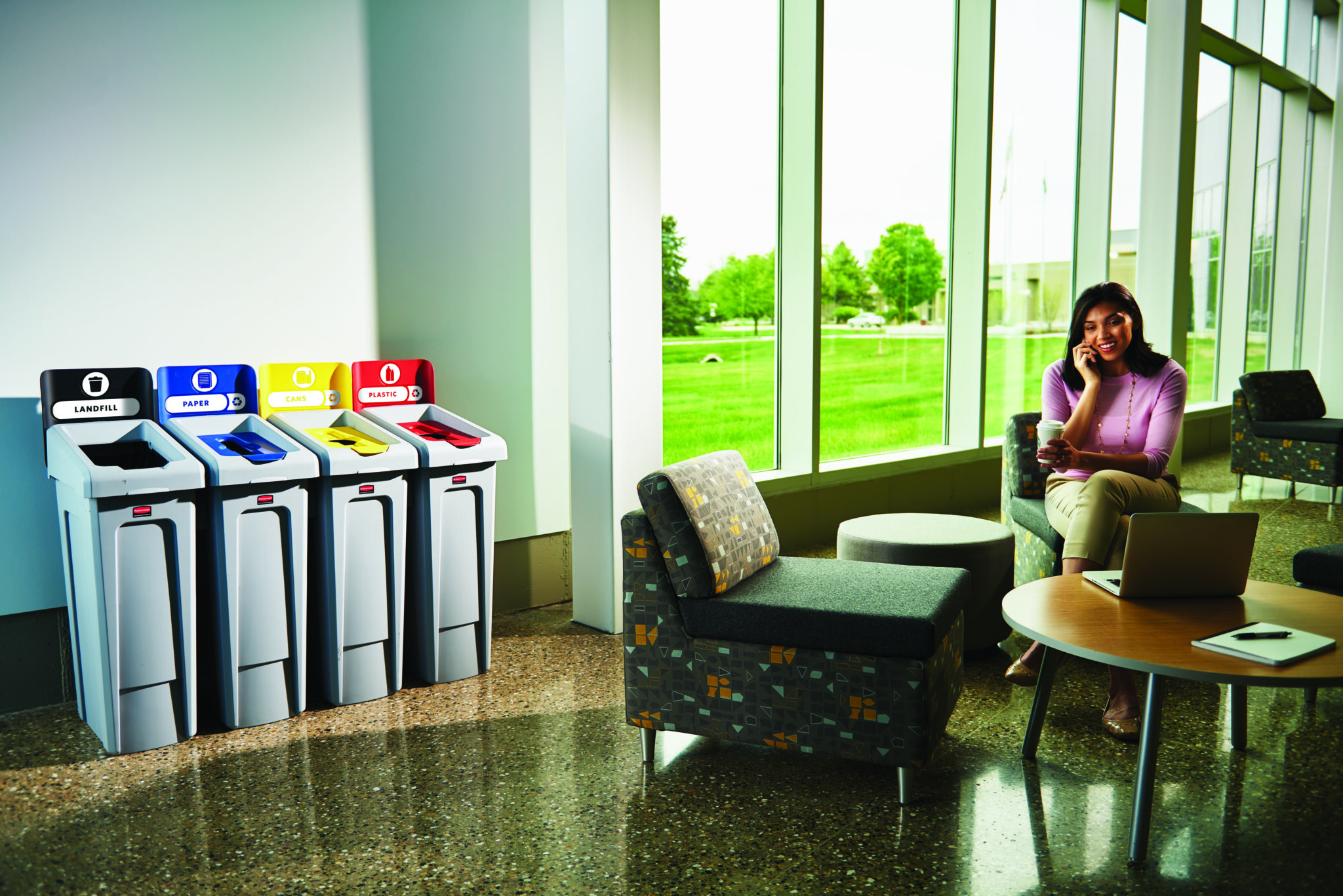
Why Product Longevity is a Powerful First Step to Improving Commercial Sustainability, the latest Love Sustainability insights report from Rubbermaid Commercial Products (RCP), reveals corporate stakeholders (95%) and consumers (52%) are calling for more action from businesses in relation to climate change. But this shared drive for change sits against a backdrop of commercial considerations and in the face of inflation, which was cited by 80% of businesses as their most significant challenge in the coming years.

Supporting businesses in turning sustainability ideas into action, the new report helps to identify and overcome future challenges to implementation and provides data-driven recommendations to combat ‘green confusion’, reassess purchasing decisions and ultimately improve operational and systemic sustainability.

Whilst findings from the report show that the number one issue  cited as a barrier by businesses is a lack of sustainable products, Why Product Longevity is a Powerful First Step to Improving Commercial Sustainability dispels the myth that recycled materials are the only route to ‘greener practices’. It argues that low frequency sustainability – making significant strides in the reduction of consumption – is far more effective than an increase in so-called ‘green purchasing’ for both the planet and business’ budgets.

For 60% of businesses the perceived investment and increase in ongoing costs for more sustainable practices is considered a barrier to implementation. The report reveals that by extending the life cycle of passive products, businesses can significantly reduce their environmental impact by up to 72% and their costs by up to a third. This subsequent reallocation of resource and investment will allow organisations to invest in innovation, improving their overall sustainability.

“We know that a staggering 95% of decision makers want to do more on sustainability but face various challenges to implementation. RCP is dedicated to being part of a concerted sustainability effort across the business world not just through its products, but through vital education and sustainability tools. The brand has already made progress when it comes to changing attitudes surrounding efficacy and cost of sustainable products but there is still work to be done,’’ explained Emilio Capelli, VP Sales & Marketing International for Commercial at Newell Brands.

RCP announced its Love Sustainability Journey last year to start open, transparent conversations surrounding its own sustainability practices. The brand set clear targets and created a set of initiatives that cover areas of the business where it can make initial gains. With 85% of businesses ranking product longevity as the most important of those initiatives, it’s clear why a laser sharp focus on durability is central to all RCP products across waste and recycling, cleaning and hygiene categories. Supported by industry leading warranties and clear accreditation, the brand creates products that lift the sustainability of every partner it works with.

Capelli continued: ‘’At Newell Brands and RCP, we believe that when businesses raise the tide of sustainability, we are all elevated by it. Let’s do this together.’’

The Why Product Longevity is a Powerful First Step to Improving Commercial Sustainability report is available for download here.

New US Tech Campus for stow

Stow’s new tech campus location, opening in early April of 2023, will be the new base of operations for both stow US, Inc. and the stow Group’s North American automation business unit, stow Robotics US. With ground-breaking technology and warehouse automation solutions from the robotics group, the innovative campus will be a technology and experience centre along with offices for solution sales, engineering and design, project management, aftermarket sales, and service & support. With the new facility, stow Group brings together all qualitative, industrial racking systems with its warehouse automation solutions such as the stow Atlas® 1D and 2D Automated Pallet Shuttle, stow Mobile®, stow e.scala® 3D Robotic Bin Storage Order Fulfilment Solution, and the iFollow AMR for picking and in-house transport in warehouses and distribution centres. Now with this unique combination of products, stow Group provides an all-round solution with innovative technology sets that are:

EFFICIENT: reaching any SKU, on any level, within a highly utilized warehouse cubic space
INTEGRATED: with the ability to be seamlessly linked together (stow Atlas® 2D, e.scala®, iFollow) to manage a complete warehouse
QUICKLY DEPLOYED: leveraging global resources and strategies to deliver solutions faster than the industry average
SCALABLE: As business operations expand, we can easily add storage locations, shuttles, and AMRs to accommodate this dynamic need
COST EFFECTIVE: providing a near ‘out-of-the-box’ solution for customers and integrators

The brand new North American technology and experience centre in Romeoville will give the stow Group a unique opportunity to showcase our newest automation solutions to our customers. This is the next step in the fast build-up of our activities on the North American market. We are thrilled to see the first big stow Atlas® 2D installations being installed on the market, and are very confident about our future on the North American market.

Jos De Vuyst, CEO of stow Group, said, “stow Group is quickly emerging as a leading warehouse racking and automation provider and is growing at an astonishing rate, both in Europe and the US.

“Our employees continue to be our greatest assets. We’re excited to give them the tools and resources they need to be successful by investing in state-of-the-art facilities like our new Romeoville campus,” added Nathan Richter, Managing Director of stow Group USA. “In addition, the new technology centre will allow our customers to get a first-hand experience with the automation and how it will fit their product/application. We understand that uptime is critical to a customer’s success; to that end, we have planned to inventory spare parts, AMRs, and robot shuttles to increase our service and support offerings domestically as well as improve response times and recoverability. Service and maintenance training for our customers will also be offered to ease the transition into automation.”

New era for Yale Lift Truck Technologies

Yale Materials Handling has changed its brand name to Yale® Lift Truck Technologies. The rebranding reflects the Company’s emphasis on technology-enabled lift trucks for warehouse and intralogistics operations, delivered through a strong network of independent Dealers.

The rebrand highlights how Yale is responding to ever changing market conditions and demands; whilst emphasising its strengths in providing solutions for customers’ needs. The materials handling landscape is changing. So are its challenges. There are increasing demands for shorter delivery times and flexible, high-quality service. Europe is the biggest intralogistics market in the world and is expected to see an unprecedented level of expansion and innovation. Fast adoption will be key. From labour shortages to safety and sustainability goals, Yale is committed to providing solutions in the intralogistics and warehouse space.

“The new Yale positioning is built around three pillars” said Robert O’Donoghue, Vice President Marketing and Solutions EMEA from Yale Lift Truck Technologies. “The first is our smart design philosophy which is all about putting the customer first. Second, is our focus on Technology Integration. We’re not just keeping up; we’re leading the way. Third, is our dealer partners, who create long-lasting, successful relationships with customers”.

The new brand name is founded on a 100-year heritage designing and manufacturing lift truck technologies which keep evolving to meet the challenges facing today’s industries.
With its Dealer Partners, Yale focuses on customer success in the fast-changing intralogistics market.

What Influences Retail Manual Pick Rates?

Ecommerce has become one of the fastest growing sectors within the supply chain, making pick rates key. With this growth each business faces a number of challenges, not just scaling up the operation to cope with demand, but also investing in equipment that can adapt as the process changes and improve the operation to make savings wherever possible.

The right warehouse fulfilment plan will not only improve productivity but will also make the whole operation more efficient. However any plan has to take into account a number of factors. Without the right equipment designed for your applications to help achieve the above, implementing the right WMS, tackling productivity or perhaps outsourcing the picking to a 3PL can’t be looked at until the hands on ‘’Picking’’ operation is defined, yet in many cases businesses will look at ‘’Off the shelf solutions’’ instead of a’’ tailor made solution’’, that’s is not only right for the current process but can adapt as and when the fulfilment process changes in the future. And in many cases, this can also take place towards the end of the planning process.

When we look for IT solutions such as WMS, or even the building we occupy how often is the right solution available without some changes? But more importantly how often are today’s requirements the same as those in two or even three years ago? Obviously one of the most important areas we have to consider is order fulfilment, what impacts our output and how this can it be improved. Can time be saved in areas, and thus reduce waste (time or material) Aside from the equipment used the wellbeing of staff has to be a key consideration after all ‘’A happy worker is a productive worker’’.

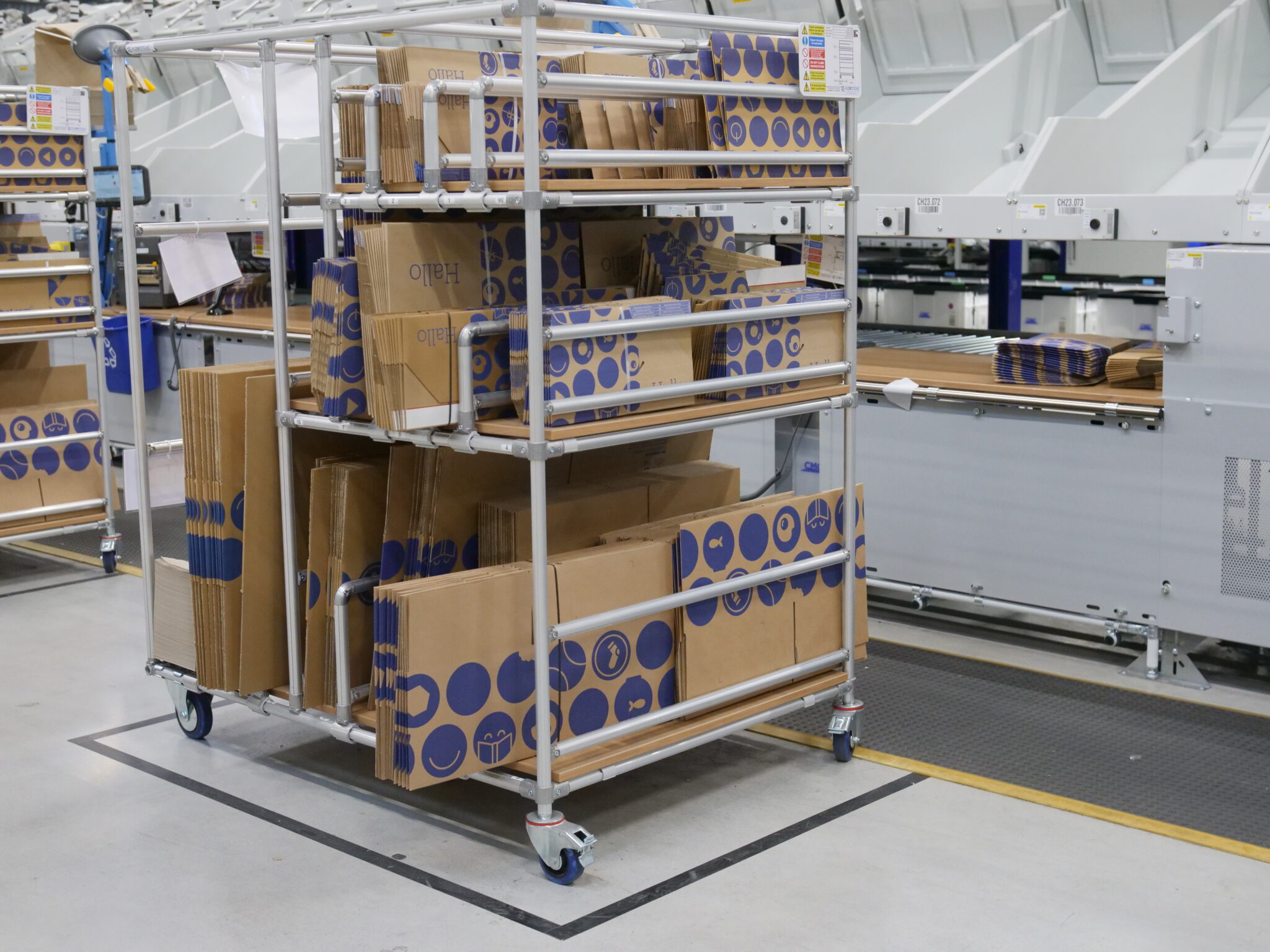
Speaking to a wide range of retail companies any improvements are the key to achieving profitability and in some cases saving just 2 seconds on a picking operation can have financial benefits to a business , obviously this is dependent on the number of picks carried out, but how many businesses do not want to grow and increase? So what items of equipment can we identify as the ones that will require the most changes over the years and what are the factors influencing change. Take for instance a picking trolley, how difficult is it to move when fully loaded, how does this impact on pick route times, can the picker load all product onto the trolley, are the shelves at the right height, is the handle to move the trolley at the right height for the operator, does the picker need steps to pick items occasionally?

Picking /Packing stations, how many items are required to complete the process? PC, Label printer, boxes, envelopes, protective packaging, how long will the operator have to stand at station, is the work surface the correct height, and are all the items within easy reach and easy to locate? Custom built solutions designed to take the all the above into account and are the obvious solution to answer many of these questions, ‘’Aren’t they expensive compared to off the shelf?’’ Yes is the quick answer, however when you look at a flexible solution that can adapt as your process/workload changes the ROI is unquestionable with so many businesses having to either ‘’Make do’’ or worse still scrap their equipment and start again it does make custom flexible solutions the unequivocal choice to the issues faced not just in E-procurement order fulfilment, but also the far wider order picking market place.

Flowstore offer a wide range of custom built applications into market sectors looking find the right solution that will stand the test of time and adapt as the demand on the supplier changes with the market place, put simply ‘’Smart solutions that work ‘’ With a dedicated team who will visit site understand your process to offer the best solutions.

Powerfleet to Acquire Movingdots

Powerfleet, Inc. (Nasdaq: PWFL), a global leader of Internet of Things (IoT) software-as-a-service (SaaS) solutions that optimize the performance of mobile assets and resources to unify business operations, has signed a definitive agreement to acquire Movingdots, a leading provider of insurance telematics and sustainable mobility solutions based in Bremen, Germany, and a subsidiary of one of the world’s leading re-insurers, Swiss Re.

Movingdots, in partnership with Swiss Re’s Automotive and Mobility unit, has spent nearly a decade designing and perfecting data science algorithms with primary insurers to provide risk-based drive style analytics for fleets and personal auto risk. Backed with actuarial insights, Movingdots enables data-driven insurance propositions for insurers, car manufacturers, and mobility platform players worldwide. By focusing on customers’ safety and security needs, and by providing transparent and comprehensive monitoring, Movingdots combines insurance analytics with artificial intelligence (AI) technology to derive an individual risk assessment. Movingdots has been looking for the right strategic growth partner to deliver these precisely architected insurance solutions to the global market in a sustainable, profitable, and scalable way.

“I look forward to welcoming Movingdots’ exceptional team and great customers to Powerfleet,” said Steve Towe, Chief Executive Officer at Powerfleet. “World-class insurance telematics solutions as well as ESG reporting are core to Movingdots’ business and are highly aligned and complementary to Powerfleet’s strategic focus on safety and sustainability. We look forward to the partnership as we bring these industry-leading solutions to an expanded market through Powerfleet’s customer base and global go-to-market channels.”

Hendrik Todte, Managing Director at Movingdots, added: “We pride ourselves on the accuracy and reliability of our data and solutions. Achieving safer and more sustainable mobility requires engineering excellence and I am proud of the dedicated team we have built in Europe. We look forward to joining forces with Powerfleet to embrace opportunities in the corporate and commercial fleet space and to deliver innovation in mobility through cutting edge technology.”

Compelling benefits from the acquisition that are expected to support Powerfleet’s organic growth include:

• Insurance-approved solutions: Movingdots is currently owned by Swiss Re, one of the world’s leading providers of reinsurance, insurance, and other forms of insurance-based risk transfer. The insurance risk insights from Swiss Re have contributed to the creation of Movingdots’ end-to-end telematics app solution, Coloride. This adds credibility to the suite Powerfleet will offer its customers and partners.
• Enhanced Powerfleet Unity platform: Powerfleet launched its new fleet intelligence platform, Unity, at the end of 2022. Unity unites people, assets, and IoT device data together on a single platform to transform the way its customers do business. Unity is made up of six data-powered solutions, including safety and sustainability. Movingdots’ focus on delivering innovative automotive and mobility safety solutions and ESG reporting will enhance Powerfleet’s SaaS enterprise applications.
• Increased global reach and total addressable market: Movingdots’ footprint and customer base will strengthen Powerfleet’s global reach and ability to penetrate EMEA markets with wider international leadership and expanded solution offerings.
• Investment in talent: Movingdots has built a hub of excellence in Germany and beyond. Movingdots employees will strengthen Powerfleet’s current tenured and talented team, all striving to deliver on the promise of People Powered IoT.

“We are excited that we have found Powerfleet, a strong buyer for Movingdots, who has the scale and footprint to further grow the business,” said Andrea Keller, Head Automotive and Mobility, Reinsurance Solutions, at Swiss Re. “We are looking forward to continuing with Powerfleet and Movingdots in partnership.”

The acquisition is expected to close in the first quarter of 2023. Following the completion of the acquisition, all Movingdots customers will continue to receive exceptional service from the Movingdots team.


Financial Results Confirm Logistics Strategy

Munich-based intermodal and shortsea logistics provider Robert Kukla closes its 2022 financial year with a substantial 22 percent increase in turnover. “In particular, the expansion of the network via associated companies with the development of our own logistics products contributed to this above average success,” sums up Kukla CEO Knut Sander. For 2023, he again expects organic growth of around 20 per cent. With its eleven affiliated companies and the headquarters in Munich, Robert Kukla achieved a turnover of EUR 248.7 million last year with 180,000 transported units. This represents an improvement of 22 percent over the previous year.

Investments ensure growth

According to Sander, the investments in the development of the European locations are paying off: “Due to the increasing number of participations, we are working more efficiently, especially with regard to fixed costs. Overall, our growing European network has created a high degree of self-dynamics, which is expressed in a double-digit plus on the income side. The affiliated companies, for example, contributed the lion’s share of EUR 30 million to the total increase in turnover of EUR 45.46 million. The headquarters in Munich also developed exceptionally well with an increase in turnover of 14 per cent.”

Logistics Strategy

In particular, the locally managed locations were very successful in the free development of independent logistics services. As an example, Sander mentions the development of full load transports with the integration of permanent carriers at the Düsseldorf location, which is developing rapidly. The Kukla company in Milan (Italy) introduced a train system with slot bookings for intermodal transports in 2022 and the Hamburg location now handles the entire FOB processing for containers (organisation of the pre-carriage to loading on board).

The company also registered a strong increase in the area of UK shipments. “In the aftermath of the post-Brexit, there was an immense shift in trailer transports to containers, from which we benefited,” explains Sander. The volume transported has increased by about 50 per cent to 24,000 containers annually. In order to be more independent of external service providers, Robert Kukla has meanwhile opened his own customs agency in Folkestone.

Potential in nearshoring and existing customer business

For the current year, Sander again expects growth of about 20 per cent. The existing customer business is the main contributor to this. “The larger network brings new opportunities for our customers, especially in the intermodal sector, synergies arise,” Sander concretises, adding, “with shippers, whom we strongly supported during the time of acute supply chain problems, we experience higher appreciation and retention than before the Corona pandemic.” The Kukla CEO also sees potential in the emerging trend towards nearshoring: “Procurement markets are moving closer to Kukla’s home market. We are represented with intermodal logistics solutions in the growth regions of Eastern Europe and North Africa, also involving Shortsea. Our transport volume in these countries is currently increasing noticeably.”

Robert Kukla GmbH Internationale Spedition, headquartered in Munich, specialises in multimodal and intermodal transports, tank transports and truck transports worldwide and has extensive experience in warehouse logistics. The Munich-based logistics service provider has locations in Hamburg, Berlin, Düsseldorf, Milan, Breda, Stockholm, Bilbao, Calais, Lisbon, London and Thessaloniki. Kukla has been in operation since 1941, works worldwide with a dense network of high-performance cooperation partners and employs around 280 people at all its locations. Of the approximately 180,000 units transported annually, about 60 per cent are accounted for by short-sea traffic and 40 per cent by shipments by rail and truck

Which Countries Have Highest E-commerce Levels?

It’s no secret that e-commerce has grown rapidly in recent years, helped along by global events, such as the Covid-19 pandemic which encouraged more consumers to shop online versus in physical stores.

With access to the internet being easier than ever before, the established global e-commerce network Ubuy wanted to know which are the ‘shopaholic’ countries – those which had seen the highest volume of online purchases.

In a new report analysing worldwide spending data, Ubuy compared the amount spent per country in relation to each country’s average annual income and population. Those that had spent the most money in relation to their annual income were deemed the most ‘shopaholics’.

Ubuy’s research found that, globally, around $3,913,058.90 is recorded in e-commerce spending annually. Using the most recent world population figures (7,888,408,686 people), Ubuy calculated that this is equivalent to $496 spent per capita – approximately 5.7% of an average income ($8,742) on e-commerce alone.

In first place was Lebanon, recording an annual e-commerce revenue of $3,269. While this may not seem like a large number, this is equal to $585 per capita with a population of 5,592,631 people. The average household income for Lebanese people is $$4,323 per year, making the amount spent on e-commerce equate to around 13.5% – a significant amount.

In contrast, China recorded a massive $1,240,968 per year in e-commerce revenue. This was equivalent to $879 per capita for China’s population of 1,412,360,000 people. In terms of household income, the average income was around $7,572 per year, with e-commerce spending equating to 11.6% of their income annually.

The research found that, overall, the majority of countries had recorded relatively large volumes of e-commerce revenue – a testament to how much e-commerce has grown in recent years.

Commenting on the research, Faizan Khan at Ubuy said: “Our research revealed which countries have recorded the highest proportional volume of e-commerce revenue annually, in relation to the average household income for each country.

“It’s interesting to see that many countries actually spend more of their annual income on e-commerce than the global average, highlighting how prominent this spending platform is in many people’s lives.

“As a well-established e-commerce platform ourselves, we’ve seen first-hand that online spending has grown massively in popularity in recent years, particularly following the pandemic. However, it was interesting to break down the global data and see just how these spending trends have emerged in different countries.

“Most notably, our research also revealed that many of the countries that had the highest volume of ‘shopaholics’ were located in South Asia and the MENA region.”

Broken down by country, the top 10 ‘shopaholic’ countries were:

  • Lebanon – $3,269 per year, 13.5% of average income
  • China – $1,240,968 per year, 11.6% of average income
  • Iran – $15.878 per year, 10.3% of average income
  • Kyrgyzstan – $531 per year, 9.1% of average income
  • South Korea – $109,842 per year, 8.4% of average income
  • Sudan – $1,406 per year, 8% of average income
  • Moldova – $842 per year, 7.9% of average income
  • Mongolia – $761 per year, 7.5% of average income
  • United Kingdom – $176,444 per year, 7.2% of average income
  • Bhutan – $137 per year, 7.1% of average income

CLICK HERE to access the full research.

Banking Collapses: UK Businesses Urged to Collaborate

With recent events at Silicon Valley Bank and Credit Suisse rocking international finance systems, the experts at global supply chain risk management solution Resilinc are urging UK businesses to collaborate with suppliers to reduce uncertainty.

This instability at major international banking institutions comes on the back of an already turbulent time for businesses. Resilinc’s EventWatchAI risk monitoring platform reported a 271% year-on-year increase between 2021 and 2022 in bankruptcies, plus a 46% increase in corporate restructuring and 77% increase in leadership changes during the same time period.

Resilinc is outlining five strategies businesses can employ to mitigate financial risk across their supply chain.

1. Map it out

The first step to collaborate and work with your suppliers is to know who your suppliers are. Mapping down to the subtier level offers complete visibility into your supply chain. Start by focussing on suppliers with the most value or whose loss would impact the company most severely. Mapping needs to go beyond just a ‘tier one’ approach. A smaller supplier in size and value could be providing a vital component of your product or service, without which the financial disruption to your own business could be considerable.

2. Assess the risk

With a full multi-tier map of your supplier network, it’s crucial to carry out risk assessments. Launch risk surveys to individual suppliers to assess financial status and highlight any weaknesses. Take a collaborative approach and offer to help suppliers implement strategies to reduce risk, identifying which suppliers are most in need and prioritizing which to work with first. By undertaking a shared course of action together with suppliers, rather than instructing that improvements are needed, trust will be strengthened at the same time.

3. Be flexible

There are many progressive financial arrangements organisations can offer their suppliers including placing advance orders, paying upfront, or even loaning funds to suppliers facing cashflow challenges. Supporting a smaller supplier essential to your business creates loyalty between you and your supplier, as well as builds a transparent, open relationship which both parties benefit. Oftentimes, it can also result in preferential treatment, early notifications about looming supply chain issues, and larger discounts.

4. Size up support

For suppliers that account for a large amount of expenditure, consider placing orders now for far in advance to account for, and secure, future demand. This could even be up to a few years ahead. Placing orders ahead might also be prudent for suppliers with whom you have a medium spend, or alternatively paying them upfront or on delivery. For suppliers where there is a smaller expenditure, paying in advance may also work, or in the case of small and medium-sized enterprises, extending a loan or relaxing service-level agreements that may be expensive for the supplier to fulfil could be possibilities. Some organisations might also consider taking an equity stake in SME suppliers.

5. Monitor the situation

Mapping out your supplier network through multi-tiers and establishing actions to minimise financial risk is the first stage in building a robust supply chain. However, truly resilient supply chains also include 24/7 monitoring of potential threats. Risk monitoring provides real-time insight into potentially threatening events, enabling businesses to act immediately. Fortunately, it’s possible to access solutions which use AI and other cutting edge technologies to not only identify but predict supply chain disruptions against a number of possible risk events, including financial risks.

Commenting on the importance of supply chain collaboration, Bindiya Vakil, founder and CEO of Resilinc, explains: “After the Silicon Valley Bank announcement, which impacted 3,000 UK businesses, many of our customers began outreach to their SME suppliers offering assistance and support to head off the crisis. We saw procurement leaders offering to help innovative, start-up suppliers, which often provide valuable components, giving options such as reduced payment terms, upfront payment, and orders ahead of demands.

“Not only was this a heart-warming display of good corporate citizenship, it’s actually high class procurement leadership in action, grounded in commercial common sense. Ultimately, it’s far more cost-effective to support existing suppliers than source new ones unexpectedly. Long term supply chain resilience is built on a foundation of supplier transparency, trust and collaboration.”


Trade Groups Come Together Over Safety

The coming together of five organisations with shared visions for the safety and security of global trade will take advantage of unified information and data sources to bring greater awareness and understanding of issues with the goal of producing preventative output.

A Memorandum of Understanding (MOU) was signed on 16 March 2023 by representatives of the five organisations:

  • Cargo Incident Notification System (CINS)
  • Confidential Human Factors Incident Reporting Programme (CHIRP)
  • Container Owners Association (COA)
  • International Cargo Handling Coordination Association (ICHCA)
  • Ship Message Design Group (SMDG)

The participants have a commonality of purpose to create a framework for cooperation that enables each group to benefit from each other’s activities in respect of their strategies in areas of joint interest. These will, in the immediate future concentrate on improved safety during the global transport and handling of goods that have the potential to cause injury to the workforce and/or damage to the environment and the goods themselves.

John Beckett, Chair of ICHCA, commented: “This unique grouping of industry leaders has the potential to coordinate data, research and best practices across the broad spectrum of the international movement of cargo. A key goal is to create an awareness throughout the freight industry, amongst operators, regulators and policy makers as to practical and effective measures to improve safety.”

A fundamental part of the group’s output will be publications, an aim that is close to the heart of Deputy Chair of CINS, Dirk Van de Velde: “As an example of where immediate attention is required, container ship fires are high on the list,” he said. “The combined knowledge, experience and database resource of the signatories to this MOU, managed in a coordinated manner, have massive potential to leverage change in safety processes. We will be publishing guidance on the treatment of lithium-ion batteries, among other cargoes, in the near future.”

In search of practical changes that will alleviate such dangers, the MOU calls for coordinated efforts both on regional and international issues of common concern and engagement with relevant regulatory bodies including the IMO and other appropriate United Nations agencies.

Other stated aims include working together to initiate innovative worldwide surveys and studies that can assist with the furtherance of these organisations on behalf of their members and associates. There will also be sharing of research findings and publications to strengthen information exchange, while avoiding duplication of effort by pooling resources.

“CHIRP Maritime is delighted to be part of the MOU,” added CHIRP’s David Watkins. “CHIRP Maritime will work with our partners to collect information on operational cargo-related accidents and incidents and share learning with the wider maritime community to promote best practices in the supply chain and reduce the number of cargo incidents on board ships and terminals

Caption: Adam Parnell – Chirp, Dirk Van de Velde – CINS, John Beckett – ICHCA, Mark Lefebvre – CINS, Patrick Hicks – COA


Logistics Terminal Opened in Tyrol

Gebrüder Weiss has opened a logistics terminal in the Kreckelmoos industrial estate in Reutte. The location is specifically designed to meet the requirements of locally-based businesses in Tyrol, Austria. This will make the trips for the collection and delivery of import and export goods shorter and more flexible. They reach Reutte directly, are cross-decked and stored there, and delivered via short routes, including as express shipments.

Customs clearance as well as air and sea freight services complete the on-site portfolio. The logistics company has invested around €8m in the new building, which was completed in less than a year. The location complements the existing Gebrüder Weiss branches in Innsbruck, Wörgl and Hall in Tyrol as well as the Bavarian ones in Memmingen, Waldkraiburg, Passau and Nuremberg.

Günter Schmarl, Branch Manager Tyrol at Gebrüder Weiss, explains what positive effects this has: “We reduce trips over the busy Fernpass road between Tyrol and Bavaria and provide relief for regional traffic because we bundle storage capacities scattered across the district close to the shippers and recipients of goods. Not only is this more efficient for everyone involved, it is also in keeping with the sustainability and climate strategy of the state of Tyrol, which aims to have regional distribution centres for the collection and delivery of goods.”

Thirty employees are to be employed in Reutte in the mid-term, and there are also plans to train apprentices here. The terminal obtains most of its energy requirements from a 600 sq m photovoltaic system installed on the roof of the hall. This system saves eleven tonnes of CO2 per year and generates clean electricity for a heat pump that is used to control the ambient climate of the logistics centre. Gebrüder Weiss aims to operate all of its logistics facilities around the world in a climate-neutral way by 2030, with the company increasingly relying on electricity from renewable sources to this end.

  • Gebrüder Weiss Reutte at a glance

  • Investments: €8 million
  • Total plot area: 11,800 sq m
  • Logistics warehouse: 2,160 sq m
  • Cross-docking area: 400 sq m
  • Picking area: 400 sq m
  • Office building: 600 sq m
  • Number of charging options for e-vans (3.5 tons): 4
  • Heat generation: Heat pump
  • Photovoltaic system – collector surface area: 600 sq m
  • Photovoltaic system – kilowatt hours of electricity per year: 140 kWp
  • Photovoltaic system – CO2 saved per year: 11 tonnes

Subscribe

Get notified about New Episodes of our Podcast, New Magazine Issues and stay updated with our Weekly Newsletter.