IFOY AWARD 2023 Winners Announced

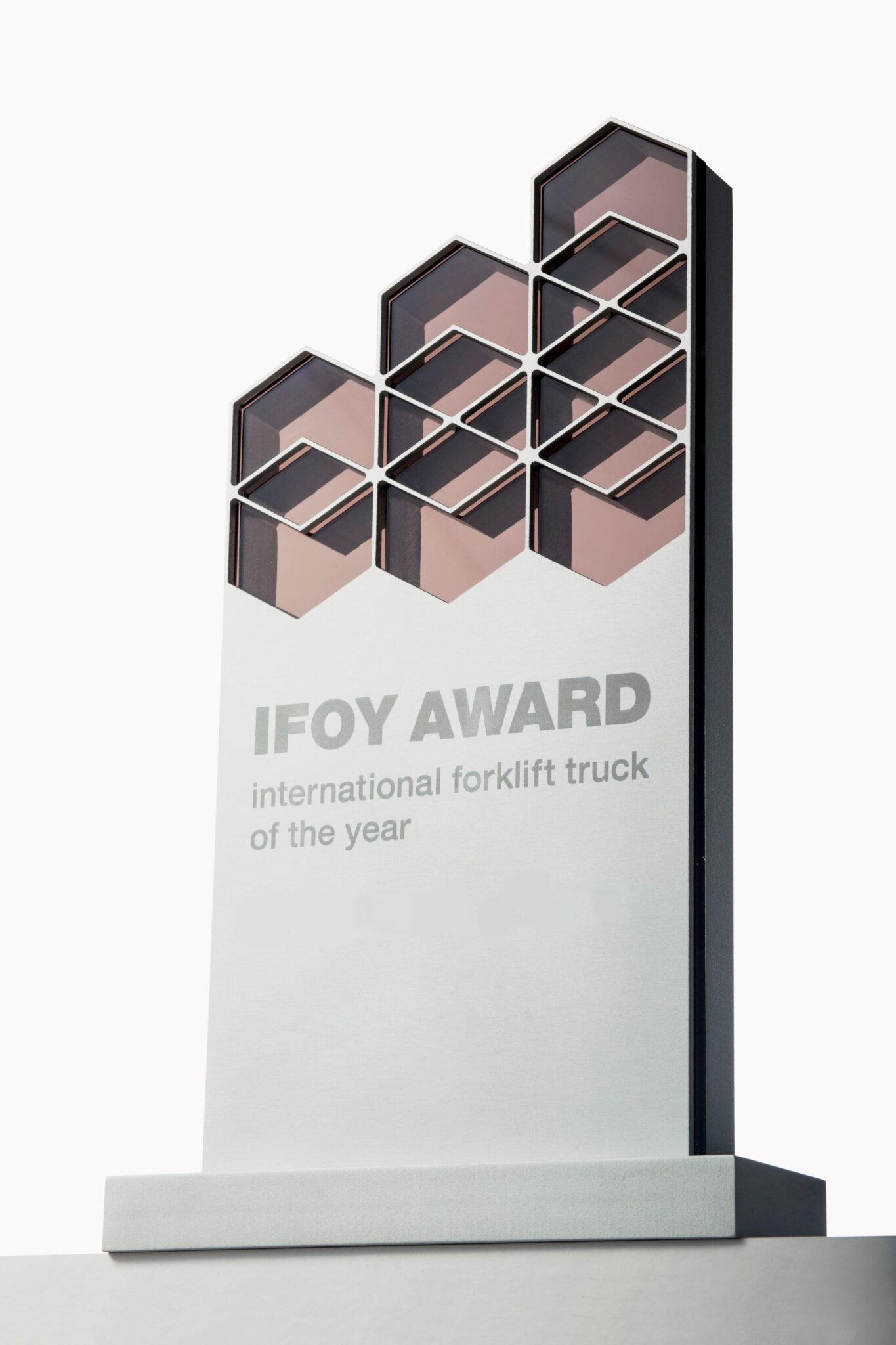
The winners of the IFOY AWARD 2023 have been chosen. Representatives of AGILOX, Crown, DS AUTOMOTION, HUNIC and STILL accepted the international intralogistics award from the laudators at the Award Night in the DortmunderU.

Jungheinrich took home two of the trophies, also known as the “Oscars of intralogistics”. A laudatory speech was given by: Dr. Johannes Söllner (Managing Director, Geis Industrial Services), Prof. Dr. Dr. h. c. Michael ten Hompel (Executive Director, Fraunhofer IML), Steffen Bersch (Chairman of the Board, VDMA Materials Handling and Intralogistics Association), Thomas Westphal (Mayor of the City of Dortmund), Bettina Baumann (Founder of Baumann Paletten), Udo Schmidt (Vice President Europe, Cascade Europe) and Peter Trapp (CIO, HGK Häfen und Güterverkehr Köln).

The International Intralogistics and Forklift Truck of the Year (IFOY) AWARD, which is held under the patronage of Dr. Robert Habeck, Federal Minister of Economics and Climate Protection, is known worldwide. In 2023, 21 companies with 23 products and solutions were finalists in the 11th round of the award – more than ever before.

“The jury made one of its toughest decisions in April, sending a signal for more technology in logistics. Already during the IFOY TEST DAYS, the outstanding level of this year’s finalists was evident, some of whom are streets ahead of their competitors on the market in terms of innovation and customer benefits. Their products and solutions will be the future benchmark for modern distribution centres,” says Anita Würmser, Executive Chairwoman of the IFOY jury.

The IFOY AWARD in the category “Automated Guided Vehicle (AGV/AMR)” was won by AGILOX with the AGILOX ODM. The omnidirectional dolly mover is a smart logistics robot for small load carriers. Thanks to X-Swarm Technology, the floor dolly solution autonomously finds the fastest route through the production or logistics environment. Among other things, the jury highlighted the autonomous functions for avoiding obstacles on the route very positively.

The winner in the category “Warehouse Truck highlifter” was Crown with the SP 1500 order picking truck, which scores points for performance, efficiency and ergonomics. The IFOY Innovation Check emphasises the “unique ergonomics with very many configuration options developed from studies directly at customers’ premises”. It also highlights “the use in different aisle widths, a unique individually adjustable operation as well as the excellent field of vision”.

In the “Intralogistics Software” category, DS AUTOMOTION took home a trophy for its ARCOS vehicle software. The IT makes it possible for the first time to have AGV and AMR fleets drive variably zone-based between fixed lane guidance, lane guidance with flexible avoidance as well as free navigation with a single flexible vehicle software (plannable autonomy). According to the jury, in combination with cooperative navigation, which enables the robots to take coordinated evasive action, the manufacturer offers a very efficient solution that can also integrate vehicles from other manufacturers via the VDA 5050 interface.

A total of five young companies competed for an award in the “Start-up of the Year” category this year. In the close race, HUNIC convinced the jurors in the end with the SoftExo Lift. The passive exoskeleton is an extremely lightweight yet effective lifting and carrying aid. Skilled workers are supported by up to 21% when lifting and carrying loads. The body is relieved of up to 50%. In addition, incorrect movements are pointed out to the user. According to the jurors, the great innovative leap lies in the design of the exoskeleton exclusively from elastic materials.

Jungheinrich won in the “Special of the Year” category with its “addedVIEW fork camera”. The fully digital fork camera with barcode scanning reduces storage and retrieval errors. It prevents incorrectly recorded goods or storage locations in the Warehouse Management System (WMS) and thus unplanned search times, returns or loss of goods. The camera reads barcodes directly at the storage location, compares them with the specifications of the WMS and marks correct and incorrect compartments in colour as the vehicle passes. Acknowledgement is made at the steering wheel. Although the individual technologies are not new in themselves, “the combination in this exemplary implementation is to be regarded as highly innovative”, according to the jury’s verdict.

Jungheinrich also took home a second trophy. Flexible, fast, efficient: with the PowerCube, Jungheinrich secured the win in the “Intralogistics Robot” category. In this automated compact tote storage system, access is possible from below, allowing for easier maintenance and variable ceiling heights. The jury highlighted several innovations, including the tote loading weight of 50kg and a quick-charge function for round-the-clock operation of the robots without downtime.

Intralogistics supplier STILL won one of the coveted awards for the EXH 16 in the ‘Warehouse Truck lowlifter’ category. The truck is part of the EXH 14-20 Plus series-hand-guided lowlifters and derivatives with additional lift for order-picking applications. The compact design together with the new functional tiller head and the resulting improvements in terms of operation and driving characteristics are classified as “undoubtedly new” by the IFOY Innovation Check. The EXH thus shows that innovations have not yet found their end in this vehicle class.

The IFOY AWARD honours the most innovative intralogistics products and solutions of the year. It has established itself as an indicator of cost-effectiveness and innovation and is regarded as the outstanding international innovation award in intralogistics due to its technical expertise. The basis of the decision is the three-stage audit–consisting of the IFOY test protocol comprising around 80 criteria, the scientific IFOY Innovation Check and the jury test. The decisive factor is that the nominees are not compared with each other, but with their competitor devices on the market.

During the IFOY TEST DAYS on the occasion of the TEST CAMP INTRALOGISTICS in Dortmund in March, all nominees went through the IFOY audit. For the fourth year in a row, numerous potential buyers were once again on hand at the TEST CAMP INTRALOGISTICS. The winners of the IFOY AWARD are chosen annually by an international jury of trade journalists.

The IFOY AWARD is sponsored by the German Conveyor Technology and Intralogistics Association and the Robotics + Automation Association within the VDMA. IFOY partners are Messe Dortmund and the world’s leading forklift attachment manufacturer Cascade. The IFOY AWARD’s pallet partner is CHEP, a world market leader in the pooling of pallets and containers. Logistics partner is LTG. Trailer partner is Fliegl Fahrzeugbau.

The application phase for the IFOY AWARD 2024 starts on 1st August 2023.


Redkik Partner to Speed Transactional Insurance

Redkik, a global software company with the mission to simplify and improve the supply chain with technology, has announced its collaboration with Cover Whale, an American commercial trucking insurtech.

Redkik enables coverage to be purchased at the time of booking a shipment, which better meets the fast-paced needs of the transportation industry. Through the affiliation, Cover Whale can act as a source for shippers and freight carriers to instantly access per-load cargo insurance through Redkik’s software.

Transactional Insurance

“Cover Whale has quickly become the go-to insurance provider for America’s truckers and plays an important role in the U.S. freight transportation network,” said Chris Kalinski, CEO and Founder of Redkik. “We’re honoured to work with the innovators at Cover Whale who have been at the forefront of commercial trucking insurtech, and who share our passion for saving time and money for all involved.”

“Cover Whale is always searching for tech solutions that help the transportation industry work better. Redkik streamlines the tedious process of attaining transactional insurance coverage for shippers and carriers,” said Dan Abrahamsen, CEO of Cover Whale.

Redkik is a global software company with the mission to simplify and improve the supply chain for all parties within logistics and transportation. Utilizing artificial intelligence and machine learning, Redkik’s technology manages and administers annual insurance policies and can generate instant quotes backed by leading insurance companies based on actual data sets, providing lower risk and higher coverage for any type of shipment.

IFOY Test Report: Youibot AT100

Tonight is the night when the winners of the 2023 IFOY Awards will be revealed at a ceremony in Dortmund. Alphabetically last, but certainly not least, we take an in-depth look at the AT100 warehouse fulfillment solution from Youibot Robotics.

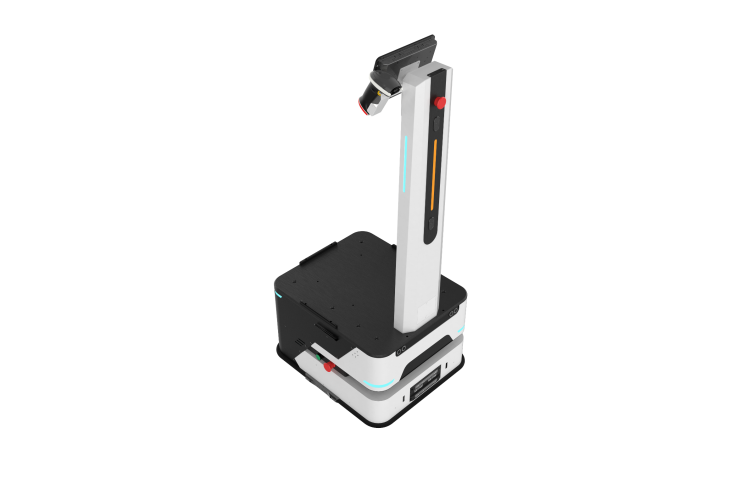
Youibot’s Automatic Trolley warehouse fulfillment solution utilises its brand-new assistance picking robot AT100 AMR and its robot fleet management system YOUIFleet to integrate with retailers’ and 3PL’s existing infrastructures and workflow and help them meet their increasing fulfillment demand, while ensuring a low ROI.

IFOY category: Automated Guided Vehicle (AGV / AMR)

IFOY Test Report

Youibot’s Automatic Trolley (AT) solutions are an automated alternative to manual picking on trolleys. Depending on the use and height of the order totes, the number of platforms on the trolley can be adjusted. The AT100, nominated for the IFOY AWARD, has a load capacity of 100kg.

While manual picking involves pushing the heavy trolleys through the warehouse by hand which often results in lost time due to the partly long walking distances, the Youibot concept works on the principle of zone picking. Each picker has his own picking zone, which the automated trolley passes when one or more order lines for the respective orders on the trolley need to be picked in that zone.

The orders on the trolley are grouped by Youibot’s Robot Picking System (RPS), which is connected to the customer’s WMS. The RPS also controls the robots in a facility. By using a central fleet management system (YOUIFleet), the risk of congestion and waiting times is minimised. YOUIFleet supports a maximum fleet size of 150 robots at one location.

For safe navigation through the warehouse, the AT100 uses the latest SLAM laser navigation technology. Because the AT100 knows the warehouse better than any employee, the robot always chooses the most efficient route to the next picking zone. One employee looks at the touch display to see how many items are to be picked at which location, scans those items with the trolley-mounted scanner, and then the display shows which order bin the goods are destined for. Once all orders in a zone have been picked, the operator confirms this via the display and the robot continues on its way to the next picking zone.

If the multisensor system detects an obstacle or a person, the robot stops automatically and the green light (ready for operation) changes to yellow. The standard safety distance is 300mm, but if a higher travel speed is desired, this distance can be adjusted. The maximum travel speed of the AT100 is 1.5m/s.

The system is CE certified and also complies with the latest US standard (ANSI/RIA R1508). This makes it one of the safest systems in its class.

The AT100 is equipped with a Li-ion battery that  ̶  when the robot is fully loaded  ̶  is good for up to nine hours of use. Incidentally, the battery is fully recharged within one hour. This enables trouble-free 24/7 use.

In addition, the AT100 provides an efficient and error-free picking process. With the same number of pickers, up to three times as many orders can be picked. For the pickers, walking distances are significantly reduced. In addition, working with the robots is more pleasant and less tiring.

IFOY test verdict: With the AT100, Youibot offers a good example of how “You, I and a robot” can work together harmoniously and effectively. Its load capacity of 100kg is one of the highest on the market. The AT100 minimises walking distances and human errors. It offers higher efficiency and accuracy and guarantees a lower ROI.

IFOY Innovation Check

Market relevance: Picking support vehicles have a large market as they can be applied in many operations. Automated transport of the picked items for one or more orders on a vehicle frees the picker from the heavy-duty pushing of order collection totes. Instead, the pickers remain in defined zones of the picking warehouse, where they take over the item removals from the provided assortment as soon as a vehicle enters the zone with its assigned orders.

Customer benefit: The AT100 has large, individually adjustable shelves and a load capacity that makes it suitable for a wide variety of combinations of larger orders and item weights. All-important functional and safety elements are well integrated into the vehicle and arranged in an easily accessible manner. The vehicle is very robustly built for its task and enables a very high usability value for its users.

Novelty / Innovation: The structure and the compact design are not exceptionally new for a vehicle supporting order picking. However, the very good design with versatile adjustable shelves and the robust design, which seem appropriate for the application, make the unit stand out in this market segment. However, the software for controlling a fleet of AT100s is limited to routing the vehicles through predetermined zones and does not highlight the potential to guide vehicles and order pickers dynamically and thus order-dependently to each other in an order-picking warehouse.

Functionality / Type of implementation: The aforementioned features of the vehicle and fleet management offer good functions for increasing performance and ergonomics in order-picking warehouses. For the sometimes challenging operation in order-picking warehouses, the vehicle offers recognisable reserves in terms of stability and robustness.

Verdict: Picking support vehicles have a large market as they can be used in many businesses. The vehicle is robustly built for this task and promises very good benefits for users. The structure and compact design with adjustable shelves is not exceptionally new but offers good functions and features for the user.

Market relevance +
Customer benefit ++
Novelty / Innovation Ø
Functionality / Type of implementation +
[KEY: ++ very good / + good / Ø balanced / – less / — not available]

Seven Theses on Ergonomics in Logistics

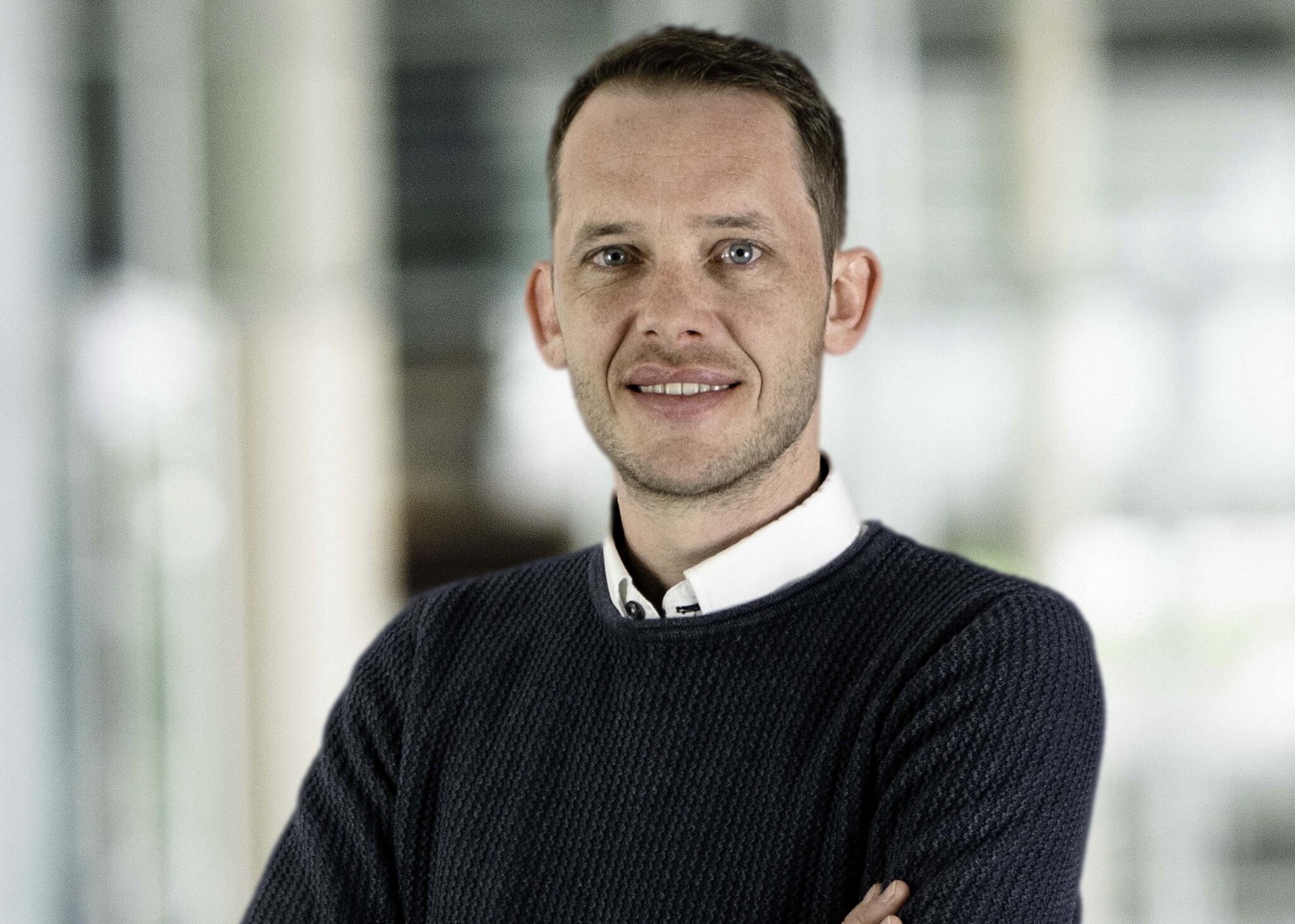
Johannes Schweiger (pictured) is managing director of Witron Service GmbH + Co. KG and talks about ergonomics in logistics and the distribution centre.

Schweiger has been with WITRON for ten years. In the interview, he explains that a distribution centre is a holistic structure where economical, ecological, and social factors have to be harmonized in order to generate sustainable competitive processes for the operator in the long term: Premium customer service, high availability, leading-edge work processes for employees, resource-friendly processes for nature and the environment. Equally important, he says, is a sound service, maintenance, and operator concept. In accordance with high-performance mechanization, the human-machine interface plays a decisive role here. On this issue, he initiates an important discussion: It’s not just physical ergonomics that matters. Cognitive ergonomics is the challenge facing the industry. The Upper Palatinate states seven theses:

1. Ergonomics is no longer a complementary feature. In the past, many companies associated ergonomics primarily with the issue of maintaining the performance of older employees. Those days are over. “We operate in a labour market. Those who can’t meet basic ergonomic requirements no longer have a chance to present themselves on the market as an attractive employer”, Johannes Schweiger says. “It’s important to provide employees with a healthy, efficient, sustainable, and safe working environment on a permanent basis.”

2. Intralogistics has been very successful for years in automating manual activities and thus sustainably improving ergonomics within the internal and external supply chain. Here, WITRON was one of the pioneers in the industry, as we have been working intensively for more than 20 years on how to minimize the lifting and carrying of heavy loads for employees in the distribution centre. But now the range of tasks continued to change, and we have to face this challenge as well: How do employees stay fit and what new ergonomic requirements are emerging? Cognitive ergonomics is increasingly becoming a major issue. How do we manage to make the amount of available information user-friendly and useable in a reasonable way in order to avoid information overload? How, for example, must future user interfaces or tools be designed? What will still be accepted by a new generation of employees?
3. “Technical” ergonomics is important. But cognitive ergonomics and UX will become increasingly important. Because well-designed, ergonomic workstations – both in terms of workplace design and their efficient and flexible operation – are a decisive selling point with customers. With better interfaces we create process stability, faster employee onboarding, and positive identification with the workplace, while reducing workload. “Our onsite teams only work with the best tools. Why should this be any different for software in the future? For example, with our on-demand service tool WITOOL, the handling and documentation of all active and proactive service and maintenance work becomes much more transparent, both in terms of organization and execution. Even with the new Beckhoff controls, WITRON has many more options in this area. And the inspirations come from the teams. “They are the source of ideas and critical testers”, Johannes Schweiger says. “The day-to-day experience of more than 4,000 WITRON employees on site in customers’ distribution centres is continuously incorporated into the development process of future mechanics, IT, and material flow optimization. A know-how transfer that benefits our logistics designers, design engineers, developers, and of course our customers.”

4. Despite all automation, there will still be people in the logistics centre in the future. WITRON therefore constantly optimizes walkways in addition to activities such as lifting or carrying – supported by modern software. “If we need an additional cross-over or platform, then we design it”. New logistics centres consider future routes for maintenance teams already in the layout. “We want to avoid team members having to climb a lot. That’s why we optimize the positioning of critical components such as motors, for example. Ergonomics already starts with the accessibility of all system components”, Johannes Schweiger adds. Those responsible at WITRON speak of construction optimization. Even though automation has already fundamentally improved ergonomics for many picking tasks, manual picking systems still exist. There, too, software plays a decisive role in optimizing routes. “We basically consider ergonomics in the entire supply chain end-to-end in our logistics solutions”. Innovative processes not only improve the working conditions of in-house logistics staff. They also sustainably optimize the working conditions of truck drivers or store stocking teams.”

5. Ergonomics in logistics centres has significantly improved over the past five years, Johannes Schweiger says. Customers are investing in daylight, air conditioning, and noise reduction as well as in minimizing unergonomic physical working conditions. “This is a crucial point that is often overlooked”, says the WITRON managing director. In the fresh and frozen food sector, full automation is gaining ground in order to further reduce the length of stay for people there to what is absolutely necessary. Social and cultural factors are also increasingly incorporated into the design of ergonomic workplaces and processes.

6. Working from home is attractive for many employees, “but from an ergonomic point of view, it’s probably a step backward”, Johannes Schweiger explains. That’s why, in his view, mixed models are more advanced. And companies would also have to think about their workers. “Home office is difficult for service teams, for example. Rotating shift work is not ideal from an ergonomic point of view. That’s why we are dealing intensively with possibilities to make it more flexible and reduce the strain.” For example, the first onsite teams are working on a common shift model to achieve more flexibility for each team member.

7. Cognitive ergonomics is the challenge of the next few years according to WITRON. New tools such as AR or AI have potential to sustainably change work in the logistics centre. But especially for the field of AI, there is still a lack of explanation for decisions made by the system. “We expect a lot from technology, but we have to think it for people and design it as a tool.”

Fleet Tracking for Long Haul Truck Deliveries

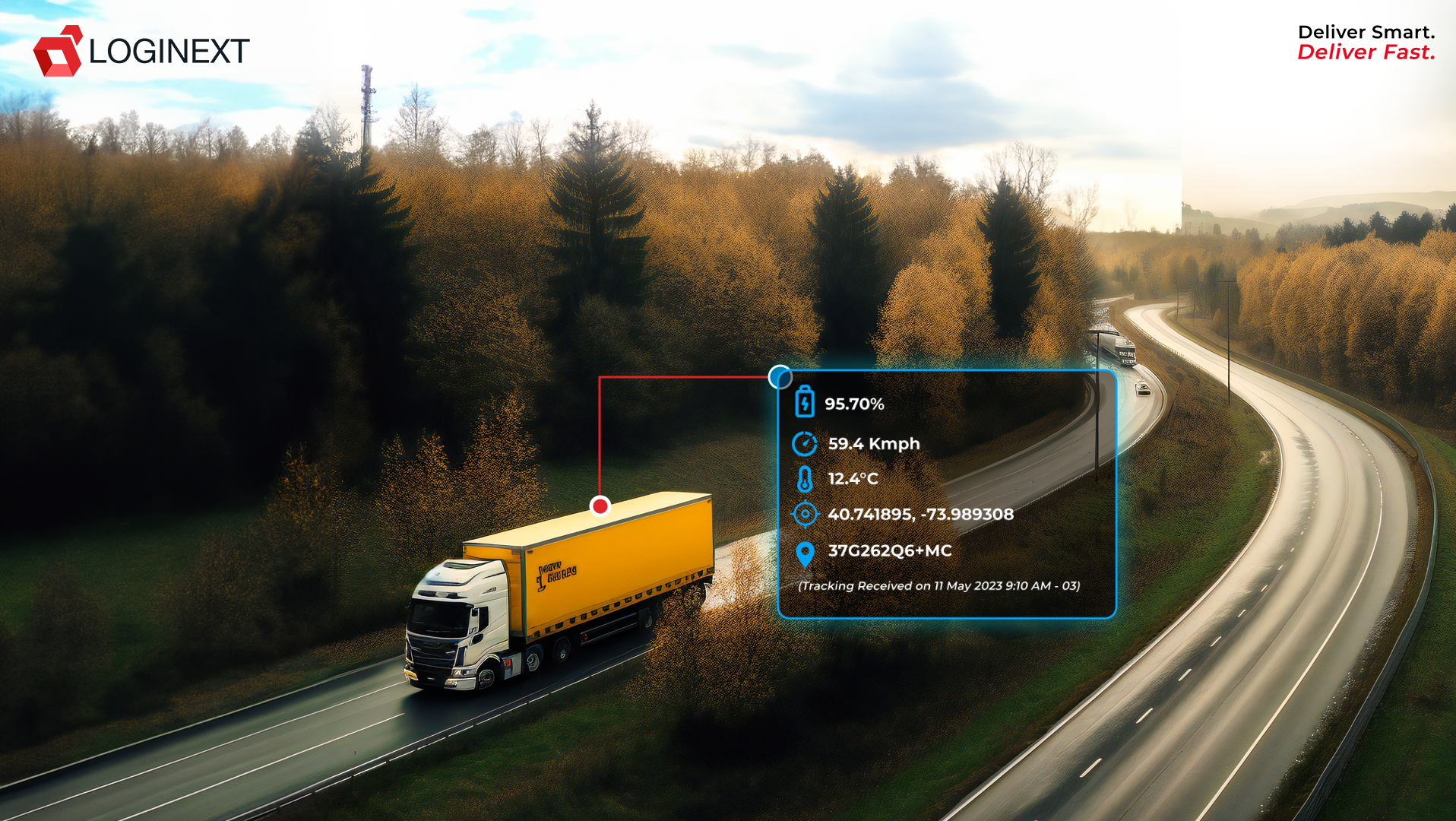
LogiNext, a logistics automation firm, announces the launch of ‘Tracking 2.0’ for long haul truck deliveries. The product is introduced to offer real-time alerts for any anomalies or deviations and share visibility on transport fleet performance through multiple indicators tracked in real-time. Through such features, LogiNext aims to minimize risks involved in the logistics industry, while helping enterprises to optimize their delivery operations.

LogiNext Fleet Tracking is built with data mapping and data analytics services, bridging the gap between technology and trucking. This makes it possible to track end-to-end long haul movement via a single platform. Enterprises can now track vehicle data tracking points like GPS location, fuel consumption, updates on truck movement, temperature of holds and much more. LogiNext has released this product with new features for the industry, offering a set of proactive alerts that promises enhanced visibility and proactive risk mitigation for long-haul fleet operations via a single control panel.

“LogiNext’s Fleet Tracking functionality can help identify and address various challenges faced by the logistics industry. We have seen interest from our existing enterprise customers on adopting this functionality for varied use cases including temperature tracking for cold chain deliveries, enhanced security management of their critical long haul deliveries, and many more. We are working towards creating impactful outcomes from this technology, as a part of our vision to make the industry safer and efficient.” said Dhaval Thanki, Vice President – APAC & MEA, LogiNext.

With visibility on KPIs like tracking vehicle location, harsh braking, speed, driver seat-belt status and door open status, the software would provide alerts to notify central teams of any deviations, delays or anomalies in fleet movement. The temperature sensor data tracking would help healthcare and food cargo carriers to ensure that the high value cargo maintains its integrity during the long-haul fleet movement.

Based on historical data, enterprises can make better & informed decisions around fleet operations planning with an aim to reduce the risk of anomalies and optimize the fleet performance.

By bringing end-to-end tracking of fleet operations, LogiNext aims to contribute to an efficient and safer long-haul logistics operational practice for the industry.

With real-time alerts for any anomalies and visibility into truck performance, the new product uses latest data analytics technologies to reduce anomalies and make fleet operations more efficient across the globe.

Innovations to Orchestrate End-to-End Supply Chain

At its annual customer community conference Kinexions, Kinaxis Inc., a leading provider of supply chain management solutions, unveiled new product innovations spanning the end-to-end supply chain. Delivered during the Day One keynote, these innovations aim to empower businesses with the transparency, control and agility they need to navigate today’s volatile business landscape.

“The days of the cascaded flow of information passed down between teams are long behind us,” said John Sicard, President and CEO at Kinaxis. “Today, CEOs and boards of directors are demanding their supply chains operate in real time and with one view of information across planning and execution. The innovations we announced today make it easier for teams to collaborate and make decisions, as well as narrow the gap between planning and execution, to create both resiliency and efficiency at scale.”

End-to-End Supply Chain Orchestration

The product innovations unveiled include:
• Enterprise Scheduling, the first and only scheduling tool on the market to allow companies to create and manage a globally integrated production scheduling strategy that accounts for all plant layouts. Leveraging industry best practices, Enterprise Scheduling allows companies to orchestrate production across sites and create a comprehensive, feasible and efficient manufacturing schedule.
• Supply Chain Execution (formerly MPO) capabilities, including transportation management, order management and returns management, are now integrated with Supply Chain Planning, eliminating the siloes that exist between planning and execution. These new capabilities will empower businesses to drive supply chain orchestration from plan through delivery across all horizons, whether managing multi-year or down-to-the-second execution.
• Sustainable Supply Chain, a new solution that allows companies to embed emissions factors (including Scope 3 emissions) directly into RapidResponse® to design scenarios that will estimate, project and simulate supply chain related CO2e in real time. Not only does Sustainable Supply Chain create visibility into emissions data, but it also empowers planners to understand its impact in seconds.
• New intuitive features within Demand.AI, an advanced application within Planning.AI, will allow companies to better understand how both internal and external factors are influencing demand for their products and be able to quickly adjust plans to take advantage of these changes. Planning.AI is an analytical approach and part of the Kinaxis RapidResponse platform.

“Kinaxis has continually been on the cutting edge of what is needed and possible for supply chains,” said Robert Kugel, SVP and Research Director at Ventana Research. “The introduction of Enterprise Scheduling, Sustainable Supply Chain, and new AI capabilities for Demand Planning, are major improvements for companies. It furthers their ability to have transparency, control, and agility within their supply chains, equipping them with that they need to manage today’s disruptions.”

In addition to Planning.AI, Kinaxis is working to bring future innovation to supply chains as the only supply chain management company and industry partner of the National Science Foundation AI Institute for Advances in Optimisation (AI4OPT).

“Supply chains are growing increasingly larger, and they are expected to be more resilient and sustainable than ever before,” said Pascal Van Hentenryck, Director of AI4OPT. “As a leader in the field, Kinaxis is ideally positioned to understand these fundamental challenges through their RapidResponse technology. Kinaxis, in collaboration with AI4OPT, is exploring how the fusion of machine learning and optimisation may bring a step change in capabilities for the next generation of supply chain management systems.”

Pascal Van Hentenryck is the A. Russell Chandler III Chair and Professor, and the associate chair of innovation and entrepreneurship in Technology at the H. Milton Steward School of Industrial and Systems Engineering at the Georgia Institute of Technology.

Everyday volatility and uncertainty demand quick action. Kinaxis® delivers the agility to make fast, confident decisions across integrated business planning and the digital supply chain. People can plan better, live better and change the world. Trusted by innovative brands, we combine human intelligence with AI and concurrent planning to help companies plan for any future, monitor risks and opportunities and respond at the pace of change. Powered by an extensible, cloud-based platform, Kinaxis delivers industry-proven applications so everyone can know sooner, act faster and remove waste.

Digital Transformation of Operations Reshape Worker Experience

Today, at its Beyond conference, Samsara Inc. (NYSE:IOT), announced product innovations designed to reshape the worker experience for organizations managing complex physical operations. The conference, which runs June 21-23rd in Austin, Texas, is one of the largest gatherings of leaders and innovators across physical operations, a wide range of industries all powered by frontline workforces who are vital to keeping the global economy running.

The digital-first tools showcased by Samsara today – from Virtual Coach, a new coaching aid that reaches drivers when and where they need it, to Mobile Experience Management, a lifeline for workers in the field to get help from the back office – empower employees with personalized, connected, and integrated experiences to help them operate more safely and efficiently.

“We have had tremendous momentum as our AI-powered platform drives real business impact for our customers,” said Sanjit Biswas, CEO and co-founder of Samsara. “Our customers’ frontline workers keep the world running – from the construction crews and field service technicians, to loading dock workers and truck drivers. With ongoing labour shortages and the next generation of the workforce demanding digital tools, we are helping make these jobs easier, safer, and more efficient. The next wave of digital transformation is happening now.”

Empowering workers with personalized, connected, and integrated experiences Serving tens of thousands of organizations across North America and Europe, Samsara’s customer base crosses a diverse set of industries and includes many of the world’s biggest construction, transportation, waste management, and wholesale and retail companies. Samsara’s Connected Operations™ Cloud is already contributing dramatic improvements to workers in these industries – using AI to prevent over 120,000 crashes in 2022 alone, and digitizing more than 23 million documents to save thousands of hours of paperwork. Today, Samsara has announced new innovations that continue reshaping the worker experience and driving results, which include:
● Mobile Experience Management (MEM): Workers doing demanding jobs in the field need mobile devices to be a lifeline, not a distraction. MEM is a software solution that simplifies mobile management at scale so workers stay safe, connected, and productive. With MEM, employees can get customized support – like remote training and live troubleshooting – through their mobile devices, all while keeping them safe by reducing unnecessary digital distractions.
● Virtual Coach: Improving road safety requires timely insights to inform the coaching of risky driving behaviour. Instead of drivers having to wait for in-person feedback, Virtual Coach empowers them to self-coach directly from the Samsara Driver App anywhere, anytime. This
makes it easy for managers to personalize coaching experiences at scale, improving both road safety as well as driver engagement and retention.
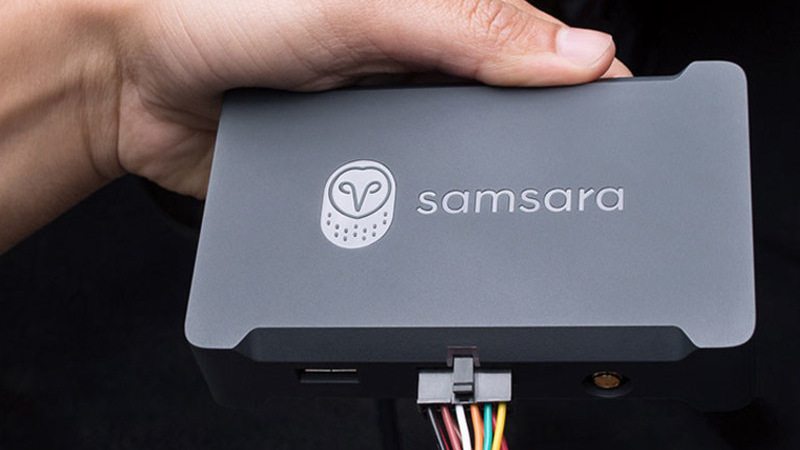
● Smart Trailer and Asset Tracking solutions: Powerful insights from trailers and assets – such as utilization, temperature, and location – are hard to act upon when they live in siloed systems. With next-generation Asset Gateways, Samsara can connect and extend this visibility to drive better outcomes. The new Find My Asset feature allows managers to quickly find lost or stolen high-value unpowered assets – saving substantial time and money. In addition, a new two-way cloud integration with Thermo King’s TracKing® Telematics makes it possible for customers to not only monitor, but remotely control, their Thermo King reefers from the Samsara dashboard.
● Data Connectors: Driving better business outcomes is challenging when your data lives in separate, third-party platforms that aren’t able to work together. With new data connectors including Fivetran, Kafka, and Power BI, Samsara data is easily streamed to power business
applications and workflows. This holistic visibility empowers everyone within your organization to make data-driven decisions and improve the bottom line.

“We know that data is essential in today’s environment to drive better business outcomes – whether that’s lowering emissions, preventing accidents, or automating workflows. Empowering the people within your organization with the right digital tools is critical to achieving these outcomes,” explained Jeff Hausman, Chief Product Officer at Samsara. “All of our announcements made today are reshaping this worker
experience for customers and enabling them to achieve meaningful digital transformation of physical operations, now.”

Mobile Experience Management is now available for purchase in early access for customers across the U.S. and Canada. Virtual Coach is now available in beta for global customers.

Also at Beyond ‘23, Biswas announced Samsara Ventures – a new investment fund to support visionary companies building innovative solutions throughout the connected operations ecosystem. Samsara Ventures focuses on portfolio companies that are aligned with Samsara’s mission to increase the safety, efficiency, and sustainability of the operations that power the global economy. Along with monetary
investments, Samsara Ventures will provide mentorship from Samsara’s leadership team, access to Samsara’s community of customers and ecosystem partners, and the unique opportunity to build and scale solutions in connection with Samsara’s Connected Operations Cloud.

Physical operations industries are the backbone of our economy, and Samsara has been innovating from the start to help these organizations succeed,” said Biswas. “We’re excited to extend our commitment to the connected operations ecosystem with Samsara Ventures. Beyond investing in industry-wide innovation, we also recognize how valuable these advancements can be for our customers, who are often looking for solutions to many of the challenges these companies are solving for.”

IFOY Test Report: Volume DIVE

Our penultimate look at all the finalists ahead of the IFOY Awards ceremony in Dortmund on Thursday June 22nd brings the DIVE storage and packing system from Volume Lagersysteme GmbH under the microscope.

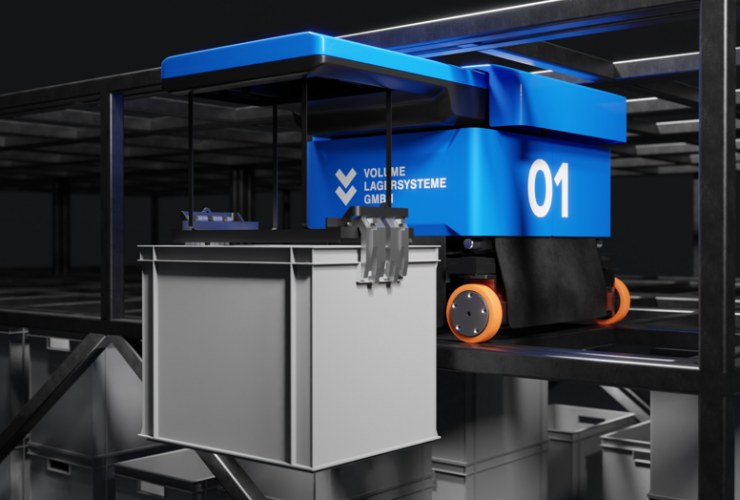
Volume DIVE is a patented robotics-based storage and picking system for standard Euro bins and beverage crates, developed for quick commerce. The throughput can be flexibly scaled up to 4,000 bins/h. Instead of long restacking, they can be accessed quickly. Lifters are not required, as the robots can place the bins directly on the floor. In the smallest version, Volume DIVE takes up only 16 sq m. The individual modules fit through any normal store door.

IFOY category: Intralogistics Robot

IFOY Test Report

Volume DIVE is a newly developed storage and picking system for urban retail and delivery services. Despite its compactness, fast access to each container is possible with minimal restacking. This creates the conditions for a throughput of up to 4,000 totes per hour. This makes the development suitable for quick-commerce applications, but also an alternative for e-commerce and classic miniload applications. The system consists of the mobile robot (Snapper), the rack (Speedrack) and the load carriers (standard euro containers or beverage crates).

The Speedrack is made up of several modules of 48 small containers each and can be extended as required. Heights of up to 14m are possible. Fire protection can be ensured by sprinklers on the moving levels. Levelling via adjustable feet allows the system to be erected on any floor. The lithium-ion Snapper, the battery supplied with power without contact at charging stations, travels at up to 3m/s and can store and retrieve containers across the entire level. With the aid of a 360° rotating gripper unit, the robot can pick up or deliver totes with or without recessed grips on all four sides, at any position including the floor. Due to the stacking height of three load carriers, stock is only transferred once on average.

Standard beverage crates and euro containers in sizes 300×200, 400x300mm (weight: up to 25kg) and 600x400mm (weight: up to 35kg) can be used as load carriers. Containers of different heights can be stocked within a tower, as can loading aids already available to the operator. There are no restrictions due to picking ports, as containers can be loaded and unloaded at any balcony position in the warehouse. Transfer to conveyor systems is possible, but not necessary. Volume DIVE can be used as a small parts storage and picking system for slow-moving C-items up to the handling of A-items. This makes the new development an alternative to miniloads with stacker cranes or shuttles. The integration into containers enables further applications.

An extension in length, width and height can be realized. The performance can be scaled by the number of snappers. Due to the access times, Volume DIVE is the suitable storage system when a C-item seasonally becomes an A-item. The setup is simple. The material can be brought in through normal doors, so Volume DIVE can be used in existing retail stores, for example. Due to the start-up on a weekend, for example, the future operator is not impaired in his regular operations.

IFOY test verdict: Volume DIVE is a patented robotics-based storage and picking system for standard euro containers and beverage crates. Throughput can be scaled up to 4,000 totes per hour. Three totes are stacked on top of each other on one shelf level. This eliminates time-consuming restacking of the totes. Lifters are not required, as the robots can place the totes directly on the floor. In the smallest version, Volume DIVE occupies an area of just 16 sq m. The modules fit through any normal store door. Existing standard containers can be used and are allowed to leave the system.

IFOY Innovation Check

Market relevance: Volume DIVE can come up with an extraordinary range of application areas. In addition to the typical applications in retail and production, it can also be used as a micro-hub in urban areas or nano-storage in boutiques, as a container-based material store on construction sites or as a refrigerated beverage storage facility, as well as a module for sorting empty goods. The scalability, flexibility and modularity, from the smallest warehouse with a footprint of 16 sq m to large warehouses, from room heights up to 14m, as well as the extremely short assembly time, leads to expect a high market relevance. Initial customer solutions have been reported with an ROI of less than one year.

Customer benefit: Due to its modular design, the system can offer maximum flexibility and scalability, both in terms of size and shape of the warehouse and in terms of performance characteristics. Unlike the market leader in compact vertical storage systems, AutoStore, Volume DIVE operates with picking robots on different levels, allowing both short access times of up to six seconds and high throughputs of up to 6,000 accesses per hour simultaneously. The pick robots themselves are said to be less expensive than AutoStore. Volume DIVE can be operated with any standard Euro containers of various heights and even beverage crates, which can also be used outside the system. Set-up time is extremely short, at one weekend, and add-ons can be made on the fly.

Novelty / Innovation: Despite similarities to well-known vertical storage systems, significant innovations have been implemented in terms of technology and process design. The pick robots have a 360° swivelling gripper with universal gripping fingers for standard Euro containers and beverage crates weighing up to 35kg, which can be placed anywhere around the warehouse system or transferred to conveyor systems or AGVs. The extreme modularity enables fast commissioning, any warehouse geometry with heights up to 14m, and scalable performance values depending on the number of robots. Sprinkler systems can be installed in every intermediate level, which is impossible with comparable vertical storage systems.

Functionality / Type of implementation: The technical implementation is of high quality and yet cost-effective. The very reliable and universal gripping mechanism, which could be tested with different containers, is to be emphasised. The robots are said to be able to act very quickly at up to 3m/s and can also be used down to -20°C in the freezer range. However, the rotating wheels of the undercarriage could be aware factor and affect the robustness. The system only requires a 230V electric power.

Verdict: Volume DIVE is a very versatile, flexible, and highly scalable automatic small parts storage solution. The very fast access times, the use of a wide variety of standard containers and beverage crates, the flexible placement and pick-up of containers around the entire system, the modular design and the quick and easy start-up over the weekend make the system suitable for an exceptionally wide range of applications.

Market relevance ++
Customer benefit ++
Novelty / Innovation +
Functionality / Type of implementation ++
[KEY: ++ very good / + good / Ø balanced / – less / — not available]

Subscribe

Get notified about New Episodes of our Podcast, New Magazine Issues and stay updated with our Weekly Newsletter.