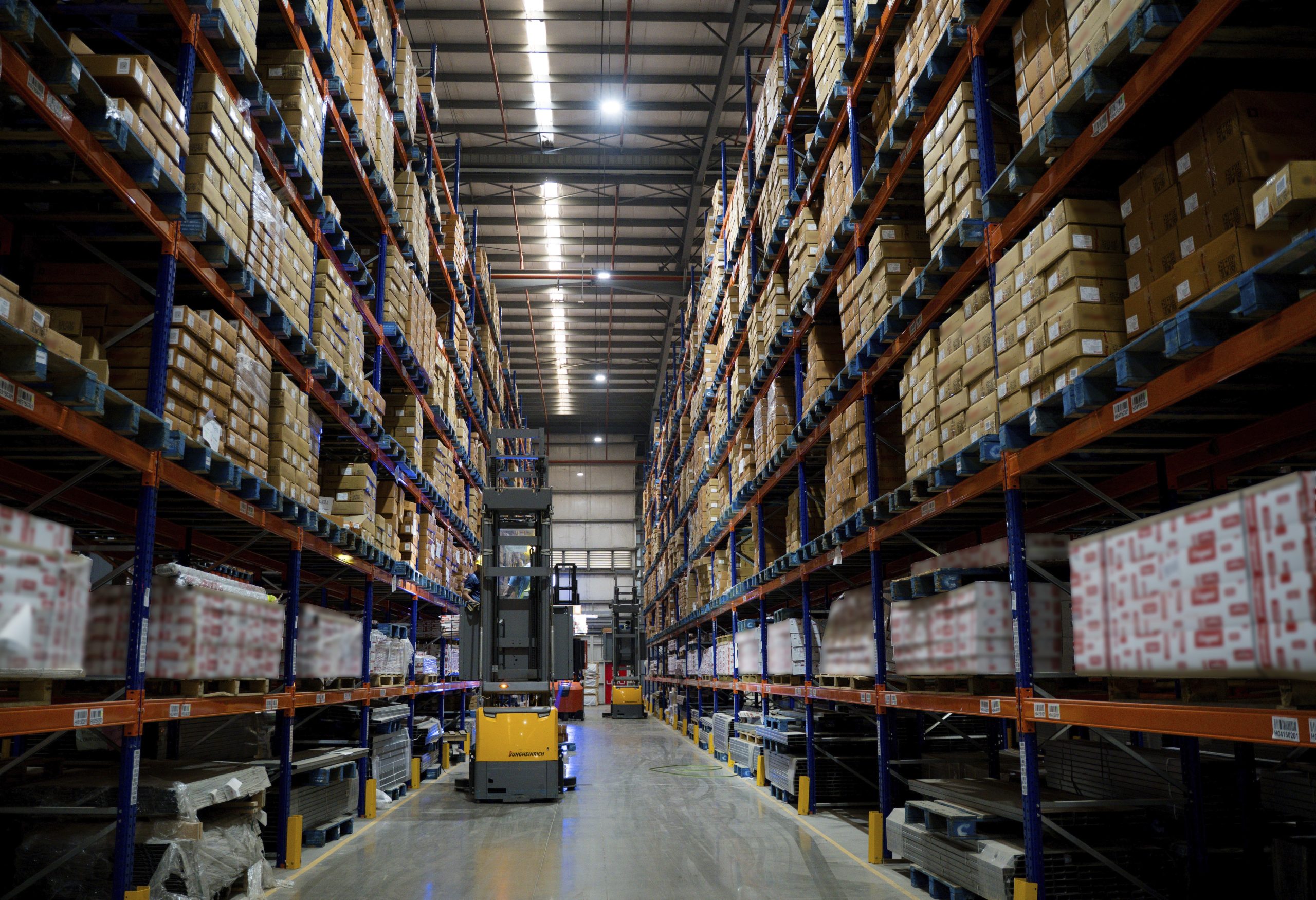
U.S. company Invar, a specialist in warehouse and order fulfillment solutions, merges with Storage Solutions, a Jungheinrich company. The acquisition marks another strategic milestone in Jungheinrich’s expansion in North America and enhances its global footprint as well as its automation business.
Invar, headquartered in Atlanta, Georgia, is a successful U.S. system integrator and software specialist for warehouse automation. Since 2007, the company has built a strong reputation for delivering tailored, automated solutions that combine consulting, design, simulation, project execution, and after-sales expertise with its proprietary Warehouse Execution System (WES). With a team of 50 experienced professionals, Invar serves a growing U.S. customer base with a strategic focus on companies seeking integrated warehouse design, advanced Warehouse Execution System capabilities, comprehensive project execution, and reliable after-sales service.
For Jungheinrich’s subsidiary Storage Solutions, the acquisition marks a strategically significant milestone: The combined expertise of both companies enables the efficient and scalable delivery of customized automation solutions. With a clear focus on mobile AS/RS, the integration positions Jungheinrich as one of the leading integrators in this segment in North America and beyond. By integrating Invar, Storage Solutions expands its operational footprint with two new locations in Atlanta, Georgia, and Erlanger, Kentucky, securing direct access to new customer segments and local integration capabilities tailored to the U.S. market.
The acquisition of Invar is another logical step in the implementation of Jungheinrich’s Strategy 2030+, which envisions targeted investments in automation solutions and the expansion of the North American business. Dr. Lars Brzoska, Chairman of the Board of Management of Jungheinrich, explains: “Automation is one of the fastest-growing segments in material handling, and mobile AS/RS solutions are at the forefront of that growth. Therefore, the acquisition of Invar is an important strategic step to strengthen our U.S.-automation platform and showcases a great example of how our U.S. subsidiary Storage Solutions brings our strategy 2030+ to life.”
“We are excited to join forces with Storage Solutions and Jungheinrich,”
says Ken Matson, President of Invar.
“Our combined expertise and capabilities, as well as our shared commitment to quality, innovation, and customer-centricity, will enable us to accelerate innovation and deliver even greater benefits to our current and future customers.”
Infios, a global expert in intelligent supply chain execution, has announced a collaboration with AWS to integrate generative-AI agents into Infios Order Management (Infios OM). The partnership with the AWS Generative AI Innovation Centre reinforces Infios’s leadership in defining the next era of supply chain.
Infios OM serves as the brain of the supply chain. It addresses evolving customer speed and convenience needs, viral channel expansion and demand shifts while orchestrating the supply chain to ensure that every promise made is a promise kept. Together, Infios and AWS are reengineering this core function with embedded AI agents to simplify ownership and increase the precision of order management. Powered by AWS’s generative AI, including Amazon Bedrock and Strands Agents, this will bring enterprise capabilities to all.
Infios and Amazon Web Services Join Forces
“Together with AWS, we’re redefining what order management can do for customers,” said Eugene Amigud, Chief Innovation Officer. “We’re building intelligent agents that now proactively detect and resolve anomalies during fulfilment, rebalance orders across networks and predict delivery times before issues arise. The result is that our customers will have simplified workflow orchestration to make every order more predictable, every decision more intelligent and every fulfilment flow more connected. This means faster onboarding for 3PLs, dynamic channel expansion for retailers and the ability for distributors to stay ahead of supply and demand disruptions.”
With purposeful innovation, Infios and the AWS Generative AI Innovation Centre identified opportunities for agentic automation in order and fulfilment management. Set to launch in early 2026, the collaboration is focused on creating AI-driven workflows in Infios OM that:
• Simplify onboarding and configuration of workflows • Generate visual representations that experts can review and refine • Provide proactive anomaly detection and optimal outcomes
“Infios is taking a bold step in turning orchestration into intelligence,” said Taimur Rashid, managing director of generative AI innovation and delivery at AWS. “Together, we’re laying the groundwork for workflows that learn, adapt and execute with the speed and intelligence modern supply chains demand. By leveraging AWS’s cloud and AI capabilities, Infios is enabling supply chains that evolve as fast as the markets they serve.”
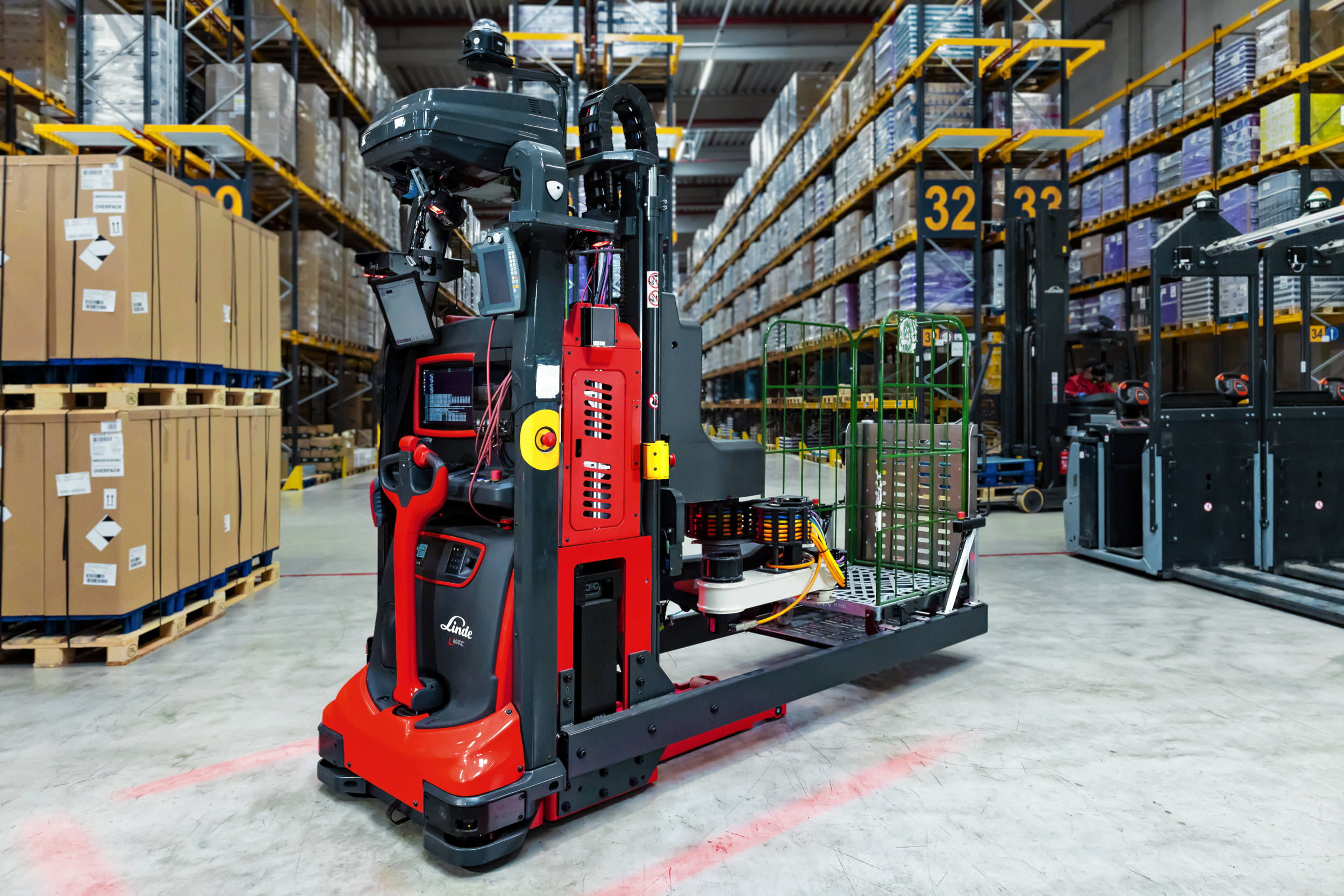
At the Linde Automation Summit in Aschaffenburg on November 12–13, 2025, intralogistics specialist Linde Material Handling and ROSSMANN, one of Europe’s largest drugstore chains, will present an innovative robotic vehicle for autonomous order picking in warehouses. The Linde Robotic Case Picker (RoCaP) is equipped with a multi-axis gripper arm that picks individual packages from the rack and place them on an integral carrier. Following a successful test phase, ROSSMANN is moving forward with its first vehicle investments.
As any warehouse manager will confirm, order picking from mixed pallets or roll containers is among the most labour-intensive tasks in a warehouse. For many years, companies have been seeking solutions to automate the manual consolidation of orders on pallets or roll containers. The underlying objective is twofold: to reduce the workload for employees and minimize errors while also addressing the increasing labour shortage in the warehouse sector. The innovative Linde RoCaP promises to bring a breakthrough in automating this task.
RoCaP as a game changer
In March of this year, the preliminary development of the new robotic vehicle was completed at Linde MH. The next milestone was to validate the marketability of the innovative vehicle in a customer’s operation under realistic conditions using the proof-of-concept approach. The concept garnered immediate attention from ROSSMANN, an international family-owned company, that had long sought a solution to relieve the burden on employees, particularly when picking outer packaging weighing up to 25 kilograms. Initially, the company-specific requirements for utilization in ROSSMANN’s regional warehouse in Burgwedel were established. This was followed by several weeks of testing, after which those responsible at ROSSMANN were pleasantly surprised.
“The Linde RoCaP has the potential to represent a significant advance in warehouse logistics. It can help address the existing shortage of skilled workers and relieve employees of physically demanding tasks,” says Hendrik van Duuren, Managing Director of ROSSMANN Logistics.
The collaboration with ROSSMANN is extremely valuable for Linde MH, too. “Collaborating with our customers to further advance the vehicle will ensure long-term market success,” asserts Frank Wiezorek, Senior Director of IKA Solutions for Linde MH. The partnership with ROSSMANN places emphasis on meeting the needs of the highly significant retail segment.
A vehicle packed with high-tech features
The new Linde RoCaP is based on the Linde L-MATIC HD, an automated pallet stacker with a load capacity of 1.6 tons and a travel speed of up to 7.2 km/h. The vehicle, navigation, and safety technologies, as well as the battery compartment, lift mast, and automation arch, are the same as those of the series vehicle. This ensures cost advantages and robustness. A new feature is the four-axis intelligent robotic arm. Permanently attached to the fork carriage, it picks the packages and places them on the goods carrier. The load-bearing device for roll containers was specifically designed for use at ROSSMANN. It is supported by steel struts and also features a folding ramp attached to the vehicle. This allows the roll containers to be pushed up and down, while at the same time securing them firmly in place during transport.
The Linde RoCaP receives its orders from ROSSMANN’s warehouse management system via a server interface. The RoCaP management system utilizes various parameters to determine the next shelf location, including the size and weight of the order items and the optimal route. Upon arrival, the robot’s gripper arm is deployed. The device is equipped with a 3D camera that incorporates AI chips from NVIDIA. The camera recognizes the pallets in real time, verifies their accuracy, conducts an optical measurement, and delineates the three-dimensional ‘workspace’. This is followed by a complex surface scan. It determines the exact location of the packages on the pallet and which package to select according to defined operational specifications. The robotic arm then utilizes special vacuum technology to grasp the package, lifting it into the desired position.
Ideal for use in brownfield sites
“The collaboration with ROSSMANN has demonstrated the significant potential of the Linde RoCaP. We now aim to build on this potential together with the customer, who operates almost 5,000 stores across Europe,” says Peter Krumbholz, project manager in the Advanced Robotic Solutions division, who is overseeing development of the Linde RoCaP for the Linde brand. The time-consuming manual picking process in the ROSSMANN warehouse will now be gradually reduced – for the sake of enhanced safety, efficiency, and throughput.
The Linde RoCaP is designed for adaptability, making it suitable for integration into other warehouses and distribution centers. “The modular concept allows us to equip other automated vehicle models with the gripper arm as well,” explains development engineer Krumbholz. “It is ideally suited for automating brownfield sites with established warehouse layouts and mixed operations.” Thanks to being equipped with sophisticated safety technology for the vehicle and gripper arm, the Linde RoCaP can work side by side with human colleagues in the same aisle. “This advantage will open up significant opportunities, because mixed operations involving both manual and automated or autonomous vehicles in warehouse and production environments will become increasingly prevalent in the future,” says Frank Wiezorek. “We aim for the Linde RoCaP to make a substantial impact and provide optimal support to our customers as they advance towards automation.”
DNATA uses high-speed doors for security and fast processing at airports in the UK and internationally. As in most areas, the challenges in the airport industry have changed in recent years and are becoming increasingly demanding. As consumer expectations rise, security and speed requirements at airports are at an all-time high. EFAFLEX high-speed doors are in use at many airports worldwide in highly sensitive security areas for luggage and passengers, as well as in catering zones. DNATA, short for Dubai National Air Travel Agency, also relies on the speed and security of doors from this supplier.
DNATA is one of the largest flight and travel providers in the world, employing more than 46,000 people. The company provides ground handling, freight and catering services at 86 airports on five continents. The company handles 17,500 passengers a year at Heathrow in the UK alone.
In all of these locations, downtime, disruptions, or delays of any kind are extremely costly and can have a significant financial impact. To ensure that everything reaches its destination in time, freight and baggage handling are planned down to the last detail.
Doors to the Shed
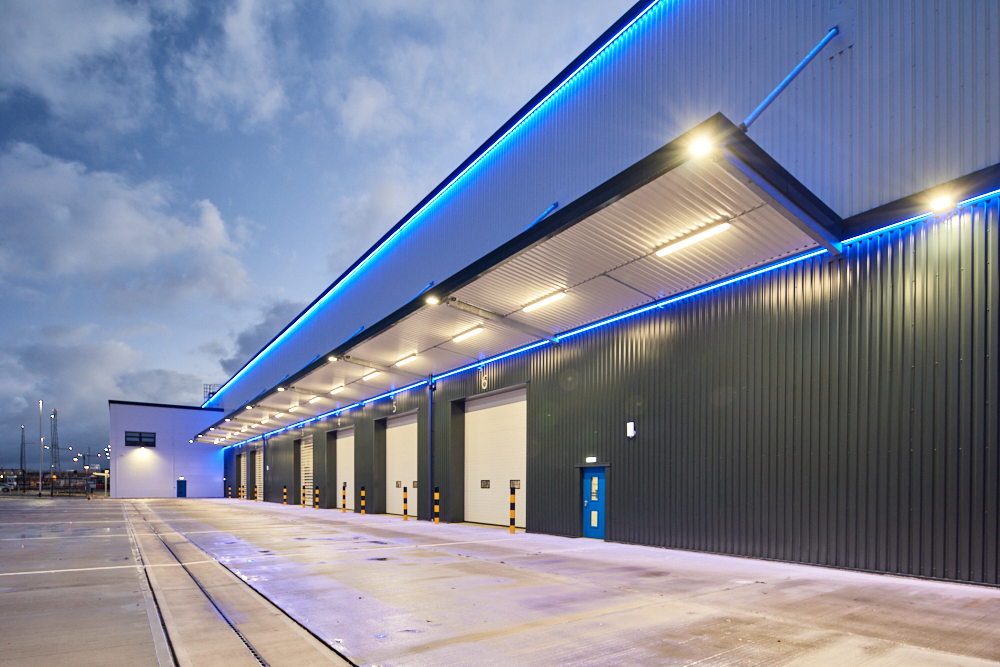
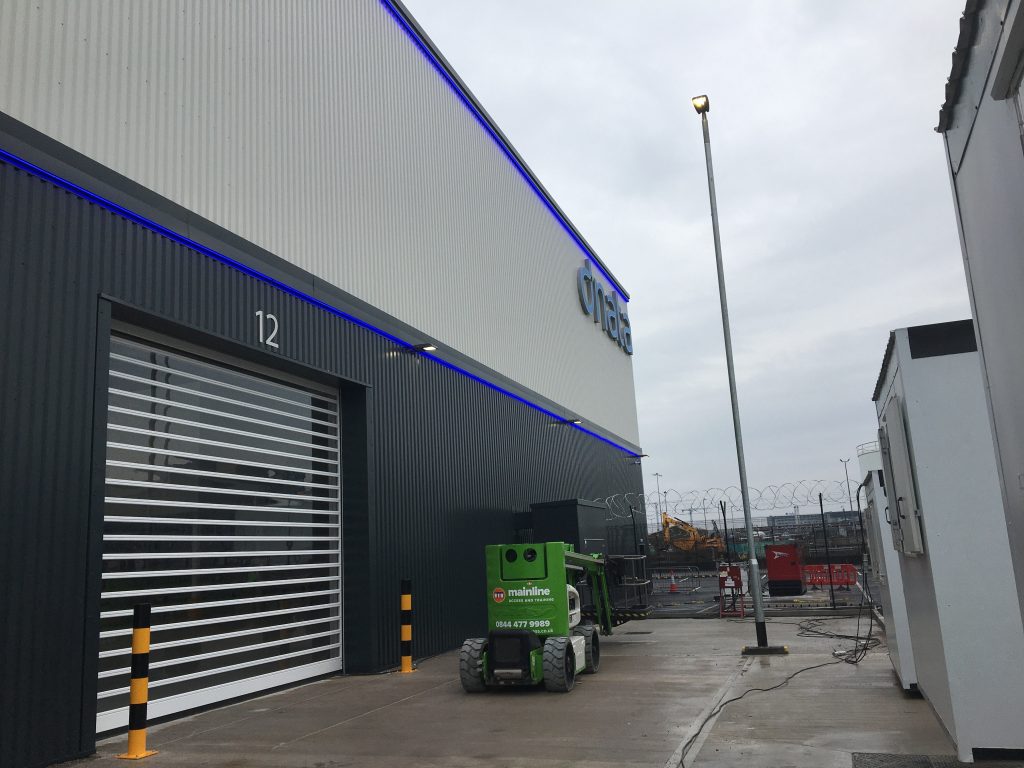
A new logistics centre for the aviation industry has been built in the north-west of the UK. Designed for airlines such as Emirates and Cathay Pacific, the designers at DNATA once again opted for high-speed doors from EFAFLEX. The focus was not only on the reliability of the doors, but also on the high-quality design and perfect aesthetics.
In the UK, DNATA is a long-standing customer of EFAFLEX and has been using the products at airport locations such as Manchester, Birmingham and Heathrow for more than 15 years. These locations rely on the doors to ensure smooth logistics and reduce downtime.
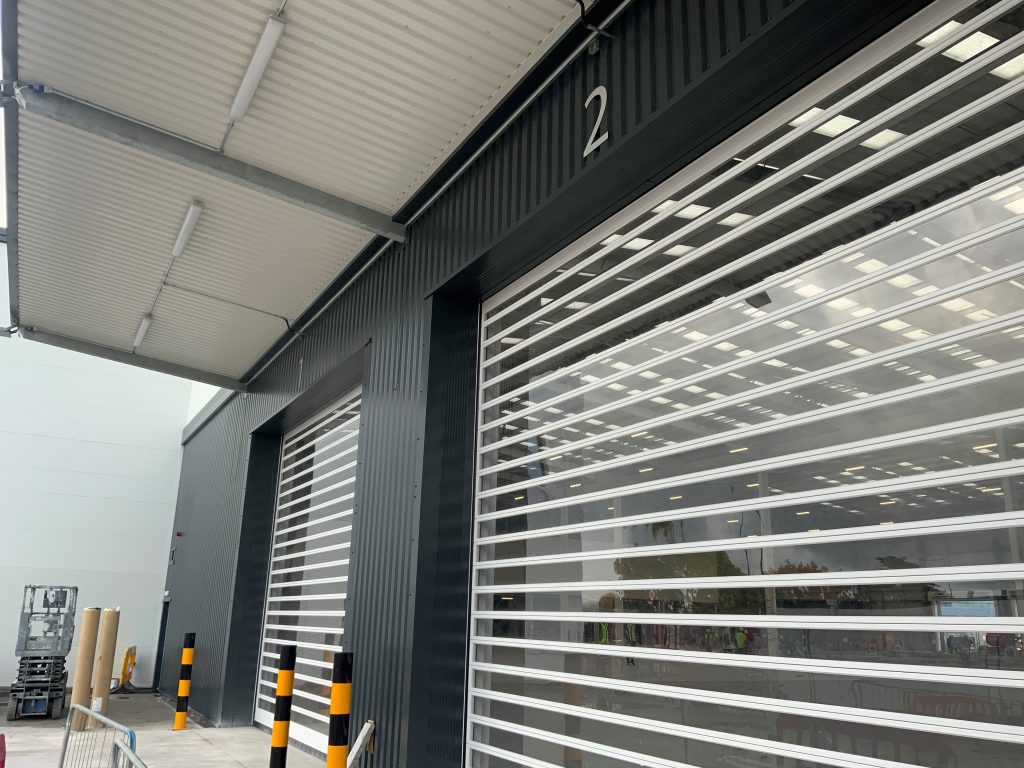
In this case, the choice was made for the EFA-STT® high-speed turbo door, which opens at a speed of up to 3 meters per second. Transparent slats in the door leaf offer better visibility and thus more user safety. In addition, the door creates a pleasant working environment because it admits natural daylight into the working areas.
Roll-up, Fast
Although the design of airports varies from location to location and from country to country, similar requirements apply everywhere. With its range of high-speed, high-performance doors, EFAFLEX delivers tailor-made solutions for every need. At DNATA, speed, durability and reliability of the doors were crucial. This was the only way to guarantee the high level of safety, the handling speed and the smooth logistical processes. In addition, the installed doors complement the beautiful facades of the new buildings excellently.
At other locations, the EFA-SRT® high-speed roll-up door with flexible curtain proves ideal for baggage handling and check-in. The EFA-SST® TK-100 cold storage door, on the other hand, is the product of choice for catering facilities or refrigeration chambers.
Specifically for DNATA UK, EFAFLEX carries out regular, tailored maintenance as part of its comprehensive range of services to ensure that the doors remain fully functional. If necessary, repairs and upgrades are also carried out at intervals.
FM Logistic has announced a partnership with Lindt, suppliers of premium chocolate, for the complete management of its logistics operations in Poland. As the holiday season approaches, a key period for chocolate lovers, this project illustrates FM Logistic’s capacity to support prestigious brands in developing innovative e-commerce solutions while meeting demands for quality, personalisation, and sustainability.
Logistics for Personalisation and Customer Experience
In a context where product personalisation is establishing itself as a strong trend, including in the food sector, Lindt chose FM Logistic to manage its operations from the logistics center in Będzin, Poland. The services include:
● Temperature-controlled storage to preserve the quality of the chocolates, ● E-commerce order management with a high level of personalisation.
On the Lindt online store, consumers can compose their own gift boxes, choose from 35 types of packaging, and add personalized messages or decorative elements. FM Logistic ensures the meticulous preparation of each order in a dedicated e-commerce zone, separate from the rest of the warehouse, guaranteeing speed, precision, and optimal cleanliness.
FM Logistic also manages the preparation of specific products such as Advent calendars, festive gift boxes, and multi-fl avor assortments. Thanks to automated filling and packaging equipment, the operator can efficiently respond to peak demand linked to holidays or promotional campaigns, without additional investment for Lindt. “Our organization and flexible solutions allow us to efficiently respond to variations in demand, particularly during seasonal peaks such as the end-of-year holidays, thus guaranteeing Lindt an agile and reliable supply chain,” adds Dariusz Rurka, Senior Business Development Director at FM Logistic Central Europe.
Quality, Freshness, and Sustainability
To preserve product quality, FM Logistic uses refrigerant inserts that maintain a stable temperature until delivery, signifi cantly reducing claims related to thermal or mechanical damage. The Będzin site is LEED Gold certified, guaranteeing high energy performance and compliance with strict environmental standards. A photovoltaic installation covers a significant part of the energy needs, particularly during periods of high consumption in the summer.
“One of the key criteria in choosing our partner was alignment with our sustainability policy. FM Logistic offers us not only optimal storage conditions but also tangible environmental benefits,”
Consafe Logistics is proud to announce the launch of Astrid, a new Generative AI-powered Assistant designed to make working with Astro WMS® easier, faster, and more efficient. Astrid helps users set up, configure, and troubleshoot their warehouse management system with confidence, at any time and from anywhere.
Efficiency through guidance and automation
Powered by advanced large language models (LLMs) and Consafe Logistics’ warehouse management expertise, Astrid supports users in setting up integrations with external systems such as ERP, automation, and transport solutions, as well as configuring workflows and managing system settings. By providing instant step-by-step guidance, Astrid helps users save time and focus on what matters most: keeping operations running smoothly.
Speed and consistency in every interaction
With Astrid, users can quickly resolve issues and speed up troubleshooting without waiting for manual support. The GenAI Assistant also ensures consistent, high-quality responses every time, reducing the risk of human error and improving overall system reliability.
Faster onboarding for new team members
New employees can get up to speed faster with Astrid as their first point of contact for learning how to use Astro WMS®. The GenAI Assistant offers clear explanations and guidance that make onboarding simpler and more engaging.
Accessible to all in multiple languages
Recognizing that logistics never stops at borders, Astrid speaks multiple languages, ensuring that teams across regions can access the same support and expertise instantly.
A step toward the future of intelligent logistics
“Our vision is to help our customers work smarter every day by combining human expertise with intelligent technology,”
“Astrid is a great example of this. Built on a Large Language Model (LLM), she makes it easier for users to get started, find answers quickly, and work more efficiently. This is not just about automation but about making technology feel more intuitive and supportive.”
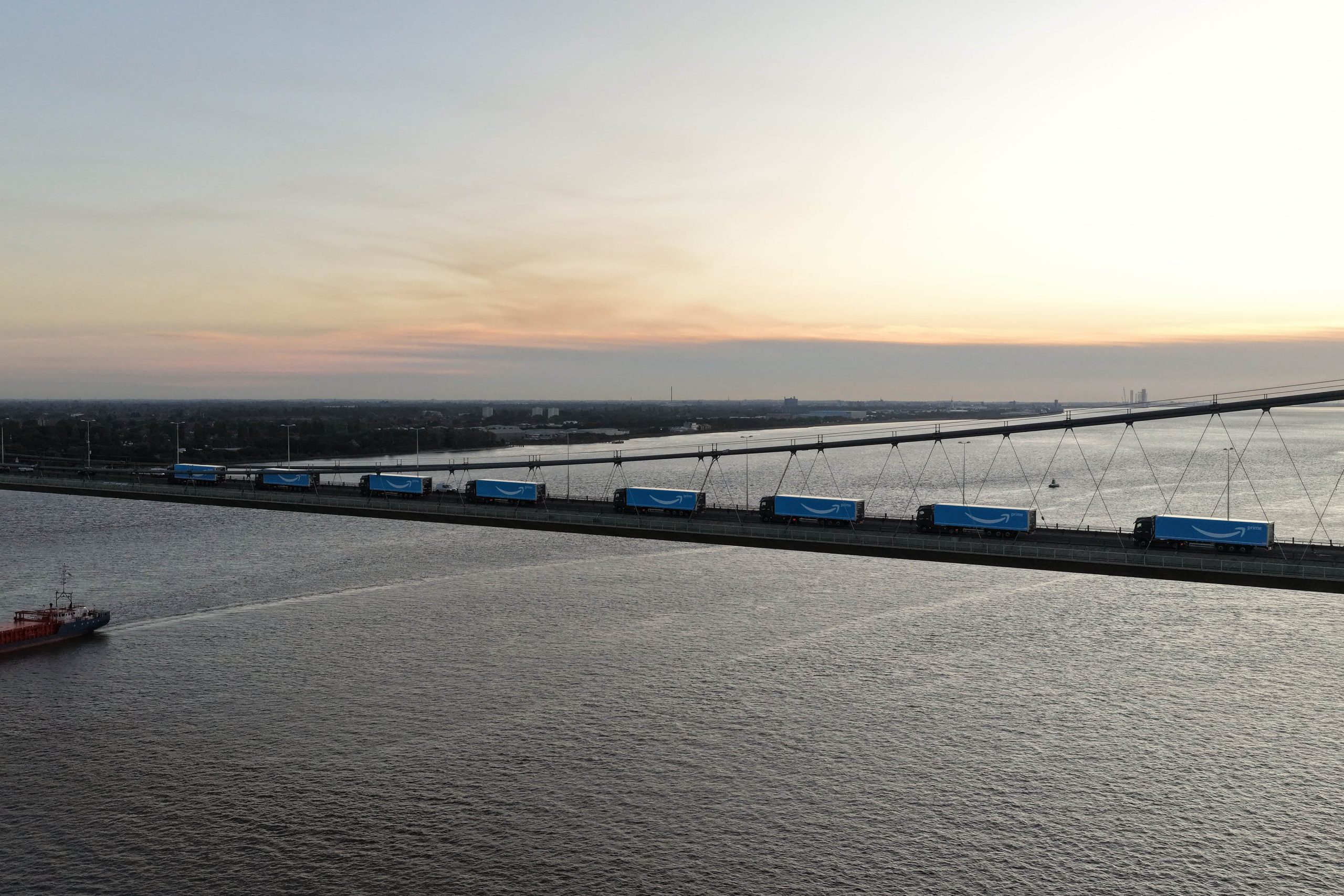
The first of the UK’s largest-ever order of electric heavy-goods vehicles (eHGVs) joined Amazon’s transportation network today, crossing the Humber Bridge to deliver packages to Amazon customers nationwide. Once fully deployed, the UK will be home to 160 eHGVs, the largest number of electric trucks in Amazon’s global transportation network. The trucks, transporting products between Amazon logistics hubs across the UK, will travel the annual equivalent of more than 450 trips around the Earth on UK roads once fully operational, carrying more than 300 million products.
This winter, Amazon is making two further updates to bring more products to customers’ doors with zero exhaust emissions: adding 800 new electric vans across the UK and extending pedestrian deliveries to London’s Borough of Camden. These walking couriers, along with the electric vans, help Amazon reduce carbon emissions and alleviate traffic congestion.
“The first vehicles from our record-breaking eHGV order are now on Britain’s roads, transporting products between our hubs. This marks a major milestone in our journey to decarbonise our UK transportation network. These trucks, alongside more electric vans and on-foot deliveries, are a win for our customers, the environment, and our business. The challenge to scaling this approach across the logistics industry, however, is charging infrastructure. We’ve invested in our own facilities but need continued industry and government collaboration to develop the national network required for widespread electric vehicle adoption.”
said Nicola Fyfe, EU VP of Amazon Logistics.
From Warehouse to Delivery Station
The 40-tonne electric trucks, operated by Amazon’s carrier partners, are part of a record-breaking order of new electric Mercedes-Benz Truck eActros 600s made earlier this year, with a small number part-funded through Amazon’s participation in the UK Government’s Zero Emission HGV and Infrastructure Demonstrator programme, coordinated in partnership with Innovate UK. With a range of over 310 miles (500 km) when fully charged, the Mercedes-Benz trucks can transport up to a 22 metric tonne load per journey between Amazon’s fulfilment centres, sort centres and delivery stations. To support this electric fleet, Amazon has installed fast charging points at its UK sites, with 360kW chargers that can charge the 40-tonne Mercedes-Benz trucks from 20 to 80 per cent battery capacity in just over an hour.
Logistics Business will be reporting from the Amazon Business Reshape conference in Seattle next week.
“The eActros 600 was designed for forward-thinking companies like Amazon – businesses taking real action to make logistics more sustainable. Seeing these trucks now on the road, delivering to Amazon customers, marks an exciting step toward the decarbonisation of road freight and the future of long-haul transport.”
said Heiko Selzam, Managing Director of Daimler Truck UK Limited
Electric Vans and On Foot Deliveries
Over 800 new Mercedes-Benz eSprinter vans arriving in the coming months will be deployed for Amazon deliveries. These vans feature improved safety elements, ergonomic designs for drivers, and practical delivery enhancements including custom shelving and sliding bulkhead doors for more efficient package handling.
In London, Amazon is expanding on-foot delivery services, where delivery associates have already delivered more than one million packages to customers’ doors in 2025, reducing traffic congestion and improving air quality. Building on successful pilots in Hackney, Westminster and Islington, Amazon has now also launched operations in Camden, with strategically parked vans acting as mobile distribution points. Teams of delivery associates collect packages from these hubs, to deliver on foot through nearby neighbourhoods.
“One of our commitments in the Freight and Servicing Action Plan was to reduce van emissions from deliveries and servicing trips,”
said Councillor Adam Harrison, Cabinet Member for Planning and a Sustainable Camden.
“To that end, we are partnering with Amazon to support a trial of walking deliveries from a private industrial site in Camden. We hope that this trial will help reduce van miles and improve local air quality. We will monitor the impacts closely and use the findings to shape future freight policy.”
Subscribe
Get notified about New Episodes of our Podcast, New Magazine Issues and stay updated with our Weekly Newsletter.
Add Logistics Business MediaGet faster access to news, podcasts, magazines and your saved content.