Can Precision Planning & Mapping Save Hauliers?

Hauliers have long been battling a perfect storm of challenges, from an ageing driver workforce and inefficient road networks to persistently rising fuel and non-fuel costs, most recently exacerbated by the conflict in the Middle East. Now, the sector faces an additional and increasingly pressing issue: razor-thin profit margins. The RHA Cost Movement Survey from the UK Road Haulage Association shows that average pre-tax profits for hauliers have fallen to just 1.58%, down from 2.6% the previous year. This, coupled with the fact that 30.1% of all HGV kilometres are driven empty, highlights a significant efficiency deficit within the sector.

Philipp Pfister (pictured, below), Sector Vice President of Transporeon, a Trimble company, believes this ‘efficiency debt’ is no longer sustainable for hauliers and fleets, and discusses how to tackle the issue by shifting from reactive routing toward precision mapping and real-time data to ensure every mile driven contributes to revenue.

Understanding the efficiency debt

Empty running has always been part of transport operations, whether driven by last-minute order changes or fragmented planning systems. But as the conflict in the Middle East drives a surge in fuel prices, the cost of inefficiency is escalating sharply. Every empty mile now represents not just wasted time and vehicle wear, but significantly higher fuel spend with no revenue to offset it.

For some businesses, this has historically been a manageable inefficiency. Today, however, especially for carriers operating on tight margins, it has become a critical pressure point, turning what was once tolerated into a serious financial risk.

The result of empty mileage is a growing gap between operational effort and financial return. Closing that gap requires more than incremental improvements, it calls for greater precision in how routes are planned, executed, and connected across the wider transport network.

Moving from shortest to smartest routing

Reducing empty running starts with improving the quality of routing decisions and commercial-grade mapping solutions are designed specifically for this purpose. A smart system keeps drivers on the most efficient path to reduce out-of-route mileage and lower fuel costs by up to 10% by incorporating real-world HGV and LCV constraints alongside operational data, allowing planners to build routes that are both safe and compliant, sustainable and efficient. This means drivers can factor in personal preferences such as 2D and 3D maps, safety views and timing of voice instruction as well as their vehicle type and load, traffic patterns and congestion, road restrictions and infrastructure and sustainability priorities.

Unlike consumer GPS, cloud-based solutions are built specifically for HGV and LCV operations, integrating legal restrictions and vehicle-specific parameters into route planning. By ensuring routes are compliant before departure, these tools reduce unnecessary mileage caused by routing errors while supporting fuel efficiency and emissions compliance. Crucially, by combining routing algorithms, map data and customer site information into a single platform, they create a consistent ‘single source of truth’ from planning through to real-time execution and post-trip analysis.

Aligning planning with execution

Reducing empty miles starts with better planning, and that planning must be tightly connected from back office to cab. By investing in advanced commercial navigation tools, carriers can ensure drivers have full visibility of optimized routes in real time, aligned with central planning decisions. This eliminates the disconnect that often leads to unnecessary detours and inefficiencies.

Crucially, when routing, scheduling, and execution operate from the same data and commercial logic, carriers can actively minimise empty running rather than react to it. The result is fewer wasted miles, lower fuel costs, and a more resilient, efficient operation, something that is no longer optional in today’s high-cost environment.

There are additional operational benefits, too. This technology is also a huge aid when onboarding a new or less experienced driver. The International Road Transport Union (IRU), estimates that Europe is short of nearly 500,000 drivers, with fewer than 5% under the age of 25. This worrying stat demonstrates the importance of getting a driver up to speed and comfortable in the role as soon as possible. A smart advanced mapping tool will allow any driver, no matter their experience, to navigate unfamiliar routes with confidence, improving productivity from day one and reducing reliance on local knowledge. This also affords drivers peace of mind and confidence in their abilities, which ultimately means they are less likely to leave the business further down the road.

Using data to unlock backhaul opportunities

For hauliers, investing in a market intelligence solution that delivers in-depth, real-time insights into market rates, spot rates, lanes, and capacity, and how these evolve over time, is a critical first step in improving visibility. When combined with smart mapping data and both real-time and historical market insights, this enables a clearer view of available capacity and demand.

Alongside this, spot freight, encompassing non-contractual transactions, offers agility, making it particularly valuable for surge volumes, irregular shipment patterns, and rejected loads. When used strategically, it allows hauliers to secure competitive rates, optimise backhauls, and ultimately enhance overall market efficiency.

With this level of insight, operators can identify backhaul opportunities more effectively and align loads with demand in real time. Ultimately, this means carriers have the opportunity to make more informed decisions about pricing and route selection. Rather than relying on static planning or manual coordination, fleets can respond dynamically to changing conditions. Over time, this reduces the structural imbalance that leads to empty return journeys.

While the challenges facing hauliers aren’t new, with the margin for inefficiency getting a lot tighter, empty running is no longer a viable option. Addressing this requires a new approach to how routes are planned and executed. This means moving away from basic consumer navigation GPS tools and towards new commercial technology that addresses the pain points HGV and LCV drivers face. Be it aligning planning with in cab execution or data that can help match capacity with demand.

Of course, it’s impossible to eradicate all empty miles completely. However, by upgrading its planning and routing technology, a business can minimise avoidable costs and inefficiencies. For many UK hauliers, this will be the difference between maintaining profitability and falling behind in an increasingly constrained market in volatile times.

Blend of Solutions in Contract Logistics

Within the UK’s so-called ‘Golden Logistics Triangle’ a high-specification facility in Corby has quietly redefined what modern third-party logistics looks like. David Priestman made a site visit.

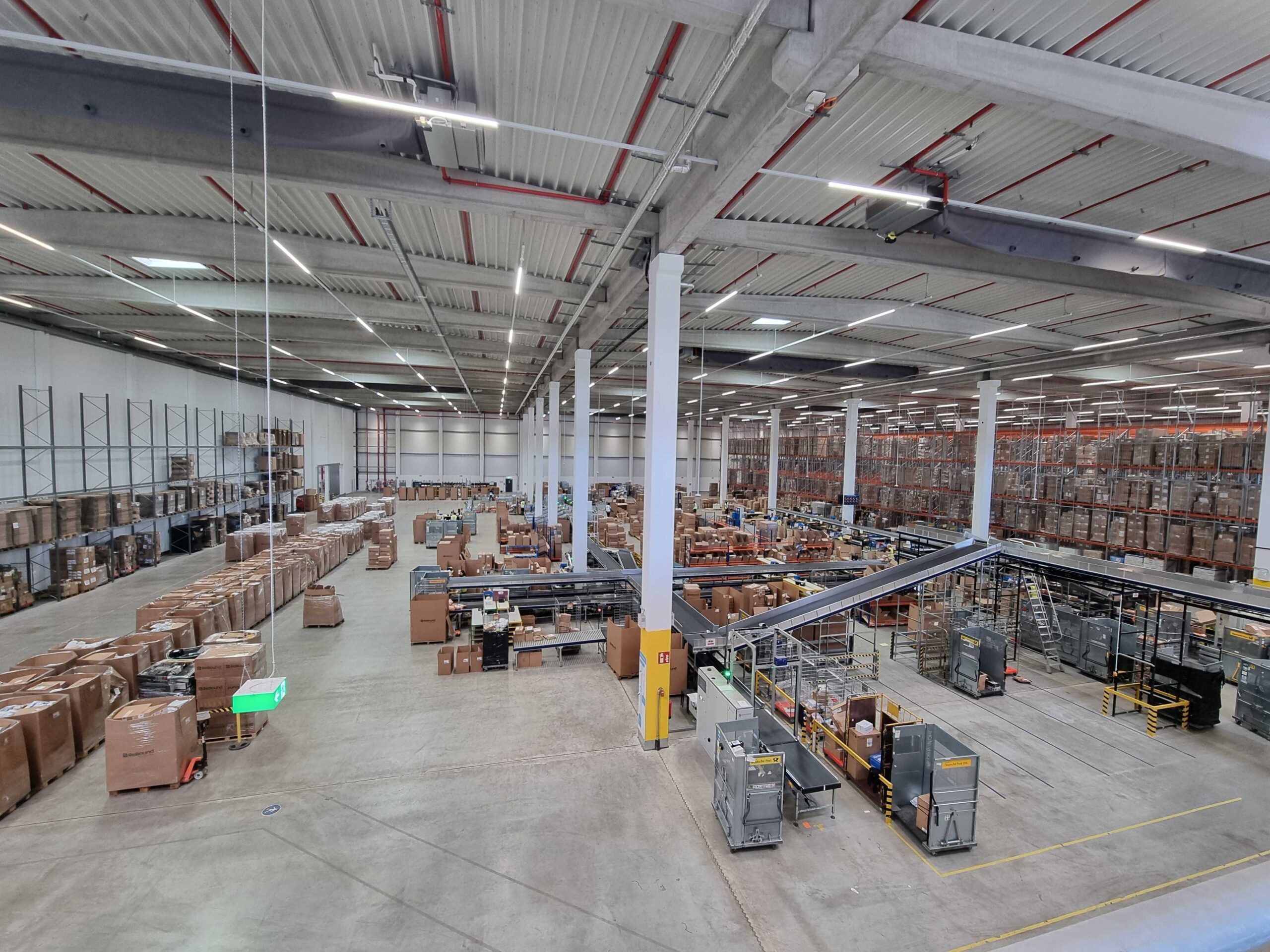
Europa Warehouse’s flagship site, opened in June 2020 and fully-operational for five years, stands not only as a testament to resilience under pressure, but also as a blueprint for scalable, technology-driven warehousing. Built on a former British Steel quarry that had lain dormant for years, the £60 million development transformed a 25-acre site into a 750,000 sq. ft logistics powerhouse with 49 loading bay docks and three 30,000 sq. ft mezzanines, demarcated into different zones.

Despite the challenges of the pandemic’s disruption, the facility was completed and commissioned ahead of schedule — an early indicator of the operational discipline that would come to define its performance. Sectors now served mainly include food and drink, nutrition, apparel, consumer goods and packaging, with clients in the drinks industry such as Beer52, Naked Wines, Beerwulf and Laylo. There are 19 brands/customers whose stock is managed here and Europa are tendering for more wins.

Scaling Smart

£11 million of the overall investment went into automation, with PSB Intralogistics as the system integrator. PSB installed the automated storage system, which holds 36000 totes and has 60 lifts, as well as the conveying, ten picking stations including the Rotapick machine (which alone costs £750,000 – see image below). Designed to support a sole occupant and now a flexible 3PL model, the automation system enables clients to scale operations up or down in response to fluctuating demand, a critical capability in today’s volatile supply chains. The Europa team are certain that they fully understand the system and can maximise its performance.

The facility’s physical design also pushes the boundaries of traditional warehousing. While a typical warehouse might accommodate around 90,000 pallets across seven storage levels, Corby has been engineered for maximum utilisation. With nine aisles of pallet racking reaching the regulatory height limit of 18 metres, and very narrow aisle (VNA) equipment in operation, the site can accommodate a blended average of 100,000 pallets, handling both British and European pallet specifications. There is an opportunity to expand the automated storage system further.

Efficiency Collaboration

Dionne Redpath (pictured, below) is the Chief Operating Officer and Warehouse Divisional Director at Europa Worldwide Group. She tells me that the secret behind having flexibility for customers to vary pick volumes due to peaks and demand changes, growth and decline lie within good customer relationships and the core processes adopted together. “If you have a customer with rock-solid forecasting then you’re able to build out really solid plans that insure capacity when its needed. We’re refining and becoming more accurate together. We need to be able to pick the right product at the right time. Forecasting isn’t just the total numbers, but what products they are expecting to sell and on what day, to avoid in-day replenishments.” There are lots of seasonal products stored here and half are for ecommerce.

“Originally the automation system was for one customer occupant, but we then migrated to a multi-user environment for drinks and health supplements,” she says, stating that this is probably the only sharer user automation system around. “It gives us a dynamic edge in the marketplace. We attract customers who are looking for ecommerce, agility and those with similar business values, like entrepreneurship, or might not feel at home in a more corporate environment. They like the friendly, family spirit we embody. Businesses starting on their journey are looking for guidance from a partner that has experienced a lot of what the ecommerce landscape has got to offer. It’s challenging.”

Workforce for Modern Logistics

Today, the Corby site employs a 170-strong team spanning operatives, forklift drivers, flow managers and engineers. Some joined as agency workers and have since progressed to management roles, now playing an active role in mentoring and developing others. “We have a unique culture which is can-do, sleeves-up. We promote from within,” Redpath says. “Typically, in a 3PL staff are siloed into individual roles, whereas we’re team-based. There’s a core skills matrix but also core specialisms. People develop as it’s a dynamic environment and we’re very proud of them.” Reflecting both the local community and the international nature of the logistics sector, the workforce represents a wide range of nationalities.

Checking the Top Shelf

Traceability and transparency are central to the model. From the moment goods arrive, they are fully tracked through to dispatch, with automated systems handling picking, packing and delivery. Clients benefit from real-time access to Europa Warehouse’s order fulfilment platform, providing live visibility over stock levels, outbound shipments and returns. Infios’ WMS is central to the operation. “It’s a very configurable system, meaning you can design it to suit any business. We share all our data outputs daily via EDI and APIs with customers, garnering KPIs, for example for inbound receipt, picking and despatched notifications,” Redpath informs me. This integration of automation and data-driven oversight ensures not only speed and accuracy but also cost efficiency — key priorities for businesses navigating increasingly complex distribution networks.

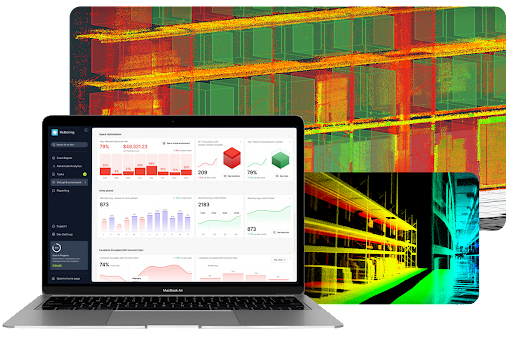
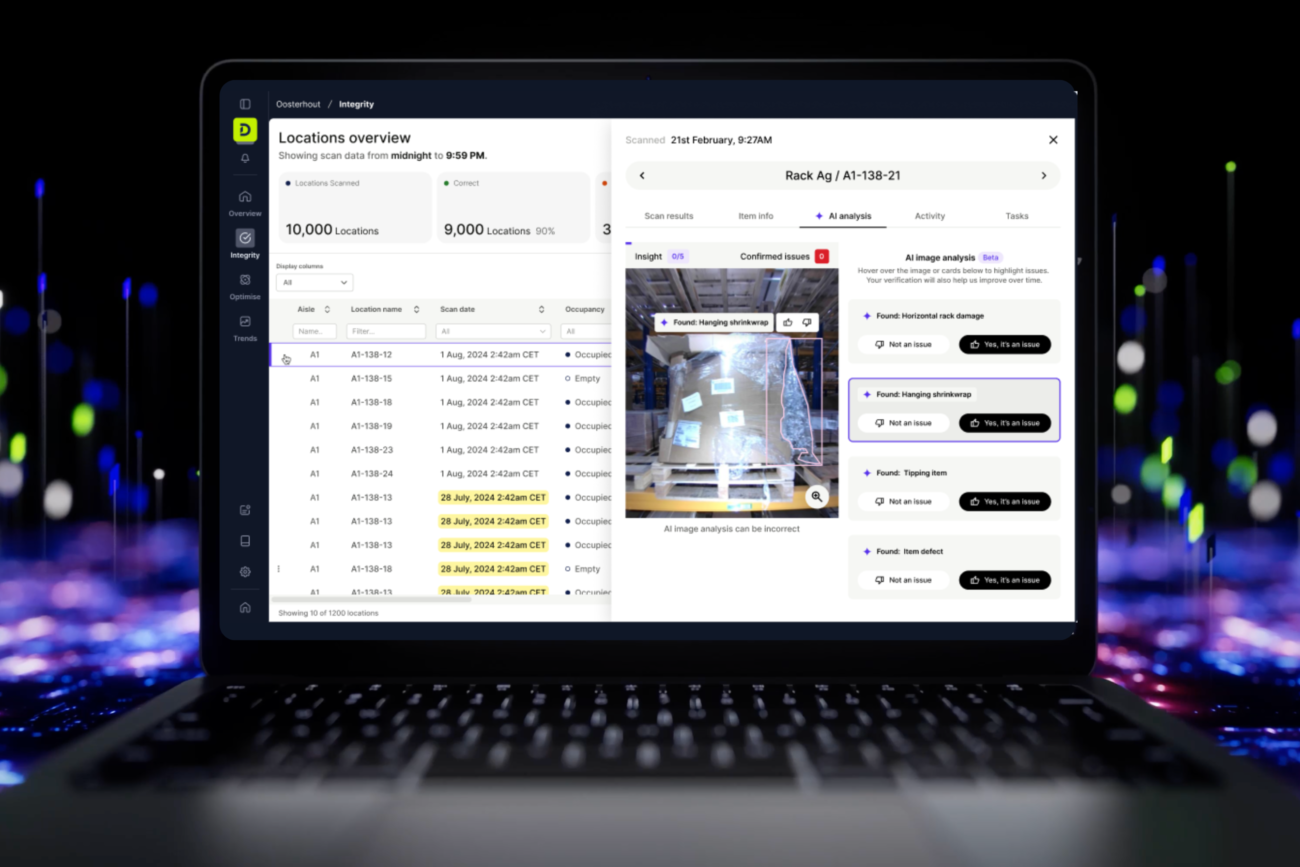
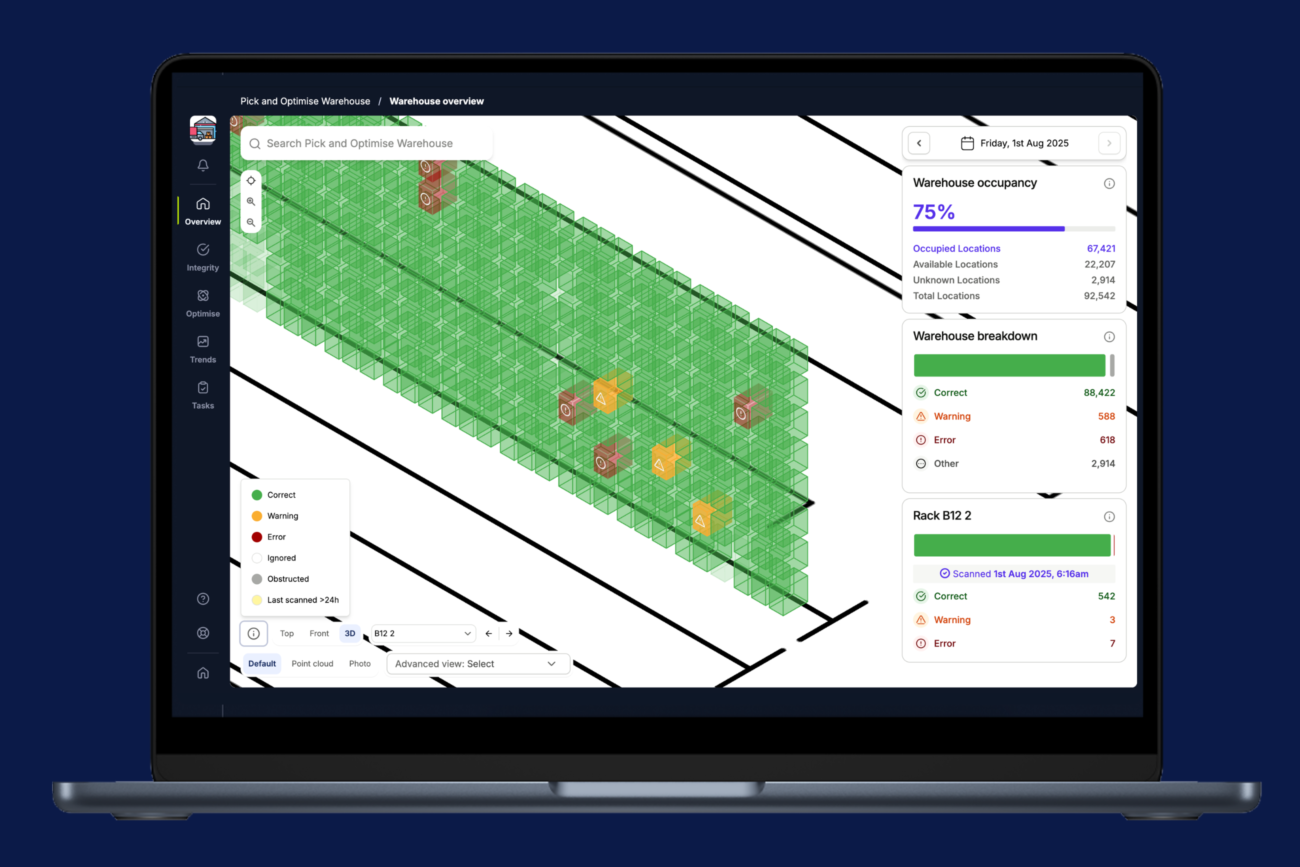
A Dexory bot (pictured, below) was added last November and has been deployed since December to scan the entire DC off-peak, covering every single pallet position each week. “You can schedule it with the Dexory team, create and zone it with many configurations. We’re swapping it to the 18m mast version soon,” Redpath informs, so it can reach the highest pallet locations. A digital twin is made by DexoryView when the bot does the rudimentary stock checks. “It removes the manual front end associated with stock maintenance. The team (of 8 with 1 manager) are taking the outputs of data analysis and using it for investigations and troubleshooting, modifications and changing sku locations. It’s an ongoing voyage of discovery,” Redpath states.

Supporting Growth Across Sectors

The hub offers strong connectivity to pallet and parcel distribution networks, as well as seamless integration with Europa’s air and sea freight operations. This multimodal capability enables the facility to support a diverse client base across B2B and direct-to-consumer channels. Since its launch, the facility has achieved several key milestones, including processing more than five million orders annually and introducing a pioneering shared-user automation solution. It also holds HMRC Wet and Dry Bond accreditation, enabling efficient handling of customs bonded goods. This is particularly useful to alcohol suppliers as the duty is not paid until it leaves the DC, when a customs transaction is created.

The Shed Ahead

As the Corby warehouse reaches its sixth anniversary in June, it stands as the largest and most technologically advanced facility in Europa Warehouse’s UK portfolio. More importantly, it represents a shift in how logistics providers think about space, systems and scalability. Redpath and her team are currently assessing all the materials handling equipment used, as well as considering replacing or enhancing some manual picking lines with more automation. But she’s coy on what the outcome will be.

“Automation is fantastic, but you can spend a lot of money when what matters the most is how much value it will deliver. Will it avert us needing an unattainable number of staff? This site has a capacity of how many people it’s feasible to operate here. We’ve embraced a number of technologies and need to drive out costs and improve throughput,” she concludes. “That’s where we spend our time and research. We were contemplating the effectiveness of robotic arms for some operations, but we’re not quite there yet. PSB have plenty of different solutions that differ from what we do today.”

A solar PV project is possible for the roof as part of the modernisation ahead and the mezzanine structure can be extended across the front of the building, making it double its current size, as well as adding more racking. In an era where supply chains must be both resilient and responsive, this DC offers a compelling case study: a warehouse designed not just for storage, but for strategic advantage.

Middle East Conflict Drives Surge in Spot Freight

The European Road Transport Institute Foundation (EITD) has published key insights from the market, a new analytical report examining the major trends shaping European road freight in the first three months of the year.

Spot freight offers surge across European corridors

Load offers on key European routes grew substantially throughout Q1, with March delivering the strongest momentum. Western European corridors led the way: the France–Benelux route recorded a year-on-year increase of 102%, while France–Germany (+73%), Germany–Benelux (+71%), and Benelux–France (+72%) also posted exceptional growth. Central European routes followed a similar upward trajectory, with Germany–Poland reaching +43% and Poland–Germany +37% in March.

“What we’re seeing is not just a typical post-winter rebound, but a structurally stronger demand environment — and part of this increase reflects a rebalancing between contract and spot markets, particularly where contract rates no longer match current cost realities,” said Michał Pakulniewicz, Market Analyst at European Road Transport Institute Foundation.

Carrier search activity recovers

Carrier search activity remained subdued in January and February, with most corridors recording year-on-year declines consistent with the trend of the past two years. March brought a partial rebound, however, with several Western European routes turning positive. The Spain–France corridor saw the strongest recovery, accelerating to +29% in March after modest growth earlier in the quarter. The shift reflects carriers being drawn back to platforms by rising rates and increased spot market fragmentation. ​

Freight rates accelerate sharply

Freight rates followed a steady upward trend across Q1 2026, but March marked a clear shift in pace. After mostly single-digit increases in January and February, double-digit year-on-year gains became widespread. The Poland–Italy corridor recorded the steepest rise at +14.1%, followed by Benelux–France (+13.6%) and Poland–Germany (+13.5%). The acceleration reflects both direct cost pressure from higher fuel prices and the amplifying effect of the spot market, which transmits cost changes into rates more rapidly than long-term contracts.

Natalia Janiszewska, CEO of ​ European Road Transport Institute Foundation, sees a structural shift in how the market is pricing transport:

“When fuel costs spike and contracts stop reflecting what transport actually costs today, freight moves to spot. That’s exactly what we saw this quarter — and the spot market is becoming the primary way to price transport in uncertain conditions. That’s a shift the whole industry needs to take seriously.”

Transport and Storage Sector Impacted by Inflation

The cost of running a business has risen significantly in the past decade, reshaping the business landscape across. However, new research suggests that not all industries have been impacted on the same scale, and transport and logistics have been revealed as the second most impacted sector in the UK, with business costs increasing by 53% on average.

To understand which industries have faced the greatest pressure, Dojo have analysed ten core cost categories, including business rates, energy, and industry-relevant supplies, between 2015 and 2025, to create the UK Inflation Index, a sector-by-sector breakdown revealing where operating costs have risen fastest, and how business inflation now compares to consumer inflation.

The analysis shows that on average, UK business costs for SMEs have outpaced consumer price growth by 11.75%, creating an ‘inflation gap’, making profitability harder to maintain in 2026. Analysis from Dojo has discovered that the transport and storage sector is the second most impacted UK sector by inflation over the last decade, with business costs increasing by an average of 53%.

Technology and software costs have increased

This sharp rise in costs is largely driven by the sector’s heavy reliance on technology and software, which have increased by an average of 103% over the past decade. This has been compounded by rising fuel costs, up 90%, and training costs, which have climbed by 92%, further intensifying overall cost pressures.

Dojo’s findings also revealed that transport and vehicle costs have increased by an average of 52% across all industries analysed, highlighting that these cost pressures extend beyond a single sector. What can business owners do to combat inflation?

Charlie Ashworth, Head of Research & Insights at Dojo, says:

“While operating costs have risen significantly over the past decade, with the right insight into their cost structure, businesses can be better equipped to respond to these pressures. For business owners, the opportunity lies in control and efficiency. With labour, energy, insurance and technology costs all contributing to long-term structural change, understanding where your exposure sits is now a strategic advantage. Reviewing supplier contracts, improving operational efficiency, reducing unnecessary overheads, and optimising payment systems can all help protect margins in a higher-cost environment.”

“With increases of this scale, businesses must take a more strategic approach to operations and managing their supplies. Understanding the supply chain is critical, and business owners should really look into how much they pay per item and whether there are more competitive suppliers available without compromising quality. Another option is to investigate how usage can be reduced, or processes improved to minimise waste. In times of sustained inflation, careful supply management can make a meaningful difference to overall profitability.”

“Businesses that regularly assess their operating model, adapt pricing strategies where possible, and invest in tools that streamline transactions and reduce friction are often better positioned to absorb cost pressures without compromising service or growth. The past decade shows that the cost of running a business has evolved. The next decade will reward those who evolve with it.”

Beyond Clearance

Customs is shifting from back-office function to commercial weapon for freight forwarders across Europe. Logistics Business spoke to one expert, about what’s driving the change.

The customs conversation among European freight forwarders and logistics service providers has changed. Björn Höglund, Sales Director at Gaston Schul, sees it across the company’s European footprint every week.

“The forwarders I speak with are split into two groups,” he tells me. “One group is focused on managing customs better – consolidating brokers, improving consistency, reducing errors. The other group is asking a different question altogether: what can customs actually deliver for our business?”

Customs Is No Longer Just Declarations

For Höglund (pictured, below), the answer is straightforward. Duty and VAT savings, trade insights, compliance advisory – these are services a forwarder can monetise. Not as a side project, but as a structured part of their commercial offering.

“The forwarders we work with who are doing this well aren’t just winning on service,” he says. “They’re building new income from capabilities they didn’t previously offer. They walk into tenders with a clear compliance picture for the customer’s specific trade lanes, flag regulatory gaps their customers didn’t know existed, and show data insights their customers can report internally. It sets them apart from the competition – and makes them far harder to replace at renewal.”

For the forwarders ready to go further, Höglund points to performance-based arrangements. “Outcomes tied to agreed targets – measurable savings, measurable results. Not just activity. That changes the conversation from ‘what do you charge for customs?’ to ‘what value does your customs arrangement deliver?'”

Who You Partner With Changes Everything

The question that follows is how forwarders access that capability. Building in-house has appeal, but Höglund is candid: customs expertise across multiple European jurisdictions takes years to develop and cannot be hired quickly or trained from a manual.

He draws a sharp line between a supplier and a partner. “A supplier processes your declarations. A partner sits alongside your business, shares your targets, and invests in understanding your customers as well as you do. A sustainable model that evolves with you – not one that resets with every contract renewal.”

But who that partner is matters as much as what they do. The customs brokerage market has consolidated significantly. Brokers are being absorbed into logistics groups. Operations are being centralised offshore.

“We’re going the other direction,” Höglund says. “Privately owned. Not positioning for a sale. Not optimising for a private equity exit. Every investment we make goes into local expertise and enhanced technologies to remain the leading-edge partner in customs and trade. When something doesn’t go as planned at the border, you’re speaking to someone in-country who knows the local authority and can act. That’s a very different model from a shared service centre.”

For Höglund, choosing the right partner is the decision that determines whether any of the value he describes is actually achievable. “Can you trust your broker with your reputation? What can they actually deliver? Can their performance be measured? Can you show your customers identified savings they can report upwards? If not, that’s the gap. And that level of trust and partnership is exactly what we’ve built within Gaston Schul to deliver.”

How the Value Is Actually Delivered

When asked how the savings and insights described are delivered, Höglund points to a combination that he sees too many forwarders underestimating.

“Standardised customs processes create clean, consistent and auditable data across Europe,” he explains. “Integrated technology and AI enrich that data – spotting errors, identifying duty and VAT savings, flagging FTA opportunities, helping optimise spend and reduce risk. But it still takes genuine customs expertise to interpret it and turn it into something a forwarder can take to their customer.”

At Gaston Schul, this thinking is formalised into what the company calls its lean customs principles – standardise processes, digitalise workflows, create visibility, generate intelligence. Höglund sees the elements as inseparable.

“Standardisation without technology is slow. Technology without clean data is unreliable. Both, without expertise is just noise. The forwarders connecting all three are the ones delivering savings, compliance insight and trade intelligence that their customers can actually see and measure.”

Where This Is Heading

The forwarders choosing Gaston Schul today are not simply buying customs services. They are building partnerships that create measurable value, strengthen their position in tenders, and deliver a level of commercial advantage that is increasingly difficult to replicate.

As Höglund puts it: “The forwarders who still see customs as a back-office cost are exposing themselves to growing risk. They are making it easier for competitors to move ahead. This market is evolving, and expectations are changing. Customers want more than declarations. The forwarders who recognise that shift are already having stronger, more strategic conversations with their customers and with us. Those who do not will see the gap widen, quarter after quarter.”

In a market defined by complexity, regulation, and constant change, standing still is not a neutral position. It is a decision to fall behind. The opportunity now is to rethink customs not as a cost to manage, but as a lever for growth, control, and long-term partnership.

Origin Risk Resurfaces as Supply Chains Shift

Oritain, experts in forensic origin verification, has announced the release of its inaugural Global Supply Chain Intelligence Report. Drawing on multiple global datasets, the report reflects a critical inflection point for global trade: as regulatory scrutiny, economic pressure and consumer scepticism intensify, visibility alone is no longer enough to operate with confidence.

The findings point not to a single-issue risk spike, but to a wider structural gap between supply chain documentation and supply chain truth, with implications for markets, consumers, investors and regulators alike. Using cotton as a spotlight commodity to examine how one of the world’s most traded materials moves under overlapping regulatory, trade and cost pressures, the report shows that after three years of steady progress, exposure to cotton prohibited by legislation has surged back to pre 2021 levels.

The report draws on a multi-year forensic sampling programme analysing approximately 1,000 garments across 40 brands annually, alongside large-scale consumer research, industry professional and supplier intelligence spanning key global manufacturing hubs. While nearly 94% of UK companies and 87% of US companies surveyed now trace their cotton supply chains, Oritain’s Market Insights data shows that 90% of brands analysed in 2025 recorded at least one risk consistent result, up sharply from 64% the previous year. The data suggests that while transparency initiatives have scaled, assurance has not kept pace.

The “Verification Gap”

Oritain’s Global Supply Chain Intelligence Report highlights a fundamental shift facing corporate leadership: while traceability demonstrates intent and process, only verification provides a defensible source of truth in an increasingly enforcement-led environment. As supply chains evolve and sourcing strategies adjust under economic and geopolitical pressure, periodic assurance models are proving insufficient.

“The data tells a clear story: risk isn’t disappearing, it is re-emerging,” said Alyn Franklin, CEO at Oritain.
“As brands pivot manufacturing regions they’re finding that upstream material exposure hasn’t gone away – it is increasingly appearing in other key manufacturing hubs. Without independent verification, that risk travels quietly through complex trade routes and only surfaces at the end of the supply chain, when goods are stopped, costs escalate and production timelines are already missed.”

Key Insights from the 2026 Global Supply Chain Intelligence Report:

• Risk Re-emergence: As sourcing patterns shift under tariff, trade and policy pressure, global manufacturing capacity is expanding faster than internal controls and traditional compliance models can adapt.
• Systemic Exposure: With 90% of brands analysed impacted by exposure to prohibited cotton, exposure is no longer an isolated issue. It reflects a system wide challenge requiring a programmatic, scientific approach rather than ad hoc checks or reliance purely on paper trails
• The Trust Deficit: Consumer scepticism is at record levels. 60% of consumers actively avoid products linked to untrustworthy origins, while only 3% trust marketing claims. Instead, trust is anchored in credible, independent evidence, with government regulation (27%) and scientific traceability to origin (23%) sitting at the top of the hierarchy of consumer trust.
• Transparency expectations are rising across materials: focussing on leather alone, 69% of consumers support mandatory ethical sourcing proof, reinforcing the need for the inclusion of leather within the EUDR scope.
• The Cost of Failure: The consequences are no longer theoretical. 80% of UK brands and 37% of US brands surveyed have already experienced material impact, including border delays, financial penalties, disrupted production cycles and lost commercial relationships.

Standard for Global Intelligence

The report demonstrates that reliance on declarations alone is no longer sufficient to support market access, investor confidence or brand resilience. The future of resilient supply chains lies in programmatic forensic verification: a continuous, independent and repeatable model that enables proactive management rather than late-stage remediation. By operating as a connected network, spanning brands, suppliers and regulators, this approach allows businesses to detect issues earlier, substantiate claims credibly and navigate complexity with confidence.

“As regulatory and economic pressures intensify, visibility without verification no longer holds,” said Alyn.
“What matters now is evidence that stands up. Oritain’s role is to provide the science, intelligence and networked approach that allows organisations to move from reactive compliance to proactive supply chain management – building trust that is measurable, defensible and scalable over time.”

Condition Monitoring for Project Cargo

Tight schedules, extreme conditions, and geopolitical conflicts make global heavyweight transport a major challenge. If damage is only detected upon arrival or during commissioning of the components, it can lead to significant delays and costs when it comes to expensive project cargo.

At Breakbulk Europe from June 16–18, 2026, in Hall 1, Booth 1J51, ASPION will demonstrate how innovative solutions enable companies to proactively ensure transparency and security in the global transport of critical freight. At the world’s largest trade fair for project cargo, the sensor specialist will demonstrate how seamless transport monitoring with 360° live tracking works reliably and will present all the new features of the innovative all-in-one solution ASPION L-Track.

Real-time monitoring for proactive risk management

The flexible ASPION L-Track adapts to a wide range of industrial requirements. The innovative, multi-award-winning complete solution – comprising a multi-sensor data logger and an IoT cloud platform – can monitor numerous environmental conditions and be customized to specific needs. With sensors for shock and vibration, climate, tilt, and light, the L-Track is particularly well-suited for monitoring high-value capital goods such as machinery, transformers, or turbines. Using live data, the current location and condition of the cargo can be tracked at any time and worldwide in approximately 160 countries. Thanks to comprehensive alert functions, the system notifies users if unforeseen events occur, enabling immediate intervention in the supply chain even during transport.

Precise data recording and conclusive proof of damage

All digital ASPION data loggers, such as the ASPION L-Track or the ASPION G-Log series, record shocks and impacts with date and time stamps and with millisecond resolution. In the event of damage, this detailed data allows for determining the cause and the party responsible and serves as conclusive evidence – not only for insurance purposes. For particularly heavy cargo, the measurement range of the ASPION L-Track can be individually adjusted for even higher levels of detail. During transport in accordance with standards, the ASPION G-Log 2 checks for impacts and vibrations in accordance with IEC 60721-3-2. This makes verifying compliance with transport conditions as easy as the simple and intuitive operation of the devices and software.

New features and attractive terms for getting started

The ASPION L-Track all-in-one system has been significantly expanded in its new Version 2, with enhancements in delivery management, reporting, and data visualization. Trade show visitors can experience all the new features live at Breakbulk in June in Hall 1 at Booth 1J51. Attractive starter packages are available directly from the manufacturer and through qualified ASPION partners, offering a cost-effective way to get started with digital transport monitoring.

Eastern Europe Logistics Firm Celebrates 30 Years

Whittle Eastern Europe Logistics Ltd is proud to celebrate its 30th anniversary this year, marking three decades of growth, resilience, and unwavering dedication to its core region: Eastern Europe.

Since its founding in 1996, paper atlases and fax machines have given way to advanced digital technologies, trade routes have shifted, and new international alliances have emerged. Through it all, the company has remained true to its identity as a specialist in Eastern European logistics.

Managing Director Natasha Sabanovic (pictured with her team, above) told us:

“What began as a small team of five has grown into a thriving workforce of 40 professionals, the majority of whom have been with the company for over a decade. Today, we are a multilingual team speaking 24 languages, reflecting both our diversity and our deep connection to the region we serve.”

“Over time, the Whittles has become associated with reliable service to Eastern Europe and a trusted long-term partner for both local and multinational businesses across the UK and Europe. This 30-year milestone marks not only an achievement, but also an ongoing journey. We would like to thank everyone — our staff, customers and partners—who have been part of our story so far.”

Partnership for Vision-Language-Action Systems

Nomagic, specialisits in applying advanced physical AI to warehouse automation, has announced a partnership expansion with Swiss online retailer, Brack.Alltron, to include Vision-Language-Action (VLA) systems in live warehouse operations, highlighting the growing need for this industry-transforming innovation.

Brack, the second-largest ecommerce platform in Switzerland, has been increasingly adopting Nomagic’s robotic solutions to automate key fulfillment processes, including order picking and packing. Expanding on its first deployments, the company is now scaling the use of advanced VLA capabilities to enable robots to better understand complex environments, adapt to changing inventory, and execute tasks with greater autonomy.

A defining feature of this collaboration has been the ability to extend operations beyond traditional working hours. Nomagic systems support autonomous warehouse activity during nights and weekends, including Sunday shifts, helping Brack reduce peak pressure and increase overall throughput.

“We have built a real partnership with Nomagic to integrate robotic picking into our operations, but the addition of VLA systems takes this to a new level,” said Roland Brack, Founder and Owner of Brack.Alltron.

“In the past, our goal was simply to minimize manual intervention. Today, we are seeing robots that truly understand their environment. This intelligence allows us to run autonomous shifts through nights and Sundays, ensuring we stay ahead of peak demand without increasing the pressure on our human workforce.”

“Brack is a strong example of how AI-driven robotics can deliver real, measurable impact in production,” said Kacper Nowicki, CEO of Nomagic. “By expanding the use of VLA models across a range of use cases, we are setting the stage for a new generation of automation technology in warehouses worldwide.”

The collaboration reflects Nomagic’s broader strategic focus on Switzerland as a hub for innovation and deployment. Close collaborations with partners like Brack, combined with ongoing research and development efforts in the region, including the company’s recent Chief Scientist hire from Google DeepMind, is accelerating the advancement of VLA systems and their adoption in real-world logistics environments.

Nomagic’s technology is built on a Physical AI platform that continuously learns from live operations, enabling robots to adapt to dynamic warehouse conditions and handle millions of product variations with minimal human intervention. As global supply chains face increasing complexity and labor challenges, the expansion of Nomagic’s systems at Brack signals a broader industry shift toward intelligent, always-on automation powered by advanced AI.

Driver of the Year Awards in Manchester

Christopher Sullivan of Aldi has been named as the 2026 Microlise Driver of the Year at a glittering awards ceremony at Manchester’s Co-op Live. Held alongside the Microlise Transport Conference, the awards recognises HGV drivers across the country for their exceptional performance, professionalism and dedication.

Logistics firms in attendance included major UK supermarkets such as Tesco, Waitrose, Co-op and Sainsbury’s, as well as specialist road haulage firms including GXO, Gist and Maritime. In addition to the ultimate prize on the evening, Sullivan also took the title of Long Distance Driver of the Year, part of the data awards category determined by anonymised driver data gathered via Microlise’s in-vehicle technology.

From a pool of more than 200,000 drivers, these awards showcase the best drivers in the business with drivers grouped by short, medium and long distance, plus a separate award recognising the Most Compliant Driver of the Year and an award celebrating the overall Operator of the Year.

Elsewhere, drivers nominated by their peers were recognised across several additional categories, including Rookie Driver, Commitment to Improve, Extra Mile, Outstanding Driver Mentor and Driver Hero. The Lifetime Achievement award was also presented on the night to Graham Whitby of Matthew Clark, recognising a career spent delivering outstanding service behind the wheel.

Commenting on the awards ceremony, Microlise CEO Nadeem Raza said: “The Driver of the Year awards is our annual celebration of all that is good in the road haulage industry, and we are delighted for Christopher and his thoroughly well-deserved success.

“Research from the Road Haulage Association has estimated that more than 200,000 new drivers will be needed over the next five years. It is therefore our privilege to highlight what a dynamic sector road transport logistics is and to promote the importance of bringing new drivers into the industry. It is vital that we recognise the extremely talented individuals working as drivers who deserve the plaudits for the great work they are doing so early in their careers,” he added.

Subscribe

Get notified about New Episodes of our Podcast, New Magazine Issues and stay updated with our Weekly Newsletter.