Ensuring Interoperability with eCMR for Spain

From 5 October 2026, Spain will require a digital Documento de Control Administrativo (DCA) for commercial road freight transport. What was meant to have an effect for domestic transports and cabotage control only, will, in practice, also be relevant to much of the transit traffic passing through the country. Companies should take action now.

The Documento de Control Administrativo (DCA) is an administrative control instrument under Spanish transport law that, until now, was mandatory to be used paper form. However, a change in the law will make the digital version mandatory from October 2026. It is neither a ‘Spanish eCMR’ nor a consignment note in the contractual sense. It regulates neither liability nor the condition of the goods, but serves as an official control document. Nor should it be confused with the upcoming European eFTI regulation, which aims at structured data exchange between businesses and authorities. From October 2026, a paper copy of the DCA will no longer suffice.

“The DCA is not about a new digital data world, but about the digital replication of a paper-based process”, explains Dr. David Saive, Legal Product Owner at the Open Logistics Foundation. “Anyone who cannot provide the document digitally immediately will face an operational problem in future”.

Access on demand: QR code or reference number

A deciding factor is how the DCA is made available during an inspection. The Spanish approach is ‘view-by-request’: no structured interfaces with the authorities, but rather a document-based approach where an unstructured document must be provided on request. There are two ways to do this. In the first, a numerical reference is issued during the inspection, and the company makes a PDF version of the document available via the authorities’ portal. In the second method, the company registers a central server path in advance, and the driver then presents a QR code that leads directly to it. The key point is that access to the document must work immediately during an inspection, whether via a smartphone, a driver’s tablet, or a back office.

Covering the DCA with the eCMR

As the DCA is largely similar with the CMR consignment note in terms of content, a correctly implemented eCMR can functionally replace the DCA, provided that the requirements of the Resolución of 22 May 2023 – the Spanish implementing regulation for the digital DCA – are met.

The technical requirements depend on the method chosen. The following applies to both methods: the document must be in PDF/A format and accessible online. Those using the QR code method require not only the QR code on the document but also a domain registered in advance with the authorities. In addition, there are mandatory fields that many eCMR data models do not yet cover: registration numbers of the tractor unit and trailer, as well as any special transport permits where applicable.

Anyone who incorporates these requirements into the data model can use the eCMR functionally as a DCA, thereby avoiding parallel systems. “Digitalisation is not about recreating paper documents on a screen. It is about designing systems that replace multiple paper-based processes with one shared digital infrastructure.”, says Dr Saive. Building a separate system for every mandatory document does not solve a problem; it simply creates the next one. In the long term, this becomes expensive, error-prone and difficult to scale. Therefore, the changes in Spain should not be a reason to develop country-specific silo solutions, but rather to set up the eCMR so that national requirements can be seamlessly integrated. As a neutral and open source solution, the OLF-eCMR is designed precisely for this purpose.

Prepare now for what matters during inspections

For many foreign companies, the real hurdle lies not in creating the digital DCA but in accessing the Spanish platform. Foreign documentation is not always sufficient. The recommendation is therefore clear: check now whether your own processes cover the inspection requirement. Where is the document? Who can provide it immediately in an emergency? How can the driver quickly gain the right access? And who will handle the formalities with the Spanish authorities? In the end, only one thing matters: the carrier must be able to produce the necessary documentation during an inspection.

Interoperability paves the way for DCA and eFTI

Some view the Spanish DCA as a precursor to the upcoming eFTI regulation. However, the two requirements differ fundamentally. eFTI aims to facilitate structured data exchange between businesses and public authorities, whereas the DCA remains a document-based proof of inspection. For businesses, both systems may become relevant in parallel. This is precisely why it is worth choosing not the quickest solution, but the most adaptable one. Open source approaches such as the Open Logistics Foundation’s eCMR are designed for this purpose: open, interoperable, and extensible, so that every new regulatory requirement does not necessitate a new system.

Interroll to Acquire Royal Apollo Group

Interroll Holding AG has today announced that it has acquired Royal Apollo Group, a Netherlands-based provider of vertical conveying, logistic and baling solutions.

Headquartered in the Netherlands and founded nearly 180 years ago, Royal Apollo Group provides vertical conveying solutions, including spiral conveyor systems, and also operates in the logistics systems and baling markets. The Group has three manufacturing sites and a global sales, service and spare parts organization supporting customers across the full system lifecycle, from installation and commissioning to maintenance, modernization, and parts supply.

“With this acquisition, we add Royal Apollo Group’s spiral conveyor technology to Interroll’s conveying portfolio, closing a gap in our offering and strengthening our lifecycle services and spare parts business,” said Markus Asch, CEO of Interroll. “The businesses are complementary, and we will focus on integration and making this product range available to our customers and system integrators worldwide as well as new customers that we will be able to reach thanks to this move”.

This acquisition strengthens Interroll’s equity value proposition by enhancing the strategic fit and resilience of our portfolio, expanding our addressable market, and unlocking value through global scale, cross-selling, and lifecycle services.

“Royal Apollo Group is joining Interroll,” said Claudia van den Pol, CEO and owner of Royal Apollo Group. “This move gives us access to Interroll’s much wider global network, an opportunity we would not have had if we remained independent. Our products and services complement Interroll’s offering well, and together we will combine our strengths to align product development, operations, and go-to-market activities over time.”

Following the acquisition, Interroll will focus on strengthening its vertical conveying activities and expanding lifecycle services and spare parts support, aligned with Interroll’s Global Platforms strategy and Global Lifetime Service. Signing and closing of the transaction took place simultaneously on May 7th, 2026. The purchase price remains undisclosed.

Next Generation Electrified Refrigeration Platform

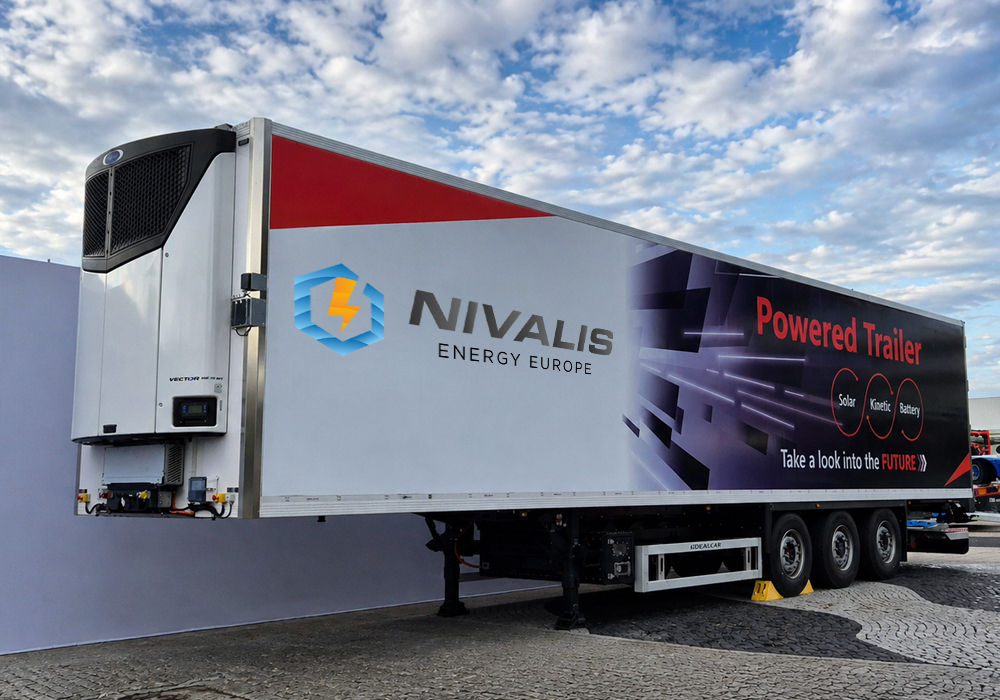
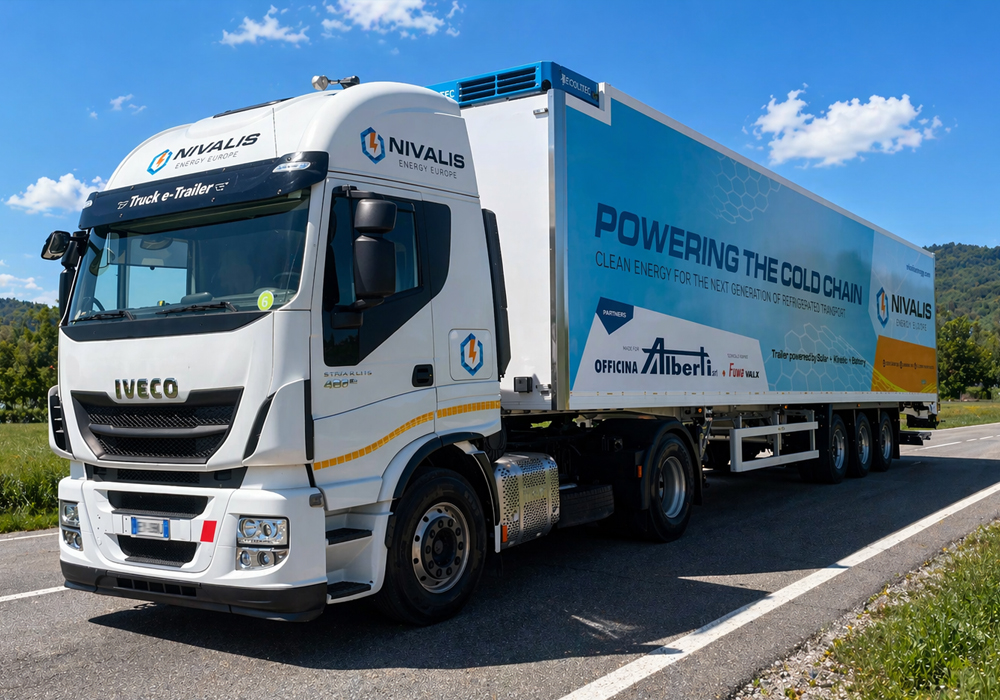
Nivalis Energy Europe will officially unveil its new next-generation electrified refrigeration platform for the first time at Transpotec-Logitec 2026.

The new next-generation platform combines battery storage, rooftop solar PV and regenerative e-axle technology – with new integration and operational intelligence – to help logistics operators fully electrify refrigerated trailer cooling systems. The new Nivalis solution also better supports the growing ESG and emissions-reduction objectives of retailers and global brands. In doing so, fleet operators can dramatically strengthen their competitiveness while simultaneously lowering operating costs, reducing charging dependency and improving the long-haul commercial viability of electrified refrigerated transport.

As electrification continues transforming commercial transport across Europe, refrigerated trailers remain one of the last major operational challenges still heavily dependent on costly and polluting diesel-powered refrigeration systems. As one of the most integrated and commercially mature electrified refrigerated transport platforms currently in the market, Nivalis believes it is uniquely positioned to help accelerate the transition away from diesel-powered refrigeration across modern cold-chain logistics.

“Over the past two years, our first-generation Powered Trailer has proven that electrified refrigerated transport can deliver real commercial and operational benefits in demanding logistics environments – and crucially, through a uniquely diversified energy architecture rather than reliance on a single power source,” said Pavel Gilman, VP Sales and Marketing at Nivalis Energy Europe.

“The next-generation platform builds on the success of our previous solution, with significant advances integration and operational intelligence – designed to further improve the commercial viability of electrified refrigerated transport. Not only does it remove one of the last major barriers to eliminating diesel-powered refrigeration from transport fleets, but our customers have also demonstrated how the platform can lower OPEX while becoming an important commercial differentiator and business driver for their operations too.”

The recent acquisition of SolarEdge e-Mobility further strengthens Nivalis Energy Europe’s ability to scale and accelerate innovation across Europe, combining deep electrification expertise with expanded manufacturing and engineering capabilities.

The Next-Generation Platform

The new next-generation platform has been developed following two years of operational deployment experience gained through early commercial projects across Europe. This included the company’s first Powered Trailer originally developed for LC3 Trasporti and unveiled at Transpotec-Logitec 2024.

According to Nivalis, the fully electric refrigerated trailer has continued operating successfully in real-world logistics environments during a period in which diesel prices climbed to approximately €2 per litre – helping demonstrate the substantial operating cost savings and commercial potential of electrified refrigerated transport.

The new next-generation platform integrates rooftop solar PV, high-capacity battery storage and regenerative e-axle technology within a single intelligent energy management architecture. The system captures and redistributes solar and braking energy while helping optimise refrigeration performance, reduce external charging dependency and improve operational autonomy across long-haul refrigerated transport operations.

According to Nivalis, the next-generation platform also introduces improvements in system integration, energy optimisation and operational intelligence designed to support a broader range of refrigerated logistics applications and operating profiles. The new next-generation solution will enter commercial operation immediately following the exhibition – a move Nivalis says reflects growing market confidence in electrified refrigerated transport solutions.

Pavel concludes: “Retailers, brands and logistics operators are increasingly aligned in recognising that the future of refrigerated transport must be cleaner, more efficient and commercially sustainable. With our unique three-source energy architecture, alongside the expanded engineering and manufacturing capabilities created through the SolarEdge e-Mobility acquisition, Nivalis is uniquely positioned to help power the next phase of electrified refrigerated transport across Europe.”

Bimbo’s High-Velocity Warehouse gets Automated

Grupo Bimbo stands as one of the world’s largest baking companies, operating across 39 countries and four continents, with 249 bakeries and more than 100 brands. Consistently recognized for its corporate responsibility, the company has ranked among Mexico’s most responsible organizations for over a decade.

As Grupo Bimbo continued its global expansion, it faced increasing pressure to modernize its logistics infrastructure, particularly within high-velocity distribution environments where speed, accuracy, and freshness are critical.

The Challenge

Grupo Bimbo‘s rapid growth brought significant operational challenges:
● High-velocity distribution demands: Fresh baked goods require rapid throughput and precise timing to maintain quality and shelf life.
● Increasing SKU and order complexity: A broad and growing product portfolio created strain on traditional warehouse operations.
● Rising logistics costs: Inefficiencies in transport and order fulfillment led to unnecessary delivery trips and higher cost per case.
● Inventory management pressure: Ensuring optimal product rotation while minimizing waste and expiration required greater precision.
● Scalability concerns: Existing infrastructure risked becoming a bottleneck as demand continued to grow.

Bimbo warehouse

To maintain its leadership position, Grupo Bimbo needed a logistics transformation that could support both current demands and future expansion. The company selected Stoecklin Logistics based on several key strengths:
● End-to-end automation expertise: Proven ability to deliver fully integrated, high-performance warehouse solutions.
● General contracting and planning capabilities: A single partner to manage complex project phases from design through execution.
● Data-driven approach: Detailed planning grounded in robust data analysis ensured alignment with operational realities.
● Flexibility and ROI focus: Solutions designed to deliver measurable returns while adapting to evolving business needs.
● Collaborative ecosystem: Strong partnerships across all project phases ensured seamless implementation.

This combination positioned Stoecklin as a strategic partner capable of executing a transformation at scale. The Solution: Fully Automated High-Throughput Warehouse. Stoecklin logistics implemented a fully automated warehouse solution tailored to Grupo Bimbo’s high-velocity environment. Key components included:
● End-to-end automation: Integration of automated storage, retrieval, and material handling systems to streamline operations.
● Optimized throughput design: Systems engineered to handle rapid product flow while maintaining accuracy and consistency.
● Advanced inventory control: Improved visibility and rotation to reduce waste and ensure product freshness.
● Efficient order fulfillment: Automation enabled faster picking and packing, reducing lead times and errors.
● Scalable architecture: A platform designed to accommodate future growth without requiring additional distribution centres.

The solution created a highly synchronized operation, aligning production, storage, and distribution in real time.

Measurable Operational Gains


The implementation delivered significant, quantifiable benefits:

● Increased throughput and speed: Automated systems enabled faster order processing and fulfillment.
● Improved accuracy: Reduced manual intervention led to fewer errors and higher service levels.
● Lower logistics costs: Fewer delivery trips and optimized loads reduced cost per case.
● Enhanced inventory rotation: Better product flow minimized waste, returns, and expiration.
● Scalable growth platform: The automated system supports expansion without the need for multiple smaller facilities.
● Competitive advantage: Faster, more reliable, and cost-efficient distribution strengthened Grupo Bimbo’s market position.

Lessons Learned

Beyond measurable performance gains, the project also delivered valuable strategic insights that can guide future automation initiatives, both for Grupo Bimbo and other organizations navigating similar high-velocity supply chain environments. These lessons highlight the importance of aligning technology, data, and partnerships to achieve long-term success:
● Data-driven planning is critical: Accurate forecasting and robust data analysis form the foundation of any successful automation project, ensuring systems are designed to meet real operational demands.
● End-to-end integration delivers the most value: While incremental improvements can provide short-term relief, fully connected, end-to-end systems unlock significantly greater efficiency, visibility, and performance.
● Scalability must be built in from the start: Designing infrastructure with future growth in mind prevents costly retrofits and enables seamless expansion as demand evolves.
● Strong partnerships accelerate success: Close collaboration between all stakeholders, from technology providers to operational teams, ensures smoother implementation, faster problem-solving, and better overall outcomes.

By partnering with Stoecklin Logistics, Grupo Bimbo successfully transformed its warehouse operations into a fully automated, high-performance distribution hub. The project not only addressed immediate operational challenges but also established a scalable foundation for continued global growth.

War Risk Insurance for Cargo Offered

DP World has launched what is says is a first-of-its-kind cargo war risk insurance solution to help businesses navigate disruption across Middle East trade routes, where traditional insurance has become fragmented, costly and often unavailable.

The solution provides continuous coverage across the entire supply chain, from ocean or air transit through port storage and inland delivery, closing critical gaps left by conventional insurance policies, which typically insure a single leg of the journey. By leveraging its scale and relationships across global insurance markets, DP World has also secured pricing that is significantly more competitive than standard war risk premiums.

“This is about solving a real, immediate problem for global trade,” said Yuvraj Narayan, Group CEO, DP World. “Supply chains don’t stop at the port or the shoreline, and neither should insurance. For the first time, cargo owners can access a single policy that protects goods across the entire journey, even in high-risk environments, helping keep trade moving when it matters most.”

The solution covers physical loss or damage caused by war-related risks, including conflict, civil unrest, seizure and derelict weapons, with all valid claims settled with zero deductible.

Available to all companies trading in or through the Middle East, the programme is designed to maintain supply chain continuity across key trade corridors, including the Arabian Gulf, the Red Sea and surrounding inland routes. The programme offers a range of options, including:

• End-to-end protection from ocean or air transit through to inland delivery.
• Standalone ocean, air or land transit policies.
• Automatic port storage cover for up to 14 days.
• High coverage limits, including up to $400 million per shipment and $1 million per inland movement.

This flexibility enables cargo owners to adapt quickly to changing routes and operational realities.

How it Works

For example, with a shipment from Asia to the Middle East, cargo travels by sea into Jebel Ali, where it is stored at port for several days before clearance, then transported by truck to its final inland destination.

With traditional insurance coverage typically applies only during ocean transit, leaving gaps during port storage and inland transport. With DP World’s solution a single policy provides continuous protection across the entire journey, from entry into the war risk zone through to final delivery.

Why this matters:
· Traditional cargo insurance typically excludes war risk or requires separate cover
· Coverage often ends at discharge, leaving gaps during port handling and inland transport
· Carriers do not cover war-related losses, as these fall outside their liability

DP World’s solution closes these gaps with continuous, end-to-end protection.

Logistics Business Magazine – May 2026

The latest issue of Logistics Business arrives at a pivotal moment for the supply chain sector, as companies across freight, warehousing and transport face mounting pressure to become faster, smarter and more resilient. Inside the May 2026 edition, readers will discover how the industry is moving beyond technology hype and into a new era where AI, automation and intelligent software are delivering measurable operational advantage.

A major focus of this issue is the growing role of AI and visibility technologies across logistics operations. From embedded AI agents helping supply chain teams move from insight to action, to advanced LiDAR systems improving warehouse safety and automation, the magazine explores how digital intelligence is becoming the invisible engine behind modern logistics performance. Exclusive interviews with leaders from Infios, MicroVision and Ocado Intelligent Automation reveal how software, data and automation are reshaping fulfilment, warehouse execution and operational decision-making.

The issue also examines the evolving dynamics of global freight and customs. Readers can explore how Trans.eu is rethinking the freight exchange model around trust, payment security and intelligent automation, while an in-depth customs feature reveals why forwarders are increasingly turning compliance expertise into a competitive commercial weapon. Elsewhere, an exclusive feature on cross-border e-commerce returns challenges common perceptions around post-Brexit trade and highlights why the UK market may represent a bigger opportunity than many retailers realise.

Warehouse and intralogistics innovation remains central throughout the edition. From robotic picking systems and warehouse gamification to high-density storage strategies and automated fresh food distribution, the issue showcases the technologies and operational thinking redefining fulfilment efficiency. Readers are also taken inside advanced logistics facilities and multimodal operations that demonstrate how leading companies are combining automation, flexibility and sustainability to meet rising customer expectations.

Packed with expert interviews, strategic analysis and real-world case studies, the May 2026 issue of Logistics Business offers essential reading for logistics professionals looking to understand not just where the industry is today – but where it is heading next.

Our digital issues can be read or listened to in any language. Simply click on the ‘Freeflow reader’ graphic near the top right corner of each editorial page. To browse all our recent issues click here.

6,000 Pallet Cold Store Adds Frozen Capacity

UK and Ireland specialist in temperature controlled logistics and supply chain solutions, Oakland International, has announced the construction of a new 6,000 pallet capacity frozen cold store at its Bardon site, marking a significant investment in its long term infrastructure strategy.

The development will increase Oakland International’s total frozen capacity across its network by approximately 30%, reinforcing its ability to support long term customer growth while further enhancing its range of value added services, including tempering solutions, at a time of continued growth and evolving requirements across retail and food supply chains, where resilience, flexibility and efficiency are increasingly critical.

Regional Director Jamie Robinson commented:

“This investment reflects our ongoing commitment to our customers and to building infrastructure that delivers resilience, flexibility and real operational value. Expanding frozen capacity at Bardon is a major step in strengthening our network and future proofing our service offering.”

By expanding frozen capacity at Bardon, Oakland International is responding directly to customer demand for scalable, strategically located storage that can support both current volumes and future expansion, while enabling a single depot, multi temperature solution that simplifies supply chains and improves operational efficiency.

Bringing frozen, chilled and ambient services together at one location reduces complexity, streamlines handling and supports faster, more cost effective distribution, particularly for customers supplying major retailers.

This investment forms a key phase in Oakland International’s long term vision to develop Bardon into a fully integrated, multi temperature logistics hub and, once complete, the site will offer customers a comprehensive, end to end supply chain solution within a single, strategically positioned location, increasing flexibility and strengthening service continuity.

Robinson added:

“Our ambition at Bardon is to create a logistics environment that doesn’t just keep pace with our customers’ businesses, but actively enables their next phase of growth. By bringing greater frozen capacity together with multi temperature capability under one roof, we are building a smarter, more connected supply chain that gives customers confidence, choice and long term flexibility.”

Infios Named a Leader in 2026 Magic Quadrant

Infios has announced that it has been recognized as a Leader in the 2026 Gartner Magic Quadrant for Warehouse Management Systems (WMS) for the eighth consecutive year.

Infios was also recently acknowledged in the 2025 Gartner Peer Insights Voice of the Customer for Warehouse Management Systems. The ‘Voice of the Customer’ report, which aggregates user reviews into actionable insights, highlighted Infios with an average rating of 4.5 out of 5 based on 32 reviews as of 31st August 2025. Placed in the upper-right corner of the ‘Voice of the Customer’ grid, Infios was recognized as a Gartner Peer Insights Customers’ Choice. Infios (formerly Körber Supply Chain Software) also received this recognition in 2023.

“We believe being named a Leader in the Gartner Magic Quadrant for Warehouse Management Systems and the only WMS provider recognized as a Gartner Peer Insights Customers’ Choice underscores Infios’s commitment to delivering real outcomes for our customers through a relentless focus on execution and purposeful innovation,” said Ed Auriemma, CEO of Infios.

“Our WMS spans entry to enterprise, orchestrating people, processes, robotics and automation in a single, scalable system. This is how we power the next generation of connected intelligent supply chain execution.”

Infios’s WMS brings together real-time inventory visibility, advanced slotting, labour management, automation and embedded AI to enable intelligent orchestration across workflows. The result is faster decisions, less rework and more reliable execution helping organizations improve efficiency, accelerate decision making and build more resilient supply chain operations.

“With Infios, we’ve moved beyond simply managing warehouse operations to running a far more connected, intelligent supply chain. We were able to scale through our largest peak on record, exceeding forecast by 170%, while nearly doubling throughput without adding labour, all while improving inventory accuracy and operational control,” commented Jeff Durham, CEO of Durham Brands.

“What stands out is not just the performance gains, but the ability to adapt quickly, make better decisions in real time, and continuously improve how we operate. It’s had a lasting impact across the business.”

View a complimentary copy of the 2026 Gartner Magic Quadrant for Warehouse Management Systems (WMS) report here.

Electrified Port Logistics at TOC Europe

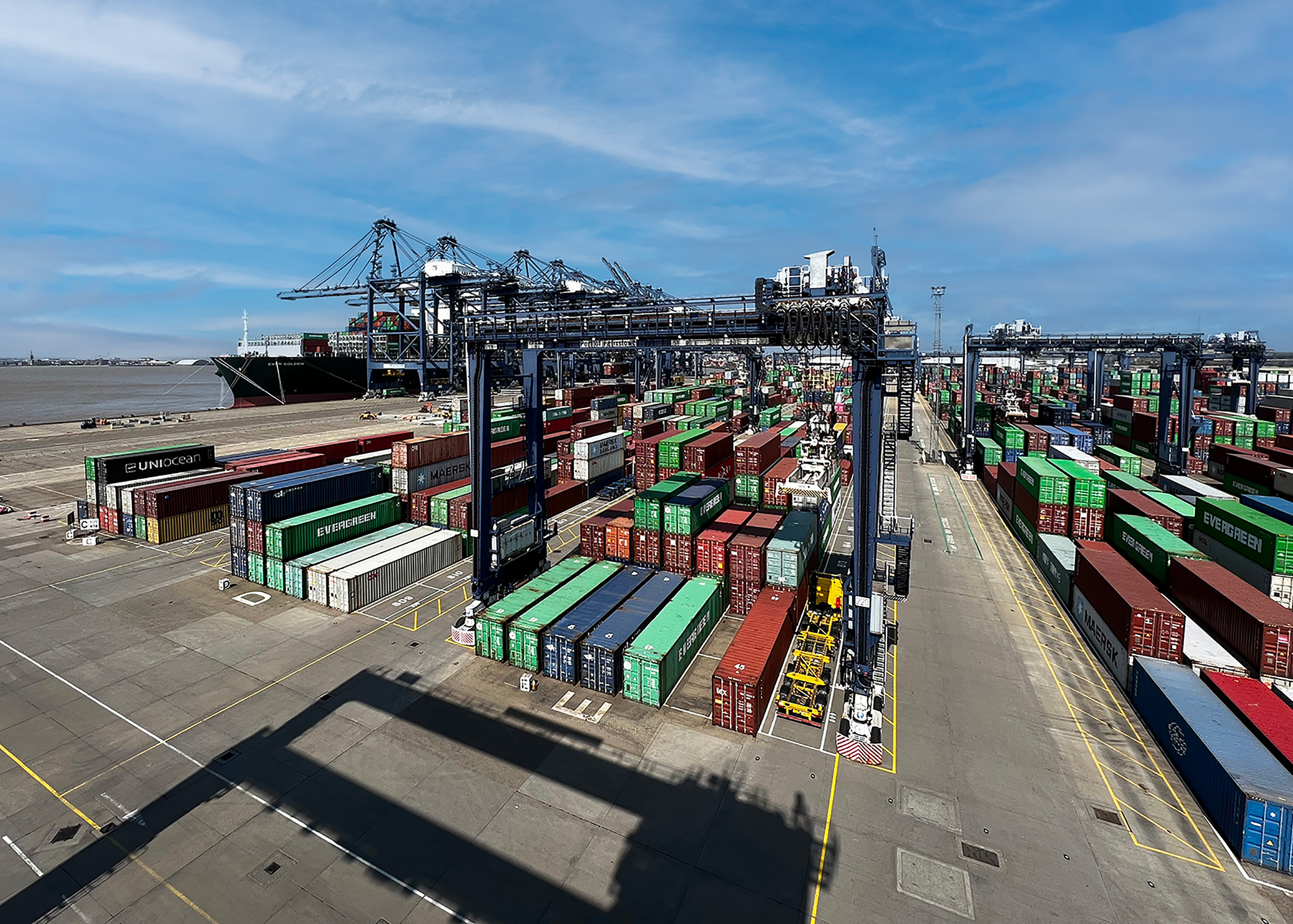
Paul Vahle GmbH & Co. KG will be presenting solutions for the electrification of container terminals at TOC Europe 2026 in Hamburg from 19 to 21st May. The focus is on integrated energy systems for highly dynamic port operations — from electrified crane applications and automated charging through to intelligent energy management in terminal operations.

“Rising diesel prices and volatile energy costs are increasing the economic pressure on port operators. At the same time, regulatory requirements are intensifying the need for low-emission terminal processes. As a result, electrification is increasingly becoming not just a question of efficiency, but a key prerequisite for future-proof terminal structures,” says Jaroslaw Warzecha, Director Business Unit Ports at Vahle. “At TOC Europe, we will show how power supply, motion systems and automation can be combined into a seamless, end-to-end solution.”

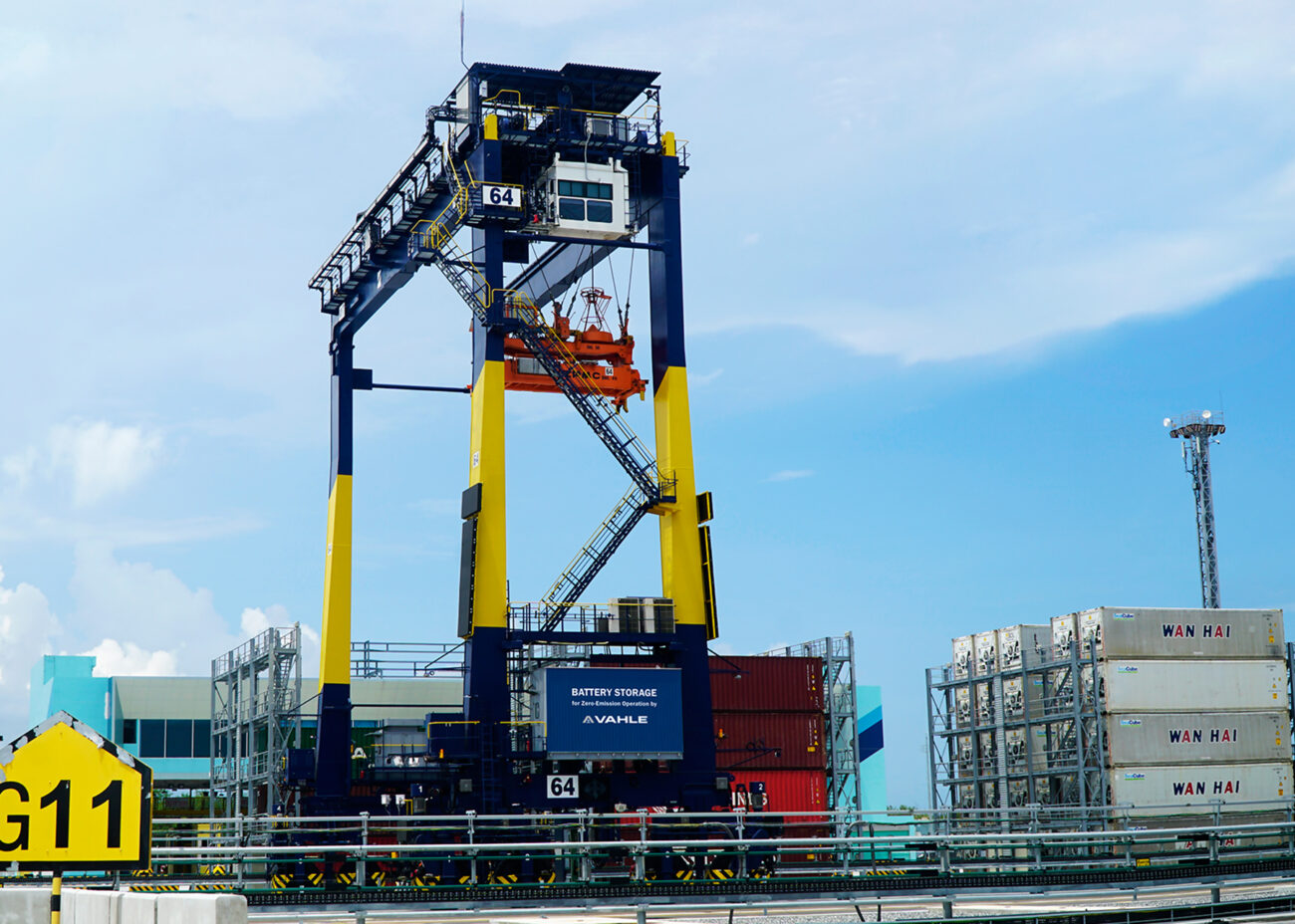
A key focus is the electrification of Rubber Tyred Gantry (RTG) cranes — an area in which VAHLE has supported port applications for many years. This segment is being consistently advanced with the modular TriMotion Compact system solution. In addition, battery-based storage solutions such as the Battery Storage System are used as dynamic energy buffers in terminal operations.

By supplying energy based on demand, peak loads on the grid are specifically reduced and power flows within the terminal are stabilized. Thanks to modular and immersion-cooled battery concepts, capacity and output can be flexibly adapted to different operating profiles — for example for aisle change, hybrid operation or peak shaving. Immersion cooling ensures a constant temperature window for the battery cells — an essential factor for service life, performance and operational safety in port use. This enables crane movements in battery mode to be carried out temporarily independent of the grid and locally emission-free.

The practical impact of this approach can be seen in electrified RTG applications with TriMotion Compact. “By replacing diesel-based units, up to around 300 tonnes of CO2 can be saved per year and conversion— depending on the operating profile. This makes the decarbonization of terminal processes not only technically possible, but also economically scalable and operationally integrable,” Warzecha emphasizes.

VAHLE’s PowerDock charging infrastructure builds on this foundation. The solution enables automated charging of electric terminal vehicles during operational standstill times. The charging process is integrated directly into terminal operations and follows the principle of opportunity charging — energy is taken on precisely when vehicles are not in active use anyway.

“With PowerDock, we standardize charging processes in the terminal while simultaneously increasing the availability of electric fleets in continuous operation,” says Warzecha. “This makes the energy supply an integrated part of the process chain.”

In addition, VAHLE is further advancing its developments in shore power supply. In the Port of Hamburg, the system provider implemented a movable installation for “HADAG Seetouristik und Fährdienst AG” that reliably supplies vessels with electrical energy while alongside. The system replaces diesel-powered onboard generators and significantly reduces emissions as well as noise. It also compensates for tidal movements and is already designed for future generations of electric ferries.

At TOC Europe, VAHLE will be presenting its solutions for electrified and automated port logistics at booth E92. Visitors will gain insights into current systems for RTG electrification, automated charging, energy management and shore power applications—and can discuss specific deployment scenarios with the company’s experts.

All Systems Are Go

Formalised on 1st April, intralogistics businesses Vanderlande, Viastore and Bastian Solutions united into a new brand – Toyota Automated Logistics (TAL). David Priestman spoke with EMEA CEO Thomas Hibinger (main picture) at LogiMAT.

Scale isn’t everything in business, but it certainly carries advantages when you have the backing and resources of a power brand. What happens when you combine a major materials handling and automation business with a warehouse management software and miniload/stacker crane specialist, under the umbrella of the world’s largest forklift supplier? The answer, in Europe, is that the viastore team, based in Stuttgart, are taking the lead in the new organisation. “One family, with three P&Ls now united,” Hibinger tells me.

Vanderlande’s baggage handling and parcel business will continue as a separate entity, but its renowned warehousing systems (e.g. ADAPTO, POSISORTER and BLUEVEYOR) now form the backbone of the integrated warehouse automation solutions that TAL offers.

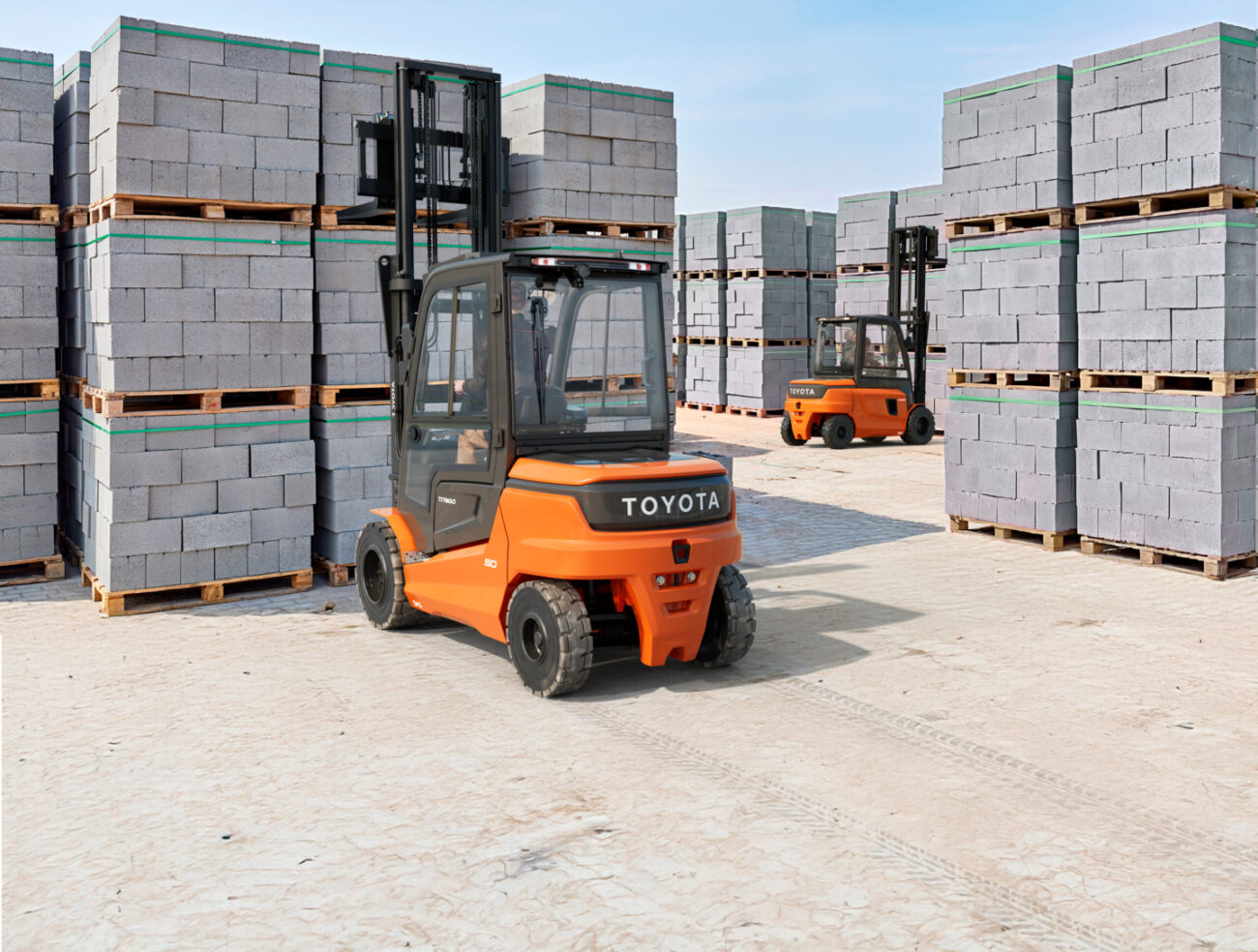
“We’re number one in forklifts and we want to be number one in automation too,” Hibinger states. “Toyota Materials Handling is the number one lead source for TAL as they have so many dealers everywhere. If a customer wants an automation solution that’s where we come in.”

The objective, for Hibinger, is not just growing the revenue substantially, but also considerable innovation. “We’re thinking in terms of solutions, everything in the warehouse. We aim to double the business in the next five years.” Look out, KION.

TAL aims to offer a seamless customer journey in one connected solution, from material handling to automated warehousing and logistics, across the regions. By combining its strengths and innovative solutions, the goal is to deliver measurable results, and maximise the trust in the Toyota brand.

Deliver for you

This multinational household name spends $1m PER HOUR on research and development. User-inspired research to ‘improve the human condition’ is a core philosophy of Toyota Industries Corporation (TICO), which shares the discoveries of the Toyota Research Institute to keep all its divisions up with technological advances. All Toyota businesses practice the organisation’s famed production methods.

A key initiative for TAL’s sister company, Toyota Material Handling Europe, is a collaboration with SSAB, a Swedish-based steel manufacturer, to use low-carbon steel in a growing number of products. Toyota is seen as an early mover when it comes to the use of lower carbon materials, setting new standards for the industry. The use of low carbon-steel in the Toyota Lifter LHM230 hand pallet trucks has resulted in an 18% carbon emissions reduction cradle to gate compared to previous models.

TMHE Senior Sustainability Manager, Marc Maureaux said:

“The focus on sustainability is evident in so many areas. Safety is a critical issue, so we are developing new ideas to improve safety across many of our products, as well as collaborations with innovative companies who provide progressive solutions to improve safety in logistics operations. We are also continuously improving energy efficiency within our product range and there are many examples of this, such as the new Traigo80 3.5 to 5.0t with up to 12% energy savings, compared to previous models.”

Subscribe

Get notified about New Episodes of our Podcast, New Magazine Issues and stay updated with our Weekly Newsletter.