Drive System Combines Motor and Inverter

Thanks to the optimal electrical and mechanical adjustment of both components, NORDAC FUSION achieves high power density, while particular attention was given to keeping the installation space as small as possible. Users benefit from a ready-to-use system that operates reliably once connected. This eliminates extensive parameterisation or time-consuming selection of components.

For logistics projects with a high level of automation, this means: less engineering efforts per drive axle, faster commissioning and consistently high drive quality – from the first conveying point to the last transfer station. NORDAC FUSION’s decentralised design furthermore allows for direct mounting on the respective unit. Centralised control cabinets are thus no longer required and wiring efforts are considerably reduced.

Various combinations

NORDAC FUSION combines asynchronous motors (IE3) and permanent magnet synchronous motors (IE5+) in ventilated and unventilated versions with a decentralised NORDAC ON frequency inverter. The optimised motor/inverter combinations cover a power range from 0.31 to 3.7 kW. They feature consistent safety and communication properties, are suitable for worldwide use, and can be ideally complemented with a gear unit from the manufacturer’s modular product range.

The decentralised frequency inverters are characterised by their compact design, full plug-in capability and high reliability. Special features include the integrated PLC and their multi-protocol Ethernet interface. PROFINET, EtherNet/IP and EtherCAT can be easily set via parameters. Integrated safety functions enable safe operation of almost all motion sequences in automated production.

Advanced communication and safety functions

Apart from STO and SS1, the NORDAC ON series will also feature the motion monitoring function SLS, SMS or SSM for fail-safe control of the rotary movement. They can be integrated via PROFIsafe or FSoE into a fail-safe application within an existing Industrial Ethernet network. Stand-alone use is also possible. The safe digital inputs and outputs can be used to incorporate fail-safe peripheral components or functions. Emergency stop buttons, safety door switches, photoelectric sensors, etc. can thus be connected directly. Two safe single-channel digital inputs can be combined into one safe two-channel digital input, and two safe outputs can be combined into one safe two-channel output. The level of functional safety can thus be individually set with NORDAC FUSION as well.

Encoderless control in dynamic applications

Another advantage is the encoderless control of NORDAC FUSION with the manufacturer’s highly efficient IE5+ synchronous motors (PMSM). Using the CFC open-loop injection method, the motor’s rotor position and speed can be captured without additional sensors. With this, NORD offers a robust, streamlined and economical drive solution that is also suitable for dynamic applications.

Highly efficient IE5+ motor technology

NORD’s highly efficient IE5+ permanent magnet synchronous motors (PMSM) are characterised by a constantly high efficiency of up to 95% over a wide torque range. In partial load and partial speed ranges, they therefore achieve optimum energy consumption performance and allow for a reduction of variants for more streamlined production, logistics, warehousing and service processes.

The NORDAC FUSION drive solution can be used up to a temperature of -30 °C. The combination of IE5+ synchronous motors and NORDAC ON PURE with NXD tupH® is, for example, suitable for wash-down applications in the food sector. Ethernet on board, hybrid cables and daisy chain technology enable efficient and hygienic topologies that are more streamlined and easier to clean than conventional decentralised wiring.


AIP Completes Deal with Intelligrated and Transnorm

American Industrial Partners has announced the successful completion of its acquisition of Honeywell Technologies’ Warehouse and Workflow Solutions business, which includes Intelligrated and Transnorm. With the transaction complete, Intelligrated, Trew and Transnorm now operate under one organization, singularly focused on helping customers design, build and support world-class warehouse automation solutions for retail, e-commerce, manufacturing, distribution and parcel operations.

The combined organization brings together trusted automation expertise, complementary technologies, systems design and project management, with expanded manufacturing, engineering and service capacity. Together, the businesses offer one of the industry’s most comprehensive portfolios of equipment, software and services to help customers optimize today’s operations, modernize fulfilment networks and prepare for tomorrow’s increasingly complex distribution challenges.

The new organization is purpose-built around warehouse automation, enabling faster decision-making, focused investment and greater consistency for customers. It brings to market a combined automation portfolio that includes systems integration, conveyor, sortation, robotics, automated storage and retrieval (AS/RS), palletizing, software, controls and lifecycle services. The businesses collectively generated more than $1 billion in revenue in 2025, employing more than 3,700 people across North America, South America, Europe and Asia.

Alfred Rebello (pictured, below) has been appointed Chief Executive Officer of the combined organization. Rebello brings more than 35 years of experience in material handling and warehouse automation, including a strong track record of hands-on, customer-focused leadership at both Trew and Intelligrated. He served as an integral part of Intelligrated since its founding in 2001, and led manufacturing, project execution and installation as senior vice president of operations through Honeywell’s acquisition of the company. He joined Trew as President and Chief Operating Officer in 2022 before promotion to CEO in 2023.

Today is more than simply bringing three respected organizations together… It’s about creating a future built entirely around our customers’ success. By combining our expertise, technologies and talent, we’re able to deliver broader capabilities, stronger execution and continued investment in innovation, while providing the continuity and trusted relationships customers depend on.

said Rebello.

Customer activities will be uninterrupted while the organizations align. Intelligrated, Trew and Transnorm will continue serving customers under their existing brands. Products, services, contracts, support teams and customer relationships remain in place. The sole focus of the new ownership is investing in and growing industrial businesses, and in the coming months, the combined organization will work closely with customers and partners to determine the best long-term operating model and strategies for success.

Bringing these businesses together is a growth strategy targeting a growing market… The numbers tell that story – industry research commonly projects double-digit growth in warehouse automation into the 2030s. To meet that demand, we must listen deeply to our customers and continually invest in tomorrow’s innovations. Earning their trust through every phase of their automation journey is how we’ll measure our success moving forward.

said Rebello.

Abbey Partners with Durwen Forklift Attachments

Abbey Attachments has entered a new partnership with Durwen Forklift Attachments, becoming the UK supplier for Durwen’s range.

Based in Bury, Lancashire, Abbey has built a reputation since 1984 as one of the UK’s most trusted suppliers of used forklift rental attachments. Over time, the business has expanded beyond attachments, introducing solutions such as AI pedestrian detection systems, forklift safety cameras and hydraulic weighing technology.

As Abbey continues to grow, the business has focused on making their solutions more accessible to customers. The recent launch of a new website reflects that direction, providing a clearer way to explore the full range of equipment, services and expertise available across the business.

In 2025, Abbey took another significant step by beginning to stock new forklift attachments for the first time, broadening their offering beyond their established rental fleet. This is where the seeds of the Durwen partnership began to grow. Durwen were looking to boost their presence in the UK. Based on Abbey’s reputation and established customer base, they got in touch with a proposal for us to become their UK supplier for their growing range of forklift attachments.

Paul Saunders, Abbey Managing Director, commented:

“I have known Ralf (Durwen’s Export Director) for over 20 years and have greatly admired them for both the quality of their attachments and the exceptional service they offer. When we realised there was an opportunity to partner with Durwen and become their distributor in the UK, we jumped at the chance. Thanks to the support from the entire team at Durwen, and the enthusiasm of my colleagues, we have a strong foundation to grow our market position and provide solutions that help our customers.”

Founded in 1947 by Niko Durwen, Durwen has manufactured forklift attachments from its site in Plaidt, Germany for decades. The company has become well known throughout the material handling sector for their commitment to reliability, durability and customer support.

Ralf Taubenheim says:

“We at Durwen Germany look forward to working closely with Abbey. They will be strong partner whose service and support, combined with the Durwen attachment range, will create a high-quality offering for the UK market. As family-run businesses, both Durwen and Abbey share the same focus on customer needs and a practical approach to solving problems. This shared mindset will give customers confidence in the support and solutions they receive.”

With shared values, complementary strengths and a clear focus on delivering high-quality solutions, this partnership positions both businesses for continued growth.

Is Diesel Refrigeration Coming to an End? – Podcast Episode

The future of refrigerated transport is changing. Rising fuel costs, tighter emissions regulations and advances in battery technology are prompting logistics operators to reconsider one of the industry’s longest-standing technologies: diesel-powered refrigeration.

In the latest episode of Logistics Business Conversations, we explore why the transition to sustainable refrigeration is gathering pace and what it means for fleet operators.

For decades, diesel refrigeration units have been the industry standard, but growing pressure to reduce emissions is driving interest in electric alternatives. Despite the benefits, many businesses remain cautious due to concerns around performance, operational practicality and the cost of switching.

This episode examines the real challenges of moving away from diesel, while also exploring the financial case for electric refrigeration. Lower fuel and maintenance costs are helping to improve the total cost of ownership, while new refrigeration-as-a-service rental models are allowing operators to trial electric units without major upfront investment.

We also look ahead at how improving technology and new business models could accelerate the industry’s move towards cleaner, more sustainable cold chain operations.

In this episode, you’ll discover:

  • Why diesel refrigeration still dominates the industry.
  • The biggest barriers to adopting electric refrigeration.
  • The true cost comparison between diesel and electric.
  • How rental models are reducing the risk of switching.
  • What the future of refrigerated transport could look like.

Listen to the latest episode of Logistics Business Conversations using the player embedded below.

From Chargebacks to Competitive Advantage

How Perry Ellis improved fulfilment accuracy, strengthened retail compliance and reduced costly shipment errors through automated outbound verification.

Every chargeback begins with a small mistake. A missing garment. An incorrect size. An extra item packed into a carton.

Individually, these errors may seem insignificant. Across a large retail supply chain, however, they can quickly become a major source of lost revenue. Chargebacks, compliance penalties, shipment investigations and inventory discrepancies continue to cost apparel brands millions of pounds and dollars every year.

For many retailers and fashion brands, the challenge is not moving products faster. Modern distribution centres are already highly productive. The real challenge is ensuring that every shipment arrives exactly as expected. That was the challenge facing Perry Ellis International.

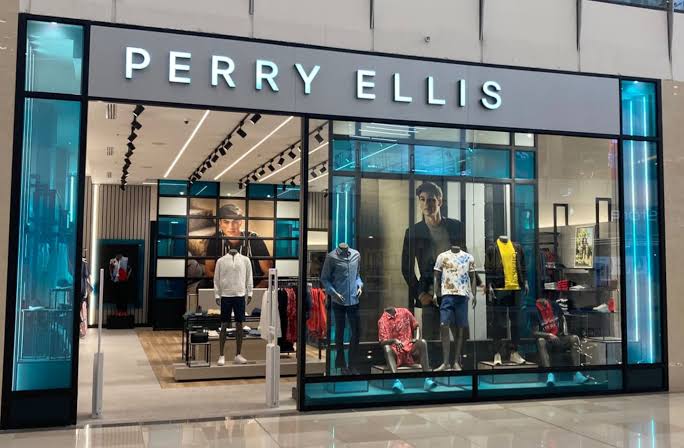
As one of North America’s leading fashion and apparel companies, Perry Ellis manages high-volume distribution operations serving retailers and wholesale partners across the region. While the company’s warehouse processes were already highly efficient, ensuring flawless outbound accuracy remained a strategic priority. The reason is simple.

Retailers are becoming increasingly demanding. Supplier compliance programmes continue to tighten, and penalties for shipment discrepancies can be severe. A single quantity mismatch, missing item or fulfilment error can result in deductions that directly impact profitability. In some cases, these chargebacks may represent up to 20% of the invoice value.

For organisations shipping thousands of garments every day, even a small percentage of errors can translate into substantial losses over the course of a year. But the impact goes beyond financial penalties.

Inaccurate shipments affect inventory availability, increase operational workload, create friction between suppliers and retailers, and ultimately influence the customer experience. In an era defined by omnichannel retailing, inventory accuracy and fulfilment reliability have become essential competitive differentiators.

Recognising this challenge, Perry Ellis took a different approach. Rather than adding more manual checks, the company focused on improving the way outbound orders were verified before leaving the distribution centre. Working alongside Clustag, Perry Ellis deployed a solution combining intralogistics automation, intelligent software integration and high-performance RFID tunnel technology to create a more accurate and reliable fulfilment process.

“This RFID deployment demonstrates how technology can transform fashion intralogistics from day one. The collaboration between operations, engineering and technology teams was key to achieving measurable results in such a demanding environment.” Jorge Robledillo, North America Director, Clustag.

At the heart of the project is a simple principle: verify every shipment before it becomes a problem.

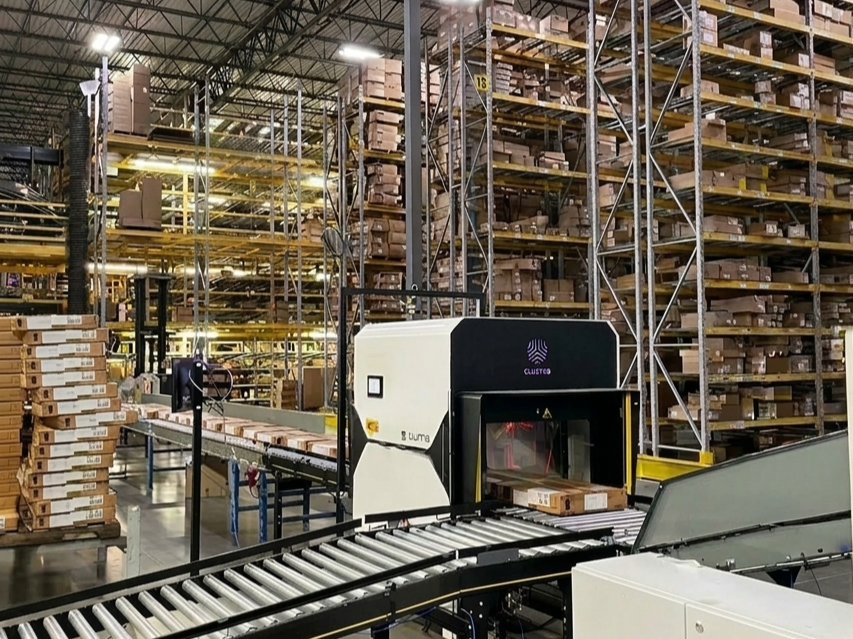
As cartons move through the outbound operation, high-density RFID tunnels automatically identify each RFID-tagged garment and compare the contents of every shipment against the expected order data. Through integration with Manhattan WMS and Clustag’s Zentup platform, the process takes place in real time, providing complete visibility of shipment accuracy before goods leave the facility.

If a discrepancy is detected, whether a missing item, an additional garment or an incorrect SKU, the shipment is automatically diverted for correction.

The value of this approach is not simply operational efficiency, it is confidence. Confidence that retailers receive exactly what they ordered. Confidence that inventory records remain accurate. Confidence that avoidable chargebacks never occur in the first place. The results were immediate.

Following deployment, Perry Ellis achieved a 17% reduction in outbound discrepancies, significantly reducing the number of non-compliant shipments reaching retail partners. The company also reported a substantial reduction in chargeback exposure while improving inventory accuracy, fulfilment quality and product availability across stores.

“The RFID tunnel solutions integrated with Zentup allow us to detect errors before they reach the store and provide a clear competitive advantage. We will continue investing in these systems for future projects.” Tom Seow, VP of Distribution Engineering, Perry Ellis.

For retailers and logistics providers facing similar challenges, the Perry Ellis experience highlights an important lesson. RFID is no longer simply a tool for inventory counting.

When combined with warehouse automation and intelligent software integration, it becomes a powerful instrument for improving fulfilment accuracy, protecting margins, strengthening retail compliance and enhancing customer service.

In today’s retail environment, success depends on more than simply moving products quickly. It depends on moving the right products, to the right place, in the right quantity, every single time. And that is where outbound accuracy becomes much more than a warehouse metric. It becomes a competitive advantage.

3PL Deploys Robots for Ecommerce Fulfillment

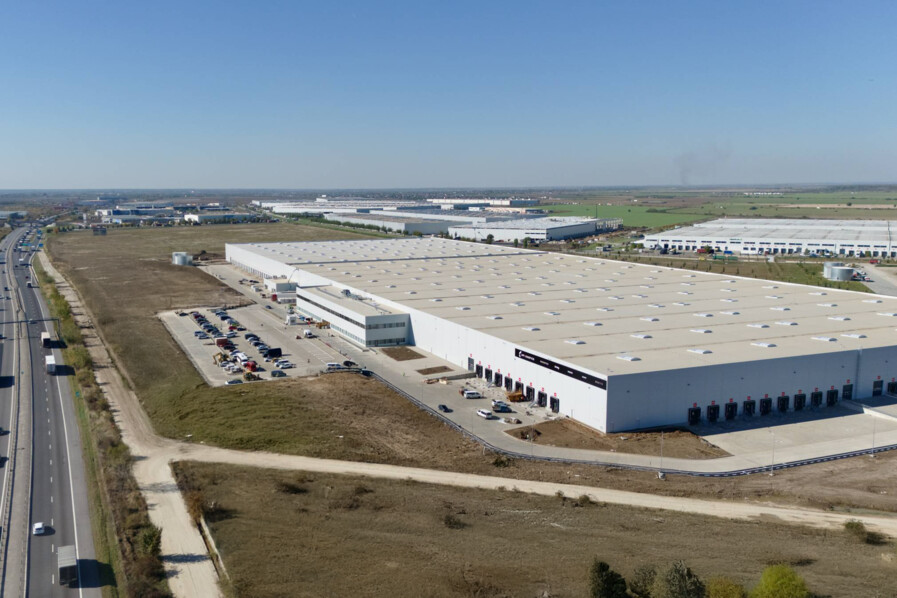
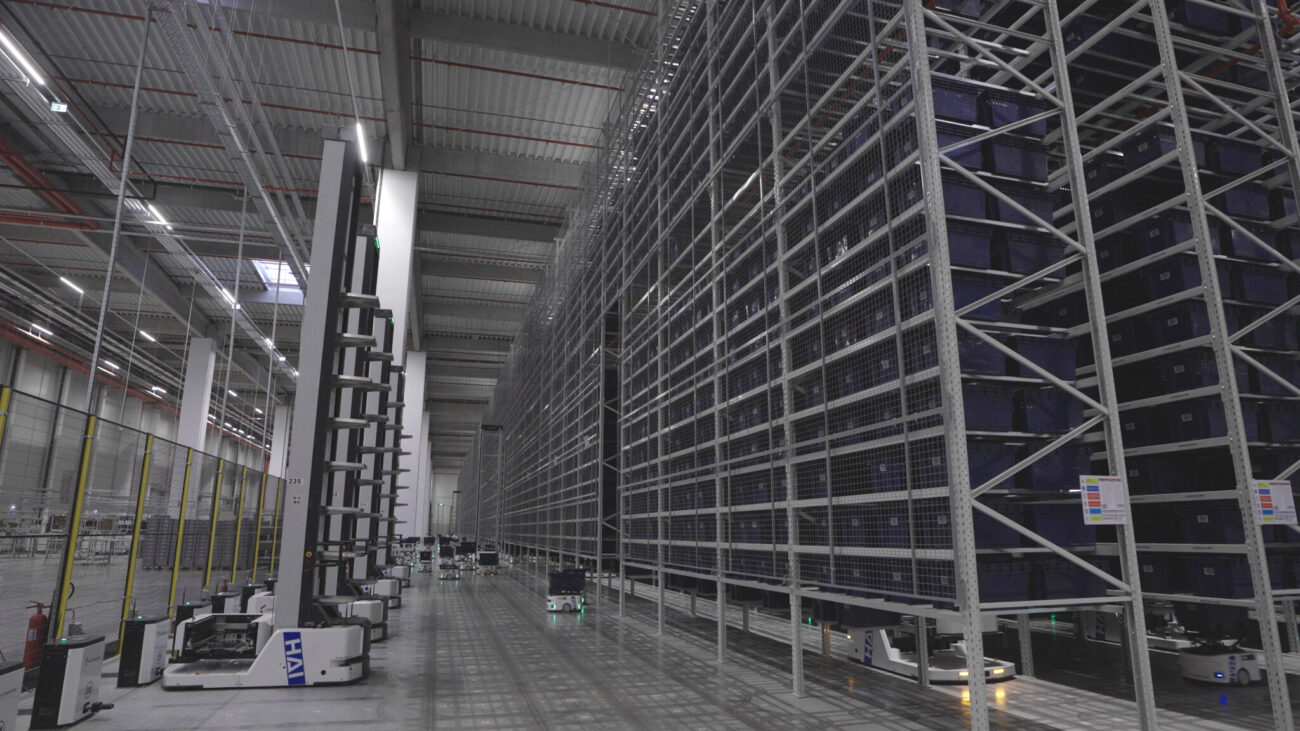
Hai Robotics has completed a project for a large-scale HaiPick System 3 deployment at LPP Logistics’ new ecommerce fulfilment centre near Bucharest, Romania.

The solution combines 278 HaiPick Automated Case-handling Robots (ACRs) with 670 Fast-transit Companion AMRs. Together, they support more than 625,000+ storage locations and provide capacity for up to 7.5 million garments and accessories.

The HaiPick System 3 deployment was completed in less than six months, enabling LPP Logistics to rapidly expand fulfilment capacity for its growing ecommerce operations in Southeastern Europe.

LPP Logistics manages the logistics operations of the LPP Group, one of Central Europe’s largest fashion retailers. The group operates five internationally recognized brands: Reserved, Cropp, House, Mohito and Sinsay. The Bucharest-area fulfilment centre serves online customers across Romania, Bulgaria, Serbia, Greece and Hungary.

Deployment at a Glance:

  • 948 Hai Robotics robots: 278 ACRs and 670 AMRs
  • More than 625,000+ storage locations
  • Capacity for up to 7.5 million garments and accessories
  • Throughput of more than 9,400 totes per hour
  • Deployment completed in less than six months

LPP Logistics demonstrates how flexible warehouse automation can support the rapid growth of omnichannel retail… Together, we have created a scalable fulfilment platform that meets current operational needs while giving LPP Logistics the flexibility to expand as its business evolves.

said Peter Guan, General Manager EMEA at Hai Robotics.

The case study shows the collaboration between Hai Robotics and LPP Logistics in designing the solution around the retailer’s operational requirements. The new fulfilment centre delivers substantial improvements across storage capacity, operational efficiency, and future scalability.

Improved Fulfillment Efficiency & Faster Service Levels

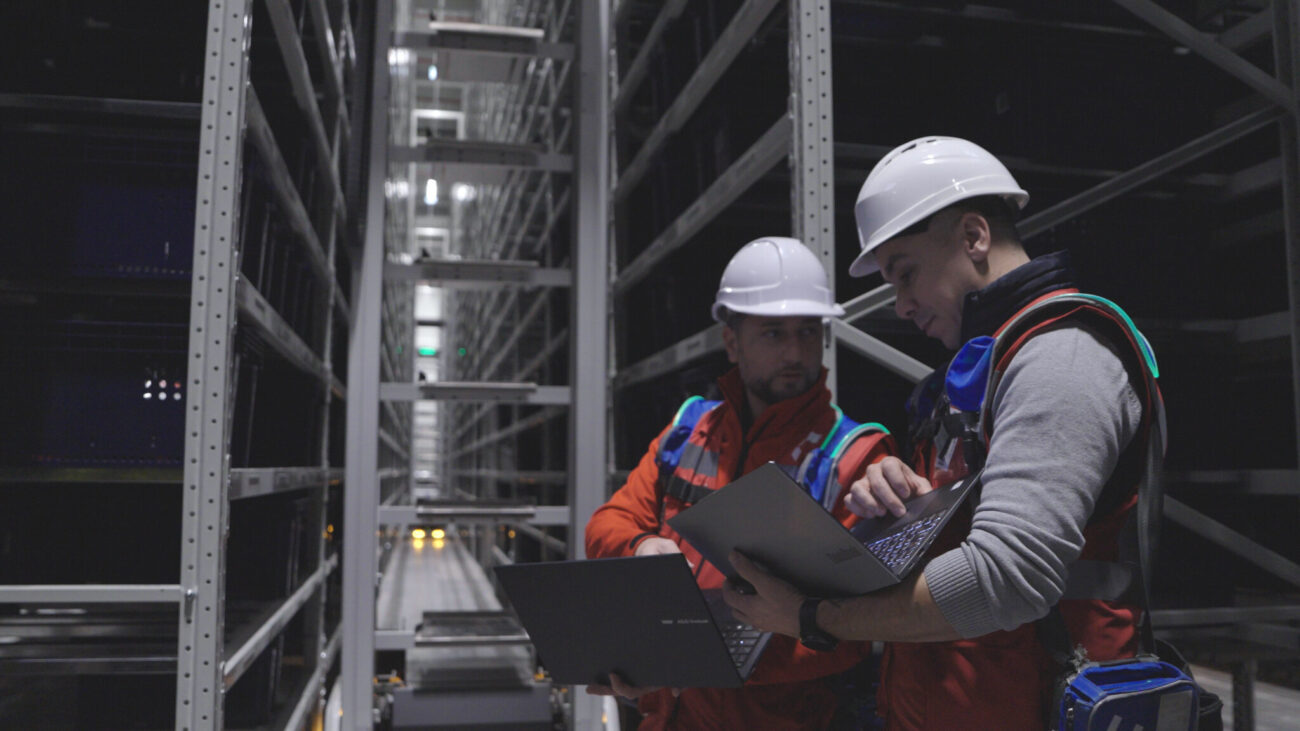
Powered by 278 ACRs and 670 AMRs, the goods-to-person solution eliminates extensive operator travel and significantly improves picking productivity. The automated workflow enables faster order fulfilment while improving workplace ergonomics and operational consistency.

The facility is designed to process more than 80,000 orders per day, supported by automated sortation capable of handling up to 14,000 parcels per hour, helping LPP Logistics in its aim to deliver faster service across South-Eastern Europe.

Subscribe

Get notified about New Episodes of our Podcast, New Magazine Issues and stay updated with our Weekly Newsletter.