


Why real-time data is becoming the missing layer in warehouse automation, by Oana Jinga (pictured), Co-Founder & Chief Commercial & Product Officer at Dexory.
Modern warehouses are more automated than ever. Autonomous mobile robots, automated storage and retrieval systems, AI-powered warehouse management systems and advanced picking technologies are helping operators boost productivity, tackle labour shortages and meet rising customer expectations. Yet despite these advances, many warehouses still rely on outdated information when making operational decisions.
Inventory is constantly moving. Pallets are relocated, storage locations fill and empty, and congestion builds in busy areas. By the time many systems register these changes, operations have already shifted. The next leap in warehouse performance will not come from adding more automation alone. It will come from giving existing systems access to accurate, continuously updated operational intelligence. Automation is only as effective as the data it relies on.
Closing the gap between systems and reality
Warehouses generate vast amounts of data through WMS, ERP platforms and automation equipment. However, much of this data reflects transactions rather than real-world conditions. A pallet may be moved after it is scanned. A location may be partially occupied. Inventory may be misplaced or incorrectly recorded. These discrepancies create a gap between what systems believe is happening and what is actually occurring on the warehouse floor. As automation increases, this gap becomes more critical.
Automated systems are designed to execute tasks efficiently, but they depend on accurate inputs. If data is outdated or incomplete, automation can only optimise based on an imperfect view of reality. Closing this gap requires continuous visibility into the physical environment, not just more automation.
Better decisions begin with better data
While automation often focuses on reducing manual labour, improving decision-making is equally important. With continuously updated operational data, warehouse teams can respond faster to changing conditions, identify issues early and use capacity more effectively.
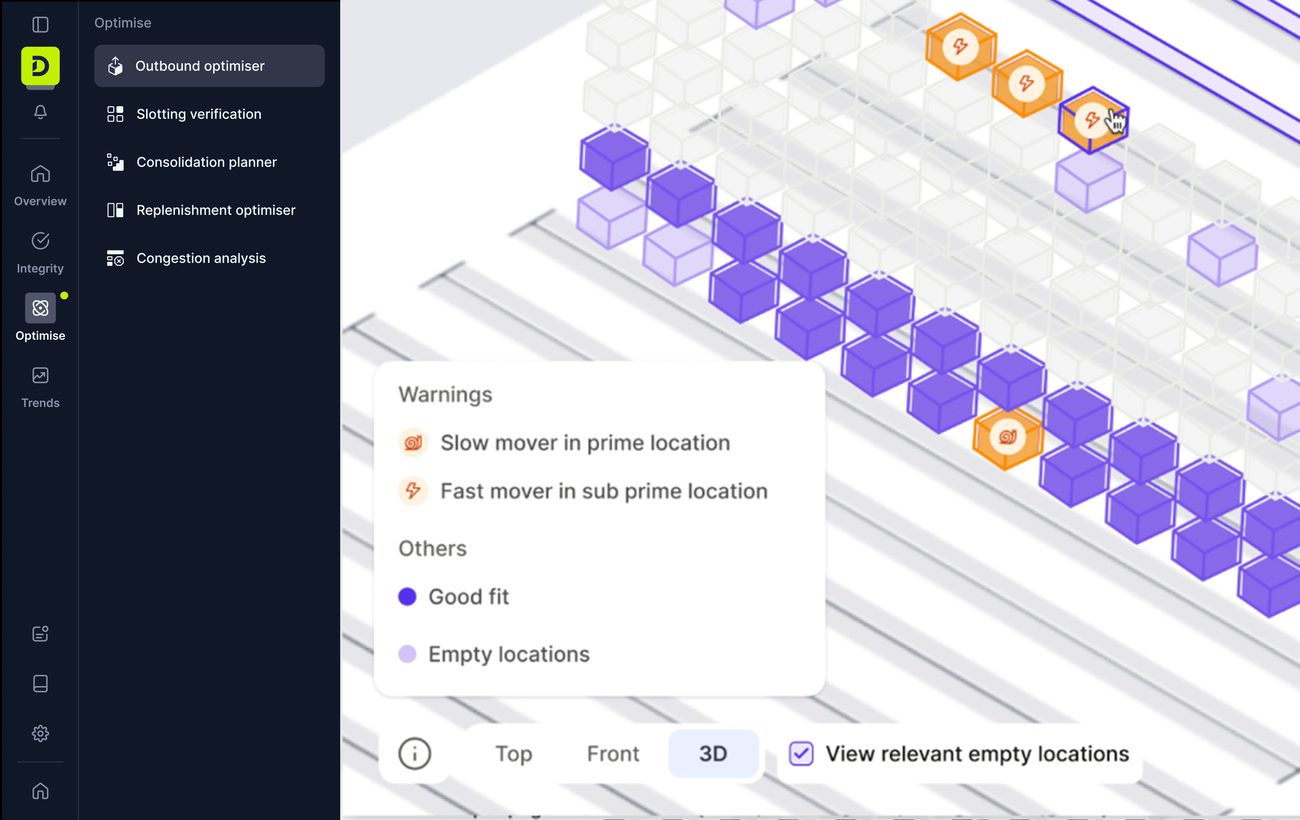
Managers can optimise storage based on real utilisation rather than assumptions. Replenishment can be triggered using current inventory data. Labour can be directed where it is needed most, and bottlenecks can be identified before they impact performance. In many cases, the biggest gains come not from adding new systems, but from enabling existing ones to make better decisions.
AI is playing an increasing role in warehouse operations, supporting tasks such as demand forecasting, slotting and labour planning. However, AI depends heavily on data quality.
If inventory records or warehouse conditions do not reflect reality, even advanced AI models will produce flawed recommendations. The effectiveness of AI is directly tied to the accuracy of its inputs. For organisations investing in AI, access to reliable, continuously updated operational data is essential.
Measuring what matters
Traditional metrics such as pick rates, inventory accuracy and throughput remain important. However, operators are increasingly recognising the value of understanding overall warehouse health as conditions change throughout the day. Continuous operational intelligence provides this visibility.
Warehouse managers can understand where storage capacity is becoming constrained, identify recurring bottlenecks before they impact productivity, assess how effectively space is being utilised and spot operational exceptions before they disrupt outbound operations. Rather than relying on periodic audits or manual investigations, they gain a constantly updated view of warehouse performance, enabling faster, more informed decision-making.
This shift enables warehouses to become more proactive, addressing problems before they escalate into delays or increased costs.
Building more resilient warehouse operations
Supply chains today operate in a constantly changing environment. Demand fluctuates, customer expectations rise and pressure on warehouse capacity continues to grow.
Success will depend not just on automation, but on creating operations that are adaptable and informed.
Automation will remain essential, but its future lies in combining machinery with intelligence. By integrating automated systems with continuously updated operational data, warehouses can move beyond isolated automation and towards truly intelligent operations.
The future of warehouse automation is not just about moving goods faster. It is about ensuring every decision is based on the most accurate, real-time understanding of reality.