4 New Logistics Units Completed in Wales

St. Modwen Logistics, one of the UK’s leading logistics developers and managers, has completed the construction of four new high-quality, sustainable warehouses totalling c. 116,000 sq ft at St. Modwen Park Newport in Wales. Developed in response to growing demand in the region and to support business growth, one building totalling 17,000 sq ft has already been pre-let to adhesive manufacturer Ureka Global.

The quartet of buildings are EPC A-rated and hold a BREEAM ‘Very Good’ accreditation, helping potential occupiers meet their own ESG targets and reduce energy usage through the inclusion of a range of energy-efficient features. Built in line with St. Modwen’s ‘Swan Standard’ approach to sustainable construction, the buildings feature intelligent and sustainable LED lighting, smart metering and rainwater harvesting. Air source heat pumps are used for heating the office elements of the warehouses and solar (PV) panels on the roofs provide a proportion of the power for each unit, as well as encouraging greener ways of commuting through the inclusion on EV charging points and dedicated cycling routes.

St. Modwen Park Newport is strategically located to provide excellent connectivity to South Wales and South West England, with Junction 23A of the M4 motorway within two miles of the park via Queen’s Way, and Cardiff and Bristol reachable within 12 miles and 30 miles respectively. The estate and surrounding area benefit from the de-tolling of the Severn Bridges, further enhancing its accessibility by road.

116,000 sq ft of space completed with 17,000 sq ft pre-let

The delivery of these warehouses takes St. Modwen Park Newport to c.345,000 sq ft of warehouse space and the estate is already home to the likes of Amazon, Genpower, CAF and Mitel. Phase 4, which comprises an additional 263,000 sq ft of best-in-class logistics space, is due to complete in Summer 2023.

Mark Snow, Senior Development Director, at St. Modwen Logistics, commented: “St. Modwen Park Newport is located in Wales’ fastest-growing city, with nearly half a million people within a 30 minute drive, which underpinned our decision to bring these units forward speculatively. The park is already home to a number of leading businesses and has a range of warehouse uses, and the addition of over 100,000 sq ft of modern logistics space will provide opportunities for companies to grow, supporting a diverse mix of employment opportunities.”

Alex Nunn, Managing Director, Ureka Global, said: “After a period of sustained growth, we are incredibly excited to be moving into our new building at St. Modwen Park Newport. Having access to the M4 and wider motorway networks is critical to our business and, having looked at various locations, it quickly became apparent that Newport was the perfect spot for us.

“This move will allow us to bring all of our stock under one roof and ensure we are able to continue delivering for our customers to help them out of whichever sticky situation they find themselves in.”
Councillor Jane Mudd, leader of Newport City Council, said: “It’s fantastic to see St. Modwen investing in speculative builds at St. Modwen Park Newport. This reflects the confidence they have in Newport as a city, recognising our fantastic connectivity, availability of workforce, and the great quality of life we can offer. The fact that the new units have already attracted interest demonstrates this confidence is well placed, and we’d like to welcome Ureka Global to Newport. The new jobs and investment they bring enhances our reputation as a place to come and do business.”

Future-proof Intralogistics at LogiMAT

In dynamic times characterized by crises the logistics sector and intralogistics industry steps up to deliver strategic competitive advantage. As one of the market leaders, SSI Schaefer’s trade fair presence at LogiMAT 2023 in Stuttgart, Germany, shows how its customers are well positioned for the future with comprehensive systems and solutions. Steffen Bersch, CEO of the SSI Schaefer Group, explains the requirements: “We see a high need for investment in automation and efficiency-increasing technologies. With our know-how and wide range of innovative products, software and services, we present ourselves as a partner to jointly realize the customer-specific resilient logistics structure consisting of flexible, scalable and sustainable systems.”

The cornerstones of future-proof intralogistics are the comprehensive portfolio of customized software, the connectivity of the systems and the innovative technologies within the SSI Schaefer Group. This also includes companies such as robotics specialist RO-BER, SAP specialist SWAN and robotics and AGV expert DS Automotion, which will become a full member of the SSI Schaefer Group on March 1, 2023.

For fully automated single piece picking, SSI Schaefer will present its advanced piece picking application at the booth in Hall 1. The highlights of the system, in addition to the patented gripping point calculation, are additional functions such as Pick & Place, AI-supported object recognition, and 100% product verification, which is important for the pharmaceutical industry, among others. Additional highly automated intralogistics solutions will be presented at consulting islands, including complex robotics applications with central shuttle and overhead conveyor technology for efficient omnichannel logistics.

Of particular interest to SMEs are ‘plug & play’ system combinations for partial automation. Processes can be accelerated, spaces condensed, and ergonomic workflows integrated in a simple way and economically. The building blocks of these solutions, some of which will be demonstrated at the booth, include automated guided vehicles, autonomous mobile robots, mobile racking, channel storage solutions with the SSI ORBITER® and the SSI LOGIMAT® vertical lift module.

SSI Schaefer’s own WAMAS logistics software will be brought to life digitally at the trade fair with all its products and modules. Via an augmented reality tool, booth visitors can explore a virtual warehouse and understand the interaction of the WAMAS modules with the equipment and systems. SSI Schaefer’s SAP solutions will be presented at the booth by SWAN, also a member of the SSI Schaefer Group. Intelligent applications being developed in the areas of predictive maintenance, digital twin and cyber security services, point the way to the intralogistics future.

The topics of the planned expert panel discussions, in which customers, science representatives and SSI Schaefer experts will participate, will show the pulse of intralogistics. They take place live daily at the trade show booth.

SSI Schaefer at LogiMAT 2023 in Hall 1, Booth D21. Please also visit other members of the SSI Schaefer Group who are exhibiting at the fair:

• DS Automotion in Hall 6, Booth D05
• RO-BER in Hall 5, Booth F17

Airbridge for Turkey Humanitarian Relief

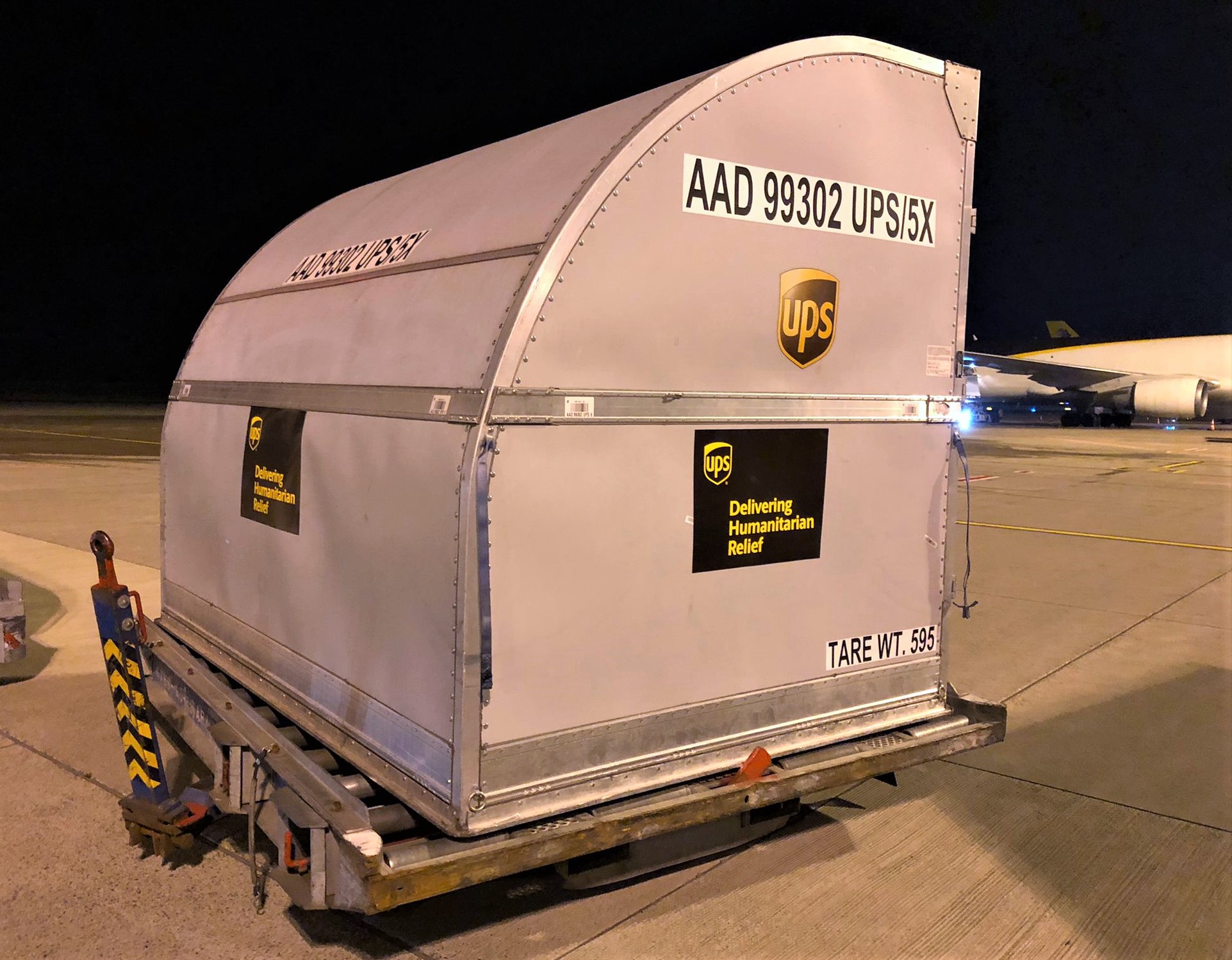
Amid widespread devastation caused by the recent earthquake people in the affected areas in Turkey and Syria need all the humanitarian relief available as soon as possible. UPS has put its worldwide smart logistics network to the task to transport relief supplies.

A Boeing 767 is currently taking off every night from the UPS Air Hub at Cologne Bonn airport, transporting urgently needed goods to Turkey from national and international aid organizations, UPS employees, citizens, and companies.

The willingness to donate in the region was so extensive that on-site donations are not currently being accepted. In-kind and monetary donations should instead be given to other aid organizations providing support.

The UPS Air Hub at Cologne Bonn Airport is UPS’s European air freight hub for international transport of goods. As a European hub, it is not only a platform to service customers but is also central to disaster relief efforts and support. The UPS Air Hub was also able to demonstrate its strategically important position and its reliability in the handling of shipments for the worldwide distribution of vaccines.

Relief supplies and donations receive freight space within the UPS network

In addition to the Cologne-Istanbul airbridge, UPS and The UPS Foundation have taken other measures to provide assistance where it is most needed. This includes:

• Pledging more than US$1 million in global logistics services.
• Working with the World Food Program, UNHCR and International Red Cross & Red Crescent to fly in relief items from Dubai.
• Offering transport capacity in UPS trucks for the Istanbul city government and NeedsMap, a local NGO that UPS supports.
• Activating EDUARDO, an emergency air dashboard created by skilled UPS volunteers to help humanitarian relief organizations quickly access all available flight capacity available at airports across Turkey.

Frank Jørgensen, President of UPS Germany, Austria and Switzerland, told us “Our hearts and thoughts are with the people of Turkey and Syria. Our sympathy also goes to the many relatives – including numerous UPS employees – of the people affected in the earthquake area. Above all, we help by using what we have: our committed employees with their expertise and our global logistics network.”

Pharmacy Boasts 1st Piece-picking Solution

Swedish online pharmacy Apotea automated its logistics centre last Autumn with a piece-picking solution to quickly, easily, and smoothly deliver approximately 50,000 orders a day to its customers. Following international cooperation between Element Logic, AutoStore, RightHand Robotics and Apotea, the centre fully integrated eOperator piece-picking robots with an AutoStore solution, a world first.

Pharmacy products are one of the fastest-growing segments of both Swedish and European e-commerce. Apotea.se is Sweden’s largest online pharmacy, with the country’s most comprehensive range of over-the-counter products and prescription drugs.

“During the pandemic, we looked at expanding the capacity to go from delivering 50,000 orders to 100,000 orders. That’s when we started looking at Element Logic and AutoStore. When we thought of installing AutoStore, it was precisely the ability to be able to robotise the picking that was one of the driving forces,” says Pär Svärdson, CEO at Apotea.

Apotea strives to deliver the best customer experience in the industry through fast and accurate deliveries. In Apotea’s logistics centre in Morgongåva, Sweden, the company has invested in automation from Element Logic, which takes care of the entire warehouse process. The goal is to optimise delivery and efficiency and cope with large variations in incoming orders.

The installation consists of 20,000 bins (with space for a total of 25,000), 30 AutoStore robots (R5) and four carousel ports, three of which are served by eOperator piece-picking robots. Initially, the new capacity at Apotea is estimated to be 800 order lines per hour. The installation is a collaboration between Element Logic, AutoStore, RightHand Robotics and Apotea. At the end of 2022, all CEOs and founders from the respective companies met at Apotea to inaugurate the solution.

“For us, it was essential to have a solution that can handle variations in product size and order intake, and that can expand as we grow. This investment helps us become more efficient, which makes it easier for us to exceed our customers’ expectations,” says Svärdson.

“To Apotea, the automation solution of AutoStore, eOperator and other features from Element Logic goes splendidly with their combined targets of optimal warehouse efficiency and environmental care. We look forward to following Apotea’s journey towards highly accurate deliveries along with saved energy, reduced noise levels and ergonomically friendly working hours,” says Dag-Adler Blakseth, CEO at Element Logic Group.

Apotea’s investment in eOperator, the world’s most advanced piece-picking robot solution, makes them pioneers internationally by using it to pick from an AutoStore installation. eOperator picks automatically 24/7, requiring no light at night. Through machine learning, eOperator automatically selects the best way to handle an item to be picked, increasing order capacity, goods handling, and delivery time.

“eOperator makes it possible to deliver quickly to customers, even at nights, weekends and bank holidays. You get a 24-hour operation, which is completely exceptional. We get better efficiency and faster deliveries, making everything cheaper and more efficient. It became natural to say, yes, let’s go,” continues Svärdson.

Apotea is not only Sweden’s market-leading online pharmacy, but also the country’s most sustainable e-commerce company, according to Sustainable Brand Index 2020 and 2021. Apotea‘s goal is to reduce the climate footprint throughout the entire chain, from production to the end consumer. On the roof of their logistics centre, you will find one of Sweden’s most extensive solar cell facilities that supply the entire AutoStore system.

“Our goal is to become Sweden’s most sustainable company, which is both brave and ambitious. It is vital for humanity and our environment, but also to be competitive. I believe that future customers will demand a different approach to sustainability from companies than today,” explains Svärdson.

AutoStore is a modular and scalable robotic solution for storing products efficiently. Compared to a manual warehouse, picking performance is ten times higher with AutoStore. The system consists of a grid where robots pick and deliver goods on the smartest available routes. The robots work around the clock and recharge when needed. At Apotea’s ports, the picked goods are delivered to both human operators and three eOperator piece-picking robots.

“Apotea has had a fantastic growth journey in Swedish e-commerce. By connecting an AutoStore system with Element Logic‘s smart piece-picking solution, eOperator, and other automation, we can help them continue to offer their customers fast and accurate deliveries and improved order capacity and goods handling,” explains Anders Bohlin, Sales Director at Element Logic Sweden.

Facts about Element Logic’s installation:
• 20,000 bins (with space for a total of 25,000)
• 30 AutoStore robots (R5)
• 4 carousel ports
• 3 piece-picking robots (eOperator)
• 800 order lines per hour (calculated capacity)
• 24/7 operations

Direct-to-Consumer Evolves

A newly released report on the rise of Direct-to-Consumer (DTC) found that decision-makers across ecommerce, manufacturing, retail, transport and logistics supply chain, and wholesale businesses in North America find DTC channels key to unlocking better customer experiences and achieving higher profit margins.

The research, commissioned by Deposco, a leading provider of omnichannel supply chain fulfilment solutions, highlights these findings about the rise of Direct-to-Consumer models:

• When asked about key drivers for using DTC models over a third (36%) of respondents highlighted access to more customer data to drive business strategy and a further 31% referenced reduced costs
• Almost 9 out of 10 respondents (89%) have seen increased sales through DTC channels over the past 12 months

This report indicates a massive trend that DTC – which will contribute more than one-half of overall sales by 2026 – enhances the customers experience in tandem with ensuring profitability of organization as the biggest benefits of DTC. Further to this the report also reveals that sustainable practices are an emerging focus for DTC brands. Almost half (48%) of the sample say they have the capability to “easily combine separate orders for delivery at the same time”, an approach that reduces environmental emissions by bringing down the number of deliveries needed.

The focus on sustainability is also gathering ground across the wider supply chain, with 30% saying they are looking toward growing the proportion of stock sourced from nearshore suppliers. Long-term scalability and future success with DTC will require proactive moves toward enhanced efficiencies and operational savings. For example, investing in technologies that allow different retailers to collaborate on delivery runs, or incentivize consumers to go for a more sustainable option through a better price on consolidated orders, would benefit everyone.

Deposco’s complimentary report, ‘The Rise of Direct-to-Consumer in North America: How businesses can break through the barriers and make a success of DTC channels’, is now available.

Deposco’s Bright Suite of omnichannel fulfilment supply chain applications is how fast-growing companies rapidly scale their warehouse management and order management operations, so they can see what inventory they’ve got, where it is, and where to position it to fulfil demand when It’s Grow Time™. It’s the only solution that provides this much actionable insight into both your supply chain and the broader marketplace. Streamlined into One Solution, One Focus, One Team. That’s why over 3,000 of the world’s fastest-growing ecommerce and DTC businesses rely on Deposco. We’re supporting over $10 billion in sales and over 51 million consumer orders annually. Last year, we saw total shipment growth increase by 78%.

Sevensense Robotics Present at ProMAT

Automation has the potential to exponentially increase efficiency, profitability, and safety in the logistics and manufacturing sectors, as will be seen at ProMAT Chicago. So far, the lack of a robust, yet flexible navigation technology has limited the scope and scale of automation in material handling operations.

Furthermore, the AMR manufacturing sector is extremely competitive. Most of its players rely on navigation technologies like 2D LiDAR SLAM or magnetic line following: proven in the field but limited in performance. To gain a competitive advantage, many AMR manufacturers are looking into new technologies; but often they lack the resources, time, expertise, and talent to develop them.

This industry landscape is now changing with the arrival of the VSLAM navigation technology developed by Sevensense Robotics. The Alphasense Autonomy Evaluation Kit accelerates the development and deployment of automated guided vehicles (AGVs) and autonomous mobile robots (AMRs) while improving their performance and expanding their operational capabilities.

“We observed that many AMR manufacturers considered Alphasense Autonomy as an option to incorporate 3D Visual Autonomy capabilities into their offering but integrating, testing, and validating the fit of this navigation technology in their own vehicles and their use cases still required more expertise and time than they were able to invest without any in-house validation of the technology. The Alphasense Autonomy Evaluation Kit offers them an off-the-shelf option to easily and quickly test Alphasense Autonomy and take a generational technological leap forward,” says Gianluca Cesari, CBDO at Sevensense Robotics.

Alphasense Autonomy leverages the 360 degrees view of the vehicle’s surroundings and cutting-edge Visual SLAM technology to offer <0.3 inches (<4 mm) precise and reliable positioning capabilities in all indoor and outdoor environments, even over uneven floors and ramps. Without any need for additional infrastructure. The Alphasense Autonomy Evaluation Kit allows mobile robot manufacturers (AGV/AMR OEMs) to test the Alphasense Autonomy 3D Visual Autonomy technology quickly and easily.

The kit is a plug-and-play software and hardware bundle that combines the Alphasense multi-camera sensor with Alphasense Autonomy and Sevensense’s proprietary software stack and configuration tools that dramatically reduce the time required to integrate a fully functioning Visual SLAM navigation system on a vehicle. The hardware consists of a compact device including 5 factory-calibrated cameras and a computer unit with pre-installed software. The system can be easily mounted on top of any vehicle and requires a minimal amount of connections such as power and ethernet. Optionally, additional 3rd party sensors can also be connected.

Thanks to a web-based interface, the user is guided through a simple step-by-step installation wizard to calibrate, set up the interfaces, and configure and deploy the target AMR. With this, any technical department can now run and test Alphasense Autonomy on their own vehicles. The Evaluation Kit enables all Alphasense Autonomy features for trial: from easily teaching an A-to-B motion layout to performing virtual line following with obstacle avoidance. All this, while delivering the same performance as the series Alphasense Autonomy product in terms of robustness and repeatability.

On top of the provided in-depth documentation, the device contains a 4G connectivity module that allows Sevensense to provide immediate support by directly accessing the unit. Together with access to Sevensense’s service desk, this level of support allows customers to confidently perform their technical evaluations in little time.

In 2022, during a closed trial, the Alphasense Autonomy Evaluation Kit already helped several AMR manufacturers to reap the benefits of the Sevensense Visual SLAM navigation solution. Now, Sevensense is supporting these early-adopter customers going to market with their new AMRs equipped with Alphasense Autonomy. In a broader industry context, the DHL Trend Radar indicates that 3D visual autonomy technology is currently maturing and will exponentially increase its potential within the next 5 years.

The Sevensense Robotics team will be offering live demos at booth #N8539 from Monday, March 20th to Thursday, March 23rd at ProMAT 2023 show in Chicago IL.


Biofuel to Reduce Supply Chain Emissions

DB Schenker is expanding its green ocean freight services and has secured an arrangement to reduce supply chain emissions by using 12,000 metric tons of biofuel component for all of its own consolidated cargo, less-than-container load (LCL), full-container-load (FCL) and refrigerated containers (reefer containers), from MSC Mediterranean Shipping Company, the world’s largest container line.

The amount of biofuel purchased is enough to save an additional 35,000 metric tons of CO2 equivalents (CO2e) along the entire production chain (well-to-wake) in the market. The equivalent of around 30,000 standard containers (TEU) may be shipped with net-zero CO2 emissions, depending on how the fuel is used during navigation.

The purchase agreement signed this month represents one of the largest carbon-insetting biofuel deals between a freight forwarder and a shipping company. It sets out the use of certified sustainable, second-generation biofuels – derived from used cooking oil – instead of conventional fossil-based marine fuel. The 12,000 metric tons of biofuel component will be blended between 20 and 30%, resulting in approximately 50,000 metric tons of blended biofuel to be used in MSC’s container ships. The agreement allows DB Schenker to offer its customers an off-the-shelf product that enables net-zero ocean transport.

Certified emission reduction for customers’ carbon footprint

This partnership is the latest impressive example of DB Schenker’s commitment to clean logistics and is another solid contribution to increasing the demand for alternative fuels in the industry. Similar to net-zero flights using sustainable aviation fuel (SAF), customers can now book regular net-zero ocean transport and receive an annual certificate of their emission reduction for their carbon footprint. The latter means that every metric ton of biofuel is bunkered in addition to any legal mandate and carrier’s set fuel purchase orders.

Thorsten Meincke, Global Board Member for Air & Ocean Freight at DB Schenker: “Together with MSC, we are offering our customers a convenient and clean solution using the latest generation of marine biofuel to help them achieve a real additional reduction in their emissions. We are doing this because we firmly believe it is the right thing to do and are therefore paying for biofuel purchases in advance. One thing is certain: the more customers demand climate neutrality throughout supply chains, the faster we achieve clean container ocean freight.”

Caroline Becquart, Senior Vice President of MSC: “Decarbonizing ocean freight cannot be achieved by a single player and requires collaboration between shipping and logistics companies and their customers. MSC Biofuel Solution is our first certified carbon insetting program that reduces emissions in our customers’ supply chains, accelerating the energy transition by creating demand for net-zero-carbon shipping and delivering direct CO2 savings. We’re delighted to partner with DB Schenker, with whom we share similar climate ambitions along our collective journey to net zero.”

Biofuel can be used for regular ocean freight operations without adjusting a ship’s infrastructure or supply chain, making it a particularly convenient solution. MSC Biofuel Solution is designed to be a win-win approach to move from ambition to action. MSC bunkers sustainable biofuel, and clients benefit from the CO2 savings, passing them on throughout the shipping value chain. This differentiates the program from carbon offsetting initiatives that focus on future emission reductions outside the shipping industry.

Biofuel is eminently well-regarded as a decarbonization transition fuel due to its high quality (according to EU RED II Annex IX, Part A+B) and the principle of additionality. The latter means that every metric ton of biofuel is produced and bunkered “in addition” to the baseline and therefore is an additional reduction in emissions in the overall carbon footprint and an actual avoidance of fossil fuels.

The entire chain of custody for the carbon insetting process is independently verified, with the carbon savings certified by external certification organizations attesting to the avoided emissions from the carbon footprint of freight transport. The bunker supplier also issues proof of sustainability for the biofuel.

Second-generation biofuel, also known as advanced biofuel, ensures at least 80% reduction in CO2e emissions (well-to-wake). For DB Schenker’s ocean freight, it is also guaranteed palm oil free, including no palm oil waste and no indirect land use change (ILUC).

The fuel needed for a 100% reduction in container transport is ensured by over-allocation, which also offsets the emissions generated when the fuel is produced and transported. This allows DB Schenker to achieve net-zero emissions well-to-wake and avoid fossil fuels in ocean freight.


Alternative Fuelling for Diesel Forklifts

Hyster has introduced new, alternative engine fuelling options which enables its big trucks and A Series IC forklifts to use HVO 100 (Hydrotreated Vegetable Oil) according to the EN15940 standard. In addition, the H2.0-3.5A A Series lift trucks can use GTL (Gas to Liquid) and BtL (Biomass to Liquid) fuels. These alternatives to diesel may help reduce CO2 emissions by up to 90%, supporting businesses in lowering their carbon footprint.

“While electrification of higher capacity lift trucks is moving forward, it is not yet the right solution for every application,” explains Rob Maris, Product Strategy Manager Big Trucks for Hyster Europe. “The initial cost of electric lift trucks along with the infrastructure and charging upgrades required can often delay adoption. And for the largest trucks, battery and hydrogen fuel cell technology simply isn’t there yet.”

“Switching to greener fuel types, such as HVO100, may offer a stop-gap solution for some businesses to reduce their carbon footprint while moving towards electrification,” Rob continues. HVO is a paraffinic bio-based liquid fuel originating from many kinds of vegetable oils, such as rapeseed, sunflower, and soybean oil, as well as animal fats. It can be used in conventional diesel engines, pure or blended with fossil diesel (Petro diesel). However, some minor modifications may be required in the fuelling systems due to the ethanol content.

Hyster A Series models are also capable of running on GTL and BtL fuel types. GTL is an alternative fuel derived from natural gas, which may produce fewer emissions and pollutants than conventional crude oil-based diesel. BtL fuels are synthetic fuels made from biomass – generally from solid biomass such as firewood, organic waste and animal meal. They may reduce emissions of particulate, hydrocarbons, CO, and CO2.

Hyster A Series lift trucks can be delivered ex-factory, readily equipped for use with alternative fuels. To enable HVO 100 to be used with Hyster Big Trucks, Empty Container Handlers, or ReachStackers, an aftermarket kit has been made available.

The solution supports compliance with Tier III, Tier IV, and Stage V emissions regulations and can be easily applied in the field, or factory-fitted for new equipment. Nitrile Rubber (NBR) seals in the fuel system replaced with FKM seals; a fluorinated, carbon-based synthetic rubber with long-term resistance to the effects of ethanol. Current fuel lines and other components used already have good resistance to the long-term effects of HVO.

Depending on the application and duty cycle, a fuel economy reduction of up to 0 – 6 percent on Big Trucks is also possible, compared to regular diesel fuel. At the same time, using HVO100 has no negative impact on a lift truck’s existing emissions improvement technologies, such as Diesel Oxidation Catalysts (DOC), Diesel Particulate Filters (DPF) or Selective Catalytic Reduction (SCR) systems. These alternative fuels also have no adverse effects on the durability of lift truck and container handler engine components, while delivering similar engine power output.
“Making HVO 100 a fuel option for Big Trucks is one of many Hyster projects relating to power options,” says Rob. “We continue to explore and provide new solutions to help businesses manage emissions from handling equipment at every stage of the journey towards electrification.”

Mecalux to Automate Manitou DC

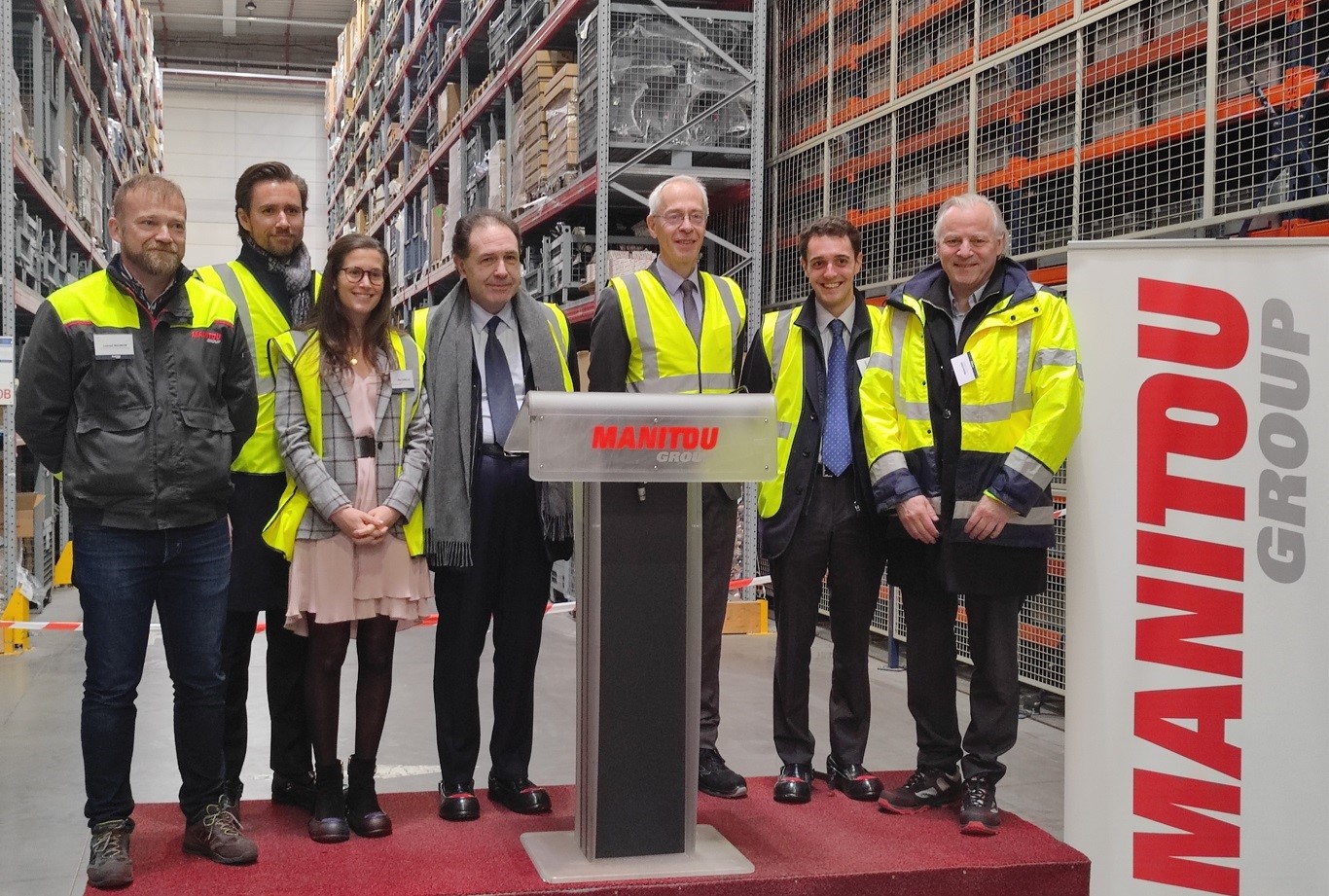
Manitou Group, supplier of handling, aerial work platform and earth moving equipment, has opened a new automated warehouse at its spare parts centre in Ancenis, France. The innovative solution consists of the Shuttle System from Mecalux.

Manitou Group, headquartered in Ancenis, has showcased its new automated storage and retrieval system (AS/RS). Mecalux has outfitted the French group’s logistics centre with the Shuttle System. This AS/RS — which houses more than 20,000 containers in just 560 m² — responds to the logistics centre’s space constraints. Two high-performance pick stations complete the solution installed. This innovative system increases productivity when it comes to picking the group’s small, high-turnover parts comprising nearly 16,000 SKUs.

The project began in 2021. It took shape in August 2021 with the installation of the structure, and the entire warehouse was put into service in April 2022. Today, with just two operators, this AS/RS can prepare 500 order lines an hour.

“Mecalux has implemented the latest storage and order picking technologies in Manitou Group’s logistics center. The Shuttle System automates the movement of goods to two high-performance pick stations, which boost operator throughput,” says Daniel Joly, General Manager of Mecalux France.

Maxime Deroch, President of Manitou Group’s Services & Solutions division, explains why the company chose Mecalux as a provider: “To better serve our customers, we reduce the preparation time of orders received and to be shipped at the end of the day. We were looking for a solution that would leverage the latest technological innovations to optimise deliveries of rush orders. The Mecalux project team understood that our storage capacity issues would be solved by deploying a high-density solution, and this clinched our decision. Thanks to the top quality of our service, we’re constantly improving our customer satisfaction.”

This two-aisle AS/RS is also scalable. That is, a third aisle can be added to handle a higher order picking volume in the medium and long term.

The Mecalux Group, with headquarters in Chicago and Barcelona, is one of the world’s leading companies in the warehousing technology and logistics software market. With over 50 years of experience, Mecalux develops automated storage, warehouse management system and metal racking solutions for all industries. The multinational has an extensive worldwide distribution network, 11 production plants, 7 R&D centres for technological development and a workforce of 5,000 employees.

How to Reduce Supply Chain Costs

No matter where we turn, supply chain costs are going up. From supermarkets to fuel stations, to our personal and business energy bills, no one has been unaffected from this steady, and sometimes devastating, increase in prices. According to a report by Accenture, the supply chain is particularly struggling; in the aftermath of the pandemic, the war in Ukraine is only exacerbating a shortage of raw materials, a breakdown in logistics, energy and inflation, and a shortage of talent. Depending on the length and severity of the war, the cost of the disruption to the supply chain could cost €242 billion – or in a protracted war scenario, €920 billion.

As the impact of this continues to be felt, Accenture predicts that consumers will start to cut back on some non-essential items, while businesses will focus on improving operating efficiency.
However, the report sets out the argument for reinventing the supply chain. It sets out the case for optimising the supply chain for value and resilience, rather than just for cost. The three key ideas within this re-design are resilience, relevance and sustainability – three areas in which Yale can deliver.

Warehouses are increasingly using robotic lift trucks to improve productivity. Seasoned managers might be inclined to assume that such significant efficiency gains must come at a steep price, but the truth is that robotics lift trucks actually help lower operating costs. While investing in automation can seem like a large expense upfront, a combination of labour, maintenance and equipment savings means that robotic lift trucks can cut operating expenses – making them a sound investment. Because an operation can begin by deploying just a single truck as proof of concept before making a larger investment, robotic lift trucks can be trialled before industry leaders commit further investment.

Today’s environment is driving operations to carefully evaluate how they utilise labour, allocating workers only for responsibilities that make the most productive use of their time and considering alternatives for lower-value, repetitive tasks. In addition to rising wages, the constant cycle of hiring and retraining workers can further swell operating costs.
Against this backdrop, improving employee satisfaction and retention can help lower operating costs. Academic research shows that organisations augmented by automation technologies are 33% more likely to be “human friendly” workplaces, in which employees are 31% more productive. That’s because robotics can relieve workers of the monotony of repetitive tasks that are abundant in supply chain environments, and instead focus on more rewarding, higher responsibility work.

By reducing operating costs and improving productivity, robotic lift trucks can deliver efficiencies, but the timeline naturally varies by operation. Several variables, such as the number of manual trucks replaced, robotic units purchased, operating hours and burdened labour rate, will greatly influence the calculation of and speed with which an operation can reasonably expect to achieve ROI.

Yale is seeking to help customers with a truck that they can configure for their own application. The Series N is designed for companies in search of equipment that directly serves the ins and outs of their operation. To meet today’s challenges head on, customers need a truck that is configured to the unique demands of their applications. This means they do not need to pay for features they do not use; instead, they can configure the truck and pay for the features they require. The Series N is designed to meet the challenges of the individual operation. The perfect balance of energy, ergonomics and productivity, the Series N invites them to reject the status quo and set their own standard.

The value of the trucks goes beyond the movement of goods from A to B; the Series N can assist with staff retention and reduce labour challenges thanks to its excellent ergonomics.
Boasting an easy three-point access, a large grab handle and generous foot space reduces strain and twisting as the operator gets in or out of the cab. A flip-up armrest provides an unobstructed route when raised, and additional comfort when down.

We all work best with the right tools and supportive surroundings, so the Series N boasts a spacious operator compartment to be spacious, with excellent head and shoulder clearance and a full suspension seat. Even during a long shift, operators can rely on the Series N to provide comfortable working conditions.

Sustainability is also a major concern for many companies. Customers looking to reduce the environmental impact of their operations have a wealth of choice with Yale products. From efficient engines to electric batteries, there are a range of power solution options for Yale materials handling equipment. Yale experts are on hand to help guide customers to the best option for their individual needs. Lithium-ion batteries can be integrated in certain models of Yale products, and boast the benefit of opportunity charging during breaks in shift. This means Yale lithium-ion products offer more uptime as well as reduced running costs.

The Yale Series N lift trucks boast low fuel consumption, enabling them to do more work with less fuel; tests showed the trucks used 13% less diesel use than leading competitors. Reliable and robust components reduce the amount of maintenance required, keeping the truck moving for as long as possible and reducing downtime. An average 14% reduction in maintenance time helps keep costs under control. All these features are solutions that Yale can offer to help customers increase productivity and reduce their costs.

Not every application requires a new forklift. Demand for quality used equipment continues to grow, and with it a need for a professional approach. Second-life products offer companies an affordable option to meet their immediate requirements. Businesses may find themselves in a situation where they need to source a forklift immediately or are required to reduce expenditure. They may even need a back-up forklift to keep their operations moving smoothly. Yaleused.com enables them to source used equipment, from a local Yale dealer at a budget to suit their individual needs.

The platform gives customers instant visibility of the variety of used products available from an authorised Yale dealer and provides easy communication with the seller. Customers can find second-life machinery manufactured by a leading, global forklift manufacturer, offering the peace of mind that an official Yale dealer can offer. As well as fully serviced, well-maintained and high quality machines with instant availability, customers benefit from the local presence of an authorised Yale dealer who can provide full parts and service support, warranties and finance options.

Subscribe

Get notified about New Episodes of our Podcast, New Magazine Issues and stay updated with our Weekly Newsletter.