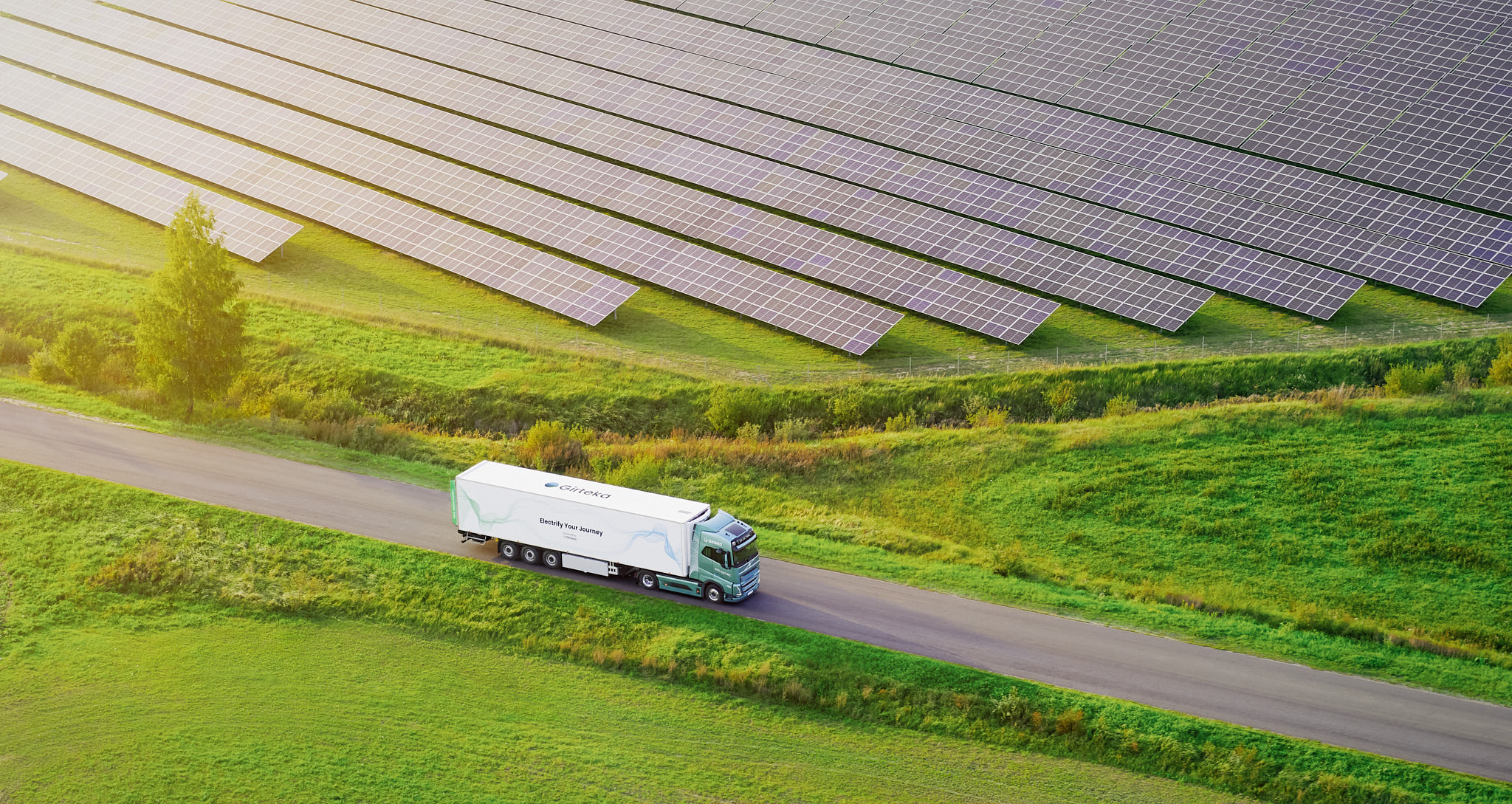
Electric Heavy Goods Vehicles in Action

The transition to electric vehicles is not just a trend; it is one of the solutions to shift towards sustainable logistics whilst the industry navigates through the transition period, according to Girteka Group. As global discussions intensify around decarbonizing transport and optimizing supply chains, adopting battery electric heavy goods vehicles (HDVs) emerges as a practical and effective solution. While still in its early stages, the adoption of battery electric vehicles (BEVs) has already demonstrated potential of reductions in carbon footprints, providing a promising glimpse into a more sustainable future.

Simple but Effective Solution

Thermomax, a Norwegian transport company, part of the Girteka Group, provides heavy goods transportation services using Volvo’s BEVs for one of its domestic customers. The purpose of this solution is straightforward – to enhance the sustainability of logistics operations by replacing conventional diesel trucks with BEVs.

At the core of this project is a simple yet effective strategy: combining BEVs with intermodal rail transportation. The transportation services conducted by Thermomax in the Trondheim area of Norway involve trucks traveling approximately 150 km daily to maintain a steady flow of goods. The cargo is delivered from a railway station to a warehouse. This approach showcases a practical commitment to reducing environmental impact of transport operations while maintaining efficiency by utilizing various forms of sustainable transport in joint creation with the customer.

Constant Data Monitoring

One of today’s advantages with modern trucks and advanced telematics is the constant monitoring of the truck’s performance. All data that can be analysed is stored and available online, providing opportunities to monitor cargo transportation for both logistics companies and their customers. In this particular case of using a BEV, information about the engine’s power usage and more are being gathered during the operations. This data allows for an investigation of energy consumption levels based on distance, average parameters of consumed energy, propulsion used, or energy regeneration.

Throughout this project, the Volvo battery electric vehicle has already been travelling for five months, consuming a total of 12,600 kWh (excluding charging) while conducting deliveries. While daily exploitation of the truck differs due to specific circumstances, the system analyses average energy consumption based on 100 km driven.

From November 2023 to March 2024, the average energy consumption fluctuated around 150 kWh per each 100 km. The energy consumption varies with the temperature and on the whole year the  is expected to be lower on average than for the winter period. Throughout the total of 330 hours of driving at an average speed of 42 km/h and using cruise control at the level of more than 30%, the BEV covered more than 8,000 km.

“At Volvo, we believe in the power of collaboration to advance electric truck technology and enable our customers to electrify their transport operation. Working closely with logistics companies like Girteka Group allows us to get feedback that is crucial for improving our electric vehicles. This partnership approach ensures that we understand the needs and challenges of the industry, enabling us to develop more efficient and sustainable transportation solutions together,” says Stefan Widlund, Electromobility Director at Volvo Trucks.

Real Environmental Effect

While the current usage of electric trucks is still primarily limited to domestic transport, mostly due to infrastructure challenges, the real environmental effect can be easily calculated. However, the calculation depends on various factors, including the energy source for the electricity, ways of truck utilization, or weight of loads. Within this example, the transition to BEVs has resulted in a reduction of 6.2 tonnes of CO2 over just a few months. This figure represents a clear, measurable benefit of adopting electric vehicles in terms of reducing greenhouse gas (GHG) emissions.

“We already see in practice the positive environmental impacts of using electric trucks. Scaling up these initiatives is crucial, and it requires a deep understanding of the challenges involved. By continuously analysing our experiences and sharing the benefits through co-creation with all partners in the Supply Chain, we aim to demonstrate to our customers the real advantages of transitioning to battery electric vehicles. This approach is not just about improving our operations; it is about leading the way in sustainable logistics for the entire industry,” summarizes Mark Mulder, Chief Commercial Officer at Girteka.

While individual effects can still be discussable, the scale makes a difference. Taking into consideration that more than 6 million trucks are currently circulating in Europe, even a small step like this can make a difference. The shift to electric heavy goods vehicles is a crucial step towards a sustainable future in logistics.

read more

Girteka Group Launches Educational Campaign on Sustainability
 

Investment in Romania Boosts European Trade

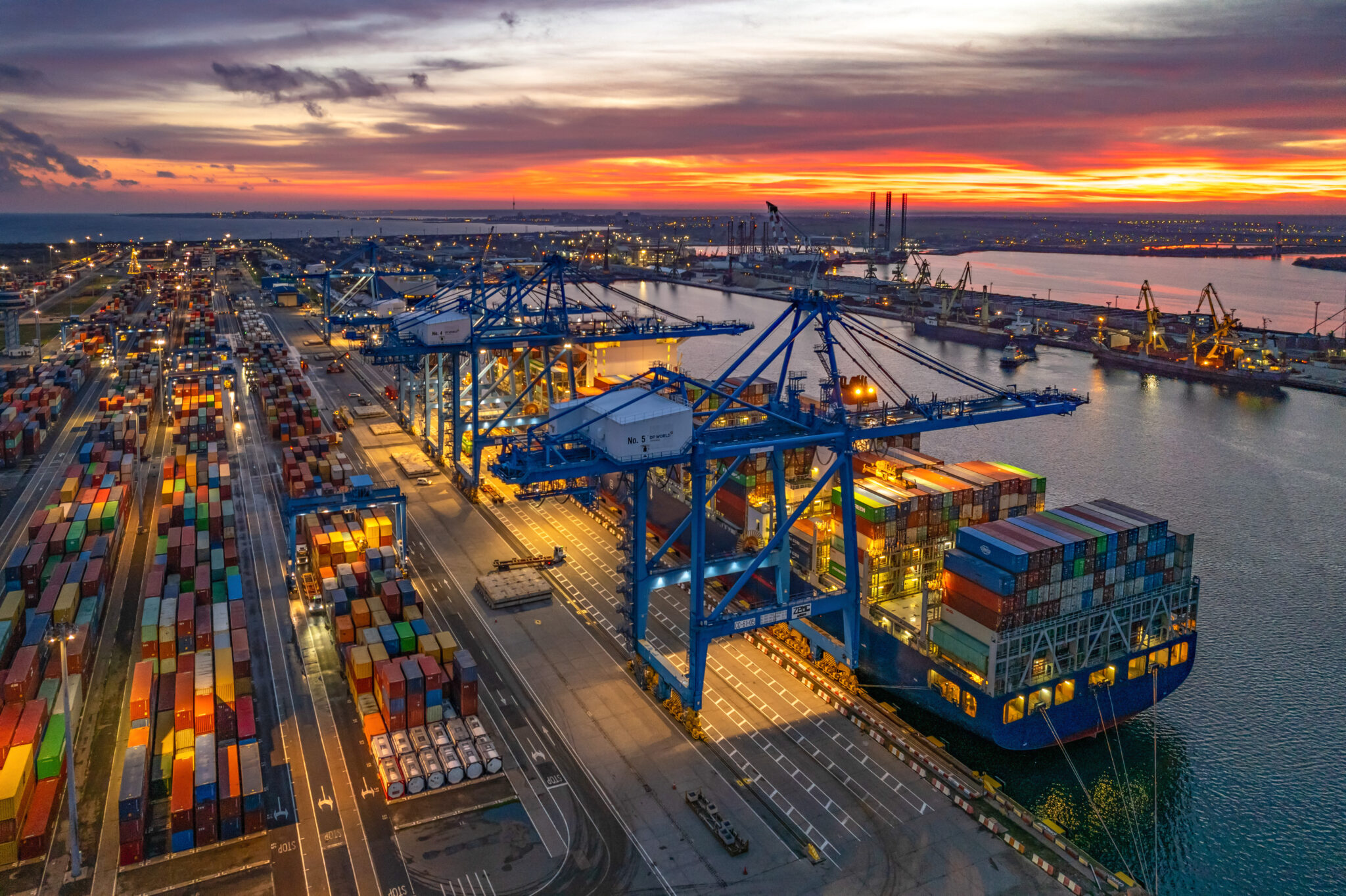
DP World has opened three major new sites in Romania, providing a significant boost to the country’s growing status as a key hub of European trade and enabling economic growth throughout the region.

Constanta, the largest container port on the Black Sea, is now home to two new facilities following a €65 million investment: a 5-hectares ‘project’ cargo terminal for heavy, large and complex cargo, and a new ‘roll-on, roll-off’ (RO-RO) terminal that will handle up to 80,000 vehicles per year at its peak. A further €50 million will be invested in a new multi-transport platform in Constanta that will open in 2025. DP World’s third new facility opening today is in Aiud, in the industrial heartland of Romania, which is now home to a new 8-hectares ‘intermodal’ logistics hub connecting rail and road, following a €21 million investment.

The new facilities will improve the connectivity between DP World’s existing sea, rail, barge and truck services across Romania and will enhance the movement of goods between mainland Europe through to the Black, North and Adriatic Seas. DP World has invested over €250 million in Romania since 2004, including grants from the European Union.

The latest infrastructure projects were announced as DP World marks the 20th anniversary of its investment in Romania; the first European country in which it expanded. The business has since grown its operation considerably, contributing to the impressive growth of the port. During this 20-year period Romania has also developed rapidly and is now Eastern Europe’s second-largest economy after Poland.

DP World anticipates that its latest investments will encourage and enable major businesses to relocate or expand manufacturing facilities in the region. This so-called ‘nearshoring’ and ‘reshoring’ has become increasingly prevalent in Europe in recent years, spurred in part by the rise in geopolitical tensions.

An example of nearshoring and reshoring can be seen in automotive manufacturing, which has increased rapidly in recent years in the region and is expected to grow further. Automotive already makes up 13% of Romanian GDP, with Mercedes-Benz, Renault-owned Dacia and Ford all manufacturing in the country. Automotive firms are also increasingly investing in neighbouring Hungary and Poland and nearby Turkey, making robust supply chains and logistics infrastructure such as the RO-RO terminal increasingly essential not just for Romania, but for the surrounding region .

Rashid Abdulla, CEO and Managing Director, DP World Europe, who started his career as Manager for Constanta in 2004: “Romania is a dynamic economy and well positioned to benefit from the rise in nearshoring and manufacturing. DP World looks forward to building on our long-standing relationship with Romania, and to deploying our latest investments to support Romania as it plays an increasingly important role in trade and economic growth in the region.”

Cosmin Carstea, CEO DP World Romania: “DP World’s latest investments in Romania will increase the cargo flows by around two million tonnes per annum through the country. We believe that with this investment, DP World in Constanta will significantly strengthen its position as one of the most important container and RO-RO hubs in Central and Eastern Europe. To aid this, we also plan to open a centre of excellence for services in the Balkans, to facilitate trade for the countries around Romania.”

Sorin Grindeanu, Minister of Transportation, Romania: “The Romanian government welcomes DP World’s latest investment in Romania’s logistics infrastructure. DP World has been a strong partner to Romania for twenty years. Constanta port has opened Romania to new markets and trading opportunities, provided stable and skilled jobs and catalysed the development of a whole host of adjacent businesses.”

DP World’s new facilities in Romania are the most recent in a series of new investments across Europe, as DP World seeks to increase capacity for customers looking for faster, more resilient supply chain solutions. Other investments across Europe in recent years have included port expansion programmes at six of its 11 major terminals across the continent, including at Antwerp (Belgium), Novi Sad (Serbia) and London Gateway (UK).

More broadly, DP World draws on its assets and substantial expertise to provide an end-to-end supply chain solution, offering its customers and their customers more integrated, sustainable, and resilient supply chain solutions.

read more

Romania terminal reaches construction milestone


Carbon Reporting Technology for Greener Road Transport

Coyote Logistics is increasing its efforts to make road transport greener by incorporating innovative carbon reporting technology from Pledge, a carbon reporting platform for freight forwarders, into its operations. This move represents another important step towards building a more environmentally friendly future for logistics.

By integrating Pledge’s GLEC-accredited and ISO 14083-aligned carbon reporting technology, Coyote Logistics will offer its customers a clear picture of the emissions produced by their supply chains. This initiative underscores Coyote’s commitment to environmental responsibility as the Amsterdam-based 3PL company is not only dedicated to providing top-quality logistics solutions; but also focused on moving the road transport industry towards a more sustainable future.

To meet the sustainability demands in this sector, they are actively working to reduce road transport emissions across Europe. This approach is consistent with Coyote’s customer values of driving more sustainable road freight by optimizing routes, implementing fuel-saving driving techniques and using zero-emission vehicles.

Carbon Reporting Technology

Environmental considerations play a key role when choosing a logistics service provider. By choosing Pledge, Coyote offers its customers a reliable foundation on which to entrust their green logistics requirements and enables them to comprehensively report emissions across their logistics operations, helping them make choices consistent with their environmental goals.

Joep Kusters, SVP Head of Europe at Coyote Logistics, emphasizes the active role in shaping a greener future: “We do more than just dream of a more sustainable future; we are actively building it. Our work with Pledge demonstrates our shared commitment to caring for the environment. This is a significant step towards creating a healthier planet for future generations.”

David de Picciotto, CEO and Co-founder of Pledge, said: “Coyote Logistics is leading the way in sustainable road freight in Europe by implementing some of the most ambitious green initiatives in the industry. Integrating our GLEC-accredited and ISO 14083-aligned carbon reporting technology will further facilitate their ambitious climate goals, offering customers a clear picture of their supply chain emissions and the insights they need to reduce them. We’re excited to witness the positive impact working together will have for sustainable logistics.”

read more

Companies Focused on Sustainability; Supply Chains Play Integral Role


TransLogistica Romania Bucharest

Fostering Growth and Connectivity in European Logistics is the motto of this year’s TransLogistica Romania exhibition, to be held in Bucharest from October 15-17th at Romexpo.

The eagerly anticipated third edition of the TransLogistica Romania Exhibition is set to take place at the central headquarters of the Romexpo complex from October 15th to 17th, 2024. Promising to be a dynamic convergence of leading players in the logistics industry, this event is poised to showcase the latest innovations, trends, and solutions driving the sector forward.

Among the notable participants confirmed for this edition are industry stalwarts such as Grup Feroviar Român, Unicom Tranzit, Timocom, Transmetrics, Trelo, Port of Constanta, Elvada, Vest Trans Rail, Marvicon, Transmec Group, Still, Rapid Logistics, Motis, VTG, Fomco, Trade Trans Combi, Kreis Express, Mol, NTG Road, European Rail Rent, and Wascosa, among others. Their presence underscores the significance of the TransLogistica Romania Exhibition as a premier platform for networking, collaboration, and business development within the logistics ecosystem.

The exhibition will also feature participation from leading industry publications, further enriching the exchange of insights, knowledge, and best practices. Representatives from these media outlets will offer comprehensive coverage and analysis of key developments shaping the logistics landscape, enhancing the visibility and impact of the event on a global scale. Logistics Business will also be exhibiting.

A central highlight of the three-day event will be the conference hall, serving as a focal point for in-depth discussions on topics of paramount importance to industry specialists. From advancements in technology and supply chain management to regulatory frameworks and sustainability initiatives, the conference agenda will reflect the diverse interests and priorities of stakeholders across the logistics spectrum.

Participation in the TransLogistica Romania Exhibition holds strategic importance not only for individual companies but also for the broader economic landscape of Romania and its pivotal role in the aviation supply chain across Europe. By fostering collaboration, fostering innovation, and facilitating knowledge exchange, the exhibition serves as a catalyst for driving growth, competitiveness, and resilience within the logistics sector.

As Romania continues to position itself as a key player in European logistics, events like the TransLogistica Romania exhibition play a crucial role in promoting synergies, forging partnerships, and unlocking new opportunities for sustainable development and prosperity. Industry professionals, policymakers, and stakeholders alike are encouraged to seize the unique platform offered by this event to chart the course for a more connected, efficient, and inclusive logistics ecosystem.
For more details, please check the official page of the event: https://romania.translogistica.eu/.

read more

Conferences and surprises at TransLogistica Poland


The unspoken risk that’s hitting businesses. Hard

Unspoken risk in the supply chain can hurt business, writes Talal Abu Issa (pictured), CEO & Founder of Beebolt.

There’s a predictable lifecycle in public rhetoric when something goes drastically wrong in the supply chain. The situation occurs. It floods news streams with photos, and live updates, and commentary from industry leaders.

Then, the memes start. They fill up social media feeds in a way that’s more often seen after an awkward reaction at an awards show or a celebrity autobiography is released. Eventually, they die down, only to be replaced with the what we can learn from… posts on LinkedIn. And no matter how unrelated the angles may seem, they usually keep the story afloat.

Rinse and repeat

Behind-the-scenes, the cleanup is happening – literally and metaphorically. When a supply chain disaster occurs, we don’t always hear about how much it costs a company, the number of job losses it resulted in, or the environmental impact it’s had. But those facts and stats are still a very real fallout for businesses around the world.

And with globalisation increasing every day, whether or not a brand is impacted by a supply chain disruption feels like luck of the draw. How to stop your business from becoming a viral joke or a cautionary tale? Greater visibility and greater collaboration.

Disruptions: in numbers

No business worth their weight is going to publicise how much a supply chain disruption has cost them. Not even a ballpark. But where the global economy is concerned, we’re swimming in numbers. The widely shared figure from the 2021 Suez Canal blockage was that the incident cost some $9.6bn of goods each day; hardly surprising given the region accounts for around 12% of total global trade.

The Panama Canal is another key trade route that accounts for around 40% of all US container traffic – but one that’s drastically cut traffic since it was hit with drought. According to canal administrators, toll revenues have dropped by about $100 million per month since October 2023. I’ll leave you to do the maths on that one.

Financial repercussions are inevitable when any major disruption occurs. They’re as shocking as they are headline-grabbing, but for real-life businesses run by real-life people, they can have long-lasting effects. Loss of goods, loss of customer loyalty and loss of reputation all hold huge revenue risk. Posing significant threat to individuals down the line of command.

Disruptions: beyond the numbers

You don’t need an MBA to know that any significant revenue loss in a business can lead to job cuts. It’s one of the harshest realities for companies facing repeated or drastic disruptions, and could ultimately put them on the backfoot long-term.

The recent collapse of the Francis Scott Key Bridge was a devastating and shocking image, resulting in the death of six individuals working on the bridge at the time. It also led to the closure of the Port of Baltimore – a port which directly supports more than 15,000 jobs.

It’s easy to think of that as yet another throw-away fact, but given the port is a critical route for millions of tonnes of cargo, long-term closure can put those 15,000 livelihoods in jeopardy. Suddenly, it’s easier to paint a picture of both how important and how fragile supply chains really are. And how much of an impact disruptions can have on global businesses, workforces, consumers and economies.

Disruptions: under the radar

It’s one thing to talk about these large scale disruptions, but they’re happening in practically every business, practically every day. They may be on a smaller scale, but that’s not to say they’re not having an impact.

Siloed communication across a supply chain, missing or misaligned documentation, the inability to track shipments and so on and so on. What can seem like minutiae and every day roadblocks can quickly accumulate to thousands of hours and millions of dollars lost for a company.

Say your Procurement Manager is managing contracts across all collaborators – and an invoice comes through with a discrepancy. They’re tasked with sourcing the initial RFQ and signed contract, understanding why there might be a change of scope (was there an add-on service last minute?), and liaising with internal stakeholders to identify where the misalignment’s come from.

Move too slowly and there’s a risk that the collaborator will halt activity, or that it results in a breakdown of the relationship. Move too quickly and pay the invoiced amount, but risk logging a discrepancy in the company books. Either way: a big no-no.

It’s only one example, but it emphasises just how prevalent siloed activity is across the supply chain. With all the will in the world, a business can have excellent communication and joined-up operations. But that doesn’t mean every party across the chain will be equipped with the same. And where lack of visibility and collaboration starts, disruptions quickly follow.

Prevention. Mitigation. Resolution

With increased globalisation, conflicts, climate change and other market disturbances, the supply chain is bound to become more susceptible to liabilities – as are businesses.

Not every disruption can be predicted or prevented. That’s the reality of trade. But by bolstering their operations, companies drastically reduce the risk. They’re in a better position to protect their bottom line in the day-to-day, cultivate a more unified way of working, and put effective crisis management plans in place. Before they’re hit with an irreconcilable event.

Deploying intelligent technology like Beebolt enables Supply Chain superheroes – your leads, managers and coordinators – to work more intelligently. Any manager or lead can automate the simpler tasks that far too often eat up time and resources, enabling them to focus on the more strategic, revenue-generating work – as well as prevent or mitigate disruptions and their effects.

But as a collaborative tool, the platform acts as its own ecosystem; the more users on the tech, the more data points, the more sophisticated its outputs. Teams can unify communications across the entire chain – something that’s comparatively rare in supply. Track shipments and identify loss patterns. Manage documents and admin, interrogate performance gaps and so on, and so on.

Watching disruptions occur from afar is one thing, but our shared global market is bringing the threat of significant loss a lot closer to home. Whether or not your company is impacted might be luck of the draw. But having operational preparedness shouldn’t be.

read more

Industry View: Secure Your Supply Chain Now to Beat Disruption


Dematic Delivers AutoStore to Key Geodis Site

GEODIS has recently commissioned an AutoStore system provided and installed by Dematic at a key site in France.

GEODIS, a leading global supplier of transport and logistics services and headquartered just outside Paris, entrusted Dematic with installing a stand-alone system for its customer, Nexter, which is now part of KNDS Group. This organisation is one of the leading European manufacturers of military land systems based in Germany and France. The solution has been installed in a fully automated warehouse in Moulins, France.

For this new automated facility, Dematic has supplied an AutoStore system with 12,500 bins, four R5 robots and two conveyor ports installed within the 22,000 square-metre (236,000 square feet) warehouse. Nexter, which designs and integrates land defence equipment systems, plans to use the warehouse for maintenance and operational services and can stock around 32,000 items on-site.

“The Dematic solution is proving to be extremely robust and has fully met our expectations in terms of efficiently utilising our floor space. It supports the ramp-up of Nexter activities within KNDS, aimed at maintaining land equipment in operational condition,” explains Thierry Schnepp, the director of business expertise capabilities at GEODIS.

“With the integration of automated and robotic equipment, we are fully supporting the growth strategy of GEODIS. We can also demonstrate our capacity to provide solutions adapted to the needs and constraints of modern logistics while establishing a third-party value chain based on customer experience and trust. It clearly opens the door for new collaboration,” notes Alain Bussod, the president at Dematic France.

The system operates on GEODIS’ own warehouse management software platform, Altesse.

read more

AutoStore Joins Dematic’s Supply Chain Optimisation Portfolio


Synergy Logistics’ new Commercial Leadership

Warehouse technology innovator, Synergy Logistics, has promoted Brian Kirst (pictured) to Chief Commercial Officer as business continues to ramp up and new commercial leadership was required.

Kirst previously looked after all customer facing elements of the business in North America, but now oversees all aspects of Sales, Marketing, Support and After Sales globally.

He brings 30 years of experience in supply chain, logistics and digital technology. Prior to joining Synergy in early 2022, Kirst co-founded and launched two high growth 3PL order fulfilment companies –Total Reliance in 2014 and Resurge in 2019. Both scaled successfully with Synergy’s highly flexible SnapFulfil warehouse management system (WMS) as their differentiator.

The restructure also sees Chief Product & Delivery Officer, Smitha Raphael, take on a more global role with the development services and implementation teams. Both report directly into Synergy Logistics Chairman, Hugh Stevens.

Stevens said: “Brian is the ideal fit for this crucial role. As a fellow owner, operator, and entrepreneur; our strategic views align. I also like his leadership and decision-making approach. He recognises opportunities quickly and looks to make an immediate impact.”

Commercial Leadership

Kirst has been using his applied knowledge, gained across multiple industries and sectors, to help customers identify their value drivers and further tap into the potential of Synergy’s technologically advanced software to drive revenue and profitability.

He added: “My focus will be growing and evolving with our existing customers, but also developing further enterprise-level business, as our highly configurable WMS and multi-agent orchestration solutions become increasingly relevant in today’s automation-driven supply chains. This includes executing on our ambitions of having a fully global and consistent product offering, with recent implementations in Asia and South America, complementing our long-standing and proven track record in the EMEA and North America regions.”

read more

Synergy makes significant UK appointment


Core System Optimisation Vital Link for Supply Chain

Core system optimisation is a vital link for manufacturing’s supply chain success, writes David Lees (pictured), CTO of Basis Technologies.

Manufacturing supply chains are growing increasingly complex and difficult to manage. Factors like nature-related risks, geopolitical dynamics and business transformation have decreased the resilience, availability, and viability of managing supply chains effectively. However, one of the key barriers to supply chain success for global manufacturers is the archaic state of their core business systems, such as ERP.

ERPs, such as leading provider SAP, is the beating heart of many logistics organisations yet is often overlooked by CIOs. It’s widely regarded as being a ‘constant’ in and amongst business innovation happening around it – it’s the age-old foundation that has kept the company running for years. However, what CIOs may be unaware of is that these established systems have become ticking time bombs. As the ECC support deadline in 2027 grows ever closer, the race is on to prepare SAP systems for a mandatory transformation toward the cloud-based S/4HANA in time. And since these operations sit at the heart of the tech stack, the collateral damage of falling or ignoring the need for transformation altogether is substantial.

SAP itself recognises that many businesses are pushing their legacy systems to the brink, just in an effort to manage day-to-day operations across their supply chain. There is an industry-wide call for a way to unify, connect, and coordinate their supply chains more effectively and unlock the full potential of data-driven decision-making.

As a result, optimising these core systems is no longer a luxury for manufacturers; it’s non-negotiable.

Don’t shy away from change

The idea of making substantial changes to such a deep-rooted business system has put organisations off for years. Fear of unexpected costs, human error and operational collapse have been reasons enough to warrant holding off making any major alterations to such a central asset like SAP.

However, it’s now reached the stage where doing nothing is equally, if not more, damaging in the long term. It’s time to get rid of the ‘if it ain’t broke don’t fix it’ attitude, particularly considering the competitiveness of the manufacturing landscape worldwide.

Untold benefits await those manufacturers that move away from this mindset. If they can transform their legacy systems into platforms for innovation and growth, manufacturers can unlock huge value, including improved efficiency, increased customer retention, reduced overhead and operational costs, and fewer IT issues in general.

However, the way in which these core systems are managed in the manufacturing space currently act as a significant roadblock to these benefits. The problem is methods of change often lack the capabilities to capture the insights needed and match the pace of the organisation. It’s like trying to navigate a storm without a compass – a recipe for disaster in the world of supply chain management, particularly as manufacturers negotiate a consistent stream of CSR mandates when it comes to supply sourcing and manufacturing practices. According to the Business Continuity Institute’s 2023 Supply Chain Resilience survey, concerns about new laws and regulations increased by 40.5%, representing the fifth biggest concern for organisations.

Moving beyond a manual approach

Manufacturers with complex supply chains have large SAP environments, which is all the more reason to move away from archaic ways of managing these core systems. Basis Technologies recently found 59% of enterprises still uses manual Excel spreadsheets for business-critical SAP management. This is at odds with manufacturers’ vision for the future; Deloitte research from 2019 stated 83% of manufacturers believed that smart factory solutions would transform the way products were made in five years. Five years later and little has changed, as the lack of core system optimisation continues to impede progress across the operational funnel.

Spreadsheets are firmly rooted in the years that came before, and no longer meet the demands of modern businesses. Technologies such as automation, machine learning, and AI have enabled businesses to act smarter, leveraging data analytics and efficient technology to manage their operations more thoroughly and with increased ease.

To effectively manage change within SAP systems, organisations require a more robust approach: an automated system where everyone has a clear view, can work together seamlessly, and can take action instantly. This requires real-time visibility, collaboration, and integration. By replacing manual spreadsheets with automation, manufacturers will unlock real-time impact analysis, adaptive governance, automated backout and landscape flexibility, across the entire supply chain. CIOs are aware of the need for innovation, but progress has been hindered by tools ill-suited for the task.

By taking back control of SAP systems, manufacturers can gain a holistic view of their supply chains, acting on data-driven decisions to inform more sustainable practices, eliminate supply chain disruption from human error-driven IT outages and integrate SAP systems with their IT stack. Ultimately, this is the way manufacturers future proof their business.

The time for change is now. By embracing modern technology for core system optimisation, manufacturers can cultivate a more resilient, efficient, and sustainable supply chain. This, in turn, unlocks a domino effect of benefits, from improved customer satisfaction to reduced costs and an edge in a fiercely competitive market. The future of successful manufacturing supply chains lies not just in the new, but in leveraging the full potential of the technology that already exists within the heart of the organisation.

read more

How to Unlock Value of Data-driven Logistics


Effective Recycling of PET and PP Strapping

PET and PP strapping raw materials can be recycled effectively as part of a circular economy. Mosca GmbH relies on Interzero’s efficient recycling of PET and PP strapping to minimize the need for new material in their strapping production. In the future, the company based in Waldbrunn will track the status of recycled source materials using the material account of the experts for closed-loop solutions and plastics recycling.

At first glance, the lifespan of packaging materials may appear to be brief: after being used, they are disposed of and replaced with new ones. As the sustainable use of commodities becomes more important, recycling is gaining in popularity. Reprocessed cardboard, paper, and other materials remain in the value chain. This also applies for strapping: its base materials – mainly PET and PP – are highly recyclable. As a manufacturer of strapping for packaging safety, Mosca relies on recycled materials as well. The share of recyclate in Mosca’s PP strapping ranges from 30 to 100 percent, depending on the strapping size. Mosca’s PET strapping is made entirely from recycled materials. “As a company that operates sustainably, we prioritize the responsible use of primary resources and the systematic recycling of PET and PP materials,” emphasizes Simone Mosca, Managing Director of Mosca GmbH. This does not only make the company less dependent on volatile commodity markets but also enables controlled production of vital strapping in high quality.

Flexible, robust, and sustainable

Since fall 2023 Mosca has been collaborating with Interzero, a partner specializing in innovative circular solutions and effective plastics recycling, to reach these targets. “Sustainable action thrives on robust partnerships across the value chain, supporting us in implementing an effective circular economy,” says Ann Mertens, Sustainability Officer at Mosca. In addition to recycling, Interzero is responsible for Mosca’s upstream and downstream logistics in the long term: the company will collect used strapping from end customers and return the shredded or recycled material to the Waldbrunn-based company. Transparency regarding the recycling process and the available quantities of PET and PP are crucial for Mosca. “Through our material account, we provide our partners with a digital twin of their raw materials and circular management. This tool enables them to track the status of recycled materials at any time, strategically secure access to raw materials, and thereby close the loop,” emphasizes Britta von Selchow, Head of Sales Circular Solutions at Interzero.

Circular economy

The material account tracks the amount of PET and PP that has been collected for recycling, is currently undergoing recycling, or is available for reuse. Just like a bank account, the digital platform shows the amount of ‘credit’ Mosca has available for producing new strapping but measured in tons of material rather than euros. “This allows us to precisely control our strapping production while maintaining access to vital raw materials – in line with our tagline of ‘Nonstop Performance,’” emphasizes Simone Mosca.

Transparent communication

Finally, the continuous recording of circular economy data supports seamless sustainability and financial reporting. “Thanks to the platform, we do not only know the current status of our PET and PP but also the share we have recycled each year – and thus create an important basis for transparent sustainability communication,” concludes Simone Mosca.

read more

Huge Delivery of Plastic Pallets Helps Automate Pet Food Maker


Innovating Mental Health Strategies in Fulfilment

Mental health strategies in the fulfilment industry can be innovated, writes Zihana Jaleel, Head of HR at Huboo.

The fulfilment industry has increasingly come under the spotlight for its treatment of employees, with particular attention to mental health and general wellbeing. Fingers are often pointed to large corporations like Amazon, highlighting harsh working conditions including demanding shift schedules and physically intense tasks – with some warehouse staff reportedly walking over 16 kilometres during a single shift. These issues have led to well-publicised strikes and debates around labour practices.

With Mental Health Awareness Week upon us, it feels prudent to evaluate what shifts have taken place within the industry when it comes to employee wellbeing. Are the perks and initiatives many companies implement actually effective in making a real difference to employees’ lives?

After many years in HR, I’ve gained firsthand insights into the various challenges and potential solutions for promoting better mental health in our industry – and it starts with going right back to basics.

Prioritising meaningful workplace enhancements

Our experience at Huboo has shown that while wellness perks like free exercise classes and healthy snacks are appreciated, they are not a panacea. We offer activities such as yoga and sports clubs, which are popular for team bonding and relaxation, yet these benefits only touch on broader issues if a company’s foundational work conditions remain unaddressed.

The crux of improving employee wellbeing lies in enhancing the actual work conditions themselves. A significant emphasis on bettering these conditions is crucial, as it not only elevates the immediate work environment but also serves as a prerequisite for other wellness initiatives to succeed. In environments that are safe, supportive, and respectful, employees are more likely to engage with additional perks, leading to a healthier, more satisfied workforce.

To this end, we have introduced a unique ‘hub’ model within our warehouses, segmenting larger spaces into smaller, more manageable units. This reduces physical strain by organising items efficiently and empowers our hub managers through enhanced technology use. This initiative has proven to reduce the physical demands of our roles significantly, improving job satisfaction and reducing staff turnover.

Listening to What Employees Really Need

Too often, companies adopt the latest HR trends without ensuring longevity or real impact. The key to meaningful change lies in genuine engagement with employees, actively seeking their feedback and involving them in the decision-making process.

At Huboo, we’ve implemented Coffee & Cake sessions, initially in our UK offices with plans to expand these internationally. These sessions provide a relaxed forum for staff to discuss their concerns and suggestions with senior management directly. Such initiatives are not just well-received; they’re crucial for creating an adaptive and responsive work environment.

By aligning employee feedback with our operational policies and decisions, we underscore our commitment to their overall wellbeing and satisfaction. This approach not only addresses potential mental health issues before they escalate but also enhances the collective performance of our workforce.

Looking ahead, the future of workplace wellness in the fulfilment sector hinges on a culture that embraces continuous listening and meaningful action. By prioritising employee feedback and their wellbeing, we can transform the industry into a supportive environment that fosters both personal and professional growth.

read more

Mates in Mind Support Employee Mental Health


Subscribe

Get notified about New Episodes of our Podcast, New Magazine Issues and stay updated with our Weekly Newsletter.