New Major Partnership in Vehicle Hire and Fleet Services

A new partnership has been agreed between a nationwide vehicle hire provider and a major tyre and fleet services specialist, covering tyre management and associated support across the UK. Under the agreement, Kwik Fit will oversee all tyre-related and ancillary work for the UK fleet operated by SIXT van & truck, which runs a nationwide van and truck hire network serving both business and private customers.

Under the partnership, tyre management, authorisation and operational support for SIXT van & trucks fleet will be carried out by the Kwik Fit team. The SIXT van & truck fleet is being fully integrated into the Kwik Fit’s fleet management system which also covers mobile fitting and rapid-response support.

SIXT van & truck opted for a partnership with Kwik Fit because of its strong account management and back-office support, national coverage and extensive stockholding, and the backing of a country-wide mobile and rapid response network.

Jim Williams, Head of Operations for SIXT van & truck UK, said:

In supporting our customers it’s critical that we have a national partner who can help us in minimising vehicle downtime. Crucial to that is not only tyre availability and expertise, but robust back-office systems and a team that works as a seamless extension to our own. Kwik Fit has demonstrated how it can add significant value to our operations and we’re delighted to be working with them.

Tom Edwards, Fleet Sales Director at Kwik Fit said:

The SIXT van & truck team have clearly shown an appetite for a true partnership and we are very proud that they have chosen Kwik Fit to play a key role in their operations. We look forward to building an even stronger relationship and supporting them in their long-term goals.

The partnership reflects SIXT van & truck’s commitment to delivering a premium, dependable service to customers across the UK. By working with established, respected national providers, SIXT ensures its fleet operations are supported by trusted expertise, giving customers confidence that their vehicles are maintained to the highest standards, wherever they operate.

As SIXT van & truck continues to expand its UK footprint, with further depot growth planned in the South West region in 2026, strategic partnerships play an essential

role in maintaining consistent service quality nationwide. The business is investing in both infrastructure and customer experience as it strengthens its presence in key commercial markets.

SIXT van & truck also continues to support customers transitioning to lower-emission mobility, offering a growing range of electric vans alongside its modern diesel fleet. The recent launch of Drive+ Telematics further enhances fleet visibility, helping customers monitor utilisation, improve driver behaviour and maximise operational efficiency.

By aligning with major, credible partners such as Kwik Fit, SIXT van & truck reinforces its focus on reliability, transparency and operational excellence, ensuring customers can focus on running their businesses, confident their vehicles are in expert hands.

Freight Benchmarking Helps Shippers

Freight benchmarking can assist shippers in identifying where they are overpaying on transport costs. Most shippers have a general sense of what their transportation costs look like. Far fewer have a clear picture of whether those costs are competitive. That gap, between knowing what you pay and knowing what you should pay, is where freight benchmarking does its most useful work.

For shippers managing complex networks with multiple carriers, lanes, and modes, the difference between market rates and contracted rates can be significant. Benchmarking provides the structured methodology to find it.

What Freight Benchmarking Actually Measures

Freight benchmarking is the process of comparing your transportation rates and performance metrics against external market data to determine whether your current contracts reflect competitive pricing. That comparison can cover several dimensions. Rate benchmarking looks at what you are paying per lane, per mode, and per shipment type relative to what the broader market is paying for equivalent moves. Performance benchmarking examines service metrics like on-time delivery, claims rates, and transit times against industry standards for comparable lanes and carrier types.

The two are related. A carrier charging above-market rates should, at minimum, be delivering above-average service. Benchmarking makes that relationship visible and gives shippers the data to evaluate it objectively.

For shippers whose freight is managed through an external partner, the benchmarking process often sits within that relationship already. How 3PL arrangements are scoped in practice shapes how rate monitoring and carrier evaluation are handled on an ongoing basis, which is worth understanding before deciding whether to run benchmarking internally or through a provider.

Why Overpayment Is More Common Than Shippers Expect

Transportation contracts are negotiated at a point in time, against market conditions that may have changed considerably since. Fuel costs shift. Carrier capacity tightens or loosens. New entrants change the competitive landscape on specific lanes. A contract that was fairly priced two years ago may look very different against today’s market.

There are also structural reasons why overpayment accumulates quietly. Shipper-carrier relationships develop over time, and inertia is powerful. Renewing a contract with a long-standing carrier often involves less scrutiny than the original negotiation. Accessorial charges, fuel surcharge formulas, and minimum charge structures can drift in ways that are difficult to track without systematic comparison.

Shippers who lack visibility into market rates are also negotiating with incomplete information. Without benchmarking data, it is difficult to push back on a carrier’s proposed rate increases or to know whether a quoted rate on a new lane is reasonable.

How the Benchmarking Process Works

Effective freight benchmarking follows a structured approach. The starting point is gathering clean, complete data on your current transportation spend: rates by lane, mode, carrier, shipment size, and any accessorial charges applied. For many shippers, this data-gathering step reveals gaps in how transportation costs are being tracked internally.

That internal data is then compared against external rate indices, carrier tariffs, and market intelligence drawn from transactions across a broader shipping population. The goal is a like-for-like comparison: your rate for a standard full truckload move on a high-volume domestic lane measured against what the market is paying for equivalent moves on that lane during the same period.

The output is typically a lane-by-lane or carrier-by-carrier analysis showing where your rates fall relative to market, ranked by the size of the gap and the volume of spend affected. That prioritisation matters. Not every above-market lane is worth renegotiating. Benchmarking helps shippers focus their energy on the gaps that represent meaningful savings potential.

Where Benchmarking Connects to Broader Logistics Strategy

Freight benchmarking rarely sits in isolation. For shippers working with a third-party logistics provider, benchmarking is often built into the managed transportation relationship, with the provider continuously monitoring market rates and flagging opportunities to renegotiate or rebalance the carrier mix.

That ongoing visibility is one of the practical advantages of managed transportation. Rather than conducting a benchmarking exercise every few years at contract renewal, shippers have access to rate intelligence on a continuous basis, which means they can act on market shifts as they happen rather than discovering overpayment after the fact.

Even shippers managing transportation internally benefit from periodic benchmarking as a governance tool. It creates accountability in carrier relationships, provides an objective basis for contract negotiations, and gives procurement and finance teams a clearer picture of whether transportation spend is being managed effectively.

What Shippers Typically Find

The findings from freight benchmarking exercises vary by industry, network complexity, and how recently contracts were last renegotiated. However, a few patterns emerge consistently. Accessorial charges are frequently the area of greatest overpayment. Base rates tend to receive more scrutiny during negotiations, while fuel surcharge formulas, liftgate fees, and residential delivery charges are often accepted without comparison. Over a high volume of shipments, these charges accumulate significantly.

Specific lanes also tend to show wider variance than shippers expect. A carrier that is competitively priced on your core network may be charging well above market on secondary lanes where they have less competition for your business.

Turning Data into Action

Benchmarking is only valuable if the findings lead somewhere. The practical output is a prioritised list of conversations to have with carriers, supported by data. That changes the negotiation dynamic considerably. Rather than relying on a carrier’s representation of market conditions, shippers can engage with specific lane-level data and a clear understanding of where gaps exist.

For shippers who have not conducted a formal benchmarking exercise in the past two to three years, the exercise almost always surfaces savings opportunities that more than justify the time invested. Transportation spend is one of the largest controllable cost lines in many supply chains. Benchmarking is the tool that makes it controllable in practice, not just in theory.

Healthcare AI Robotics Partnership

Medline has announced a strategic agreement to implement next-generation warehouse automation from Symbotic, specifically AI-enabled robotics technology, as part of the company’s ongoing efforts to strengthen the resiliency, efficiency and scalability of the healthcare supply chain. Medline claims to be the first healthcare company to deploy this technology.

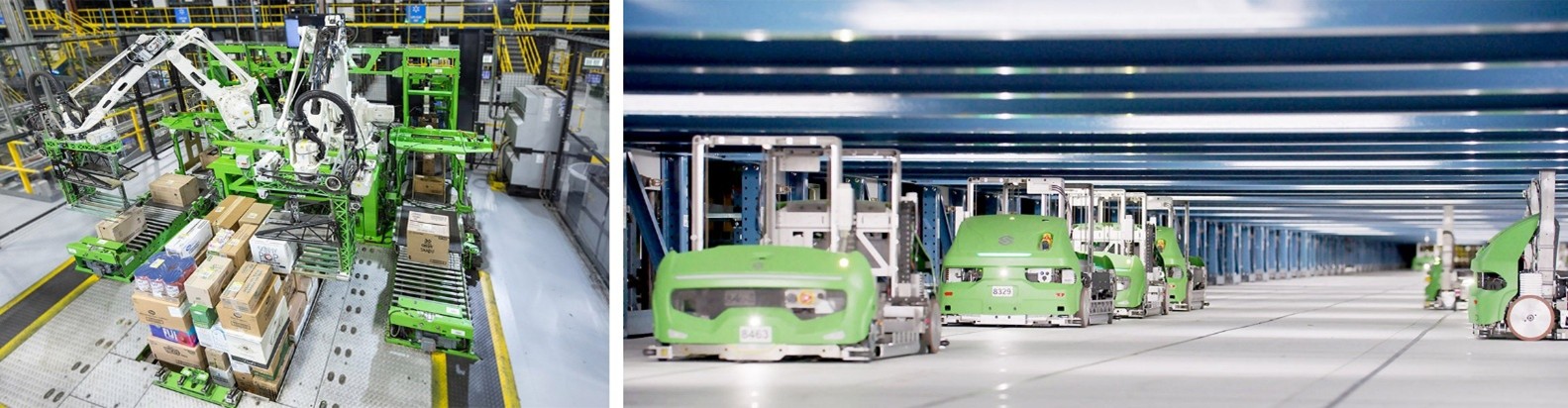
The Symbotic System is an AI-powered platform that automates picking, storage and retrieval of items for distribution. Widely used across multiplecomplex industries, including large scale retail and consumer goods companies, the technology uses intelligent, autonomous robots to depalletize and singulate inbound full pallets, store and retrieve items, and build orders into smart outbound pallets mapped to the needs and layouts of downstream recipients, helping to drive faster and more efficient operations. Medline will pilot this technology in 2027 at one of its 45 distribution centres in the U.S.

“Our vertically integrated solution of manufacturing and distributing products to all points of care is unique among healthcare suppliers,” said Sean Halligan, chief supply chain officer at Medline. “Medline’s strategic investment in this technology will help us provide even more efficiency for our customers andhelp them meet their operational, clinical and financial goals.”

The partnership with Symbotic builds on Medline’s continued investment in advanced technologies across its U.S. distribution centre network, aimed at improving speed, accuracy and scalability while supporting employee safety and experience. Medline also has recently deployed a range of automation and packaging solutions, including goods-to-person robotic picking systems,automated packaging and its custom ‘Pick Pack Pro’™ technology, to modernize fulfillment operations and better serve customers across all points of care.

“We are proud to partner with Medline, the largest provider of medical-surgical products and supply chain solutions, on the next step in itstransformation,” said Mike Dunn, chief customer officer at Symbotic. “Given the importance of accuracy, speed and cost in this space, this agreement is a great validation of the power of the Symbotic System, and of our commitment to reimagining the supply chain and transforming the movement of goods through intelligent automation.”

Thule’s New Automated Warehouse in Poland

Swedish multinational Thule, manufacturer of products designed for active lifestyles and outdoor enthusiasts, has entrusted Mecalux with optimising its European supply chain. The company is set to build a state-of-the-art automated warehouse in Krzy Wielkopolski, Poland to centralise its European product range while also serving other international markets.

With a well-established network spanning 138 markets, this logistics automation will boost Thule’s competitiveness.

“Our goals are to increase throughput, leverage our storage space and ensure product traceability,” says Pawe Pêpiak, Director of the Distribution Centre for Europe and ROW. “Automation will enhance cost efficiency and streamline processes, enabling us to deliver superior service and improve customer satisfaction.”

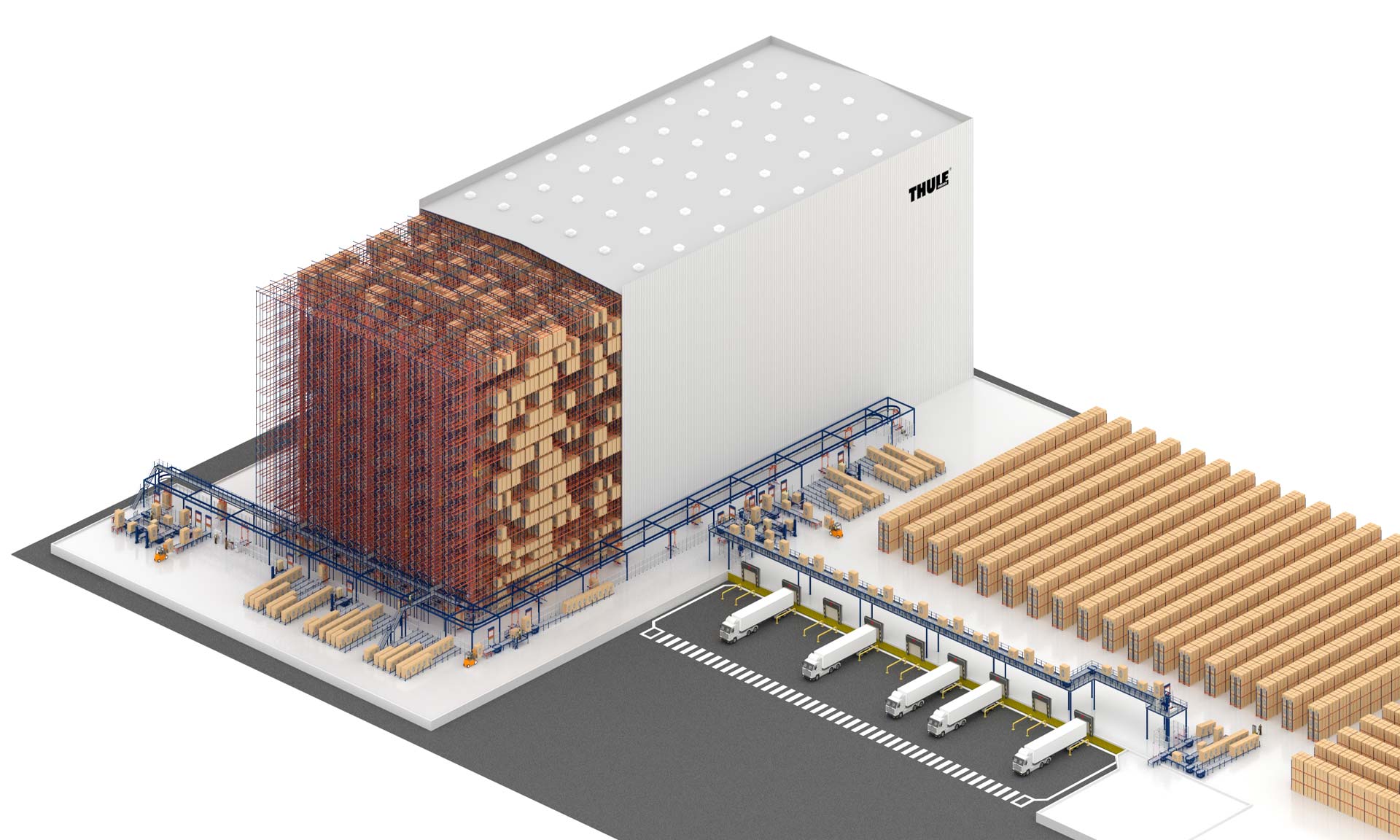
Thule’s new clad-rack warehouse will feature racking measuring 51 m wide, 135 m long and 42 m high. Six double-deep automated stacker cranes will handle nearly 40,000 pallets. The facility will also be equipped with a temperature and humidity control system. A conveyor and a pallet lift will provide a direct connection between the automated warehouse and the existing manual warehouse and production hall.

The facility will also feature a floor-mounted electric monorail system, which will be responsible for transporting pallets from the receiving area to the automated warehouse. Additionally, it will move goods from the storage area to one of the 16 flow channels located in the dock area.

Mecalux’s Easy WMS warehouse management system will oversee all operations. For example, the software will assign storage locations based on product category and turnover, organise order picking and provide product traceability. Digitalisation combined with automated systems will reduce manual handling, enhance staff safety and ergonomics and improve operational efficiency to meet anticipated demand in the coming years.

Record Store Day Logistics Surge

DP World’s Bicester warehouse – Britain’s largest physical music distributor – is preparing to handle record volumes this ‘Record Store Day’ as demand for vinyl continues to surge across the UK.

Record Store Day – the music industry’s standout annual retail event – is expected to see more than 210,000 vinyl records shipped from Bicester, with over 230 individual releases distributed to record stores nationwide on 18 April.

In 2025, DP World handled 8 million vinyl records, a new annual high and an increase of more than one million units year-on-year, bringing the total number shipped from Bicester to over 15 million since it opened in 2023.

In the final quarter of 2025 alone, more than 7 million records, CDs and other music formats passed through the warehouse, including nearly 3 million vinyl records as customers sought out the format’s listening experience and collectability.

Across all music formats, the 270,000 sq. ft. state-of-the-art site distributed more than 21 million units last year, highlighting the scale of operations underpinning the UK’s music retail supply chain.

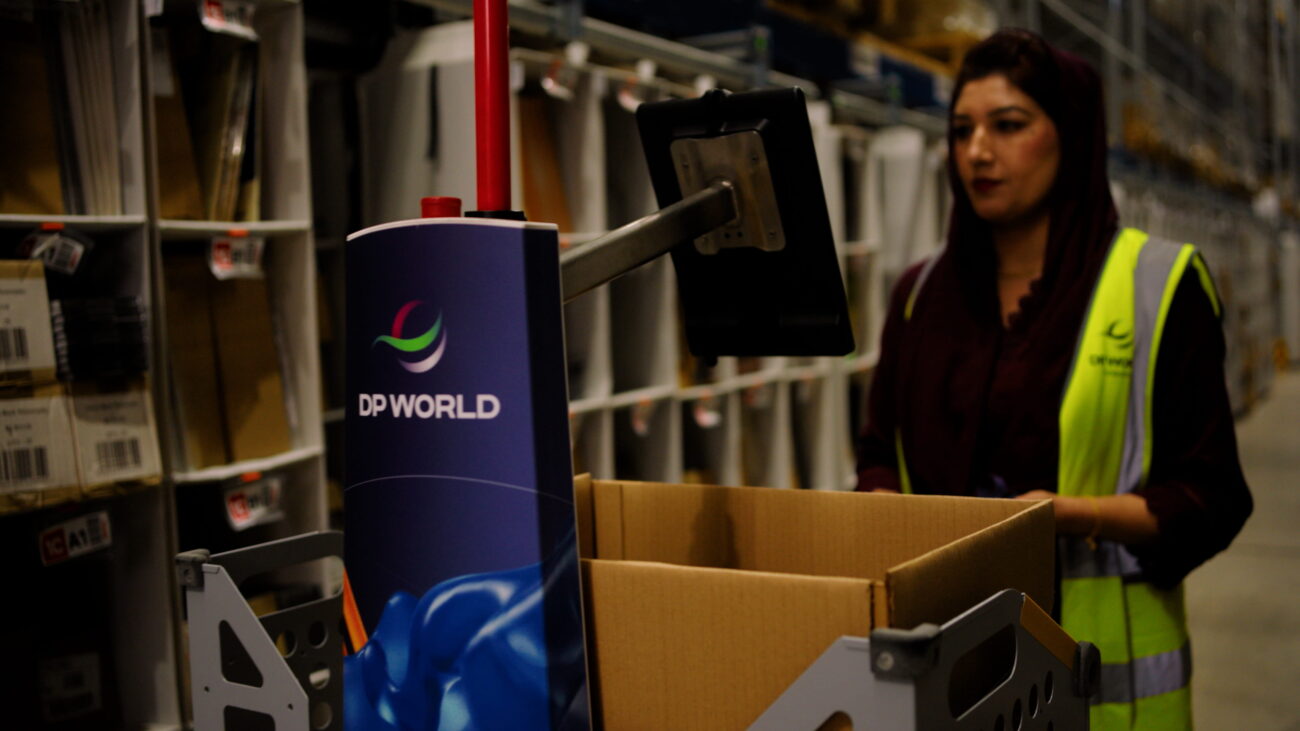
Angela Howard, Vice President Contract Logistics, North Europe, DP World said: “Record Store Day is a moment for the music industry to celebrate the record shops we serve and the enduring popularity of vinyl and physical formats. At DP World’s Bicester operation, our team brings real passion and pride to supporting this moment, working alongside more than 80 autonomous picking robots to ensure hundreds of releases reach stores nationwide on time.”

“This commitment goes beyond logistics – we’re proud to play a role in supporting artists and independent retailers, while contributing to the industry’s long-term growth. By continuing to invest in our people, technology, and partnerships, we aim to help sustain the vibrant future of music, connecting fans with everything from globally renowned acts to cult favourites.”

Kim Bayley, Chief Executive, ERA, the digital entertainment and retail association, said: “Record Store Day is the single, most important day in the calendar for independent record shops in the UK and is bigger than Christmas, so it is fundamental to all UK retailers getting the physical products in their stores. Thanks to the Bicester operations, DP World has managed to re-invigorate the physical redistribution process such that retailers are able to service their customers creating the foundation for future growth.”

Partnership for AI-Powered Mixed-Case Palletizing

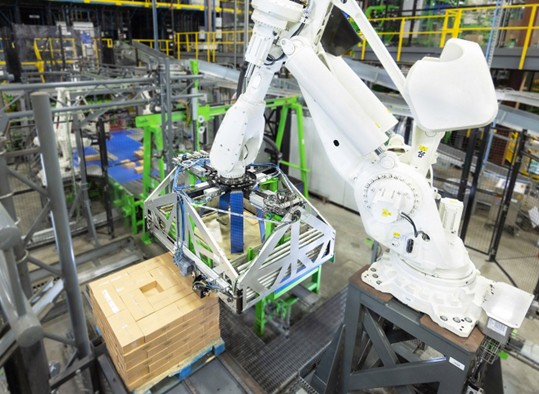
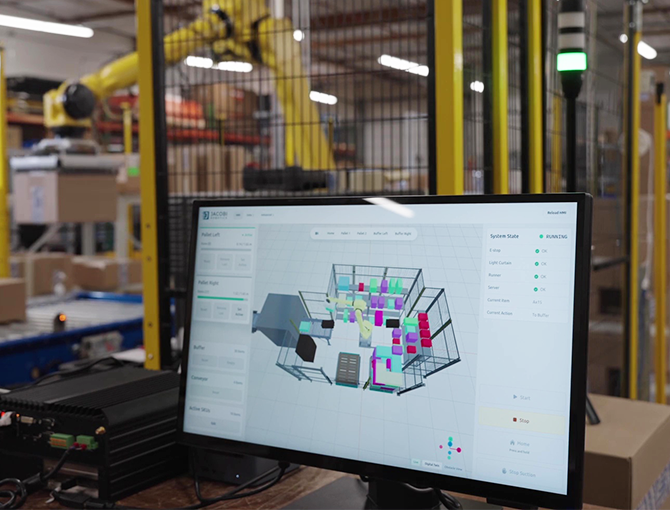
Fortna and Jacobi Robotics, a physical AI innovator for warehouse automation, have announced a strategic partnership to bring AI-powered mixed-case palletizing to distribution and fulfillment operations. The collaboration adds the Jacobi Robotics ‘OmniPalletizer’ platform to the Fortna solution portfolio, expanding an ability to solve one of the most complex and labour-intensive workflows in high-volume distribution environments.

Mixed-case palletizing has historically required significant manual labour due to its operational complexity and variability. With OmniPalletizer, Fortna can deliver a scalable, production-ready solution that automates this process without requiring upstream sequencing infrastructure or major facility redesign, unlocking new levels of efficiency, safety and performance. Through digital twin simulations and AI-optimized workflows, the partnership translates advanced AI into reliable, scalable outcomes on the warehouse floor.

“At FORTNA, we partner with companies that are redefining what’s possible in warehouse automation, and Jacobi Robotics is doing exactly that,” said Rob McKeel, Chief Executive Officer. “Our commitment is to deliver the right solution for each customer’s environment, and Jacobi Robotics adds a best-in-class capability that allows us to solve a problem that has historically been challenging while driving measurable results.”

“FORTNA is exactly the kind of partner we built OmniPalletizer for,” said Max Cao, Chief Executive Officer, Jacobi Robotics. “Their deep expertise in distribution and fulfillment solutions and proven track record of delivering best-fit technologies for their customers make them an ideal partner. Together, we’re bringing a proven, high-impact solution to customers across parcel, retail, grocery and food and beverage industries.”

Expanding a Best-in-Class Automation Partner Ecosystem FORTNA will leverage the addition of AI-powered mixed-case palletizing to further enhance and strengthen its ecosystem of best-fit technology solutions that also include:

AutoStore – to deliver high-density, goods-to-person solutions that maximize space utilization and accelerate order fulfillment. Recent innovations like AutoCase and AutoStore Intelligence expand these capabilities by enabling automated full-case and each picking in a single system and providing advanced, AI-driven insights to help make confident, faster decisions across design, deployment,operations and ongoing optimization.

Geekplus – to deliver advanced robotic solutions, including the OptiSweep™ system,designed to automate the sorter close-out process for distribution operations. By seamlessly orchestrating mobile robots with proprietary intelligent software, Fortna OptiSweep™ reduces labour dependency, enhances operator ergonomics and optimizes material flow in high-volume e-Commerce and sortation environments.

Hai Robotics – to help warehouses maximize vertical space, improve throughput and adapt quickly to changing demand through its HaiPick Systems, including the recently upgraded HaiPick Climb solution. As a global system integrator, Fortna designs and implements the high-density, goods-to-person solutions to optimize storage, picking and order fulfillment while increasing capacity and productivity. These flexible systems scale from small to large facilities, combining intelligent software with advanced robotic automation to enable more resilient, high-performing operations.

OTTO by Rockwell Automation – to deploy autonomous mobile robots that streamline material movement across facilities. These solutions improve operational flexibility and enable scalable automation of repetitive transport tasks.

Packsize/Sitma – to deliver on-demand, right-sized packaging systems that reduce corrugate waste, lower shipping costs and improve sustainability.

Swimwear Brand Gets Euro Logistics Base

Kulani Kinis, a fast-growing Australian swimwear and apparel brand with a loyal global following, has announced a new partnership with Bleckmann, specialists in supply chain management for fashion and lifestyle brands. Bleckmann will provide warehousing, order fulfilment and returns processing from its facility in Venlo, the Netherlands, launching Kulani Kinis’ first logistics operation based on European soil.

Supporting a bold growth strategy

Founded in Sydney in 2015 by Dani Atkins and Alex Babich, Kulani Kinis has grown from a side hustle into a globally recognised brand, expanding its reach far beyond Australia. In particular, the US market has been a strong growth engine, with a majority of the brand’s business currently generated there. Europe is another important market, and the brand has been building toward a dedicated European logistics presence for several years. “Europe has gone from a relatively small share of our business to around 10% and growing”, said Will North, Head of Commercial and Performance at Kulani Kinis. “Being based in Australia, we simply couldn’t service our European customers the way we wanted to.”

This made delivery speed and operational efficiency top priorities in a new potential logistics partner. Now, with Bleckmann handling warehousing, fulfilment and returns for all the brand’s EU business, customers can expect a step change in the end-to-end shopping experience. “Previously, delivery times to the EU were up to six days as orders shipped from Australia”, said Melissa Blume, Head of Customer Experience at the brand. “With fulfilment now based in Venlo, many customers will receive their orders the next day via local carriers they know and trust.”

Dedicated expertise, cost efficiency and faster returns

After visiting several potential providers in the Netherlands, Kulani Kinis selected Bleckmann for both its ability to deliver service improvements and its fashion and lifestyle focus. “What really stood out was that Bleckmann isn’t a generalist player – they have the deep expertise we need”, continued North. “Our products demand careful handling and precise presentation, so Bleckmann’s strong SLAs around fulfilment accuracy and value-added services were a deciding factor.” This was illustrated during a team visit to Bleckmann’s Venlo facility. “We arrived in the days after Black Friday and everything was running like clockwork”, noted Blume. “That told us exactly what we needed to know.”

The economies of scale achieved with Bleckmann have also allowed Kulani Kinis to introduce free shipping on orders over €100 – a first for the brand’s European offering. Returns, too, will be transformed: rather than items being sent all the way back to Australia, items returned from European customers will benefit from faster, more efficient processing, handled locally in Venlo. “Customers can now receive their exchange orders and refunds more quickly”, explained Ruud Mars, Business Development Business Transport at Bleckmann. “This typically results in a smoother post-purchase experience and stronger customer relationships.”

Euro summer, delivered

The partnership go-live comes at a key moment for the brand. Kulani Kinis is launching its European fulfilment operation alongside the release of its new Espresso Island collection – foregrounding retro glamor, deep espresso hues and playful core prints. Bleckmann will help give European customers faster access to the brand’s latest styles just as the summer season gets underway. “Launching a major new collection and a brand-new logistics operation at the same time is a real test of any provider”, said Blume. “But the way Bleckmann has handled it has given us complete confidence going forward.”

Looking ahead, Kulani Kinis sees Europe as a key pillar of its long-term growth strategy – not just in direct-to-consumer, but in wholesale too. The brand has already appeared twice at Splash, the leading swimwear trade show in France, and is looking to build the kind of wholesale momentum in Europe that has accelerated growth in the US.

“Having product physically on the continent makes everything easier – from marketing activations to wholesale conversations”, concluded North. “When potential partners see that you’re here, that you’re invested, it sends a very clear signal: we’re here to stay.”

New Ink Jet Printer Series at Interpack

The launch of a new continuous ink jet (CIJ) printer range will be the centrepiece of the Linx Printing Technologies stand (C59, Hall 8B) at this year’s interpack exhibition in Düsseldorf, Germany.

This latest addition to the Linx product portfolio will be shown alongside the company’s current ranges of advanced coding and marking solutions which, in addition to CIJ, include laser coding machines, thermal transfer printers and large character marking printers. All reflect Linx’s ongoing commitment to practical innovation with the development of coding and marking products and services that make production life easier for factory personnel.

interpack provides a global showcase for the packaging industry and it therefore presents the ideal opportunity for us to share with visitors what we believe will be a gamechanger in coding and marking for busy production managers,

said Mark Cooper, Senior Director Product and Marketing, Linx Printing Technologies.

In another first at the exhibition, Linx will also be previewing a new model for its large character marking printer range, which will be launched later this year. This will set new standards in the coding of text, logos and graphics directly onto porous substrates such as cardboard, paper and wood in industries including manufacturing, packaging and logistics.

Among the other highlights on the stand, the three models on show from the Linx laser coding machine range underline the variety of solutions offered by the company to meet the needs of many different markets and applications. All offer high-quality permanent marking at high speeds and, with no reliance on consumables, operating costs are reduced while the substrates being coded remain intact and unblemished.

The Linx UVG5 is ideal for delicate mono-recyclable films and difficult to mark rigid plastics, delivering fast and consistent code marking, and can be seamlessly integrated into existing production lines.

The Linx CSL30 produces sharp codes, even on hard to mark materials such as glass and rubber, on high-speed production lines in markets including food and beverage, pharmaceuticals, cosmetics and electronics. The adjustment focus of the coder’s CO2 laser marking head, which incorporates integrated simplified focus technology, means there is no need to move the laser or adjust it for different height or width products. This reduces changeover times and eliminates errors on lines with frequent product changes.

Linx’s fibre laser coder, the FSL20, achieves very fine spot size to deliver excellent quality codes for the clear and effective marking of very small components or products which require large amounts of information in a small area. In addition, the extreme clarity of the codes makes the coder ideal for traceability requirements in markets such as pharmaceutical, medical devices, automotive and electronics.

Linx will also showcase three models from its thermal transfer printer range, which offer high quality printing onto flexible materials including bags, pouches, labels and flow wrap. All offer a large range of ribbons to match individual applications and production line printing needs, with bi-directional stepper motors to deliver more prints per ribbon. An easy-to-use colour touch screen and simple cassette system ensure ease of set-up, operation and changeovers.

Customs Reform Puts Focus on UK-EU Fulfilment

An overhaul of the EU customs framework isn’t deterring expansion of UK-to-Europe retail supply chains, writes Andrew Scanlon (pictured, below), Head of Sales and Marketing at e-commerce logistics provider Paxon.

The European Council and the European Parliament recently agreed on reform that will collect customs duties more efficiently and tighten controls on non-compliant, dangerous or unsafe products. It’s a move that’s been regarded as the EU’s greatest customs reform since the creation of the Customs Union in 1968 and has seen headlines about a crackdown on low-value parcels entering Europe.

Changes are expected to see the end of duty relief on parcels valued at less than €150 entering the EU, with this being replaced by new fees. However, there is much more to the reform, with significant changes potentially encouraging, rather than deterring UK businesses from exporting to the EU. Our experience suggests this is the case, with retailers and brands keen to plan early and adapt supply chains to grow sales among European shoppers.

Facilitating trade

The new EU customs framework will see the introduction of a data hub, which is scheduled to become operational for e-commerce goods on 1 July 2028. A phased rollout will bring all movements of goods into its scope by 1 March 2034. The EU customs data hub will be a single online platform for collecting and analysing customs data, supporting the secure and efficient movements of goods into and out of the EU. A new, decentralised agency for EU customs will utilise the hub to help identify the riskiest cargo, flagging this for inspection.

Businesses will submit customs information to the new portal, meaning they only submit information once, rather than up to 27 individual entries for each of the Union’s member states. This should help facilitate and simplify trade by saving exporters time and money. It will also create opportunity for ‘trust and check traders’ – a new process that streamlines customs obligations for companies that consistently provide comprehensive information about their goods. Companies recognised under the scheme could find they are able to release goods into the EU without any active customs intervention at all.

Benefits of the new reform appeal to UK-based retailers and brands, which want to cut the complexities of cross-border trade. Businesses are seeking advice to improve the accuracy and compliance of customs declarations, ensuring they’ve got tried and tested processes in place well ahead of the changes.

It’s the new rules for small consignments that are more likely to be causing concern among UK businesses exporting to the EU.

Changing fees

In December 2025, EU member states agreed to eliminate the customs duty relief threshold for goods valued at less than €150 entering the EU. From 1 July 2026, there are plans to replace this exemption with a temporary customs duty, which is expected to be around €3 per item, in parcels valued up to €150. A new flat rate handling fee has also been proposed, with plans for this to be introduced from November 2026, although this is still to be confirmed.

In the most recent communication (26th March) from the European Council and the European Parliament, it was indicated that the level of the handling fee will be decided by Commission delegated act, before it starts being applied by EU member states no later than 1 November 2026.

Communications further indicated that platforms and those selling into the EU by distance sale (e.g. via e-commerce) are expected to be responsible for ensuring that all customs formalities and payments are taken care of. A new system of financial penalties will be introduced for e-commerce operators systematically failing to comply with their customs obligations.

Although further clarity about the new EU-wide handling fee is still required, UK companies are acting early. They are reviewing fulfilment strategies, considering options such as dual-entity warehousing and EU-based bonded warehouses, as well as hybrid models of centralised supply chain planning and inventory management, supported by regional distribution hubs.

The EU presents a strong growth opportunity for UK-based retailers and brands. European e-commerce is thriving and shoppers are willing to buy from outside the EU – around a quarter (27%) of shoppers did so in 2024. The new customs reform may sound daunting but can present opportunities to streamline exports and fulfilment. Planning early will be key to adapting supply chain and fulfilment strategies that enable effective cross-border trading.

Andrew Scanlon is Head of Sales and Marketing at Paxon – a newly formed third-party logistics brand created by bringing together three specialist providers: Active Ants, Staci and Radial.

Hormuz Crisis’ Supply Chain Impact

The ongoing severe restrictions on shipping through the Strait of Hormuz, triggered by the United States and Israel’s unprovoked attack on Iran, has gone from an understandable reluctance for ships to pass during the conflict to Iranian threats and attacks on vessels, plus attacks on Gulf ports and facilities, to a new US naval blockade on Iranian tankers and potential blackmail ransoms involved to allow navigation to resume via this critical chokepoint. Predictions on the increasing supply chain consequences for all products are being constantly revised.

“If peace with Iran is not locked in within weeks, structural changes in global supply chains will begin to harden,” Kevin O’Marah, Chief Research Officer, Zero100 told us. “War risk becomes baseline: higher insurance/security costs, persistent surcharges, and redesigned shipping networks around safer hubs; longer, less reliable transit times.

“Short-term tactics to shift inventories, seek secondary sources, and pay freight premiums are getting us through this crisis, but nothing will change the fact that ongoing geopolitical tensions mean costs are set to keep rising for the foreseeable future. This means redundant manufacturing capacity, higher inventories, smaller-scale production assets, and rising transaction complexity – all of which add both capital and operating expense.

“Regionalization is a good thing in the long run, and AI could be the breakthrough technology needed to make it all profitable. But the transition will take years. Rising costs of living are the new normal, and until we fully dial in the productivity effects of AI, we will be forced to pass along the costs of transitioning to regionalized supply chains.

“Supply chain transparency is a critical unlock as business leaders look for not only lower product supply costs, but also a good way to explain what customers get for higher prices.”

Subscribe

Get notified about New Episodes of our Podcast, New Magazine Issues and stay updated with our Weekly Newsletter.