Why Zone Separation Could Transform Cold Chain Efficiency

The UK operates the largest cold storage market in Europe by capacity, and it is under pressure. The temperature-controlled sector contributes £14 billion in gross value added to the economy, according to the Cold Chain Federation, yet operators are absorbing sharp cost increases: the Federation reported cold-chain energy costs rose 46% in 2023 alone. For logistics operators running chilled and frozen distribution, energy is no longer a background overhead. It is a defining operational and competitive variable.

Much of the industry conversation focuses on the storage side, on refrigeration plant, insulation, and set-point management. But in a distribution centre, the bigger and more overlooked energy drain is movement. Distribution facilities are defined by constant door activity, frequent openings, and the transfer of goods between zones held at different temperatures. Ambient goods-in, chilled pick faces at up to 8°C, and frozen areas at −18°C or below often sit within the same building footprint, and every uncontrolled opening between them costs money.

Where the energy actually goes

The scale of this is not marginal. The ASHRAE Handbook of Refrigeration notes that heat gain from infiltration air can amount to more than half the total refrigeration load of distribution warehouses. That figure is specific to high-throughput, high-door-traffic facilities, which is exactly what a modern fulfilment or 3PL distribution centre is. In other words, in the buildings logistics operators actually run, air movement between zones can be the single largest driver of refrigeration demand, ahead of the storage envelope itself.

This is where physical zone separation earns its place. Temperature-separating curtain walls and PVC strip curtains reduce the uncontrolled exchange of air at openings and between zones, so each area is held only as cold as it needs to be rather than bleeding cold air into warmer neighbours or over-cooling on rebound. Peer-reviewed research has measured strip curtains in good condition reducing doorway air infiltration by around 90%, though effectiveness falls sharply when curtains are damaged, gapped, or poorly overlapped, which makes condition and maintenance part of the energy strategy, not an afterthought.

Flexibility as an operational advantage

The other reason curtain systems suit distribution rather than fixed storage is change. Fulfilment operations reconfigure constantly, with zones expanding and contracting by season, by contract, and by product mix. Warehouse curtain dividers and insulated partition systems can be repositioned as those needs shift, letting an operator create or move a chilled zone without a construction project. For 3PLs in particular, whose space requirements change with every new client, that adaptability protects both capital and continuity of operation.

It also aligns with where the sector is heading. The Cold Chain Federation’s ongoing Cold Chain Net Zero work, alongside the UK’s legally binding 2050 Net Zero target, is pushing operators toward measurable energy reductions. Reducing refrigeration load through better zone separation is one of the more straightforward interventions available, requiring no plant replacement and no operational shutdown.

Specifying responsibly

Any internal partitioning must be designed around the building’s fire strategy. Curtains must not obstruct escape routes or fire detection, and must not impede sprinkler coverage under BS EN 12845, in line with duties under the Regulatory Reform (Fire Safety) Order 2005. Fabric should be certified to BS 5867 Part 2 Type B, with a BS EN 13501-1 Euroclass rating where required, and operators should check the manufacturer’s actual test certificate rather than assume a classification. Handled properly, zone separation is a rare thing in cold-chain logistics: a meaningful energy saving that does not require rebuilding the facility to achieve it.

By Scott Fullerton, Operations Manager, AKON Curtains Limited

AI drives a new era of specialist logistics technology

The logistics industry is entering a new phase of digital transformation as artificial intelligence moves beyond visibility and analytics to automate operational decision-making. With supply chains under continued pressure to improve efficiency, resilience and customer service, logistics service providers (LSPs) are increasingly investing in AI-powered infrastructure that can streamline workflows, reduce manual processes and deliver real-time operational intelligence.

One of these such companies has announced it is separating into two focused businesses. project44 will continue serving enterprise shippers as a Decision Intelligence Platform, while LSP44 launches as a dedicated, profitable AI-native company built specifically for logistics service providers, including 3PLs, freight forwarders and brokers.

The move creates two businesses with distinct customers, go-to-market strategies and product roadmaps, while continuing to share the same underlying AI-native agent network, carrier API infrastructure and global logistics data graph.

Although launching as a standalone business, LSP44’s roots stretch back to project44’s founding in 2014, when the logistics industry still relied heavily on phone calls, faxes and EDI. The company’s first product connected carriers through real-time APIs across quoting, dispatch, visibility and documentation, with logistics service providers including Worldwide Express, BlueGrace and DSV among its earliest customers.

Today, nine of the world’s ten largest logistics service providers operate on LSP44 infrastructure. Over the past decade, project44 expanded into the enterprise shipper market, building its Decision Intelligence Platform while continuing to develop the carrier network, integrations and data foundation that underpin both businesses.

Shippers and LSPs don’t buy the same thing, so we stopped pretending one business could serve both… People often forget that project44 began by serving brokers, forwarders and 3PLs. LSP44 represents a renewed focus on those customers, giving them more than a decade of network, data and trust in the form of AI agents that don’t just observe—they act.

said Jett McCandless, Founder and CEO. “

The separation reflects the increasingly different technology requirements of shippers and logistics providers. While shippers use platforms to improve planning and execution, LSPs embed infrastructure directly into their own transportation management systems, customer portals and digital services. As AI adoption has accelerated, those differing needs have become even more pronounced.

Unlike many newer AI entrants, LSP44 combines AI with more than a decade of operational logistics context. Its platform is built on a logistics data graph spanning more than 280,000 carriers, 1.5 billion shipments and 706 million carrier events processed every day across North America, Europe, Asia-Pacific and Latin America.

The platform supports the full shipment lifecycle through APIs and AI agents, covering carrier procurement, quoting, tendering, booking, dispatch, ocean execution, appointment scheduling, carrier onboarding, real-time visibility, exception management, documentation, freight audit and settlement. By grounding AI in live operational data, LSP44 says customers can automate complex logistics workflows while improving speed, accuracy and service.

LSP44 also launches as a profitable standalone business with its own engineering, sales and leadership teams, enabling it to focus exclusively on the needs of logistics service providers while continuing to invest in AI innovation.

Industry partners welcomed the move. Michael Rabaud, Global Director of Digital, Data and Innovation at CEVA Logistics, said combining AI agents with live logistics data creates “a step-change in what we can do.” BlueGrace Logistics Founder and CEO Bobby Harris described LSP44 as “the infrastructure layer we build on”, while Worldwide Express President Joel Clum highlighted the company’s long-standing partnership with project44 and the value of AI embedded directly into logistics operations.

As AI becomes increasingly central to supply chain execution, organisations are looking beyond standalone automation tools towards connected platforms that combine trusted operational data, carrier connectivity and intelligent decision-making. With dedicated businesses serving both enterprise shippers and logistics service providers, project44 and LSP44 aim to accelerate innovation for each customer group while building on the shared infrastructure developed over the past decade.

Study Finds Small Asset Theft Behind Millions in Hidden Losses

Asset theft and equipment loss remain persistent challenges across industries including construction, transportation, utilities and field services, placing increasing pressure on organisations already managing tight margins, labour shortages and complex supply chains. While the financial impact of stolen high-value equipment is well understood, the day-to-day operational disruption caused by missing tools, smaller assets and specialist equipment is often harder to quantify. As businesses look to improve efficiency and resilience, greater visibility into asset location and utilisation has become an increasing priority.

New research from Samsara highlights the scale of this challenge. The company’s 2026 State of Connected Operations (SOCO) Asset Theft & Loss Report, Quantifying the Hidden Cost of Asset Invisibility, finds that equipment theft and loss is not just a replacement-cost problem—it’s a £9.7 million annual operational drain for mid-sized organisations (between £180 million and less than £740 million in annual revenue) without asset tracking.

The bigger surprise is which assets are driving those losses. While heavy machinery theft often makes headlines, the report found that 72% of operational costs stem from disappearing assets valued at less than £7,400, including tools, sensors, generators and specialised parts that organisations rely on every day.

The proprietary study, based on insights from 1,500 financial executives — majority mid-size operations between £180M and <£740M annual revenue —  across construction, logistics, field services, and utilities in the United States, Mexico, the United Kingdom, Ireland, France, Germany, and Canada, puts a precise number on a problem the industry has long felt but never been able to quantify. Despite 71% of operations experiencing equipment theft every quarter, and 25% of new equipment budgets going to replace what’s been stolen or lost, the hidden damage runs far deeper: project shutdowns, emergency rentals, idle labour, and contract penalties compound the direct loss into millions in operational costs.

Before deploying Samsara, a single missing piece of equipment could delay a job, idle a crew, and force emergency procurement, all without ever knowing where the asset actually was… With real-time asset visibility, we expect a 100% reduction in unreturned assets, 90% reduction in days outstanding, and our teams spending time on safety and customer service instead of searching for tools. All told, this could add up to millions in recovered operational costs.

said John Chaccour, Director of Technology at Total Safety.

Key findings include:

Equipment theft is a reality, not a rare event

  • 71% of operations without asset tracking experience equipment theft every quarter
  • 25% of new equipment budgets go to replacing stolen or lost assets
  • In the UK & Ireland, 37% of organisations report higher insurance premiums as a direct consequence of asset theft and loss

Small equipment is a hidden driver of losses

  • Operations without tracking lose an average of £9.7M annually from direct and indirect costs of missing equipment
  • 72% of those operational costs come from missing assets valued under £7.4K, like tools, sensors, and specialised parts
  • The “death by a thousand cuts” from disappearing small gear is where the real financial drain occurs

Missing assets drain productivity and halt projects

  • 98% of organisations say searching for assets is a daily or weekly occurrence
  • At more than a quarter of organisations without real-time visibility, employees spend more than 10 hours per week searching for missing equipment — equivalent to one full-time employee doing nothing but searching for three months a year
  • 77% globally (71% in the UK & Ireland) say a missing critical asset caused a significant shutdown or delay in the past 12 months
  • Without tracking, the average time to locate a missing asset is 25 days, and 54% of organisations can’t recover even half of their stolen high-value equipment

The gap between organisations with and without asset visibility is not merely operational, it’s financial. Companies investing in tracking are not only recovering assets faster, they’re preventing the secondary costs that compound long after the initial loss.

Find the full report findings here.

Next-generation high-speed doors make UK debut

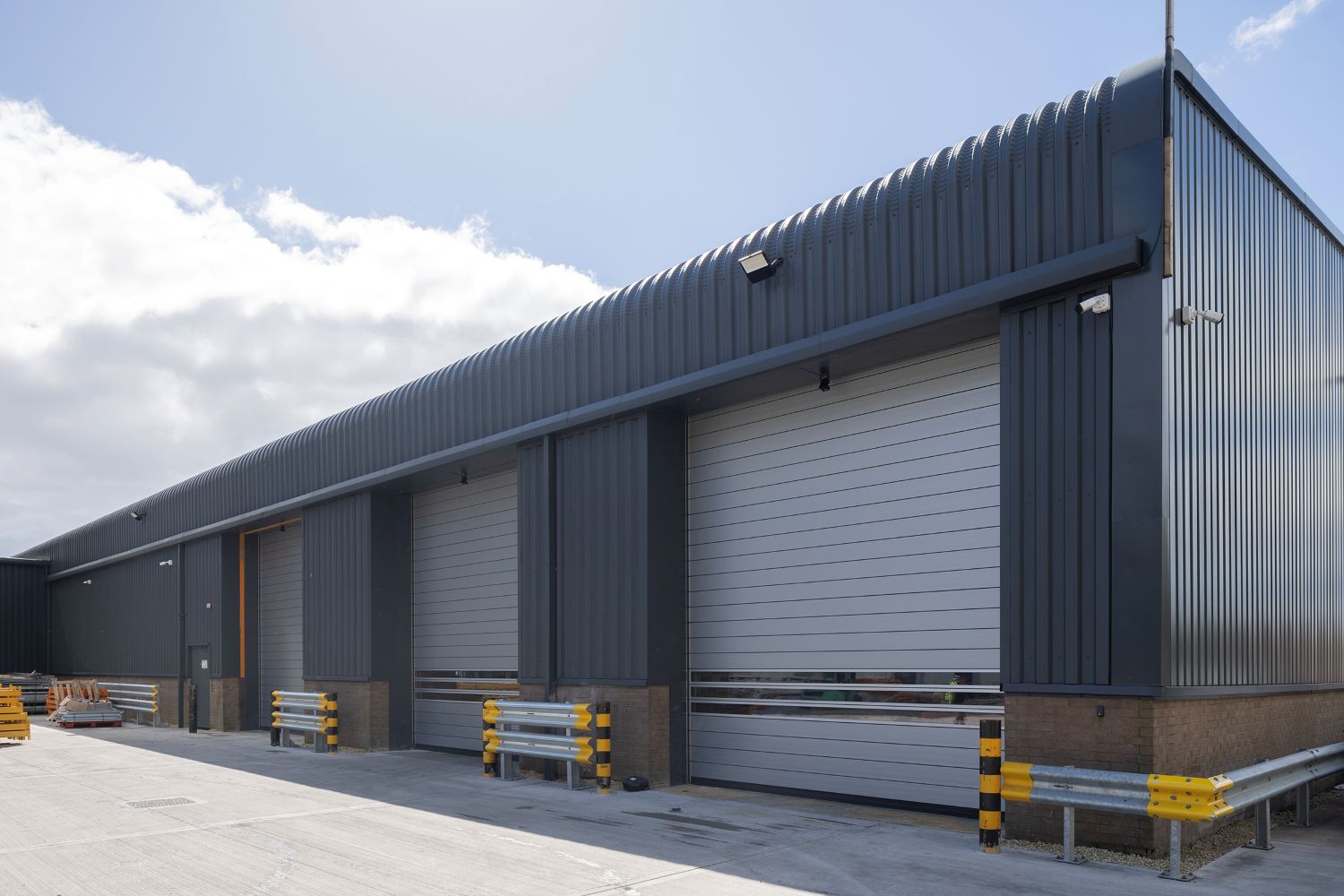
As logistics operators continue to look for ways to improve energy efficiency while maintaining fast-moving operations, warehouse infrastructure is increasingly becoming a focus for investment. A recent project at PRL Logistics’ Rotherham distribution facility has seen the first UK installation of a new generation of high-speed industrial doors, alongside wider upgrades designed to improve traffic flow, climate control and fire safety.

ASSA ABLOY has supplied and installed a comprehensive range of industrial door types for PRL Logistics, a logistics services provider for leading supermarkets.

Having previously supported PRL Logistics at their Premier Park site in Doncaster, ASSA ABLOY worked with contractor Fit Out UK to improve a high-traffic zone within the Rotherham facility, delivering the UK’s very first installation of the next-generation ASSA ABLOY RT1000 spiral high-speed doors. This landmark upgrade, alongside doors for their new extension, has successfully bridged the gap between maximising operational speed and climate control.

Philip Whiteley, High Speed Doors and Docking Sales Manager at ASSA ABLOY explains:

PRL Logistics operate in a fast-paced environment, moving goods, counters and fridges for major supermarkets. With two buildings including an extension on-site, it is imperative staff can move between buildings efficiently and safely. Our range of rigid high-speed doors offers the perfect hybrid solution, providing high-speed performance and security for the external building envelope.

Supplying for the extension first, ASSA ABLOY installed four Crawford OH1042S fast overhead sectional doors, providing efficient and reliable level access between internal and external areas. Operating faster than a standard sectional door, they help to reduce waiting times and improve traffic flow, particularly in areas with regular movement of pedestrians and material handling equipment such as pallet trucks and forklifts. Designed for frequent daily use, the doors deliver dependable performance while supporting smooth and safe movement through a busy logistics environment.

Alongside these solutions, a key element of the installation was a geared drive fire shutter, designed to provide essential fire protection within the building layout. Positioned centrally within the transition area and flanked by insulated roller shutters, the system plays a critical role in compartmentalising the space. In the event of a fire, it helps contain the spread of flames and smoke, protecting both personnel and assets.

Engineered for reliability, the geared system ensures controlled, fail-safe operation, automatically closing when triggered by the building’s fire alarm system—even during power loss. This allows the site to maintain high levels of safety compliance without impacting day-to-day operations. By integrating the fire shutter with the surrounding insulated roller shutters, ASSA ABLOY delivered a balanced solution that combines safety, regulatory compliance, and operational flexibility in a key working zone.

The older building previously had slow roller shutters, with staff leaving the shutters in the open position for speed and accessibility. Unfortunately, in the colder months, this meant the internal environment was exposed to the elements.

To address this challenge, ASSA ABLOY recommended the installation of four RT1000 spiral doors.

Marking the first installation of the new ASSA ABLOY RT1000 spiral doors in the UK, the high-performance design reportedly increases energy efficiency, security and durability in demanding industrial environments. Engineered for rapid operation and long service life, they state that the RT1000 is ideally suited to logistics, warehousing, manufacturing and car dealership environments seeking to enhance operational flow and reduce energy loss.

Operating at high speeds, the rigid aluminium door panels roll up into a circular “spiral” guide track at the top. Because the panels do not touch each other as they roll up, they open quickly, operate quietly, and experience very little wear and tear.

To further enhance operational efficiency and safety, the RT1000 doors at PRL Logistics are fully automated with radar activation on both sides, enabling hands-free opening and closing for smooth, uninterrupted traffic flow between the building and yard.

To connect the two buildings, ASSA ABLOY enhanced insulated roller shutters were installed. These doors act as a connecting gangway between the buildings while also forming a secure containment area. Because this area is not used frequently, high-speed doors were not required; instead, the insulated shutters provide a practical solution for storing plant and equipment, which can be easily accessed and moved into the main yard when required.

The project reflects the growing emphasis within the logistics sector on modernising warehouse infrastructure to improve efficiency, reduce energy loss and strengthen safety measures. As distribution centres handle increasing volumes of traffic, investments in high-performance access solutions are becoming an important part of maintaining productivity while meeting operational and environmental targets.

FastMove unveiled for long-distance pallet transport

As warehouses face mounting pressure to move higher volumes while improving efficiency and extending the life of existing automation, Swisslog has repositioned its long-established monorail technology under a new identity. The company says its newly branded FastMove system reflects an increased focus on helping operators boost throughput, reduce lifecycle costs and modernize existing intralogistics infrastructure without the need for wholesale replacement.

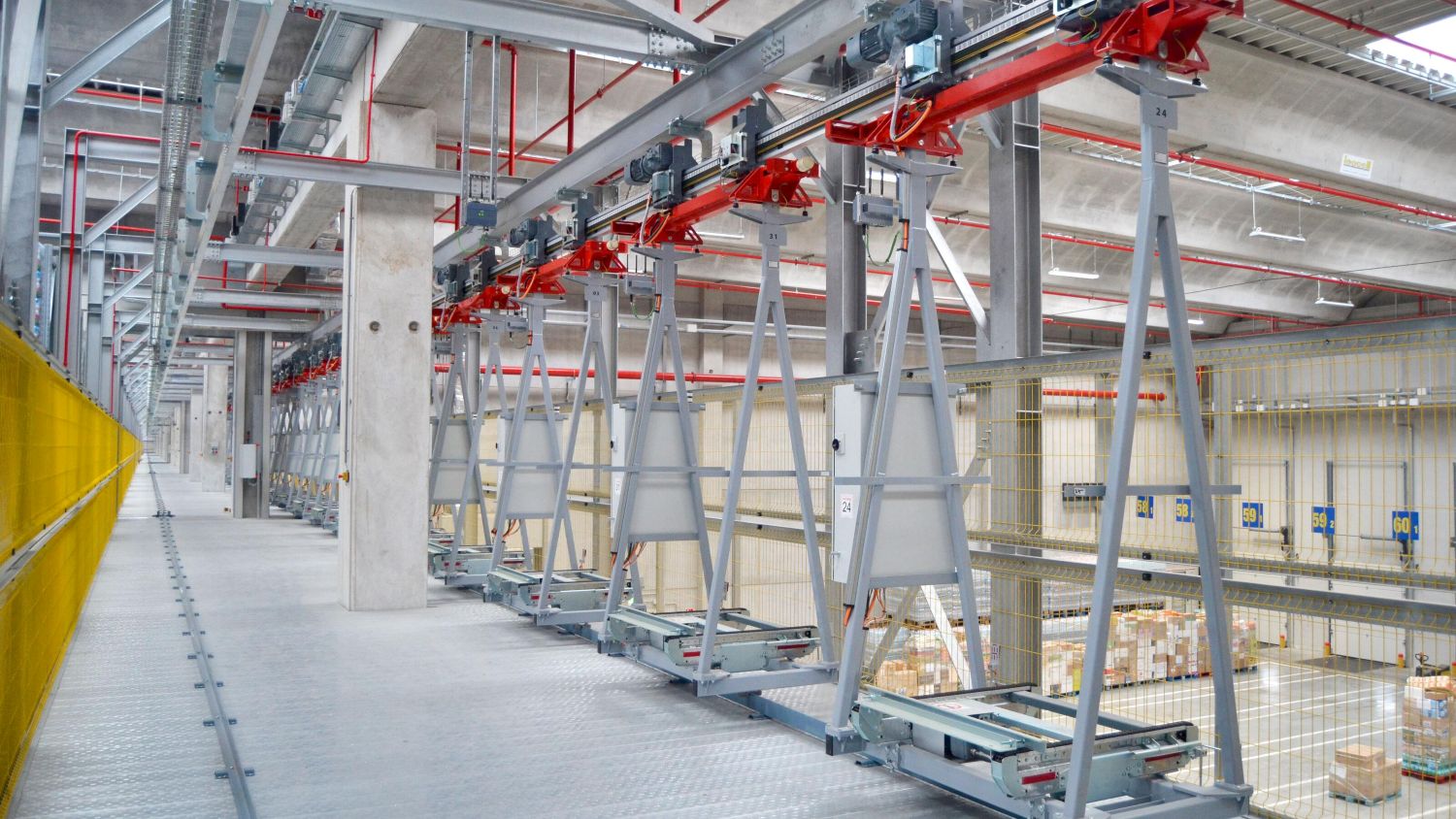
FastMove is a high-capacity electrified monorail system designed to move palletized goods efficiently across complex warehouse environments. Building on more than 40 years of proven Swisslog technology, this next-generation monorail solution enables companies to optimize material flow over long distances while maintaining high throughput and gentle handling of goods.

Driving high pallet throughput while maintaining flexibility

With enhanced throughput management, Swisslog strengthens its commitment to delivering measurable operational advantages. FastMove allows customers to significantly increase throughput, with transport speeds of up to 2 m/s and system capacities exceeding 600 pallets per hour. This high-performance capability helps operators meet growing demand and manage peak volumes more efficiently.

Compared to conventional conveyor-based transport systems, FastMove offers a more favorable cost position, particularly in applications requiring long transport distances or high throughput. Its ability to transport large volumes over extended distances with fewer system components contributes to reduced installation and operational costs, while also improving space utilization within the warehouse.

The system has been designed with flexibility and scalability at its core, allowing customers to adapt their intralogistics infrastructure as business requirements evolve. Its modular track design supports complex layouts and can be adjusted with minimal effort. Throughput scales simply by modifying the number of vehicles operating within the system, enabling a phased investment approach that aligns with business growth and demand fluctuations.

Extending service life: Upgrade packages for modernization

FastMove also offers clear advantages for existing operations. Its components are well suited for modernization and retrofit projects, enabling customers to upgrade performance and extend the service life of their intralogistics infrastructure without requiring a complete system replacement.

Current upgrades are applied primarily at the controls and software level, with mechatronic requirements addressed where needed, protecting existing investments while ensuring installations remain current and compliant.

The next product release, available by the end of 2026, is designed to meet the requirements under the EU Cyber Resilience Act (CRA) and machinery regulations.

Designed for demanding environments and diverse industries

FastMove is engineered to perform reliably under a wide range of operating conditions. It operates in environments from deep-freeze temperatures of -30°C to ambient conditions of up to 50°C and handles loads of up to 1,500 kg, or up to 3,000 kg with twin-load configurations. These capabilities make it a versatile solution for the food and beverage, consumer goods, and retail sectors, where performance and robustness are non-negotiable.

Seamless integration with intelligent software

FastMove integrates into existing warehouse IT infrastructure through Swisslog’s SynQ software platform, enabling intelligent control of material flows and synchronization between automated and manual processes. Transparent, data-driven operations are supported throughout, meeting the growing demand for connected intralogistics solutions.

The relaunch comes as warehouse operators increasingly look to maximize the performance of existing assets while investing in automation that can scale with future demand. With growing pressure to improve throughput, resilience and regulatory compliance, technologies that combine modernization with long-term flexibility are expected to play an increasingly important role in the next generation of warehouse operations.

FastMove represents the next step in the evolution of monorail technology at Swisslog… By combining high performance with modular scalability and cost efficiency, we provide our customers with a future-ready solution that supports growth, modernization, and long-term operational excellence.

said Giovanni Franco, Product Manager, Pallet Transportation at Swisslog.

Subscribe

Get notified about New Episodes of our Podcast, New Magazine Issues and stay updated with our Weekly Newsletter.