Amazon Business Reaches $60 Billion in Sales

Amazon has announced that Amazon Business reached $60 billion in annualized gross sales in Q2, supplying 11 million organizations worldwide with business purschases.

Organizations of all sizes — from hospitals and schools to factories and hotels — use Amazon Business to buy what they need to operate. Since launching in the U.S. in 2015, Amazon Business has grown to serve organizations across 11 countries, including hundreds of thousands of small business customers. In the first half of this year, more than 1.8 million new organizations joined Amazon Business, further accelerating that momentum – organizations including Citi, United Service Organizations, Marriott International and Carnival Corporation.

“Amazon Business has made it easier for our teams to get what they need, when they need it,” said Scott Thompson, vice president, logistics, North America, at Carnival Corporation.

“Procurement tasks that used to take hours — searching across vendors, routing approvals, reordering supplies — can now be done in minutes. It’s a better experience for our team members, and we’re looking forward to building on that with Amazon Business as we find new ways to improve how we work.”

In the past year, Amazon Business has introduced new tools and offerings designed to make buying for work easier and smarter — supporting growth for more than 11 million organizations and reaching $60 billion in annualized gross sales in Q2 — including:

· Launching new AI-powered tools to help organizations discover savings

· Expanding business-relevant selection through a network of millions of sellers

· Offering everyday low prices, business-only pricing, and quantity discounts

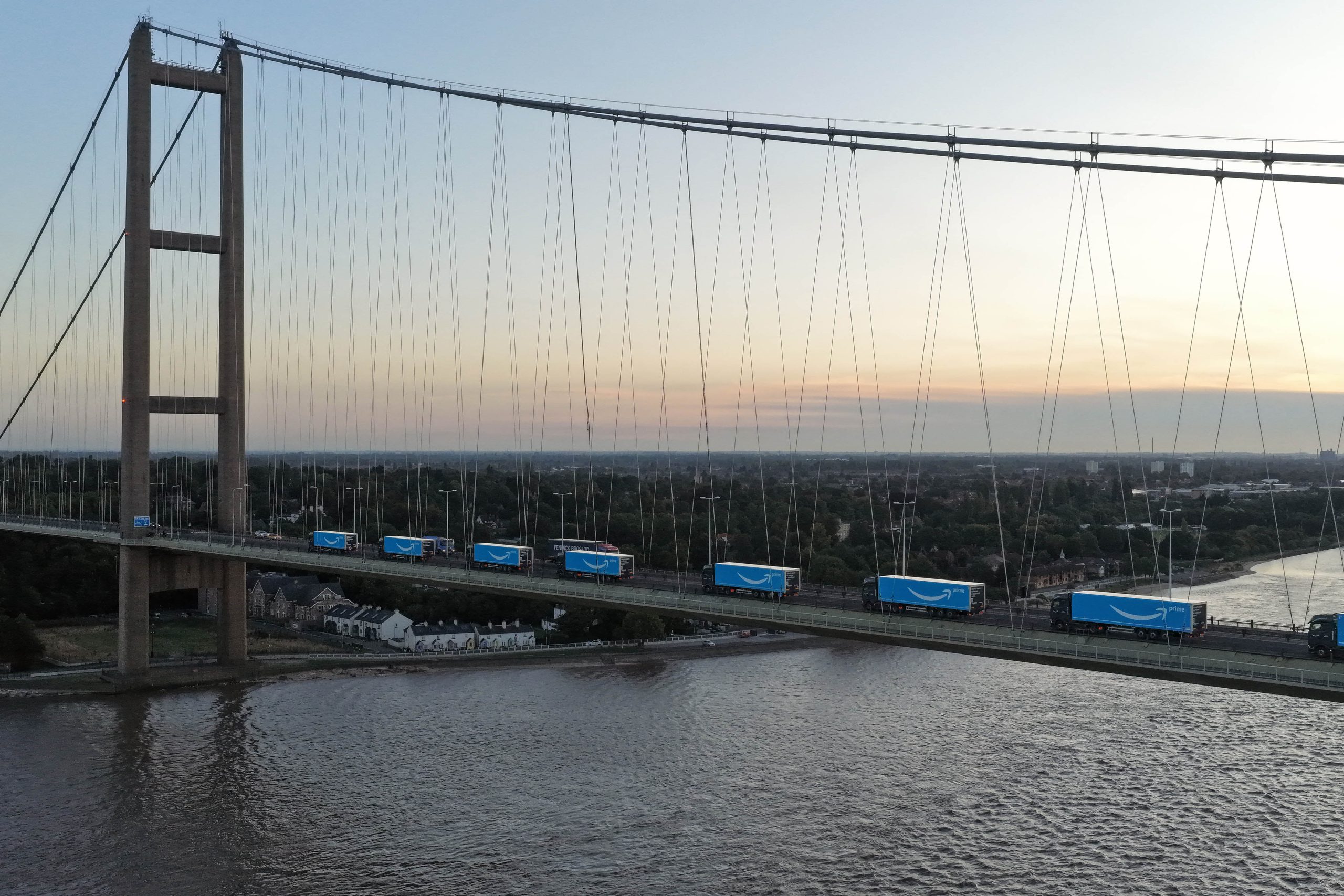
· Deploying fleets of delivery trucks across the U.S. purpose-built to make business deliveries

· Adding new benefits to Prime Business membership

“Organizations of all sizes trust Amazon Business for vast selection, everyday value, and fast, reliable delivery — and that trust is reflected in our continued growth,” said Shelley Salomon, worldwide vice president of Amazon Business. “As organizations look to do more with less, we’re inventing new ways to help them save time and money — and reinvest in growing their business.”

Business buyers today value a personalized, intuitive experience. Amazon Business has introduced a set of AI-powered tools designed to meet that expectation — helping organizations find ways to save money and make smarter buying decisions. Amazon Business Assistant answers questions in real time to offer account support and offers suggestions on how to buy more efficiently based on past purchases. Read more of our coverage here.

Savings Insights suggests ways a business can save money by analyzing their spending and suggesting options like bulk discounts or repeat ordering. Spend Anomaly Monitoring alerts teams when purchases look unusual — helping catch mistakes or overspending. Organizations are finding these tools enable their teams to identify savings and catch issues early.

From Beakers to Bananas

Whether it’s a school that needs laboratory beakers and break room bananas, a manufacturer sourcing everything from welding equipment to office shelving, or a mechanic looking for car parts and paper towels, customers have been clear that they want to buy more of what they need from fewer places. Business-relevant selection lets them consolidate suppliers instead of managing dozens of separate accounts and orders. Today, Amazon Business customers have access to hundreds of millions of products worldwide — nearly 30% more items compared to last year — with strong selection growth in categories like repair tools, office furniture, and fresh groceries. This growing selection is powered by a network of millions of sellers worldwide, many of which are small and medium-sized businesses. As that selection continues to grow, Amazon Business is giving organizations simpler ways to navigate it, like Guided Buying to direct employees to preferred products and the Alexa for Shopping Assistant to quickly find and evaluate products.

When organizations spend less on the things they need, they have more to put back into their business. Amazon Business offers everyday low prices, business-only pricing, and quantity discounts on millions of products starting at just two units of the same item. In 2025, Amazon Business-specific discounts saved organizations more than $1 billion worldwide, from school districts stocking up on classroom supplies to hotel chains replenishing linens and cleaning products. Organizations can also save through Subscribe & Save for recurring purchases and private brands products like Amazon Basics that give businesses quality selection at low prices.

Trucks designed for business deliveries, from bulk orders to everyday supplies

Leveraging Amazon’s fulfillment network to meet the unique delivery needs of business customers, Amazon Business made more than half a billion deliveries worldwide last year. Now, the company is investing further in delivery designed specifically for organizations. In 13 states across the U.S., Amazon Business started rolling out dedicated, branded delivery trucks designed for organizations. Built for how businesses receive deliveries — from loading docks and office buildings to university campuses and mailrooms — these trucks offer scheduled delivery windows, palletized bulk and parcel delivery, and consolidated drop-offs. The result is faster, more predictable, and more flexible delivery for business customers. What’s more, the trucks run on compressed natural gas, which produces fewer emissions than traditional diesel trucks.
Automation From Small Parts to Pallets

Growth needs structure: with a fully automated distribution centre built as a greenfield project, Eisenhart Laeppché GmbH in Wilhelmshaven (Germany) is laying the foundation for further growth. Jungheinrich is delivering an integrated complete solution comprising an automated miniload warehouse, an automated pallet warehouse and modern warehouse management software.

Eisenhart Laeppché GmbH, a wholesaler and manufacturer of rolling bearings and linear technology based in Wilhelmshaven, has commissioned Jungheinrich to plan and build a new, fully automated distribution centre.

Rising order volumes in the small-parts segment had increasingly pushed the previous manual order picking to its economic limits. At the same time, the company wanted to make its workstations more ergonomic and improve its processes for the long term. With the new building, Eisenhart Laeppché GmbH is responding to these requirements and creating additional capacity for further growth.

An integrated automation solution from a single source

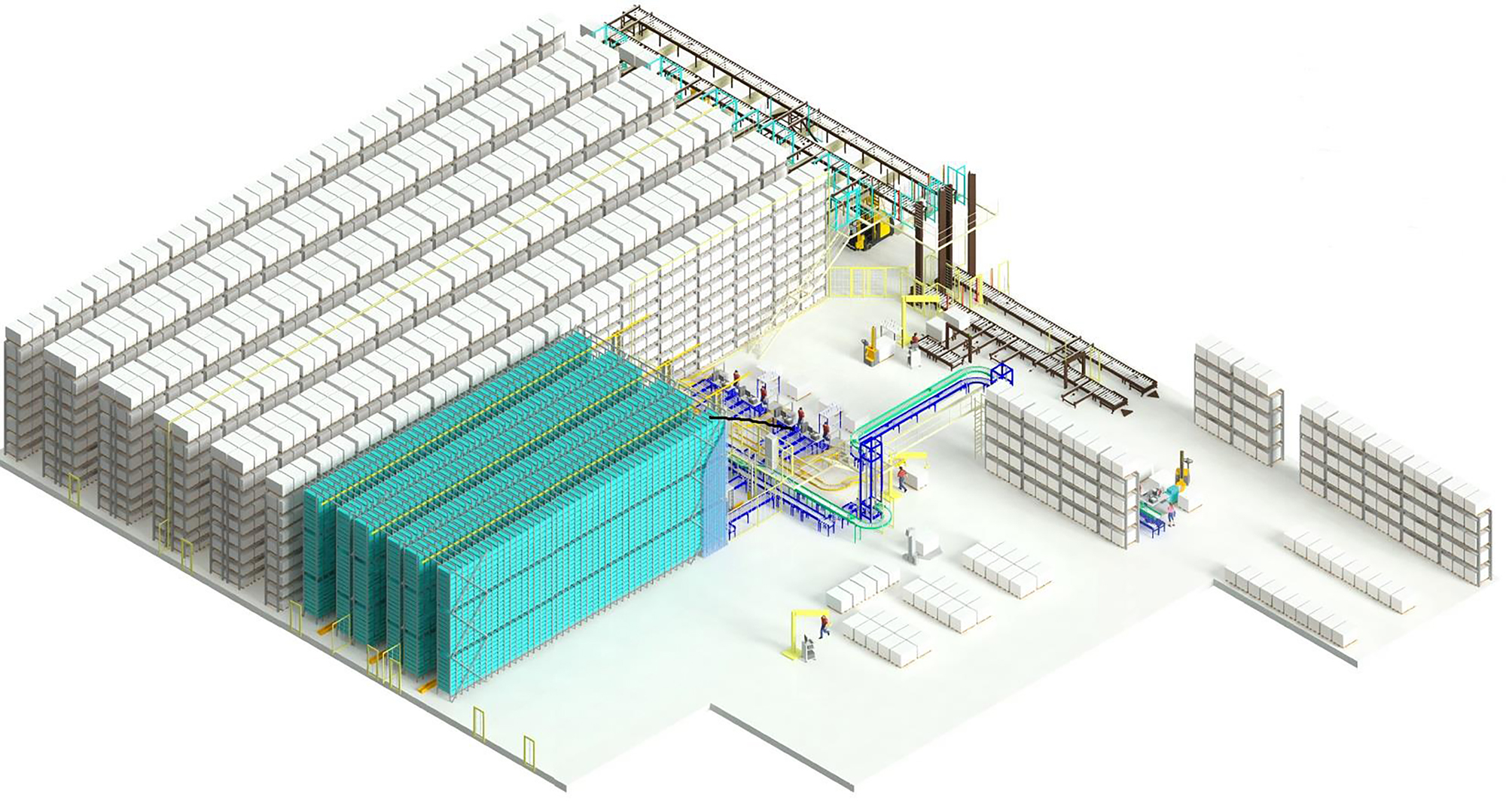
At the core of the solution is an automated miniload warehouse with 14,904 container storage locations in double-deep storage. Three STC 2B1A stacker cranes handle the fully automated storage and retrieval of the containers, combining high travel dynamics with an energy-efficient drive concept for powerful operation.

The miniload warehouse is complemented by an automated very narrow aisle (AutoVNA) warehouse for pallets with 3,870 storage locations. Two automated EKX 516ka narrow-aisle trucks ensure precise and efficient processes in the high-bay racking. The system is housed in an in-house building with a usable height of 9.7 metres.

A total of six ergonomically designed picking workstations based on the goods-to-person principle, four for containers and two for pallets, ensure efficient and employee-friendly processes.

Jungheinrich’s scope of delivery also includes the complete conveyor systems for containers and pallets, the higher-level control system including visualisation, and the Jungheinrich Warehouse Management System (WMS) for the end-to-end control of all storage and material flow processes. The racking system and workstation equipment complete the solution.

The system is designed for growth from the outset: the miniload warehouse can be expanded by two further aisles, and the automated very narrow aisle warehouse by up to three additional EKX 516ka trucks. This gives Eisenhart Laeppché a dependable reserve of performance and capacity.

A long-standing partnership as the foundation

The decision in favour of Jungheinrich is based on a long-standing, trusting collaboration and a convincing concept phase delivered by Jungheinrich Material Flow Consulting.

“Given our growth, we were reaching the economic and organisational limits of our previous manual order picking. The new automated solution gives us considerably more efficient processes, creates additional capacity, noticeably shortens lead times and at the same time improves working conditions for our employees,” says Hendrik Laeppché, Managing Director of Eisenhart Laeppché GmbH.

Klaus-Peter Wolters, Head of Technical Sales at Jungheinrich, adds:

“Eisenhart Laeppché faced the challenge of handling rising order volumes in the small-parts segment both economically and ergonomically. With our integrated solution combining a miniload warehouse and an automated very narrow aisle warehouse, we deliver the performance and scalability needed for further growth, together with high energy efficiency.”

Commissioning is scheduled for Q2 2027.

Ocado Leases Final DC at Stoke Central

Indurent, developer, owner and operator of industrial and logistics space across the UK, has fully let its Stoke Central warehousing park after agreeing a new 15-year lease with Ocado, the online grocery retailer.

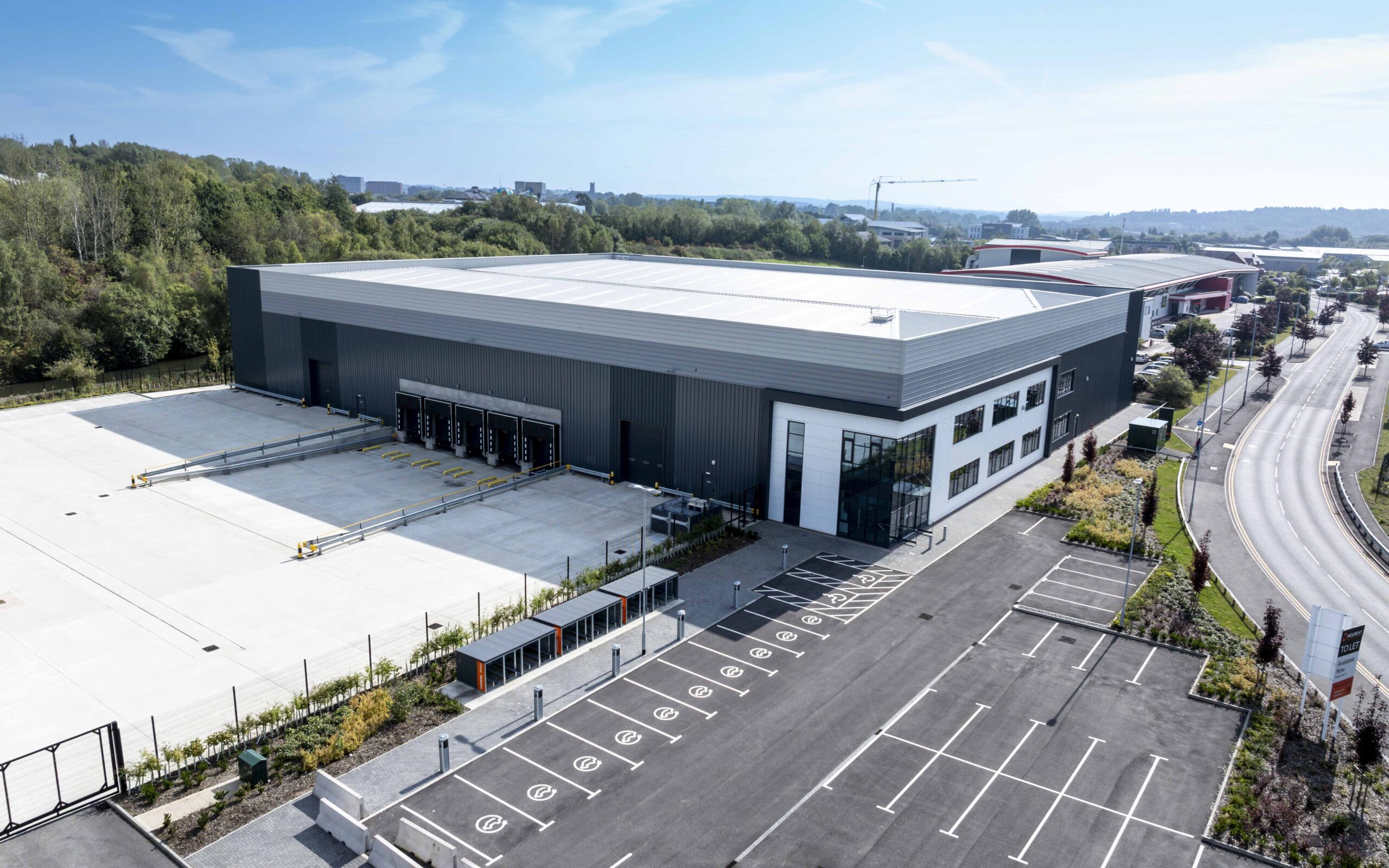
Ocado has taken the scheme’s final available unit, C55, which spans over 55,000 sq ft. Park Stoke Central is a 530,000 sq ft industrial and logistics space and part of the 300-acre Festival Park development in Stoke-on-Trent. The development was delivered in two phases between 2020 and 2023.

Located close to the A500, Indurent Park Stoke Central provides connectivity to the national motorway network, enabling occupiers to serve customers efficiently across the UK.

C55 has been delivered to a high sustainability specification, achieving a BREEAM ‘Excellent’ rating and EPC A certification. The building also incorporates rooftop solar PV and EV charging infrastructure, which Ocado will use to house, maintain and charge its growing fleet of electric delivery vehicles.

George Goldsmith, Senior Asset Manager at Indurent, commented:

“Securing Ocado as the final tenant at Indurent Park Stoke Central is a significant milestone for the scheme and reflects the continued strength of demand for high-quality industrial and logistics space in strategically located markets. Reaching full occupancy across the park demonstrates the appeal of modern, sustainable buildings with excellent connectivity, and reinforces our commitment to delivering space that meets the evolving needs of our customers.”

Danny Kennedy, Senior Property Strategy and Development Manager at Ocado Retail commented:

“We are always looking for ways to support our growing customer base whether that is identifying new sites or maximising the capacity of our current infrastructure. Confirming the new spoke at Stoke is a great example of this, and it will enable us to deliver to even more customers. While work has only just started, we expect the site will be up and running later this year, creating hundreds of new jobs in the process.”

Viking Partnership Extended

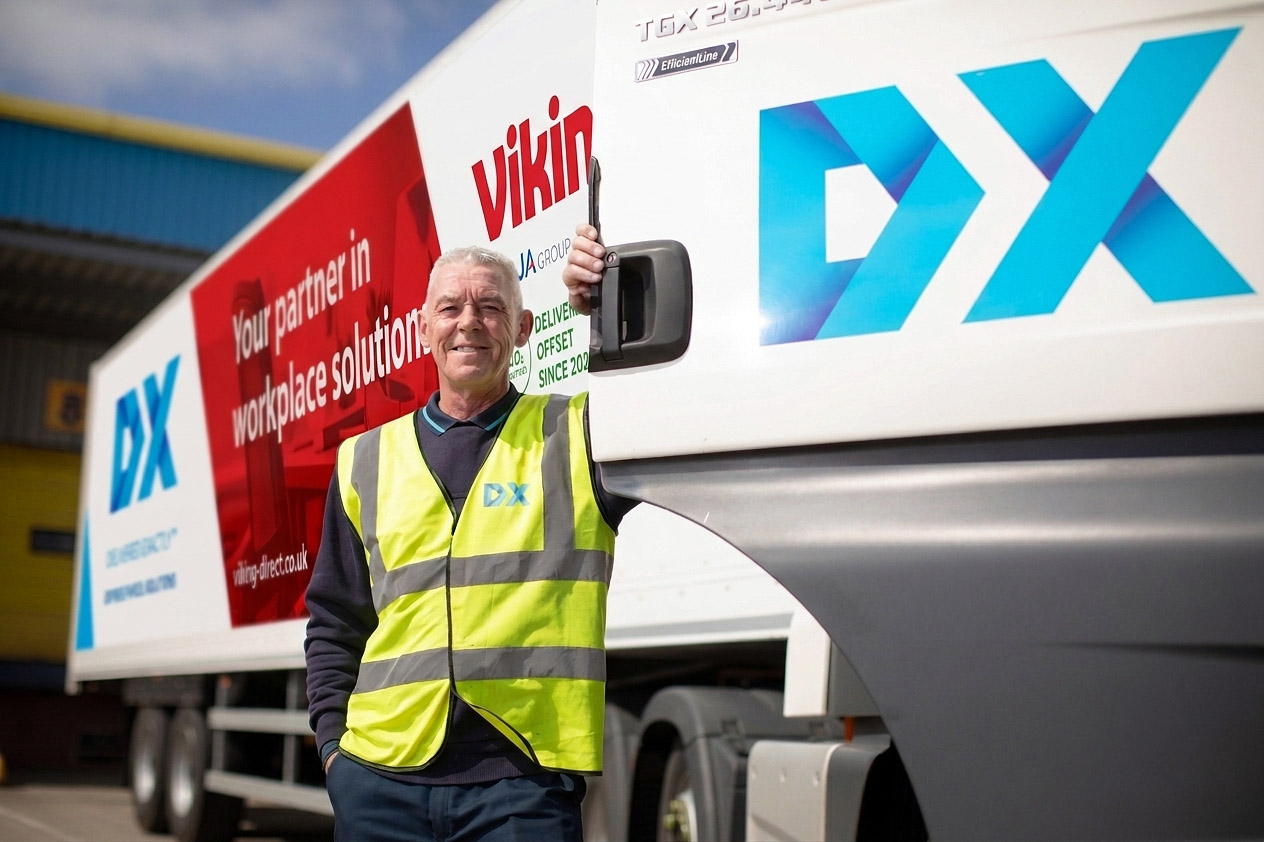
DX has announces the expansion of its strategic partnership with Viking Direct UK, a large distributor of workplace supplies and equipment, in a new, multi-year contract. The contract builds on the highly successful and close relationship the two businesses have already established.

Under the terms of the new contract, DX, which was awarded ‘Trusted Partnership Status’ by Viking in 2025, will be responsible for the next-day delivery, across the UK, of the hundreds of thousands of Viking customer orders placed each year. Both sides have committed significant investment into the partnership over the past few years. This has been across dedicated facilities and dedicated personnel, including embedded DX teams within Viking’s operations.

Even more significantly, DX and Viking have established very close communications between the two organisations. This close level of engagement has helped to create a culture that has promoted and rewarded problem-solving, innovation, and greater efficiencies. The net result has been increased performance levels, record customer satisfaction for Viking, and a reduction in operational costs.

Andy Renshaw, Logistics Director at Viking, commented:

“DX feels like a true partner to Viking rather than simply another supplier. What sets DX apart is not just service performance, but the way the relationship works when there is an issue to solve or an opportunity to improve. There is transparency, agility and a motivation to adapt on both sides. DX’s depot managers and our own team treat each other as colleagues solving the same problem rather than two businesses managing each other. That’s not something you can impose. It has to be built, and you can see it in how impressively people on both sides actually behave.”

Ian Truesdale, Chief Executive Officer of DX, commented:

“DX and Viking have established a highly effective and close relationship, and we’re delighted to see our partnership continue to grow. It has been extremely productive because both sides take their commitment to high customer standards very seriously and are willing to engage openly and transparently with each other. We look forward to further years of successful collaboration and development.”

Viking Direct UK is a supplier of office supplies, stationery, furniture and ink and toner for businesses of every size. With over 35 years of experience, the company aims to deliver reliable products, competitive pricing and fast UK-wide delivery to keep workplaces running smoothly.

UK-India Trade Requires Resilient Freight Network

The UK and India reached the culmination of long negotiations as the new free trade agreement between the world’s 5th and 6th largest economies comes into effect. The agreement will deliver major benefits to exporters in both countries, estimated at an eventual £25bn boost in bilateral trade, by reducing or removing tariffs on almost all goods exports, writes Rashid Abdulla, DP World CEO & MD, Europe (pictured below).

“Some businesses will see sweeping reductions. The UK’s largest food and drink export, whisky, will benefit from a Indian tariff cut from 150% today to 40% over the next 10 years, while the tariff faced by UK car manufacturers’ on exports to India will fall below 10%. The majority of current UK exports to India will ultimately be tariff free. UK suppliers will also gain access to the Indian central government procurement market, worth tens of billions a year.

“For key Indian export sectors, like textiles and fishing, tariffs on the goods they send to the UK will also be cut, giving UK consumers more choice and cheaper prices on the high street. This is good news for people and businesses in both countries – trade powers economies. Reducing tariffs and freeing international trade boosts prosperity.

“Negotiating, signing and ratifying free trade agreements is the first step to boosting trade. Delivering on their potential requires reliable, resilient trade networks with capacity to spare. The logistics assets and networks that underpin the ability of economies to trade reliably and in increasing volumes are especially important when goods need to cover significant distances to reach their intended markets.

“The UK and India already trade goods and services worth £48bn a year. Boosting this trade requires innovative, ambitious businesses seeking to export to distant markets, served by the major freight handling and transport infrastructure they need to do so successfully. As a country grows the volume of its trade, so it needs more facilities, modes and routes to service that trade with the speed and reliability that cargo owners require.

“For small or medium sized enterprises, some who may be exporting into a new market for the first time, the prospect may seem daunting. However, the UK has the trade infrastructure in place, a developed network of routes, and the business expertise available to ensure the reduction of tariffs is an opportunity that is taken.

“DP World has now invested more than £6bn in our network of UK assets, as we believe in this country’s potential to continue growing as a global trading power. Our ports, logistics and marine services network is connecting UK importers and exporters with domestic and international markets.

“Enhanced trade capacity makes the UK better able to respond and adapt to trade shocks, elevates its role in connecting European trade more widely, and brings it closer to global markets. In India too DP World is a major investor that handles one quarter of the national container trade. We integrate ocean, air, road and rail transport in India with free zones, warehousing and forwarding to make trade simple and boost supply chain resilience. A container leaving the UK from London Gateway on one of the world’s largest container ships can reach our terminals in Nhava Sheva, Mundra, Chennai or Cochin in little more than three weeks. Our new container terminal at Tuna-Tekra in Gujarat is scheduled for completion next year.

“Supply chain resilience around the world is now in greater focus than perhaps ever before. When routes and networks are disrupted by global events and geopolitics, exporters need logistics expertise to adapt and ensure their goods reach the markets they are destined for, safely and on schedule.

“In a market as large and complex as India, inconsistent fulfilment can quickly erode distributor confidence and weaken customer relationships. Businesses that cannot maintain operational continuity may find themselves losing market share not because of product quality, but because of an inability to deliver reliably at scale.

“This is where integrated logistics and market access expertise become strategically important. Exporters need customs coordination, market access advisory and established operational infrastructure – regulatory expertise and end-to-end logistics execution help them reduce administrative friction, maintain supply chain visibility and secure resilient distribution networks.
India is forecast to become the world’s 3rd largest economy in the coming years.

“Increasing trade with India and with the world’s other major economies is a long-term opportunity for the UK. Investment that has been made already and is still ongoing can support the businesses who will generate rising exports and spread the benefits of growth to every part of the country.

“The start of a major free trade agreement is an exciting moment brimming with economic potential, and for businesses and employees across the UK we hope to see repeated many more times in the coming years.”

Subscribe

Get notified about New Episodes of our Podcast, New Magazine Issues and stay updated with our Weekly Newsletter.