New Rack protection Sensor to Prevent Damage

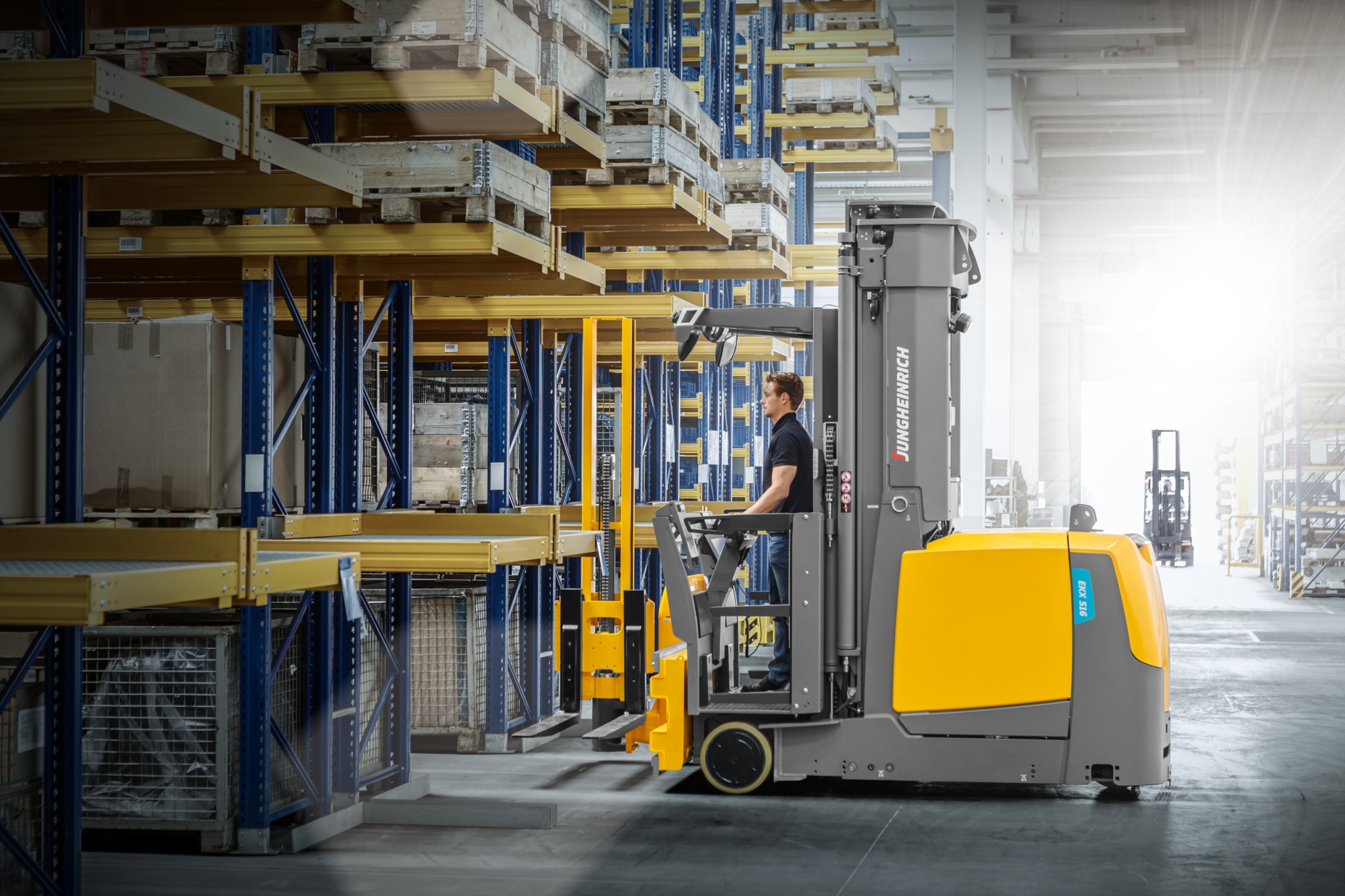
A rack protection sensor that prevents collision damage to racking and a multifunction lever that combines efficient control of driving, reach travel and lifting functions into a single joystick control: These two new options are now available for reach trucks from Linde Material Handling. Fleet managers will benefit from cost savings and productivity gains, while forklift operators can devote their full attention to load handling.

Collision damage to racking systems can be a significant cost for warehouse managers because it entails considerable expenditure of time and money. Damaged end frames and beams primarily result from reach truck operators manoeuvering in front of the racking with their attention focused upward as the load is stored and retrieved. “What’s happening on the ground can be easily overlooked,” says Alexander Schmidt, Senior Product Manager Reach Trucks at Linde Material Handling, adding that market studies have shown that damage is caused primarily by the reach legs while the load, forks or chassis are less frequently involved.

“Even minor carelessness can lead to major disruption of warehouse operations,” Schmidt says.“If a rack end-frame suffers a six millimeter dent over a length of one meter, up to one-third of it’s load-carrying capacity can be lost. This results in a number of rack locations that can no longer be used reducing the capacity of the warehouse. Repairing the damage and replacing the racking components is time-consuming because all areas to either side of the damaged rack frame must be emptied and the goods temporarily stored elsewhere. This takes up working time and additional storage space, disrupts operations and thus reduces productivity in the warehouse,” the Senior Product Manager says, outlining the negative consequences.

Linde Material Handling is addressing this problem by means of its Rack Protection Sensor (RPS). Two special light sensors, which are installed on top of the reach legs in a protected housing, detect objects in front of them. When an obstacle is detected, the assistance system automatically brakes the truck, thus avoiding damage. The sensors only become active at a traction speed of less than five kilometers per hour – which is the usual speed when maneuvering in front of a rack. As operator accelerate beyond this set limit, for example to cover longer distances, the patented system is switched off. The technology used is perfectly suited to typical warehouse conditions because it can work in artificial light as well as natural daylight or sunlight, explains Schmidt.

The rack protection sensor has proven particularly beneficial to companies whohave a high staff turnover or who regularly employ agency operators. “New or agency staff often lack experience and can misjudge the dimensions of the reach truck,” states the Linde product manager. Here, as an “extra pair of eyes”, the rack protection sensor provides valuable support for the fast yet safe maneuvering of heavy equipment.

The RPS assistance system is available as optional equipment on the high-performance models of Linde reach trucks series R14 – R25 with a load capacity of 1.4 to 2.5 tons and will soon also be offered as a retrofit solution for these trucks.


The second new option from goods handling specialist Linde MH is a new type of multifunction lever. It makes operating the Linde reach truck even more comfortable and is designed to help maintain the concentration and comfort of operators as well as increase productivity. Based on an ergonomic study, this innovative human-machine interface was developed in collaboration with the Fraunhofer Institute (IAO) and Porsche Industriedesign. The result is a joystick that can be easily operated in all four directions, with the operator’s hand resting comfortably in a natural position. A wing extended laterally to the right provides additional support for larger hands. Traction, reach travel and lifting functions can all be controlled intuitively with minimal effort from the wrist and fingers. All hydraulic functions are combined in a single control element and there is no need to move the hand up and down. This results in increased productivity and enables intuitive operation. The entire lever is moved back or forward to raise or lower the lift mast. Movements to the left and right direct the reach travel of the mast. Repositioned from the armrest to the center of the large joystick, two butterfly levers control the fork carriage tilt and sideshift functions and now combine two additional operations as they also control the tilt and horizontal leveling of the fork carriage as well as the alignment and centering of the sideshift, respectively. The horn and the direction lever are located on the left side of the multifunction lever. A major advantage of the conveniently positioned components is that all control commands can be made intuitively, even when wearing gloves, so that the operator’s attention remains focused on load handling at all times.

Vanderlande commits to Climate Pledge

Vanderlande is delighted to be joining Amazon and Global Optimism in signing The Climate Pledge, showcasing its ambition on sustainability and commitment to achieving a net-zero carbon footprint by 2040 – ten years ahead of The Paris Agreement. With this in mind, Vanderlande will routinely report on its greenhouse gas emissions, implement decarbonisation strategies, and act to offset any remaining emissions.

Vanderlande is committed to a vision of becoming the worldwide leader in sustainable automated logistics solutions and has made great strides towards this commitment. In terms of the solutions it delivers to customers, the company has been a pioneer of circular economy principles and energy efficient technology since 2010.

More recently, it has been exploring new business models that help to reduce the carbon footprints of its customers. One such example is FLEET, a flexible solution for handling baggage at airports and based on autonomous vehicle technology. Through this solution, Vanderlande takes full responsibility for the operational and sustainable performance of the vehicles, as well as closing the materials loop.

In 2018, Vanderlande joined the Capital Equipment Coalition of the Platform for Accelerating the Circular Economy (PACE). By actively defining an action agenda with concrete steps for the capital equipment industry to implement circular practices, Vanderlande is expanding its impact beyond its own organisation.

Through the Global Forest Programme, Vanderlande is engaging with local forestry companies to plant trees to offset its carbon emissions. Furthermore, many of the company’s international offices comply to the highest sustainability assessment standards. For example, Vanderlande’s buildings at its HQ in The Netherlands will be home to 2,600 solar panels by mid-2021 (with the capacity to generate 871,760 kWh annually).

“Through our commitment to sustainability, we intend to reduce the carbon footprint of our operations, those of our customers and suppliers, and of society as a whole,” says Vanderlande’s CEO Remo Brunschwiler (pictured above). “As a signatory of The Climate Pledge, Vanderlande is excited to be joining a community that will share knowledge, ideas, and best practices to address the most critical climate challenges. We look forward to cooperating closely with Amazon, Global Optimism, and the other signatories on this important mission.”

Rhenus announces BLG Freight Forwarding Sites Acquisition

The BLG Logistics Group has made a strategic decision to focus on its domestic and international business in its Contract, Automobile and Container divisions in future. Rhenus Air & Ocean is consolidating its position in Germany with the planned takeover of the freight forwarding business of the logistics company, BLG International Forwarding GmbH & Co KG.

Rhenus is using the BLG acquisition to tap into new business fields and is making its global network available to the BLG Group. Provided that the cartel authorities approve the development, Rhenus will acquire nine air and sea freight sites on 1 April 2021.

The nine freight forwarding sites operated by BLG International Forwarding with about 100 employees are due to be integrated within the existing network of Rhenus Air & Ocean in Germany, which currently has twelve branches, from the beginning of April onwards. They include business sites in Hamburg and Bremerhaven, Düsseldorf, Frankfurt, Stuttgart as well as Munich. This will enable the company to handle greater volumes through its LCL gateway in Hilden and its air freight hub at Frankfurt, for example.

“We’ve gained a strong partner in Rhenus Air & Ocean and it’s making available its extensive network to our customers thanks to its global presence,” says Jens Wollesen, the Contract Board Member at BLG LOGISTICS. “BLG is strategically adapting to changes in market conditions through the sale of our freight forwarding business. Even if we’ll no longer be represented right across Germany in terms of freight forwarding in future, we’ll continue to provide extensive international services in our Contract, Automobile and Container divisions.”

“We’ve paved the way for the continual expansion of our air and sea freight activities during the last few years. Thanks to the additional business sites, employees and business activities, we’re consolidating our network in the Air & Ocean division in Germany. We’d also like to develop new lines of business like transporting food using reefer containers and activities in the trade fair and eventlogistics sector,” says Stefan Schwind, Managing Director of Rhenus Air & Ocean Deutschland.

The BLG freight forwarding site in Bremen, which focuses on overland traffic, transporting heavy goods, project business and sea freight, is excluded from the takeover.

Last year Rhenus Logistics announced the opening of a new hub in Liege Airport.


Sustainable Solutions: Cleaner Alternative to Red Diesel

In June 2019, the UK became the first major economy in the world to pass laws guaranteeing an end to its contribution to global warming by 2050, requiring the UK to bring all greenhouse gas emissions to net zero by this date. This will inevitably have an impact across industries and companies as they start to research and deploy new solutions to fall in line with government targets. To meet its ambitious goals, the government will introduce several initiatives over the coming years, so organisations must prepare now – not just to support global warming reduction efforts, but also reduce their costs and reap the resulting productivity benefits. Alexander Baal, Directors Sales Operations, Jungheinrich UK Ltd., explains how Lithium-Ion battery technology in the material handling industry will be an instrumental solution in supporting the government’s aggressive environmental targets, while also delivering valuable productivity gains.

Reducing red diesel

Part of the government’s initiative to tackle climate change and improve the UK’s air quality involves changing laws around the use of red diesel. From April 2022, the government plans to remove business entitlement to use this type of fuel, except for agriculture, rail and non-commercial heating. At present, businesses gain a significant benefit from using red diesel, paying a duty of just over 11p per litre, compared to almost 58p per litre for using white diesel. At Budget 2020, the Chancellor, Rishi Sunak brought attention to the fact that the sectors using red diesel are some of the biggest contributors to polluting air quality and the red diesel scheme was essentially “a tax relief on nearly 14 million tons of carbon dioxide every year.”

Despite calls by a coalition of construction trade bodies for an extension on the abolishment of red diesel to at least 2023 to allow for time for economic recovery after the pandemic, the fact remains that red diesel has a detrimental impact on the environment. In order to achieve the UK’s climate change goals, businesses will inevitably need to adapt to using cleaner sources of energy. Many will therefore need to overhaul their diesel equipment and consider more energy efficient power alternatives, such as Lithium-Ion. Addressing these issues now will increase efficiency and sustainability in the long-term, preventing any damage to business operations and ensure continuity.

A cleaner alternative for MHE

Separate to the plans around red diesel, research by Calor found that 38% of forklift users are facing pressures to reduce their carbon emissions, and although 54% of those surveyed recognised that carbon reduction was a very important consideration, there were other priorities ahead of this. Above carbon concerns were cost, fuel efficiency, machinery downtime, security of supply and level of customer service from the fuel provider.

Lithium-ion batteries offer many operational and commercial benefits compared to diesel or gas-powered trucks or even lead-acid batteries. Increased efficiency and reliability is achieved as Lithium-ion delivers energy for multiple shift applications without the need for battery changes, due to its rapid charging times and the possibility of opportunity charging during short breaks. Additionally there is a very small drop in remaining capacity experienced over the entire lifecycle of the battery. Savings are made as no maintenance is required and no period of battery resting is needed after each charge. During the recharge process, less energy is wasted as heat, thus saving money, and during the truck’s operational shift, energy is harvested through direction changes and braking – resulting in lower energy costs.

An electric forklift may have a higher initial cost than its diesel or gas counterpart, however, it also benefits from lower maintenance costs as fewer service items are involved. This means the total cost of ownership can be significantly lower, especially when considering the stability of the price for electricity compared to red diesel.

Not only does Lithium-ion prove cost effective with the added benefit of having rapid return on investment (ROI), but it has the ability to support most 24×7 logistics operations with its fast charging capabilities, meaning operators won’t need to be concerned about machinery downtime.

Conscious compliance

Sustainability is key to the future of the industry and protecting the planet. The government will continue to introduce schemes, such as the impending red diesel initiative, to reduce carbon emissions in order to meet its targets and protect the environment – but the compliance of industry is essential to achieving this.

Organisations have the opportunity to proactively prepare for a sustainable future and not be caught off-guard. While it may seem like a significant undertaking to upgrade materials handling equipment, there are solutions available now that can support this shift in addition to delivering significant cost, efficiency and productivity benefits. Not only does the changing legislation around red diesel provide companies with the perfect opportunity to act, employing Lithium-Ion as an energy-efficient solution will also protect organisations against future legislative changes and work towards a more sustainable future, while ensuring business productivity and success.

Covid Forces Retailers to Rethink Order Picking Methods

When Covid triggered the e-commerce frenzy, many grocery retail logistics operations had little choice but to rethink their order picking methodologies and, as a result there is a trend away from traditional zone picking towards wave picking B to C strategies, says John Maguire, managing director of Narrow Aisle Ltd.

The global pandemic has brought the essential role of the UK logistics industry – and the one million people employed by it – in underpinning our national economic and societal infrastructure sharply into focus. And as the world adjusts to the ‘new normal’ with social distancing and lockdowns looking increasingly likely to become a regular part of everyone’s day-to-day life for the time being at least, our reliance on supply chain efficiency will only increase.

Covid-19 – and the lockdowns introduced in an effort to restrict its spread among the population – has changed the way goods are stored, picked and moved to the consumer dramatically, with the switch to online shopping in particular forcing retailers and their logistics partners to radically rethink and quickly adapt well-established working practices. The pace of change has been breathtaking: 10 years of forecast e-commerce growth occurred in month one of the first national lockdown in 2020 and between February and October of last year online sales grew from 19.6% of retail sales value to 28.5%.

The logistics sector’s ability to scale-up and adapt its services in response to such massive and rapid changes in consumer spending patterns has been hugely impressive and without the expertise and dedication of the industry there can be little doubt that the public would find the restrictive lockdown conditions even more difficult to live with. For warehouse or distribution centre operators the need to keep pace with the shift away from bulk deliveries to retail stores towards the fulfillment of individual online orders directly to the consumer has necessitated significant adjustments across all aspects of the warehouse operation, but in many cases, it is perhaps the order picking process that has undergone the most significant overhaul.

It has long been accepted that of all the processes involved in modern warehousing, the ability to quickly and accurately collate picked goods with an efficient order picking regime has the greatest impact on a warehouse or DC’s performance, costs and ability to deliver customer satisfaction. When Covid triggered the collapse of high street shopping and the concurrent e-commerce boom, many third-party storage operations had little choice but to rethink their order picking methodologies and, as a result, there is a noticeable trend away from traditional grocery retail zone picking towards wave picking strategies.

In simple terms, zone picking involves dividing stock-keeping units (SKUs) into different product zones within the store and assigning pickers to work within each zone. Each picker is responsible for picking all SKUs located within their area of the store for each order; in this way, the roll container or pallet is loaded with similar product types to aid efficient decanting into shelves on arrival at the retail store. Also, passing through each zone within the warehouse allows any orders with SKUs in multiple zones to be filled.

The zone picking method has always been considered suitable for bigger warehouses that deal with a large number of SKUs with unique characteristics or picking requirements. And, because inventory pickers remain in their assigned zones rather than traveling around the warehouse, operative travel time between picks is significantly reduced. A further benefit of the system is that by working in a smaller zone, pickers become more familiar with the SKUs and pick locations in their area and, as a result, pick rates are faster and more accurate.

But problems can arise with zone picking – particularly in e-commerce operations ¬- because the method is often only capable of scheduling one picking period per shift, which means that any orders received after a pre-set cut-off time will not be fulfilled until the following shift takes over.

While zone picking requires workers to be dedicated to a specific section passing order totes from one zone to the next if required, with wave picking orders are grouped and picked in batches, but at specific times of each day. Picking personnel receive a consolidated pick list and workers utilise multi-tote picking carts to manage the various items picked in any particular wave. As it requires pickers to pick one order and multiple SKU’s at a time wave picking systems are often organised around factors such as commonality in the SKU location, shipping deadlines, common carriers and similar sorting or kiting processes used in the warehouse.

At sites where e-commerce or multi-channel orders are being picked and consolidated, wave picking offers a number of advantages over zone picking. For example, many SKU’s can be stored in multiple pick locations at multiple height locations across the warehouse and the picking efficiency is optimised with a fewer number of line visits required. But to achieve optimum wave picking performance it is important to deploy the most suitable materials handling equipment. The recently launched Easi-Pick from Narrow Aisle Ltd has been designed to optimise operational efficiency at sites where order picking tasks are undertaken using wave picking strategy.

Designed specifically with e-fulfillment operations in mind, the Easi-Pick is a compact ride-on electric-powered vertical order picker that delivers hugely improved productivity and increased safety for warehouse staff as they carry out a range of picking duties at both lower levels and at height within warehouse aisles. Its ability to work in very narrow aisles (VNA) means 30% more pallet and shelving locations can be designed into storage systems compared to traditional wide aisle operations.

Featuring a heavy-duty and exceptionally stable mast in combination with a spacious and ergonomically-designed working platform, the Easi-Pick allows picking tasks to be performed at heights of up to 6.5 metres, while its compact chassis design allows the unit to operate in pallet racking aisles measuring just 1.6 metres wide. To maximise productivity, the Easi-Pick travel can be controlled by the operator in the raised position, allowing diagonal lift and travel, thereby saving valuable minutes when travelling between picking locations throughout the warehouse – essential if optimum wave picking pick rates are to be achieved.

There is no doubt that the growth of e-commerce is changing the face of order picking in the warehouse. Higher throughputs, greater picking accuracy and increased emphasis on ground and first level picking are now the key goals at many sites. As a result, the type of materials handling equipment used within the modern order-picking environment is changing too and products like the Easi-Pick are in ever greater demand.

Dachser Logistics Reorganise Regional Management

Dachser Air & Sea Logistics (ASL) has reorganised management within its business units in Europe, Middle East & Africa (EMEA) and Americas regions.

The position of Managing Director, ASL EMEA has been assumed by Dr Tobias Burger, who is already responsible for the strategic development of the business field Air & Sea Logistics as Deputy Director ASL. Before moving to the air and sea freight business, the 43-year-old was head of Corporate Governance & CEO Office at Dachser. Dr Burger succeeds Thomas Krüger, who has led the air and sea freight business in the EMEA region since 2016.

With immediate effect, Dachser Air & Sea Logistics has assigned responsibility for the ASL Americas business unit to Ralph Riehl. Before joining Dachser, the experienced manager worked for the logistics group Panalpina, now DSV Panalpina, for over 30 years, holding management positions in France, Singapore, and the United States. Most recently, Riehl was Senior Vice President of Sales, responsible for all DSV Panalpina sales in North and Latin America. Riehl assumes the position of Managing Director ASL Americas from Guido Gries, who has led Dachser’s business in the region since 2012.

“We would like to thank Thomas Krüger and Guido Gries for their many years of dedicated work in the business development and integration of our air and sea freight network, and we wish them all the best for their professional and personal future,” says Edoardo Podestà, COO Air & Sea Logistics at Dachser.

“Dr Tobias Burger and Ralph Riehl will provide new impetus for the sustainable and profitable development of Dachser Air & Sea Logistics in their regions through their optimal combination of in-house and external expertise. As a result, they will consistently drive the development of globally integrated, value-added solutions for our customers.”

London Gateway new Port of call for 2 Shipping Services

DP WORLD today announces that London Gateway, Britain’s fastest growing container terminal, is now the UK port of call for two new major international shipping services, connecting the economies of Western Europe with the Eastern Mediterranean, North Africa and Russia.

DP World – the leading provider of smart logistics solutions – has created an integrated business in the UK comprising two deep water ports with freight rail terminals at London Gateway and Southampton, meaning greater flexibility and choice for shipping lines and cargo owners.

London Gateway is now the UK port of call for Sealand-Maersk’s North Sea service, which connects the key economies of Northern Europe with the Eastern Mediterranean. Previously calling at the Suffolk coast, this major international shipping service has a 42-day rotation stretching from Western Europe to Cyprus, Egypt and Israel. After London Gateway, the service calls at Rotterdam, Bremerhaven, Wilhelmshaven, Hamburg, Antwerp, Limassol, Ashdod, Alexandria, Haifa, Mersin, and finally at Port Said East before returning to London Gateway.

Also, London Gateway last month became the UK port of call for Unifeeder’s new St Petersburg service. Increasing its UK service in response to a growing demand for multimodal transportation, Unifeeder has introduced an additional loop connecting the Benelux and Russian markets with Britain. London Gateway is the preferred import hub because of its proximity to the capital’s consumer market and is becoming a vital gateway for Shortsea and Feeder shipments to and from the UK. The new service has fixed day weekly connections on a rotation from London to Antwerp, St Petersburg, Bremerhaven and then back to London, offering connectivity with the entire Unifeeder network with multiple transhipment options.

Ernst Schulze, CEO of DP World in the UK, said: “We are delighted to welcome two new services to the most technologically advanced and fastest growing container port in the UK. We have the capacity to continue to prioritise delivering first class services for all existing customers at the same time as handling new sailings which expand customer choice.”

“DP World in the UK is committed to being at the heart of Britain’s trading future, providing the right trading infrastructure and smart logistical solutions for our customers. We believe in the UK market and have the ambition and the resources to boost growth, support businesses, create jobs and improve living standards.”

Growth in Supply Chain Salaries Despite Global Pandemic

There has been growth in supply chain salaries despite the huge economic impact of Covid-19 across the procurement and supply chain sector. The industry grew significantly in 2020, according to new data released today by REED.

 From analysis of over 6.5 million jobs posted to reed.co.uk over the last 3 years, the Reed Procurement & Supply Chain Salary Guide 2021 found that Covid-19 had not had a negative impact on overall salary levels within the sector. In fact, the majority of positions advertised in 2020 showed an increase in salary, with an average 4.5% growth, resulting in a typical salary of £48,700, compared to £46,600 in 2019. This is well above the UK national increase of 2.32% and in the face of slow inflation, with the Consumer Price Index (CPI) 12-month rate falling to just 0.3% in November 2020, from 0.7% in October 2020, and the Office of Budget Responsibility predicting it to stay below 2% until 2025.

Despite the unprecedented challenges it faced in 2020, with the combined impact of Covid-19 and Brexit, procurement and supply chain was one of the best performing sectors in the country, when it came to salary growth.  Roles in logistics and supply chain that had the largest salary increases, are logistics managers (9.1%), demand / supply / materials managers (7.3%) and supply chain managers (7.2%).

In procurement roles, salary increases were not as high but still outperformed the UK average.  The largest rises were for category managers (6%), buyers (4.9%) and assistant buyers (3.2%).

Sarah Hewitson, Reed Procurement & Supply Chain expert, said: “While the procurement and supply chain sector has been heavily impacted by both Covid-19 and Brexit, its critical role in keeping vital supplies moving has come into the spotlight. Although the pandemic has exposed the vulnerabilities of complex supply chains, it has demonstrated the value of talented supply chain and procurement experts.  As such, we can see that roles in the sector are being highly rewarded, with significant pay increases for some positions.

“Managing supply chain disruptions will continue to be a challenge in 2021, as the sector has to adapt to being outside of the EU. Businesses will also have learned lessons from Covid-19 and as they look to reduce risk and build resilience into supply chains, expertise in this area will continue to be very valuable. Salaries in this sector have been increasing over the past few years and we expect this to continue in both procurement and supply chain roles next year.”

Procurement and supply chain salaries outperform other sectors

Across the UK, the sectors that saw the highest growth in average salary levels – bar procurement and supply chain – were sales (6.4%), and hospitality and leisure (4%).  Surprisingly, the hospitality and leisure sector, which was one of the hardest hit in terms of job losses, still saw average salaries increase by 4%. The accountancy and finance sector was the only one to show a decrease in average salary (-0.1%).

Hewitson continued: “Although overall average salaries in the sector have increased, there are variations by region, position and job level.  Our annual salary guide gives employers specific insight into the impact Covid-19 and Brexit has had on salaries in procurement and supply chain, at a national and regional level.  The guide will enable businesses to compete effectively in what is a candidate-driven market – helping them not only to recruit new talent but also to retain the valuable employees they already have.”

New Sales Manager Danny Kenworthy Appointed at ULMA Packaging

ULMA Packaging UK has announced the appointment of Danny Kenworthy (pictured) as Regional Sales Manager for the North East. Danny joins the sales team to support the demand for packaging machinery solutions in the region.

With over 25 years’ experience in engineering and sales roles, Danny Kenworthy brings a varied skillset to the role and considerable knowledge of the sector. At ULMA, he will help customers in the North East access the leading packaging machinery manufacturer’s solutions in the medical and pharmaceutical sectors. He will also be recommending machinery for customers in the food industry, with specific focus on protein, ready meals and baked goods providers and processors.

Commenting on his new role, Danny said: “Joining ULMA at an exciting time of growth in the company is great, and I’m really looking forward to supporting this continued success. With a market leading range of packaging solutions at ULMA, I’m in a strong position to provide non-produce and pharmaceutical customers in the North East with the means to help transform their operations and grow. I am confident my efforts can help the company continue to expand into different markets and solidify its presence in areas where it is already a leader.”

Ed Williams, Sales Director at ULMA Packaging UK, comments: “We’re always on the lookout for new talent at ULMA, and with Danny’s extensive experience and proven track record, he fits the bill to spearhead our efforts in the North East. He joins us at a time where we are looking to make great strides in multiple markets, and demonstrate the performance capabilities of our traysealer and thermoformer ranges in particular.

“With industry beginning to ramp back up following the pandemic, businesses with the most efficient and effective, whether in packaging or other areas, will be best-placed to recover and even thrive.  Choosing the best possible personnel to meet the demands of this new business landscape is vital to ULMA’s continued success, and we know Danny will be a key part of this.”

Knapp Announces US Management Changes

Effective April 1st KNAPP is announcing an initial round of promotions and restructuring at its Atlanta-based, North American subsidiary.

“Over the last five years the KNAPP North American subsidiary has experienced significant growth. Our growth has driven the need for change, which in many cases has been informed by, and a direct result of, your suggestions and feedback. Our initial investments have focused on infrastructure, including the investment in a new facility, expansion of our campus at the North American headquarters, and a new training center that is planned to be operational later this year. Investments have also included upgrades to our networks and subsystems – to address the need for added capacity, response and reliability. And lastly, the need for a more comprehensive training infrastructure was of critical importance, both internally, for added staff, and to better serve our customers.

What operations changes have we made?

Through these last several years, Gernot Rupp our SVP of Service and Procurement has done outstanding work; growing both the KNAPP North America service and support organization – and scaling procurement to meet the needs of a rapidly expanding business unit, while keeping pace with the physical changes we have made here in Kennesaw. The extent of our growth however necessitates additional changes and an expansion of our management structure. Effective April 1st, we are separating the service and procurement roles into separate full-time positions within the company. Gernot Rupp will lead the procurement organization here at KNAPP, as SVP Procurement.

Wes Goode joined the KNAPP team just as we entered 2020 – and working closely with Mr. Rupp over the last year, rapidly shifted much of our focus to Covid related challenges that have faced our industry. Coincidentally, many of the impacts also drove new business growth at KNAPP, specifically in grocery, retail, healthcare – and eCommerce.

Having built a substantial and successful customer service group in his previous position, focused on implementation, service and support dedicated to meeting the daily needs of customers, Wes was the obvious choice to assume responsibility for our customer service organization. Effective April 1st, Wes Goode will lead this group as VP Customer Service. The investment in customer service and lifetime support has become of increased importance to the KNAPP organization as we also expand our Resident Maintenance Program – and expand a partnering program designed to focus on shared outcomes and best-in-class performance. As such, this position will now report directly to the Board.

Lastly, our increase in projects and installed systems requires an expansion in US based software product development and implementation teams. Effective April 1st, Chris Brennan will assume the role of VP Project Implementation where his responsibilities will include project software development, commissioning and installation. Our goal is to continue a process of building and training our implementation, service and support teams to better serve our customers. This will take the form of continuous improvement and ongoing investment in infrastructure, personnel, training and programs – with the goal of creating a world-class customer service organization.”

Subscribe

Get notified about New Episodes of our Podcast, New Magazine Issues and stay updated with our Weekly Newsletter.