BITO expands to accommodate growth

BITO Storage Systems has taken on additional staff and developed new services at its UK subsidiary to support the storage and order picking projects required by sectors emerging from the pandemic. The Nuneaton-based company has doubled the number of staff in its warehouse that serves its online web store shop and the online page-turn catalogue.

BITO is executing in excess of 25% more orders than last year. “Having planned on a turnover of £15m for this year, we are currently forecasting above £20m, which clearly demonstrates a significant uplift in business levels,” said Edward Hutchison, Managing Director of BITO Storage Systems.

“BITO has maintained a consistent growth trend over the years but, more importantly, we make regular modest profits averaging about 5% year-on-year. With the family-run BITO GmbH group reinvesting profits back into the business, this ensures we remain a solid, financially stable and reliable partner for our clients into the future.”

To ensure growing order volumes are fulfilled, BITO is bringing more full load deliveries into its Nuneaton hub, both for restocking the warehouse and to crossdock customer orders. Hutchison said: “BITO is shipping more consignments out of the warehouse than ever – in fact throughput has doubled, resulting in an increase from previously receiving two lorry loads of stock a week to now getting an average of four. In addition, the cut-off in terms of order value that we can fulfil direct from the warehouse has doubled to around £5,000.”

Crossdocking is a new development for BITO allowing the company to, for example, send several incoming pallets of plastic containers direct to a customer’s site on local transport. In addition to reducing paperwork and speeding delivery, the customer is provided with a more precise delivery slot, making it easier for them to book in their delivery.

A booming warehouse requirement across Europe is resulting in issues around steel price increases, availability and production capacity. BITO however is reporting significant growth not only in the UK but across the BITO GmbH group itself, which is based in Meisenheim, Germany and has subsidiaries across Europe and the world.

“The BITO group is more productive than ever,” reported Hutchison. “It has increased production capacity through extending shift patterns and by investing in additional production facilities outside of Germany as part of strategic production capacity growth strategy over the next 18 months.”

BITO’s GmbH’s capabilities provide the UK subsidiary with significant benefits, as Hutchison explained: “We are noticing that larger companies often tend to be international themselves. If they wish to source from a UK-based company for both domestic and cross border sites then BITO is well positioned to operate internationally on their behalf, thanks to the Group’s subsidiaries across Europe and the world.

“Having the facility to sell back into Europe directly, safely, legally and without VAT issues gives BITO in the UK an advantage over many other domestic suppliers. Furthermore, we are able to operate with the new EN codes for racking, which apply across Europe, and are recognised internationally, so we are not limited only to SEMA regulations.”

With business optimism riding high at BITO, Hutchison concluded: “Our confidence factor is underscored by an investment in bolstering our installation team and increasing staff numbers – both in our warehouse and in project management division. We have also revamped our Experience Centre showroom at Nuneaton and further developed our YouTube channel adding informative new films. This makes it easier than ever to find the right solutions to meet a broad range of storage and order picking challenges for retail, manufacturing and logistics operations returning to business normal as well as new sectors that have emerged from the pandemic.”

Expert Customs overcomes Brexit challenges with e-Customs solution

Descartes Systems Group, a global leader in uniting logistics-intensive businesses in commerce, has announced that Expert Customs, a recently established customs agency based in Dartford (UK), is using Descartes’ e-Customs solution to enhance business operations with its UK-EU trade offering and provide customs compliance for customers.

“Following Brexit, we saw the demand for a smooth and efficient customs declaration process grow,” said Kasia Gancarz, Customs Clerk, Expert Customs Ltd. “We realised a great opportunity to provide assistance to other companies looking to import to the UK from the EU. After implementing Descartes’ e-Customs to help our Expert Joinery operations, we saw how straightforward the e-Customs solution made imports to the UK.

“With the continued and unparalleled support from the team at Descartes, we were quickly set up and able to implement customs clearances within weeks and offer a solution to other businesses struggling with navigating Brexit complexities.

“The solution is very user-friendly, the online training videos and step-by-step guides are detailed and easy to follow. We are looking forward to growing our customs business and continuing to work with Descartes as we offer both import and export solutions to our customers.”

Expert Customs is affiliated with Expert Joinery Ltd, an importer of windows and doors from the European Union. Expert Joinery first sought the help of Descartes for a particular shipment it was importing from Poland in February 2021. With many businesses struggling to navigate Brexit, often made more difficult with language barriers and the customs declarations required by HMRC, Expert Joinery quickly identified an opportunity in the market to support other small businesses importing to the UK.

Establishing itself as a professional customs agency with the help and support from Descartes’ e-Customs solution, Expert Customs now provides an essential service to other businesses seeking to overcome the challenges faced with importing goods to the UK following Brexit. Initially, Expert Customs was completing 250 declarations per month, rapidly increasing four-fold on projected volumes to 1,000 a month, as a result of the success of its newly established customs agency.

Pol Sweeney, VP Sales and Business Manager UK for Descartes, adds: “It’s very exciting and rewarding to support exemplary businesses such as Expert Customs to grow and prosper through using our e-Customs solution by providing effective and efficient technology to enable straightforward customs processes. It has been a pleasure working with Expert Customs to support its operations and help develop its offering for customers and we look forward to our continued partnership.”


5 ways cloud integration can improve resilience

With the unpredictability of today’s market and the digital transformation that has been taking place across the industries, B2B cloud integration has become vital for building resilient, prepared, and responsive supply chains.

The Covid-19 pandemic revealed the insufficiency of visibility in supply chains due to shortcomings of integration technologies. Even though 9 out of 10 businesses believe end-to-end visibility to be of great importance, only 50% of businesses can currently access and utilise information about their supply chain as a means to obtain business insights.

At the same time, the e-commerce boost has brought about a digital transformation. Keeping this in mind — as well as the need to rapidly adjust to market change — centralising all processes through B2B cloud integration is vital.

To clarify the benefits of B2B cloud integration in today’s supply chain ecosystem, Meili Robots discusses 5 ways in which B2B cloud integration can help create more resilient supply chains:

  1. The Optimisation of Data Management
  2. The Improvement of Supply Chain Visibility & Agility
  3. The Prevention of Further Disruption
  4. The Elimination of Onboarding Challenges
  5. The Establishment of Stronger Ecosystem Partnerships

A resilient supply chain focuses on three goals: supply chain optimisation, demand-driven supply, and supply chain visibility. B2B cloud integration allows businesses to centralise all of their processes, tools, and systems in one place. This way, they are provided with a full overview of their entire supply chain at all times. Now, businesses can better understand their operations, enabling them to make more informed decisions.

CLICK HERE TO READ THE FULL ARTICLE


DENSO: Why RFID is the future

DENSO WAVE EUROPE, member of the Toyota group, has developed and deployed various RFID readers and solutions, which are used for inventory management, in-store product movements at the POS, for warehouse management or shipping controls. The experts for mobile data collection and auto-ID solutions know that RFID technology will continue to play a significant role in optimising processes and bringing the benefits of digitisation to physical locations.

One of these experts at DENSO WAVE EUROPE is David Walker, who has specialised in RFID. “Two of the key advantages of RFID are precision and speed,” he says. “However, there are so many more benefits of the RFID technology, especially in retail and logistics with their complex structures and new challenges.”

Walker refers to the increasing demand of digitisation processes in general and during the corona virus pandemic in particular. “New business models are emerging quickly nowadays, hence, supply chains will need to make shifts to accommodate the new demands. RFID is the technology that can help companies, especially retailers and logisticians, meet a new future,” explains Walker.

RFID increases sales and profit

As the old saying goes “time is money”, and RFID saves companies, especially in retail, logistics, warehouse management, at the POS, and inventory management a lot of time. “It can be stressful to scan individual items one at a time, which can also lead to human error”, says Walker. “With RFID however, employees can quickly scan an entire area within seconds, rather than having to point at and scan each item individually. DENSO’s RFID readers impress, among other things, with their outstanding reading speed. As we have developed a range of RFID devices, DENSO offers the right one for every purpose.” More information about DENSO WAVE EUROPE’s RFID readers and solutions and how they can optimise processes in retail, logistics, inventory management, POS systems, warehouse management, and shipping controls can be found at https://www.denso-wave.eu/en/denso-products/rfid.html.

RFID implementation can be flexible as supply chains can implement RFID solutions at any point in their processes. “The key benefit of this concept is that when distributing RFID tagged items to different locations, these items do not need to be tagged over and over again. Instead, accurate interpretation of cases and pallets is possible along the way,” says Walker. “The further upstream in the supply chain a product is tagged, the more benefits it garners. Thus, it provides more accuracy,” he continues. Greater inventory accuracy also leads to more customer satisfaction and ultimately to more turnover and profit.

RFID is the present and the future

In the current omni-channel landscape, it has become even more important to have the products customers want or need in stock. Otherwise, it is almost impossible to face – and service against – the ever-increasing competition on the market. The corona virus pandemic has even accelerated the processes in this development.

For instance, when a customer sees an item online and rushes over to the brick-and-mortar store to buy it, only to find that the desired item is not actually in stock even though the “Inventory Management System” says it is. This customer is not likely to visit either the online shop or the brick-and-mortar location again anytime soon. The solution: better stock accuracy with RFID. It virtually eliminates “Out of Stocks” due to poor inventory accuracy. The inventory-tracking technology can offer up to 99% accuracy, ensuring stock is replenished and thus minimize out-of-stock problems. RFID is not only essential for inventory accuracy, however. It can ultimately improve the employee and customer experience, resulting in more sales and lower costs. “If a product is not there, employees cannot sell it. Case studies tell us that in retail the adoption of RFID have increased sales by over 10%, whilst most see an increase of five of 6%,” adds Walker.

All in all, RFID is extremely multifaceted, which makes it so beneficial for numerous industries – from cashless store concepts to supply chain management, and even tracking lost luggage by airlines.

“As DENSO’s mobile RFID computers are extremely robust, they can be used ideally for work in the warehouse, but also in stores – and practically any location. Cloud-based mobile applications in combination with DENSO’s RFID devices are the perfect end-to-end solution for any company that wants to optimise its processes,” explains Walker.

The theoretical basis for RFID was already born in 1948. Since then, RFID has been further developed and continues to be a vital area of exploration, especially as it relates to business intelligence in our fast-paced century. Thus, it will be essential in order to work more efficiently now and in the future. DENSO provides further information about the benefits of RFID and NFC, and their auto-ID solutions, mobile computers, and innovative models of the QR Code at https://www.denso-wave.eu.

For the European market, DENSO WAVE EUROPE is the contact point for all enquiries on RFID, QR Codes, mobile data collection, handheld terminals, and scanners. The durable and robust terminals and scanners manufactured by DENSO are to be found in storage, logistics, at the POS, in production, and field & sales automation applications.

Short and informative video clips about the terminals, scanners, and solutions from DENSO WAVE EUROPE can now be viewed on YouTube. The clips include the 20th anniversary of the QR Code, a company presentation, and introductions to the various devices for mobile data capture such as the BHT-1500, BHT-1400 and the GT20 scanner. For more information, click on the this link below: https://www.youtube.com/channel/UCHp4Yboj7IccPlSeRxQ6yBQ.


STILL wins major automation contract

Beiersdorf AG is relying on the expertise of STILL for the design and implementation of the production and warehouse supply of its state-of-the-art production centre for cosmetic products in Seehausen near Leipzig.

This is the first major joint project for the two long-standing Hamburg-based companies. In a six-month selection process, the STILL automation experts impressed the jury with their extensive experience in internal logistics and in-depth expertise in the automation of logistics processes. STILL also brought KION’s sister company Dematic on board. As part of this project, Dematic is supplying a conveyor system for pallets that links all subsystems together.

“I think that in addition to our technical concept, we were able to impress above all with our solution-oriented approach and the constructive teamwork with the customer and his planning partner,” says Florian Kratzer, International Key Account Manager Automated Solutions.

This is also confirmed by Beiersdorf’s logistics team: “Right from the start, the communication was open, appreciative and very results-oriented. The team repeatedly presented us with alternative approaches and made competent suggestions during the planning process. This eye-to-eye exchange and the excellent consulting services were key factors in our decision to choose STILL as a partner. We are very much looking forward to working with them in the future.”

The new facility near Leipzig is one of Beiersdorf’s largest investment projects in Europe. In order to make the plant sustainably fit for the future, the production supply processes are to be integrated according to the latest standards of efficient warehouse organisation. Here, automation in particular is of decisive importance.

For where driverless transport systems interact perfectly with each other, with manually operated equipment and intelligent warehouse elements to ensure a flawless flow of materials, productivity can be increased, processes optimised, costs reduced and capacities increased.

“Projects of this dimension are not commonplace in Germany. They offer specialists like us an outstanding opportunity to contribute their entire spectrum of know-how,” explains Florian Kratzer. “We are all the more pleased to be a partner in this innovative project at a structurally important location like Leipzig.”

Specifically, it is about goods receiving, quality control, internal transport and storage of incoming materials. The next step is to make them available and transport them on to production. For this purpose, STILL has designed an integrated system in close cooperation with Beiersdorf.

For goods receipt and dispatch, manual STILL electric forklift trucks and warehouse technology equipment are used. Conveyor technology from the group’s sister company Dematic provides the link between the goods-in area and the narrow-aisle warehouse, where six fully automated STILL MX-X iGo systems very narrow-aisle trucks are in operation.

In addition, the conveyor system ensures onward transport from the narrow-aisle warehouse to production, where six STILL EXV iGo systems high lift stackers take over the goods. These provide fully automated transport to Beiersdorf’s production facilities.

“The special challenges of the project arise from its volume and the resulting complexity,” explains Florian Kratzer. “We have heavy loads in different dimensions, high racks and long distances that have to be covered quickly and safely.” Thus, around 140m of conveyor technology are installed and about 25 manual and automated vehicles are used. A large number of different load carriers weighing up to 1,250kg each had to be taken into account and a storage height of up to 12.7m in the fully automated VNA narrow-aisle warehouse had to be made possible.

New tools to increase supply chain visibility

FourKites, a leading real-time supply chain visibility platform, has released powerful new capabilities designed to help shippers, carriers and forwarders more quickly and easily collaborate to increase end customer satisfaction, reduce supply chain costs and increase on-time delivery performance.

With ever-increasing demand, supply chain visibility has become table stakes for modern supply chains, and seamless connection and communication between carriers and shippers has never been more important. FourKites’ combination of swift carrier connections, powerful collaboration tools and the industry’s highest-quality real-time logistics data provides shippers and their forwarder/carrier partners with robust assurances of rapid, frictionless implementation and faster time to value.

Instant Messenger, now with extended capabilities that allow shippers to chat directly with forwarders and carriers, gives supply chain partners the ability to view and share important information and resolve issues together, in real time.

Without leaving the FourKites platform, track-and-trace and dispatch workers, drivers and warehouse personnel can view the critical information that affects shipments and deliveries — all in one single interface. Users can share documents, photographs and notes for any given load, as well as form online workgroups and control access as needed.

CarrierLink, the industry’s most downloaded visibility app for drivers, now includes improved turn-by-turn navigation for better route optimisation; mobile check-in; and new capabilities for updating appointment times, adding notes to loads and uploading paperwork. It also features enhanced capabilities for viewing fuel stops, weigh stations, location ratings and amenities along routes.

“We have hundreds of carriers within our network, from the courier side to the truckload side. When it comes to onboarding, FourKites has been fantastic,” said Josh Dolan, VP of Global Logistics, Cardinal Health. “They’ve done a phenomenal job working with carriers through the process and helping us fill the gap with new technologies that simplify and speed up onboarding, and enhance communication between Cardinal Health and our partners.”

The German multinational Bayer saves time while increasing customer satisfaction thanks to FourKites’ supply chain visibility platform.  The impact has already been so strong that the company has made visibility an essential part of its long-term strategy.

“Every day, our carriers automatically share location data with our FourKites platform on hundreds of loads throughout Europe,” says Edmund Jager, Head of Distribution EMEA at Bayer. “We are able to track our products minute by minute and, in real time, pass on detailed arrival times to our customers. This means the distributors we supply always know their stock situation and end customers can depend on us to get them the seeds and crop protection they need, when they need them. We look forward to onboarding more carriers and so strengthen our customer-centric approach.”

In addition, FourKites recently announced its industry-first Tracking Quality Guarantee, which establishes the highest standards in supply chain data, guaranteeing real-time visibility and predictive intelligence into a minimum of 90% of customers’ shipments — end-to-end and across every mode and geography. This differentiated approach gives supply chain partners the collaborative opportunities and network effects they need to improve customer satisfaction and optimise their supply chain performance.

“As the first mover and leading innovator in real-time visibility and supply chain management solutions, FourKites is committed to helping shippers, forwarders and carriers achieve end-to-end supply chain visibility faster, and with assurances of the highest-quality tracking in the industry,” said FourKites founder and CEO Mathew Elenjickal. “We are excited to make these powerful new capabilities available to the community to enable greater collaboration and communication, and ultimately, value.”

Combilift delivers largest-ever C-Series forklift

Combilift has delivered the largest multidirectional forklift to come off its production lines so far to modular data centre manufacturer BladeRoom.

The giant 30t capacity C30,000 truck is now in operation at BladeRoom’s factory in Gloucestershire, where it is ensuring the efficient handling of components for its server rooms, as well as the finished products, which are comparable in size to shipping containers and can weigh up to 19 tonnes @ 1200mm load centres.

This is a “second first” for BladeRoom, as it ordered a 25t C25,000 model in 2010, which was at the time the largest C-Series that Combilift had built. This is still in operation at the Mitcheldean factory, along with a number of other Combilifts of varying load capacities, which handle raw materials such as RSJs and roof structures.

BladeRoom’s data centres incorporate computer fluid dynamics to extract the maximum amount of heat with the minimum use of mechanical cooling for a highly efficient cooling system. These pre-engineered, factory built, energy efficient data centres are fully fitted out for immediate use and supplied within a much shorter time frame than that for traditional structures. This minimises customers’ capital outlay and offers the lowest possible operational costs.

“The initial challenge for BladeRoom was how to easily, quickly and safely manoeuvre these extremely large loads in and around the site,” said Rob Perry of HFT Forklifts Ltd (Hereford), BladeRoom’s MHE consultants and Combilift’s dealership in the area.

“Fixed cranes would have been too inflexible, and the sheer physical size of a counterbalance forklift capable of moving these structures would have taken up far too much space in the manufacturing area. Following the successful operation of the C25,000 over the years and the growing size and weight of the data centres, BladeRoom decided to scale up its newest Combilift.”

The C30,000 measures around 5m x 5m, has a wheel base of 3725mm and is fitted with a John Deere Diesel 127 kW (170hp) engine, and also incorporates customised features which enable the safe and stable lifting and transportation of BladeRoom’s very oversized loads. These include four cameras (one of which is a reversing camera), with two camera monitors in the cab, red danger zone lights and a tilt indicator in the cab display.

“It’s a very impressive piece of machinery,” said Perry, “and in spite of its size, its four-way ability enables it to move easily around the manufacturing facility. We are very proud of the fact that HFT was instrumental in supplying the largest Combilift C-Series model, not just in the UK, but worldwide.”

Cargo Expreso uses LogiNext technology to increase market share

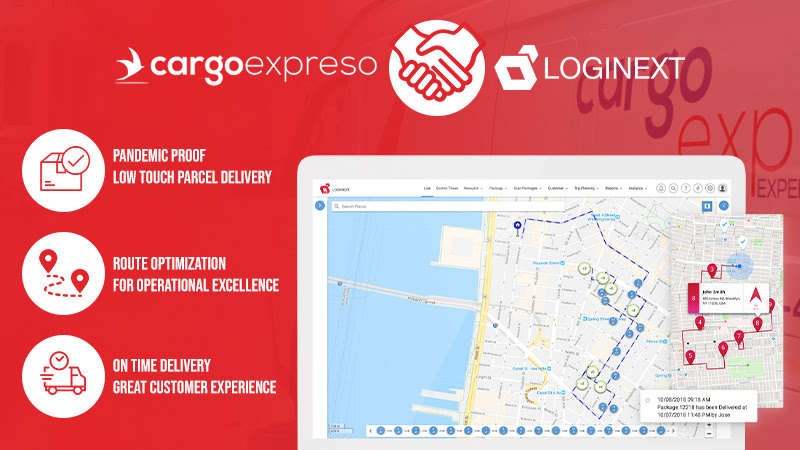
Cargo Expreso, a Grupo Almo company in the business of delivering parcels and couriers in Central America, has partnered with LogiNext, a global logistics deep tech company. The main driver of this partnership is to accelerate its digital transformation and deliver a superior customer experience, a process that is led by KPMG.

As a part of this collaboration with LogiNext, Cargo Expreso will implement a state-of-the-art transportation automation platform on top of its existing processes, to speed up operations, from the receipt of a package to the delivery to the recipient. The Oracle CX CRM technology will be connected in real time to LogiNext and Oracle ERP, which will facilitate the customer journey, optimising and digitising parcel delivery and added services.

“The customer is at the centre of our entire strategy. In this new digital age, we needed to take this step and implement technologies that allow us to provide a better experience to our customers. We started this transformation some years ago and today, in partnership with LogiNext, Oracle and KPMG, we continue this process by adopting new technologies that can easily fit existing systems and that will contribute to the growth of the company,” expressed Mario Tejada, Chief Executive Officer, Grupo Almo.

The Post and Parcel industry has an estimated value around $400 billion in 2020 and is growing at 8-10% annually. eCommerce has grown exponentially, and this has given a huge impetus to digitisation in the Courier, Express and Parcel industry, using digital automated transportation management systems to improve operational efficiency and pave the way for the future of parcel delivery.

“Most of our clients, including Cargo Expreso, have a large network of their own carriers built over the years. Bringing in all the stakeholders like their shippers, carriers, drivers, dispatchers and the end customers is almost always the first priority.

“What we have been able to achieve in a short term and a relatively low cost of technology is truly unparalleled and sets the tone for the future of the Courier, Express and Parcel industry,” says Dinesh Dixit, Vice President of Account Excellence at LogiNext.


Clark supports disaster relief operation

The heavy rainfall in Germany during the summer turned small streams into raging rivers, and led to large parts of Nordrhein-Westfalen and Rheinland-Pfalz to be declared disaster areas. Since then, a wave of aid has been running throughout Germany.

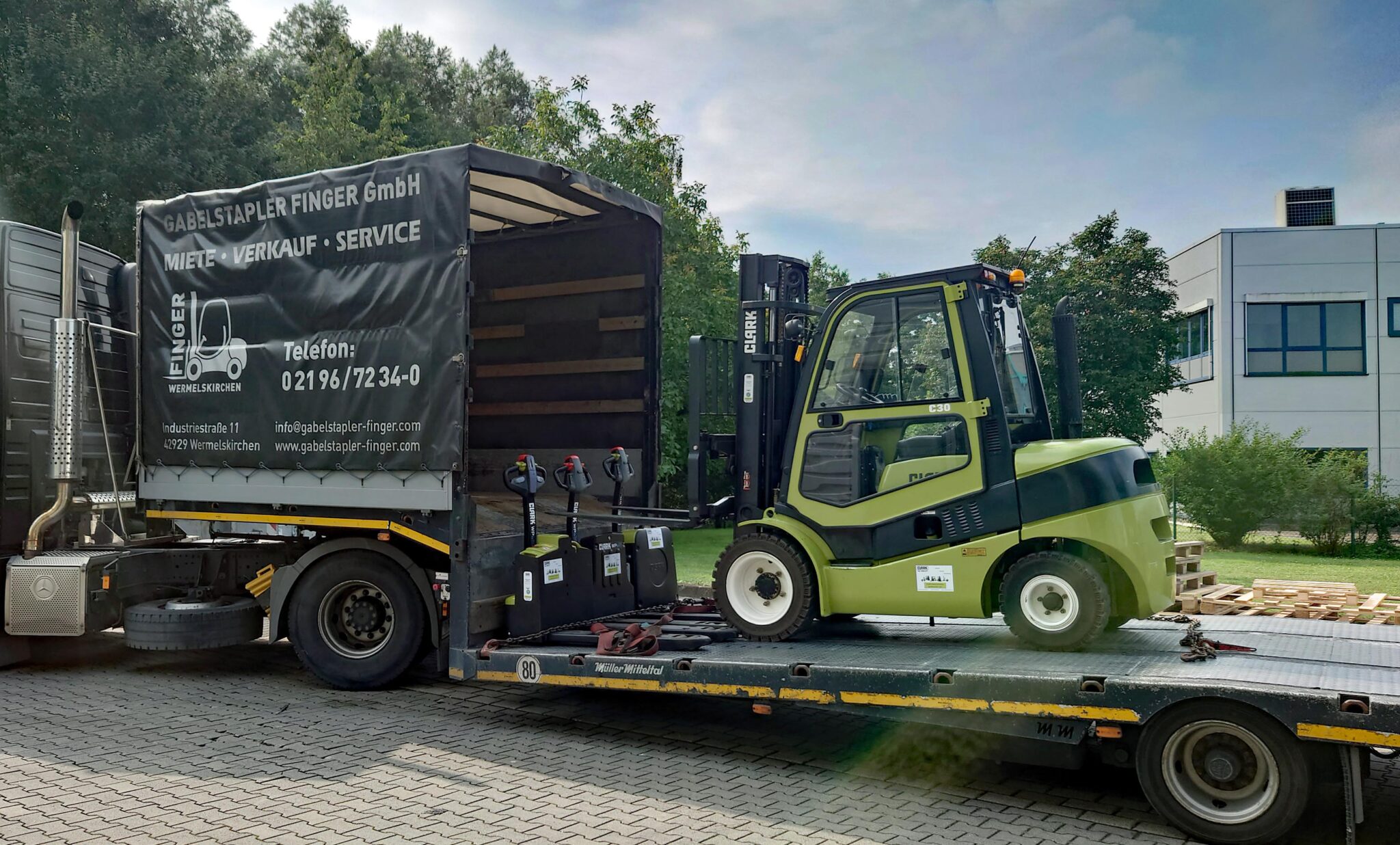
Clark Europe has also helped the people in need and supported the German Technische Hilfswerk (THW) in the disaster operation at the Nürburgring. Three Clark WPio 15 electric low-lift trucks and a Clark C30D diesel forklift were sent to help load the THW’s emergency vehicles, which travelled from there to the disaster areas, with materials and helping to supply the relief workers on site.

“For us at Clark Europe, it was clear from the outset that we wanted to help the people in need as a result of the floods,” explains Karl Hielscher, Director Logistics at Clark Europe. “I immediately contacted the THW. The head of operations in charge told us that materials handling vehicles were urgently needed – to load the emergency vehicles, to supply the relief workers and to distribute the donations in kind, which are now stored in three halls. The transport of the Clark trucks to the Nürburgring was organised free of charge by our dealer in Wermelskirchen, the company Gabelstapler Finger, whom we would like to thank again at this point.”

Because of the infrastructure and location, the Grand Prix circuit at the Nürburgring became the operations centre for the aid organisations. Here are the temporary accommodations for the emergency forces. Here they are fed and vehicles and equipment are maintained. Just under 40km from Ahrweiler, the site is the ideal base camp for the state of Rheinland-Pfalz to coordinate disaster relief operations from.

More than 5,000 helpers from the THW, the fire brigade, the rescue service and the German Bundeswehr were stationed at the site. At the same time, the event centre of the Nürburgring became a collection point for relief supplies. The public’s willingness to donate was so great that the goods filled three halls.

“With the low-lift trucks provided, loading our emergency vehicles is not only faster, but our helpers’ work is also made much easier,” says a technical manager of the THW at the Nürburgring.

ARIBIC digitalisation project saves AGV sensor data

As automated guided vehicles (AGVs) navigate through warehouses or production halls, they become real data collectors. Data that is, however, immediately deleted again. “This is a huge waste,” says Bengt Abel, project manager at Hamburg-based intralogistics provider STILL. The international research project ARIBIC (Artificial Intelligence based Indoor Cartography) therefore aims to identify methods to make profitable use of this valuable information.

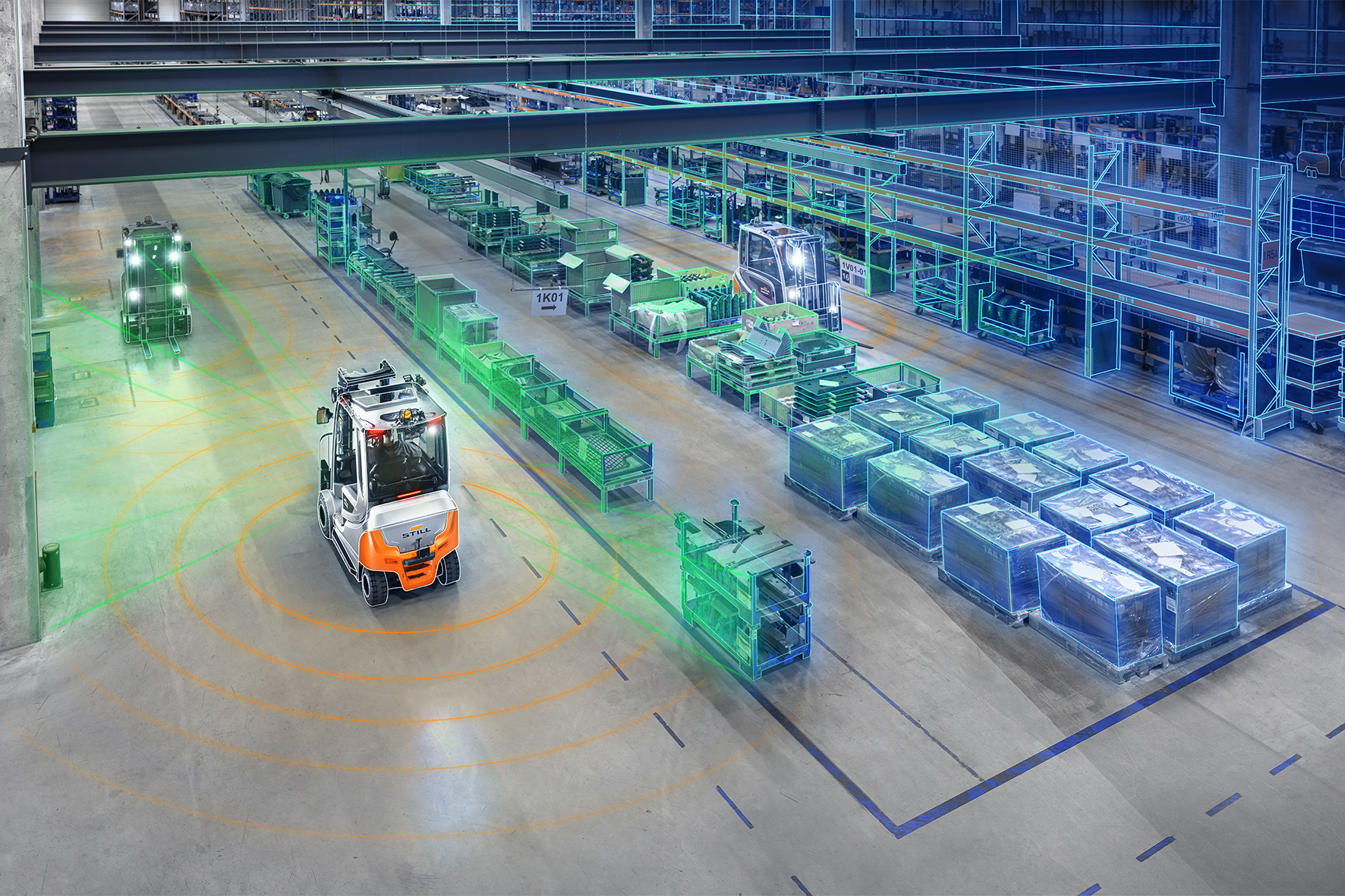
The data collected via sensors and cameras can be used in the ARIBIC cloud to create continuously updated 3D maps of warehouses or production facilities. “Via this real-time sensor data, we create a live digital twin of the environment and can thus display and share relevant information virtually in real time,” says Bengt Abel, describing the basic idea of the research project. In contrast to today’s method, where a rigid 3D image of the environment is created from a snapshot, the images generated by the ARIBIC platform (3D map creation engine) remain dynamic and always up-to-date.

“As the truck or AGV travels through their surroundings, their sensor technology detects even the smallest changes and forwards them to the ARIBIC platform. These changes, such as a moved rack or a newly placed pallet, are immediately taken into account in the artificial intelligence-based interior mapping and fed back into the system,” says the STILL expert.

Enormous benefits for users

High-resolution 3D maps with semantic information are primarily needed for the localisation and navigation of automated guided vehicles in their working environment. Operators of warehouses or production halls thus know where their vehicles are at all times. This information, in turn, can be used to optimise warehouse or factory planning. For example, it becomes clear in which areas of the warehouse traffic is high or low. It also shows which aisles are more frequently blocked. With these results, racks can (initially) be moved virtually or production areas rearranged.

Bengt Abel: ” With this new possibility to permanently record the working environment, operators will be able to optimally plan and utilise their warehouses and production halls in the future. For the first time, they would get a detailed insight into what is actually happening in their warehouses.”

According to the STILL expert, countless other fields of application are conceivable that build on the ARIBIC results: “We already have great ideas today. But I am quite sure that there will be a great many more in the future.”

The ARIBIC project

The ARIBIC project was launched in March this year. Completion is planned for the fourth quarter of 2023. In addition to the consortium leader STILL, the Karlsruhe Institute of Technology (KIT), the University of Toronto with its STARS laboratory and the Canadian sensor manufacturer LeddarTech are also involved in the international research project. The project is funded by the German Federal Ministry for Economic Affairs and Energy (BMWi) and the National Research Council of Canada Industrial Research Assistance Program (NRC IRAP).

STILL will also be contributing the OPX iGo neo, their successful autonomous order picker, which is already well equipped with sensors and camera technology. Yet that is not all, as Bengt Abel emphasises: “Our early commitment to the areas of automation technology, robotics and digitalisation is now paying off. For years we have already been working on a variety of sensor solutions for our industrial trucks, which are now gradually being implemented in series production. An important prerequisite for being able to participate in such a project in the first place.”

Subscribe

Get notified about New Episodes of our Podcast, New Magazine Issues and stay updated with our Weekly Newsletter.