Heppner purchases further German distribution businesses

Heppner has acquired the family-owned businesses ABC-Logistik, ABC-Warehousing and incharge, based in Düsseldorf and Krefeld. These acquisitions form part of Heppner’s international growth strategy, designed to strengthen the Group’s distribution capacity in Western Germany and increase its competitiveness in the French and German transport markets.

The overall goal is to strengthen the territorial network in Germany, perceived as a vector of new economic dynamics

Following the acquisition of Hamacher Logistik in 2019 and the conclusion of a strategic partnership with Koch International in early 2021, the acquisition of ABC-Logistik, ABC-Warehousing and incharge, specialists in goods storage and transport in the North Rhine region, marks a new milestone in Heppner’s continued international growth. These acquisitions are aimed at boosting and accelerating Heppner’s distribution capacity in the region, endowing it with the capability to propose transport and logistics solutions to its customers and partners within an integrated international network.

As leader in traffic between France and Germany, the latter country represents a strategic perimeter in the company’s growth ambitions. When combined with the solid regional presence of ABC-Logistik, ABC-Warehousing and incharge and the know-how of their 270 employees, Heppner’s international expertise will enable excellent service provision in support of transport solutions tailored to its customers’ needs.

With more than 12% of its turnover generated in Germany, the country is currently Heppner’s second-largest market. Each year, it carries out almost 400,000 groupage shipments between the two countries, which account for close to 30% of its total overland shipments. The 12 agencies that Heppner now has in the country provide a strong base in key regions for serving its customers and partners.

“The integration of ABC-Logistik’s business in Heppner is excellent news for customers who want to grow their operations in Germany. The synergies generated by our respective areas of operational, geographical and technical expertise will become key assets for strengthening our European network, offering our partners increasingly personalised and reliable services, and leveraging opportunities for future growth,” Heppner Group CEO Jean-Thomas Schmitt explained.

Founded in 1997 by Holger te Heesen, ABC-Logistik, ABC-Warehousing and incharge have a combined turnover of €22m and 270 employees. Characterised by a distinctive family business culture, they share a dynamic vision of the business. With a strong presence in North Rhine-Westphalia and corporate headquarters in Düsseldorf, the companies have almost 60,000 sq m of warehouse space and operate a logistics centre in Krefeld. In addition, as member of the CTL network in Germany, ABC-Logistik brings a strong distribution capacity in the region that will create more closely-knit transport links between Western Germany and France.

“We are delighted to embark upon this new chapter between Heppner and our company. It is an important step that will create new growth opportunities, in line with the values of entrepreneurship and excellence that we uphold in our daily work. By pooling our resources with an international group such as Heppner, we will be able to offer our customers a broader range of transport solutions, particularly in international traffic to and from France,” highlighted Holger te Heesen, CEO of ABC Logistik Group.

ABC will continue to operate independently with its network of partners, initiating a phased process to integrate its businesses and human resources with those of the Heppner Group in Germany.

Sustainable urban logistics

In line with its sustainable development commitments undertaken in 2010 and in response to growing restrictions on traffic in town centres, Heppner is working to expedite implementation of its sustainable delivery solutions in these areas, while maintaining its competitiveness within the industry. Last-mile delivery is a major challenge for the transport industry and requires engagement and reflection by all the economic agents involved.

“As one of the pioneers in the drive to master last-mile logistics in the Düsseldorf conurbation, the acquisition of ABC-Logistik will allow Heppner to consolidate its know-how at local level, offering innovative, sustainable solutions in coordination with public and private sector stakeholders,” observed Ghislain Fernandez, Heppner’s International Subsidiaries Manager.

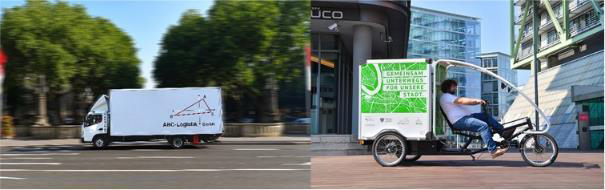
“For the last few years, we have been developing our know-how to offer competitive services on the cutting edge of sustainable logistics. In 2017, ABC-Logistik launched incharge Smarte Innenstadtlogistik, a smart, innovative solution that seeks to reduce traffic by grouping deliveries in the centre of Düsseldorf and reducing emissions through the use of electric vehicles and low environmental impact technologies,” explained incharge CEO Michael te Heesen.
Toughbook upgrade promises improved performance

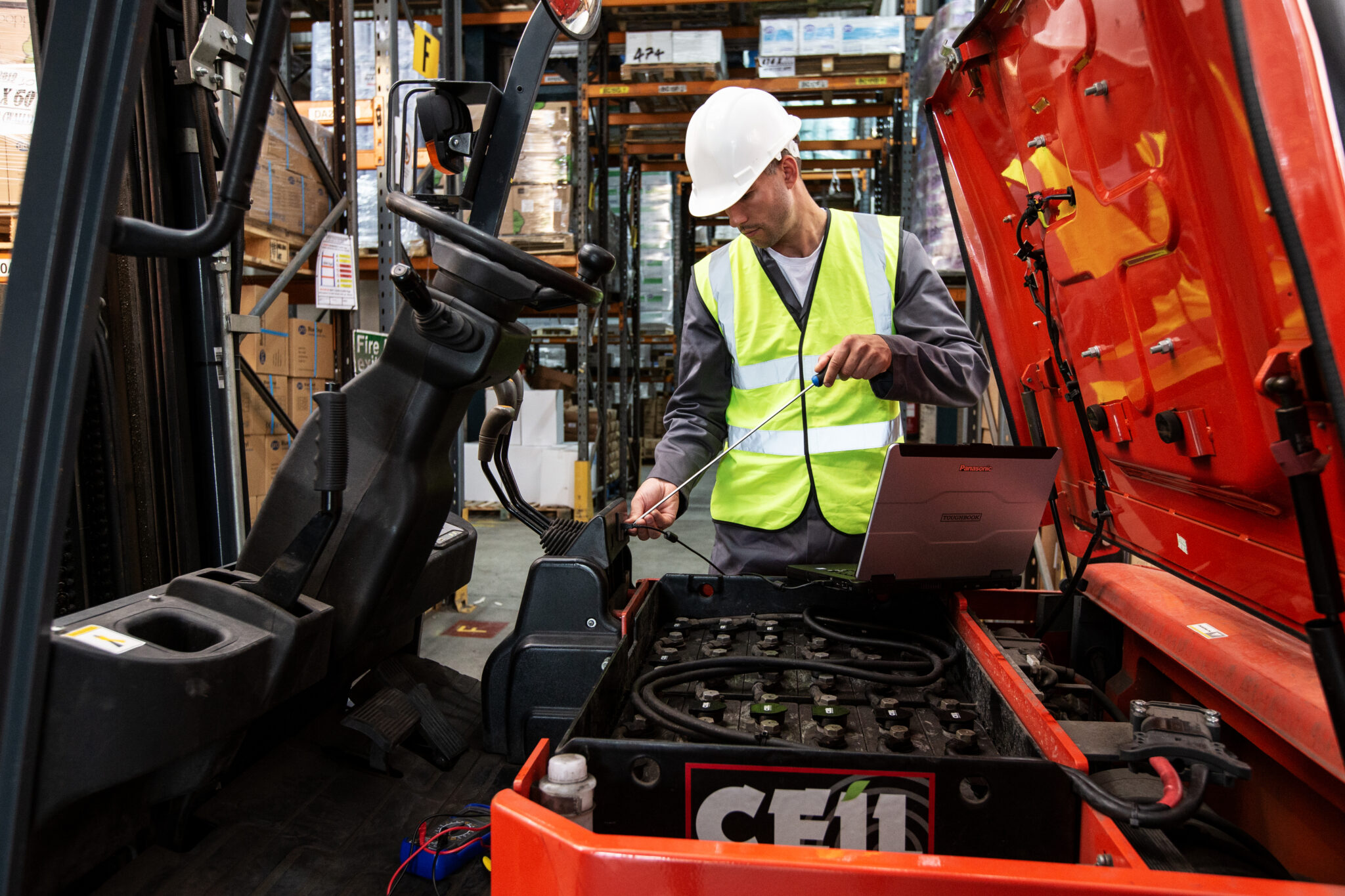
Panasonic has announced the latest version of its Toughbook 55 notebook, that is as versatile as ever but with improved performance, connectivity and security. When launched in 2019, the Toughbook 55 set a new benchmark for mobile computing by enabling users for the first time to customise their device for different tasks while in the field. The latest Toughbook 55 maintains this popular modular approach but has been updated with the latest technologies ideal for users in field services, automotive, emergency and security services.

According to Panasonic, for the ultimate reliable communication on the move, the second-generation rugged clamshell notebook has enhanced connectivity with eSim, and the option for 4G to deliver Dual Sim. Additional comms improvements to future-proof the upgraded device include the latest WiFi (Intel Wireless 6 AX201) and Bluetooth 5.1 connectivity, alongside support for Thunderbolt 4.

For use with demanding applications, such as CAD, performance has been boosted by up to 19% with the addition of the 11th generation Intel CoreTM i5-1145G7 Processor (with Intel vPro Technology). Storage has been improved with the NVMe OPAL SSD, which self-encrypts in real-time, freeing-up processing capacity and offering enhanced data protection to information sensitive industries such as emergency services, security forces and defence. To make the device even more secure, the device is also equipped with the Microsoft Secured-core PC technology.

Versatile Modular approach

The Toughbook 55 allows users to boost graphics capabilities with support for Intel Iris Xe Graphics. They can also configure the device on the move to suit their industry sector or changing job requirements. A smartcard reader, additional storage or a DVD or Blu-Ray drive can be added with a simple switch, fit and click into the Toughbook  Universal Bay. In addition, a front expansion area can be used to quickly integrate a fingerprint reader, HF-RFID or regular smart card reader or for the addition of a second battery. For sustainability and cost efficiencies, all peripherals used with the first generation Toughbook 55 remain compatible with the latest device.

“The Toughbook 55 notebook was a game-changer, taking mobile computing to new levels of flexibility, productivity and sustainability and the updated generation will further enhance its reputation,” said Dirk Weigelt, Senior Product Marketing Manager at Panasonic Mobile Solutions Business. “Users can customise their device on the move to suit the needs of their job role at the time. While buyers can invest in the device knowing that it has the flexibility to adapt to the changing needs of the business and the workforce over the long-term.”

Panasonic says the Toughbook 55 is lightweight (2.08kg), slim (32.8mm) and easy to move around with its premium designed handle. It carries an enhanced Ingress Protection Rating (IP53) against dust and water splash and is protected against drops up to 91cm. It can comfortably operate in temperatures ranging from -29°C to +60°C.

With a battery life of up to 19 hours and an extended capability of 38 hours, with the addition of a hot swap second battery, the Toughbook  55 is as long working as it is adaptable.

The latest Toughbook 55 notebook is available in three options: HD, Full-HD and Full HD with Touchscreen. All devices come with a standard 3-year warranty and are available from September 2021. Prices start from €1,988/£1,799 + VAT.

Ocado invests in further CNG station

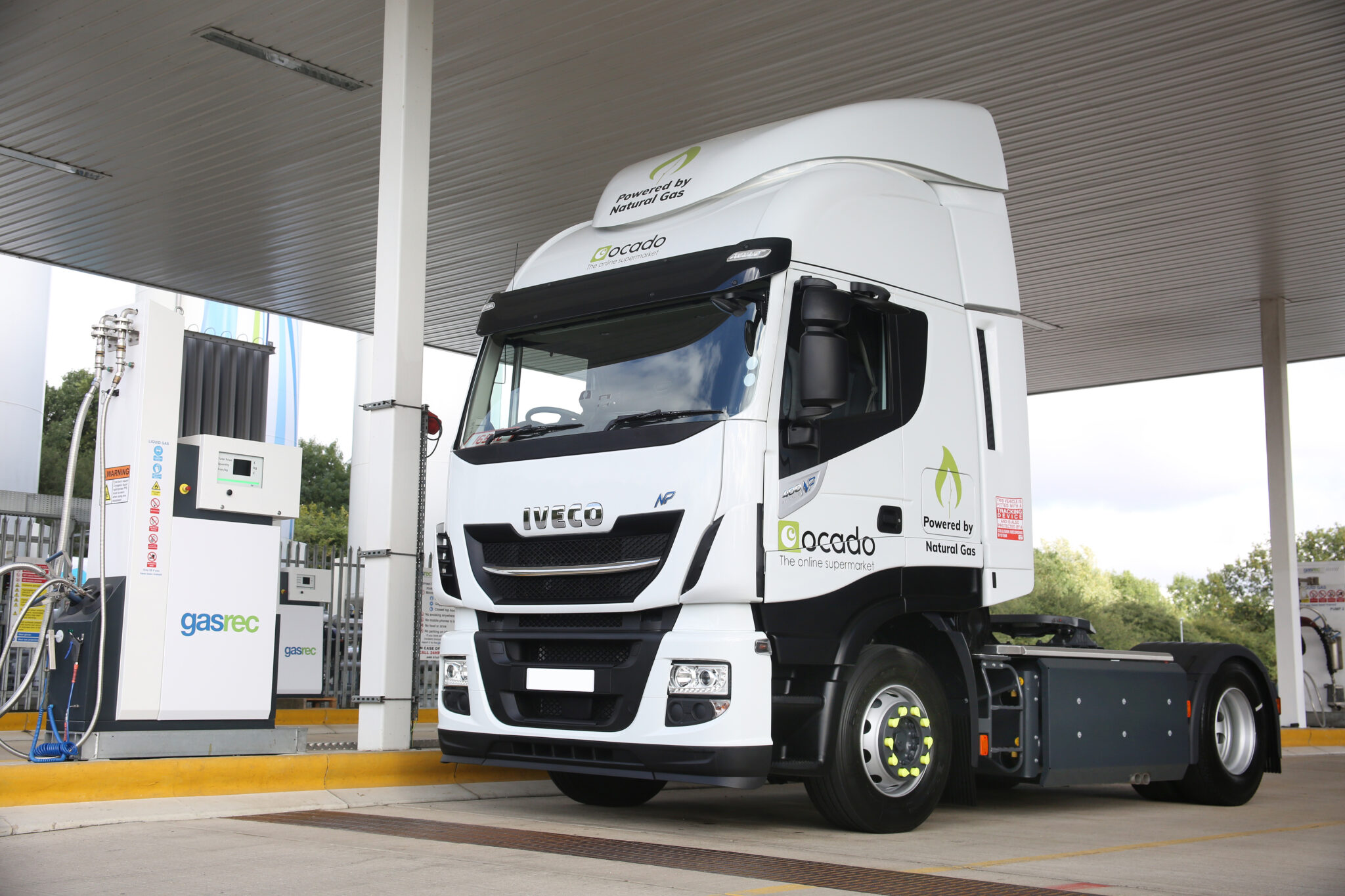
Ocado Group has reaffirmed its transition to alternative fuels by signing a deal to open a further natural gas refuelling station at its Dordon Customer Fulfilment Centre.

In January 2019, the online supermarket became the first UK retailer to self-fund the purchase of an onsite grid-connected gas refuelling station at its depot in Hatfield.

The new facility at Dordon is due to open in Q2 2022 and will again be designed and built by Gasrec – the UK’s largest supplier of gas to the road transport sector – to fuel the 10 Compressed Natural Gas (CNG) tractor units already running from the site and allow for the remaining Dordon tractor fleet (70 total) to transition from diesel to blended biomethane.

Graham Thomas, Fleet Operations Manager at Ocado Group, says: “The results we have seen since beginning our switch to gas have been fantastic and shown that we are on the right path to a cleaner, more environmentally-friendly future.

“This new facility at Dordon will allow us to get more gas trucks on the road and access delivery routes further up the country with our CNG fleet.”

The facility at Dordon will be a tanker fed operation, with Ocado signing a 10-year supply agreement with Gasrec. With 60 natural gas-powered trucks operating from Hatfield and Dordon, this latest development will allow Ocado to more than double their total CNG units over the next three years, with over two thirds of its total fleet running on natural gas.

“We are committed to transitioning away from diesel and the performance of the IVECO gas trucks we have in service, as well as the resilience of the facilities and support Gasrec has provided for us so far, has only strengthened our conviction,” adds Thomas.

Environmental benefits of switching to natural gas include 99% fewer particulate emissions and 70% less nitrogen oxide than the latest diesel standard. Natural gas-powered vehicles are also, on average, 10db quieter than diesel vehicles, significantly reducing their impact in residential areas.

Gasrec currently supplies a minimum 50% biomethane blend to Ocado, meaning significant reductions in CO2 output – up to 68% across the fleet calculated from the total amount of biomethane used. Going forward, the mix of biomethane is being increased, making further inroads to cleaner transport.

James Westcott, Chief Commercial Officer at Gasrec, says: “Ocado Group continues to take great strides in reducing the carbon footprint of its transport operation. We have built a fantastic working relationship with them over the past few years and are delighted they have chosen us again to build and deliver the new refuelling site in Dordon.”

FDL accelerates e-commerce in Greece with smart sorting robots

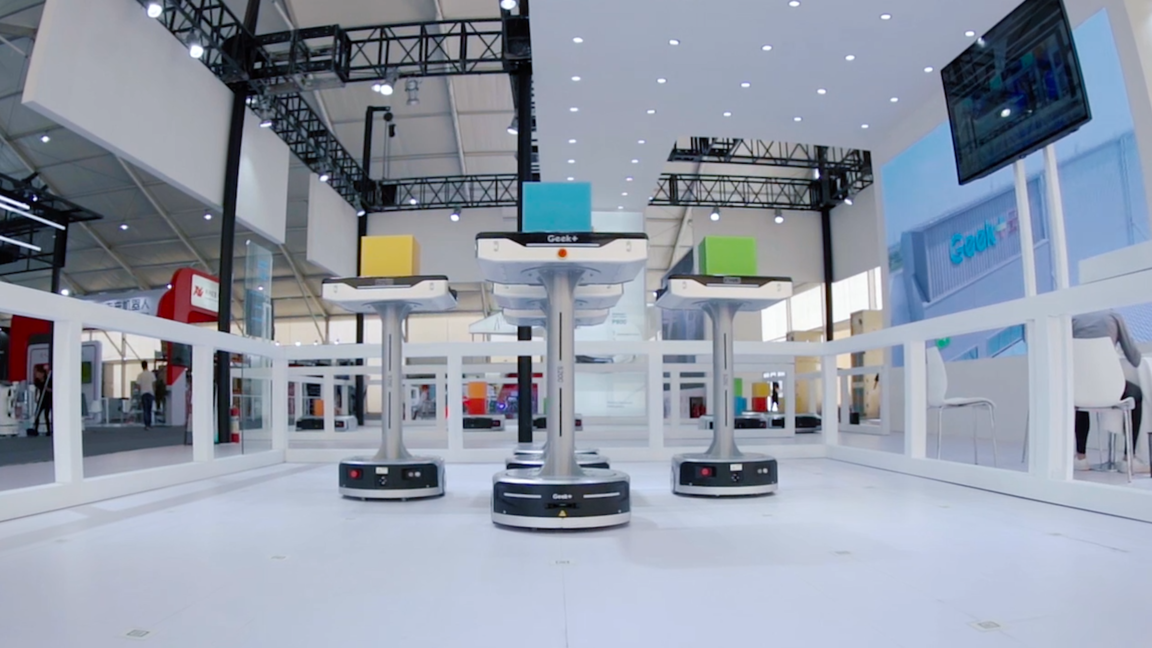
Geek+, a global AMR leader, has announced the successful deployment of smart sorting robots in the warehouse of Athinaiki S.A., a logistics and transport service provider specialising in last-mile delivery in Greece.

The solution was implemented in partnership with FDL Group, a leading integrator for supply chain solutions and the exclusive distributor of Geek+ AMR solutions in Greece and Cyprus. It marks the company’s second project in the region.

Jackson Zhang, VP of Geek+ Europe, says: “We are very excited to see our sorting robots provide Athinaiki S.A. with the speed and accuracy needed for excellent last-mile delivery services. With Geek+ and FDL, intelligent automation is easily accessible to Greek companies.”

Vassilis Karakoulakis – Chairman FDL GROUP, says: “We see it as our responsibility to explore new technologies that can help streamline supply chain operations and work together with local pioneers like Athinaiki S.A. to facilitate the transition from physical stores to e-commerce. Geek+ flexible sorting robots provide us with an efficient tool that widens our reach, allowing us to help SMEs and big brands alike meet customer expectations for accurate and efficient services to compete and grow.”

Set in a 562 sq m warehouse, 29 sorting robots currently support warehouse employees by handling sorting of 1,400–1,500 parcels/hour. Today, employees will put ordered goods onto sorting robots that will automatically transfer them to one of the 104 sorting cages bound for different destinations following a simple chutes layout made up of QR codes. With no need for wires or fixed infrastructure, companies can flexibly scale operations should there be a sudden change in throughput demand by simply adjusting the number of robots and sorting destinations.

The solution can be immediately set up into existing facilities, saving considerable infrastructure costs, leading to fast ROI. Controlled by RMS (robot management system) and powered by algorithms, the solution monitors robot traffic and balances the task of each robot to achieve maximum sorting efficiency, allowing 3x more productivity and 99.99% sorting accuracy.

Retailer to logistics industry: “get innovative”

The founder of Midlands-based flooring manufacturer and retail firm Factory Direct Flooring (FDF) is calling on the UK logistics sector to generate more creative ways to attract and retain drivers and workers.

Amid news of tactics such as sign-up and retention bonuses, and mammoth apprenticeship schemes, Paul Hambidge of FDF is applauding these efforts and calls on firms to continue in this vein.

While the hospitality and fast-food sector supply challenges have been highlighted in the media recently, stock across a wide number of sectors has become harder to obtain and shipping costs are spiralling. The current supply issues are affecting businesses like FDF, which supplies to the home improvements, renovation and developer markets, and is having a serious knock-on effect to tradespeople, main contractors and homeowners.

FDF is in a strong position due to its move to a larger warehouse earlier this year – which has allowed it to increase stockholding and strategically manage longer manufacturing and shipping lead times – but Hambidge says fresh, homegrown solutions to supply chain issues are needed fast to ensure businesses remain viable. Being tactically inventive to attract the workers needed will not only help to keep many UK SMEs afloat, but it will also ensure consumers aren’t forced to bear the brunt of the ongoing global challenges.

Hambidge – whose Nuneaton-based firm FDF supplies flooring products including Luxury Vinyl Tile (LVT), laminate and engineered wood – warns that the current scenario of supply chain issues, coupled with lower product supplies from the east and Europe is making availability of products for the trade and developer, and consumer markets, significantly lower and notably more expensive.

The challenges, due to various issues caused by the pandemic and Brexit, are being further exacerbated by container shipping cost hikes and transport issues as a result of truck driver shortages, as well as the postponement of HGV lessons and tests during lockdown.

Hambidge explains: “Just as it has been heavily reported recently that many sectors such as food are experiencing supply issues that are impacting consumers, this is also happening in many other industries including ours. From building supplies through to home interiors products, a shortage of these items has a real knock on effect. The issues are now affecting tradesmen who can’t get hold of products to complete domestic or commercial jobs, which could severely affect people’s livelihoods. Subsequently the UK economy is going to suffer once again.”

FDF moved to a 40% larger warehouse earlier this year to be able to facilitate a 50% increase in stock holding.

“We’re in as good a position as we can be to weather this storm. But the truth is that this storm isn’t likely to blow over any time soon. There’s no quick fix, no real solution on the horizon and the situation will definitely get worse before it gets better. Transport, warehouse and logistics providers must innovate to tackle the current issues to avoid a catastrophe,” he added.

The logiastics industry’s driver shortfall is estimated by the Road Haulage Association (RHA) to stand at 100,000 drivers, and an existing ageing workforce means around a third of the 380,000 drivers in the UK is predicted to retire within the next five years.

Hambidge concluded: “It’s a worrying picture for businesses like ours, as transport costs are rising because of demand, so we’re paying around seven per cent more with some transport carriers. It’s just not sustainable.”

Vehicle logistics threatened by microchip shortage

The Finished Vehicle Logistics (FVL) industry faces major new challenges. The current microchip crisis threatens the very existence of the logistics industry that moves new cars.

Inventories are close to zero, volumes have fallen dramatically, factories are closing without notice, unbalanced flows are destroying efficiency and thus profitability. The result is empty yards, empty workshops, idle and under-utilised car transporters, trains and ships.

The industry has never before been so unpredictable and planning has become impossible with supply chain visibility in vehicle manufacturing almost non-existent in the lower tiers. A consequence of this is an almost total absence of meaningful volume forecasts to logistics operators.

The Covid pandemic destroyed profitability in many industries and vehicle logistics is no exception. Unbelievably the global shortage of microchips is now causing an even more disastrous crisis. While governments worldwide supported industries through the pandemic this new crisis is hitting the sector even harder, and it not only lacks government support but company reserves have been eroded or destroyed over the last 18 months as the sector has lost an estimated €4.5 billion in turnover.

ECG – the Association of European Vehicle Logistics – is calling for the automotive industry to take all possible steps to support their logistics suppliers. Many potential measures are available to them including suspension of bonus-malus performance measures, postponing tenders until markets have regained some stability, sharing of production schedules in real time, reviewing lead times and shipping frequency and so on.

Wolfgang Göbel, ECG President, said: “Components are manufactured worldwide and delivered to the automotive industry via global supply chains involving highly complex planning. The problem is not the lack of planning competence of the companies, but the fact that other industries are competing for the semiconductor products and global demand exceeds supply for the foreseeable future.

“As a result the FVL industry is seeing huge variations in volumes at very short notice making capacity planning almost impossible. The problems are not so much in the logistics chains, but mainly in the production lead times and also a bit in the classic bullwhip effect.”

He went on to say: “Long-term contracts with our customers narrow the operational planning scope for us. We need more accurate information for planning certainty to ensure our efficiency and avoid significant additional costs that are not offset by customers. Our member companies are happy to deliver, but the industry must also let them.”

All of this comes at a time when the industry is coping with astonishing levels of change – a topic that will be addressed during the annual ECG Conference in Brussels on 14/15th October 2021. Not only are the products changing fast as electric vehicles replace the internal combustion engine drive trains, but the manufacturers are completely reinventing their sales and distribution models which will require different assets as online activities take business from the historic dealer networks.

In addition, as with all supply chains, there is immense pressure to decarbonize as fast as possible and to address the aspirations of the European Commission in the ‘Fit for 55’ proposals. All of this is going to require significant investment in people, assets, systems and so forth. In short, almost every aspect of the FVL industry will change. If the industry is not supported and protected from the impact of the short-term crisis such long-term investments will prove impossible.

Tenancy tips for logistics businesses

With Covid highlighting how the logistics sector can change very swiftly, it’s vital for tenants to avoid unnecessary and unwelcome disruptions. Bill Dunmore, a partner in Brecher LLP’s Real Estate team, offers some tips on what to look for and what to avoid when signing new leases.

As we emerge into the Covid era, the role of logistics seems assured. Changes in consumer and business behaviour are driving occupier demand for logistics property over both the short and long term.

There is currently an understanding, encouraged by the government, that landlords and tenants need to work together, in the spirit of transparency and collaboration – good timing if you are about to take a new lease, or renew an existing one. The following pointers will assist your business to maximise flexibility and minimise risk.

Leasing flexibility

Recent times have highlighted just how hard it is to plan for the future. Many logistics businesses are still waiting to see the longer term effects of Brexit on supply chains, so remain cautious about entering into significant financial obligations. If the term of the lease is too short, you might be faced with the distraction of having to relocate / renegotiate with the landlord just when things are going well. On the other hand, too long and you are tied in to an expensive commitment when times could get tough.

Negotiating maximum flexibility in leases is therefore key. Ask for the right to extend the lease or even take leases of neighbouring vacant units, but also have the ability to break, assign or sublet the lease if needed.

Covid clauses

Tenants were shocked to find they still had to pay rent during lockdown, even if it was illegal for them to trade from the premises. Going forward, some landlords are now voluntarily agreeing rent holiday provisions in new leases where the tenant cannot open under future government instructions. This is a rapidly changing area and concessions secured vary according to landlord, property and bargaining strength of tenant but 50% rent reductions or substitution of turnover rent are considered standard.

Bespoke requirements

To keep up with increased customer demands and technical innovation, the property may need altering. Structural alterations will be prohibited, but consider if you are going to need a mezzanine floor or loading bays and carve this out to avoid being held to ransom by the landlord. Internal, non-structural alterations should be permitted but you will still need written consent to comply with the lease. A client recently carried out a warehouse modernisation installing mechanical and electrical infrastructure, high bay pallet racking, automated systems and an upgrade to the electricity supply.

Landlord’s consent was obtained as part of the lease negotiation (planning permission and energy company authorisation were also needed).

Exit strategies

Break options – these permit the tenant to end the lease early on prior written notice (usually six or nine months). Beware – if the notice is not served correctly, the lease will continue with the tenant ‘on the hook’ for several more years’ rent, business rates and service charge. For this reason conditions on the break (e.g. reinstating alterations) should not be agreed because they make it harder to break the lease.

Assignment and Underletting – make sure the lease can be assigned (transferred or sold) to a third party, but beware of the guarantee the outgoing tenant must give of the assignee’s obligations. During the pandemic there has been an increase in former tenants having to pay a defaulting assignee’s rent arrears – a nasty shock. Underletting rights can also afford useful flexibility. We recently helped a tenant sublet part of their external yard to a car dealership for parking, thus gaining rental income from surplus space.

The above list is by no means exhaustive, but highlights some important points for consideration to bolster a tenant’s position in uncertain times.

Axfood  plans Gothenburg eCommerce DC

In mid-July 2021, the Swedish food retailer Axfood awarded its logistics lifetime partner Witron Logistik + Informatik an order for the design, implementation, service, and system operation of a food eCommerce DC in Gothenburg, Sweden.

Both companies are thus continuing the OCM (Omni-Channel Machinery) strategy they started with four very specific goals: maximum premium delivery service for end customers of all distribution channels, maximum end-to-end cost-efficiency, flexibility, and sustainability. Witron is already implementing the 100,000 sq m  omnichannel distribution centre in Bålsta (near Stockholm) for Axfood, which will bethe largest single project in the history of both companies.

“With the investment in these two distribution centres, we have laid the foundations for our future logistics platform, which will strengthen the entire Axfood family,” explains Klas Balkow, President and CEO of Axfood. “We are ensuring first-class, efficient, and sustainable logistics processes – for us and our nationwide customers – and with this are creating the prerequisites for profitable growth.”

Piece picking competence

From the end of 2024, the Gothenburg facility with a size of 11,500 sq m will provide home delivery to all online customers of the Scandinavian retailer in the region of southern Sweden, supplying approx. 17,000 different dry goods, fresh products, fruits and vegetables, as well as frozen food. In addition to the home shopping orders, the facility in Gothenburg will also handle click+collect orders for Axfood stores across the region. The highly automated food eCommerce DC is designed for a daily picking performance of 412,000 cases, which corresponds to some 6,700 customer orders.

“Witron’s piece picking systems pick almost 20 million single units per day worldwide,” says Jack Kuypers, Senior Vice President North-West Europe of Witron, citing an impressive figure. “In addition to a consistent overall concept – characterised by a high level of cost-efficiency – the competence in the area of end-customer delivery, which has been proven in numerous industries, was a particularly important decision criterion for Axfood.”

The logistical heart is the AIO “All-in-One Order” Fulfilment solution from Witron. The decisive advantage of this innovative piece picking system is that multiple categories such as different temperature zones, different distribution channels, as well as fast and slow movers can be handled in one integrated system – multi-functionally with the same technology and the same staff.

In Gothenburg, for example, e-commerce orders and click+collect orders are consolidated in this way. A total of 89,000 tote storage locations, 44 stacker cranes, and 52 ergonomic pick workstations are connected in a highly flexible material flow across all logistics areas. Due to these numerous advantages, Axfood has already opted for the AIO solution in the omnichannel distribution centre in Bålsta, where it also uses the system to fulfil online orders in addition to store orders.

Picking directly into containers

At the workstations, items from the dry goods and fresh food assortment are picked directly from the storage tote into shipping bags. Frozen products are picked from the storage tote into specially designed insulated containers, ensuring that the cold chain is maintained. The automated consolidation of all orders and temperature zones is optimised by an automated route sequence buffer, which consolidates the customer orders just-in-time and route-friendly for dispatch by Axfood’s own delivery vehicles or service providers.

Continuation of OCM strategy

“The food eCommerce DC in Gothenburg is the consistent continuation of our OCM strategy, which we started at Axfood with the realisation of the omnichannel distribution centre in Bålsta,” explains Jack Kuypers. “Consequently, OCM (Omni-Channel Machinery) is an integrated retail platform. It includes a high-performance logistics centre, the integration of the horizontal supply chain nodes, as well as different vertical channels, and, in addition, an optimiser that makes it possible to easily and efficiently manage the generated network according to various priorities – e.g. time, costs, performance, transport, or volume.

“We combine existing technologies, simultaneously develop a platform from the supplier, over the warehouse, through to the store or end customer, create transparency within the retail network, and enable data exchange between all participants,” says the Witron SVP “all the way to the store – or as here in Gothenburg – to the end customer.”

“With OCM, Witron has succeeded in creating a platform, a high-performance end-to-end retail logistics network, which actually integrates all nodes of our network for the first time,” explains Nicholas Pettersson, Managing Director Logistics at Axfood. “Inefficient parallel worlds and self-sufficient silos are taboo. In addition, the future solutions in Gothenburg and Bålsta will increase efficiency in all logistics processes, reduce food waste, and provide even higher supply quality, as well as better service for stores and end customers.”

As a general contractor, Witron Logistik + Informatik GmbH is responsible for the entire design, concept, realisation, and commissioning of all IT, control, and mechanical components. A Witron Onsite team with 38 technicians, responsible for service, maintenance, and system operation, ensures the permanent availability of the highly dynamic food eCommerce DC in multi-shift operation.

Motion: the next dimension of hand-eye applications

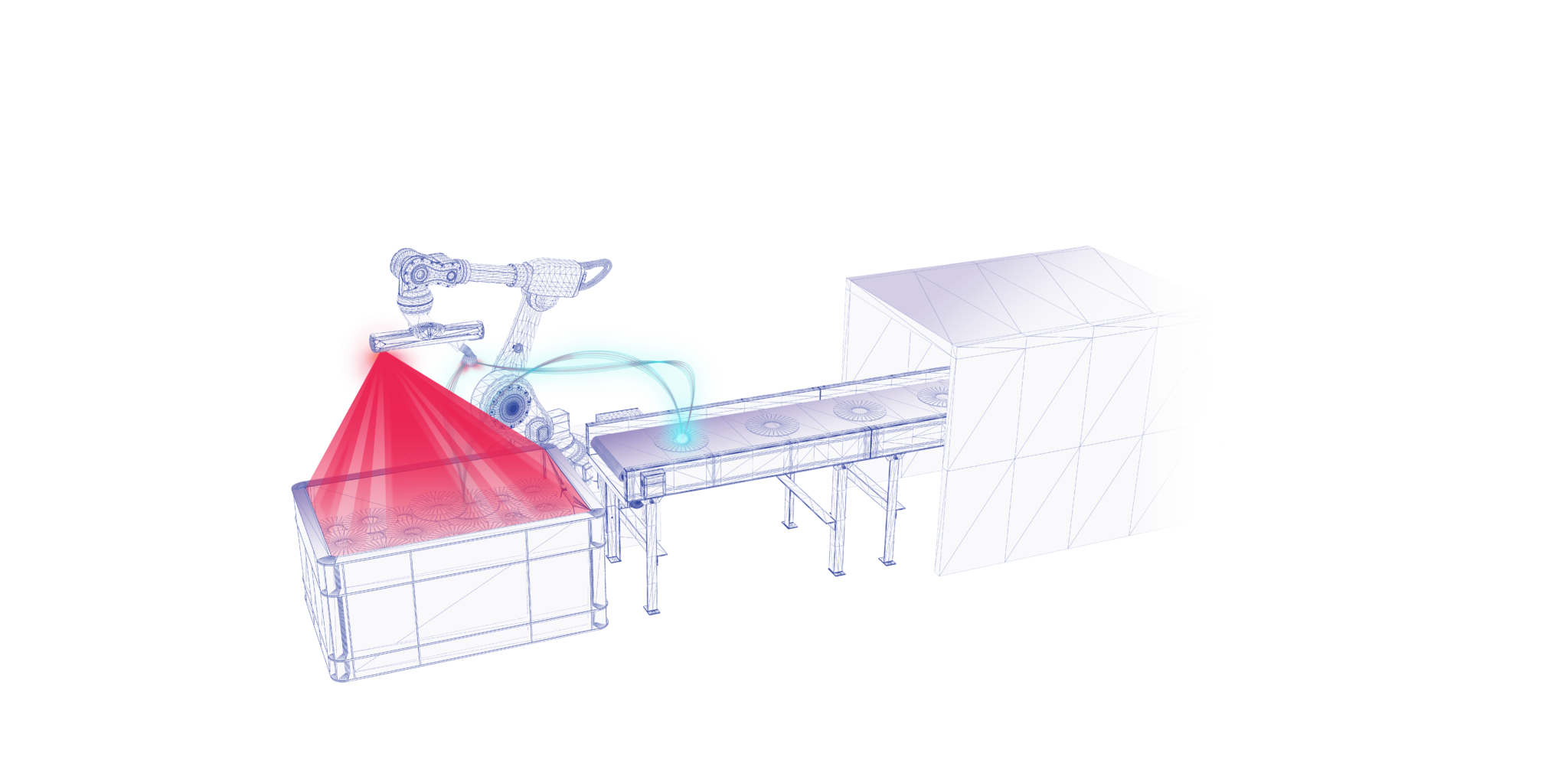
In robotics, a hand-eye system denotes a setup where a vision system is directly attached to the robotic arm, generally behind the very last joint. This approach offers an alternative to the more traditional fixed mounting of the vision system, usually above the working volume of the robot.

Though the hand-eye approach may benefit many applications, its potential has so far been largely limited by standard vision systems. Photoneo comes with an ultimate solution that finally puts an end to these vision-based limitations.

Advantages

The hand-eye approach is very useful in specific applications as it offers a number of advantages over the fixed-vision-system method. First of all, it can cover a much bigger scanning volume as it can be specifically directed to the area of interest, offering much more flexibility than the latter approach. The vision system is thus only limited by the reach of the robot rather than by its own scanning volume.

Scanning distance is one of the main parameters that determine scanning accuracy – a hand-eye vision system with a shorter scanning range can provide a much higher level of detail than a fixed vision system with a large scanning distance. If a customer has a large bin filled with small parts, the highest level of detail will be achieved by using a small scanner with a short scanning range mounted to the robotic arm.

A hand-eye system is also an advantageous option in case an application comprises two or more containers. A standard setup with a fixed vision system would either require a linear axis above the bins or multiple vision systems. A hand-eye system will do with one scanner moving with the robotic arm from one container to another.

Furthermore, bin walls or a vision system mounted above the container in a fixed manner may cast shadows on certain sections of the container, inhibiting proper scan acquisition of some parts. In such cases, a compromise needs to be made for finding an optimal position for the scanner in relation to the bin and sometimes the parts need to be manually rearranged. The hand-eye approach can easily overcome this challenge.

Hand-eye systems present a modern approach with rising popularity, which gains a firm foothold in an increasing number of robotic applications. Its benefits become even more important with the rise of collaborative robotics. However, one should keep in mind that the deployment of the hand-eye approach makes real sense only in specific types of applications.

Important considerations

Though the hand-eye setup provides a number of advantages, there are certain factors that need to be considered before adopting the approach.

Hand-eye systems require a more difficult installation than setups with a fixed vision system. It is also more difficult to find an optimal way to handle the cables that power the deployed vision system.

In addition, because the scanner is attached to the robotic arm, it may restrict the robot’s movements. It is therefore advisable to use a smaller vision system.

Another drawback of hand-eye systems is a higher risk of colliding with the sensor and possible difficulties with finding the optimal position on the robotic arm for the vision system, especially if it is of a larger size.

Moreover, robot movements cause vibrations, which standard high-accuracy area-scan vision systems cannot handle. Because of this, the robotic arm needs to stay still during scan acquisition, which may prolong the cycle time. As a result, the hand-eye approach is not the right solution for time-critical applications.

Of course, there are applications where the hand-eye setup is the best option and that do greatly benefit from this approach. In those cases, the vision-based limitations can be overcome with Photoneo’s revolutionary ‘Parallel Structured Light’ technology.

Hand-eye coordination in motion

The ‘Parallel Structured Light’ technology, implemented in the Photoneo 3D camera MotionCam-3D, enables hand-eye coordination without trade-offs between quality and speed. MotionCam-3D is the only 3D vision system that provides high-quality scans even during the movement of the robotic arm. The camera is highly resistant to vibrations and does not require stopping the robot.

The technology enables the capture of objects moving up to 144kmh, providing a resolution of 0.9Mpx and an accuracy of 300–1250μm, and in the static mode a resolution of 2Mpx and an accuracy of 150–900μm. MotionCam-3D is available in five models – most suitable for hand-eye applications are models S, S+, and M.

The greatest benefit of the novel technology is that the robot does not need to stop to make a scan, which dramatically shortens the cycle time when compared to standard technologies. It thus opens the door to new applications such as instant tracking of the object position.

Collaborative robotics has also been limited by the drawbacks of standard methods. Collaborative robots are slower per se than industrial robots and when combined with the hand-eye approach, the cycle times are prolonged even more. MotionCam-3D overcomes this limitation and works perfectly also if attached to the arm of a collaborative robot.

Motioncam-3D comes as an ultimate solution for any kind of robotic tasks. Vision-system-based limitations of the hand-eye approach are now an issue of the past. The technology offers the best resolution and accuracy for scanning at fast speed, effective resistance to vibrations, and shorter cycle times than ever.

Nelly achieves storage capacity of 37,000 positions

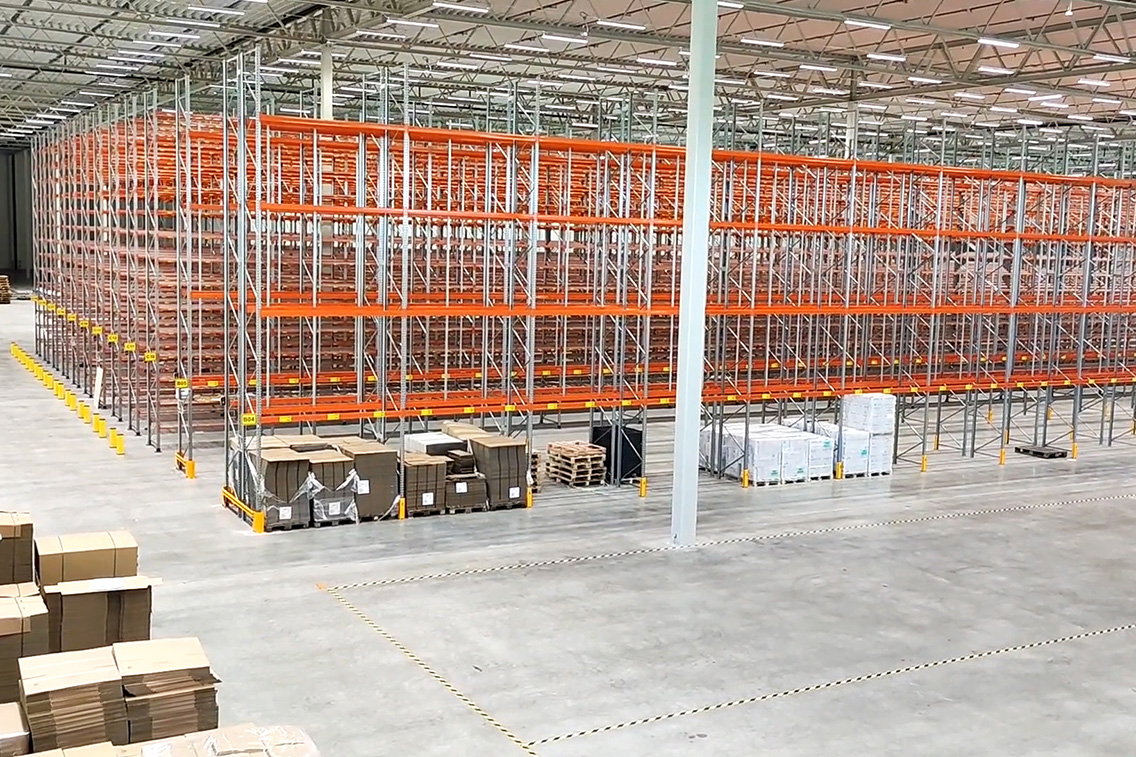
Nelly, a leading online retailer of fashion and beauty products in the Nordic countries, relied on the expertise in industrial storage systems of AR Racking and its distributor and strategic partner Rudells, who have designed and installed a narrow aisle racking solution (VNA racking) adapted to the storage of boxes in a 1,360 sq m area of the new warehouse. With the installation of these racks, a storage capacity of 36,960 positions was achieved. The warehouse is located in Borås (Sweden).

“When Nelly first contacted us, they looked at a solution with high storage with shelves. Given the characteristics of the products and the customer’s needs, we proposed a pallet racking solution, but adapted to the storage of boxes” explains Anders Rudell, Sales Manager of Rudells Lagerinredningar.

After that first phase of technical-logistical analysis and the search for the best solution for the customer, Rudells and AR Racking designed and installed a narrow aisle racking solution with 1200 mm deep sections to pick 600 mm boxes from both sides. In addition, mesh panels were added to the sections to prevent dust on the storage levels and to allow the sprinklers to reach the entire installation.

According to Jimmy Andersson, Regional Area Manager for Scandinavia, EE & South Africa at AR Racking: “The storage system installed is a very versatile solution as it allows adaptation to any type of goods, by weight or volume, by regulating the load levels or adding any of the accessories for special loads.”

Additionally, the narrow aisle racks allow direct and selective access to the stored goods.

CLICK HERE to watch the video.

Subscribe

Get notified about New Episodes of our Podcast, New Magazine Issues and stay updated with our Weekly Newsletter.