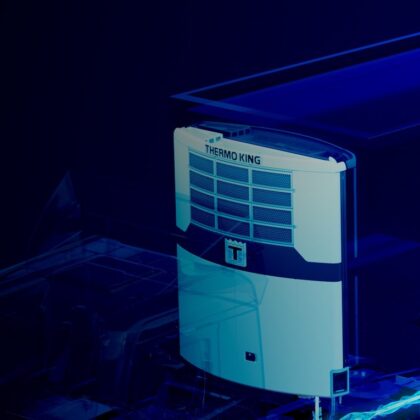
AxlePower helps achieve zero-emission trailer refrigeration

Thermo King, a leader in transport temperature control solutions and a brand of Trane Technologies, in partnership with BPW, a leader in running gears and mobility services for transport businesses, revealed new AxlePower technology at the recent Solutrans exhibition in Lyon, France.

The AxlePower technology with BPW’s ePower axle is a highly innovative energy recovery system for trailer refrigeration units, which delivers immediate and long-term sustainability benefits while also helping cut day-to-day operating costs.

Francesco Incalza, president of Thermo King in Europe, Middle East and Africa, said: “Sustainability is undoubtfully front and centre for the transport industry. For decades, Thermo King has considered it our responsibility to advance transport refrigeration, designing and manufacturing products for our customers that reflect our environmental awareness and answer ever-new challenges.

“Thermo King was the first to offer true hybrid and non-diesel truck and trailer refrigeration solutions. Today, combining our expertise, research and development with BPW, we’re introducing new technology that turns the energy typically lost by a trailer during transit into clean, sustainable power for trailer refrigeration units.”

Thore Bakker, General Manager Trailer Solutions & Mobility Services at BPW, added: “We are proud to present a climate-efficient solution for refrigerated transport that implements our strategy of system and mobility partnership just perfectly: Vehicle operators can rely on operational safety, mobility and service around the clock with the European service networks of Thermo King and BPW.

“Additional benefit is that the customised cooling solutions fit seamlessly in vehicle manufacturers processes. Whether air suspension, spring centres, wheel ends or interfaces – nothing changes, nothing has to be redesigned. In this way, we are making a joint contribution to the breakthrough of emission-free refrigerated transport.”

Across global cold chains, trailer vehicles routinely dissipate energy due to constant braking and deaccelerating in traffic and in downhill routes. At the same time, transport companies are seeking the most sustainable energy sources, both in terms of CO2 emissions and noise, to power their refrigerated trailers.

The new AxlePower technology results from a partnership of two technology leaders for freight transport solutions that combined their competences to answer these needs and deliver a solution, which will drastically reduce the environmental impact of refrigerated trailers.

The AxlePower technology is a fully integrated system that combines Thermo King hybrid or fully electric trailer refrigeration units, BPW’s ePower axle energy recovery system, and battery storage technologies developed to create an efficient, autonomously powered trailer refrigeration solution.

The system stores the energy generated while the vehicle is rolling or braking in a high voltage battery and reuses it to power the refrigeration unit and keep the cargo at optimal temperature.

The AxlePower system is tractor-independent, which makes it easy to deploy across the customer’s fleet. The technology also offers immediate compatibility with all Thermo King and Frigoblock trailer refrigeration units.

Ideal option for sustainable operations

The possibility to recover and reuse energy makes the AxlePower system an ideal solution to increase the sustainability of all types of trailer journeys. With silent running and no CO2 emissions when operating from the battery-pack, this technology allows customers to easily run inner-city deliveries, including in Ultra-low Emission Zones (ULEZs).

Laurent Debias of Thermo King concluded: “The AxlePower technology represents a significant advancement in both operational flexibility and long-term sustainability of refrigerated trailer fleets. Enabling this form of electric power supply recovering energy that would typically be lost, allows for significant emissions and cost gains during every single journey. This is especially important in a price competitive industry like commercial transport.”

Providing electric solutions for refrigerated transportation is part of Thermo King’s and Trane Technologies’ overall approach to reducing carbon emissions in the industries and markets it serves. It helps advance the 2030 Sustainability Commitments, including the Gigaton Challenge to reduce customer greenhouse gas emissions by 1 billion tonnes.
Collaborative automation contributes to enhanced productivity

Universal Robots, the world’s most widely-deployed collaborative robot provider, has provided Stanley Engineered Fastening with robotic quality inspection using cobots in its Warrington Facility.

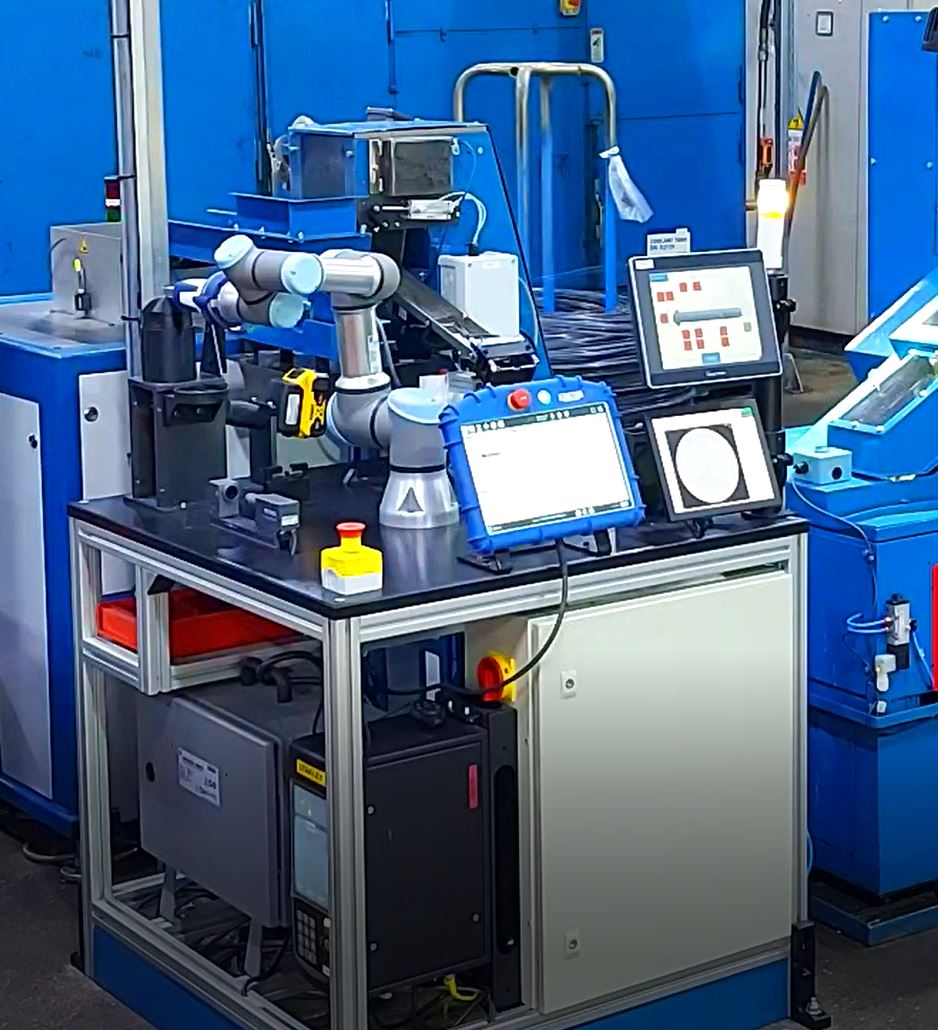
Fifteen UR3e cobots act as key components in its brand-new cells for Breakstem autonomous manufacture which have reduced product costs by approximately 10% and shortened lead times by up to 70%. They are producing approximately 350 million fasteners per annum from across the company’s product range.

The new cells fully integrate four previously independent processes, boosting productivity and improving conditions for machine operators by eliminating 2.5 tonnes of manual handling per year. Within the manufacturing process a UR3e cobot randomly selects a component for batch sampling and performs a pre-programmed quality inspection. This involves degreasing, drying, deburring and feature inspection through a digital micrometer. The cobot then performs an automated destructive test by placing the part in a Stanley Smart Gun to record the break load of the components.

Vitalij Rodnov, Advanced Manufacturing Engineer at Stanley Engineered Fastening, explained his reasons for automating quality inspection on the production line: “We needed to increase throughput and productivity in order to meet demand across our fastener product range. Freeing up our machine operators from this repetitive task allows them to add more value elsewhere in the process, delivering better profitability and shorter lead times.”

“Stanley Engineered Fastening is a great example of a company smartly using collaborative automation to make its business more successful and resilient”, added Mark Gray, Country Manager, UK & Ireland at Universal Robots. “Our cobots are helping transform so many organisations whose potential would otherwise be constrained by labour shortages, limited production space or rising production costs.”

Cleveron moves towards autonomous delivery in NL

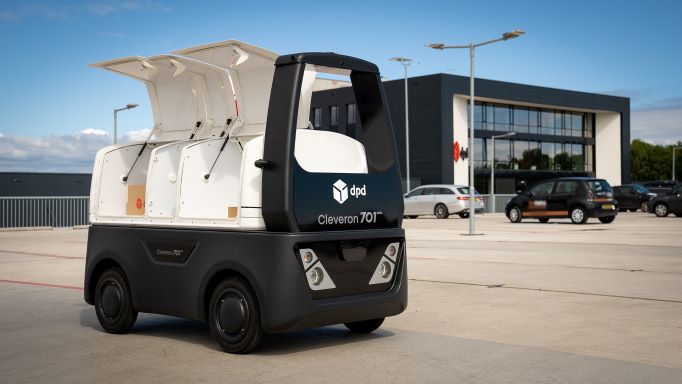
Estonia-based technology company Cleveron‘s unmanned autonomous vehicle took on the city of Eindhoven, the Netherlands, to be part of a 5-day pilot project carried out by DPD Netherlands and Cleveron. This marks the start of bringing autonomous delivery services to the public streets of the Netherlands.

The rapid growth of e-commerce has changed the playing field for companies operating in the retail and logistics sector. Keeping up with consumer trends requires a modern approach; thus, adopting new technologies and clever solutions is essential. Cleveron and its robot courier, Cleveron 701, offers just that.

Cleveron 701 is the first unmanned autonomous delivery vehicle in Europe with a license to operate on public streets. It’s designed as a multi-purpose delivery platform to which the operator can add suitable modifications for serving different delivery needs.

So, how does a robotic courier service differ from a conventional service? For the consumers, the ordering process stays similar to any other service. However, on the operational side, while the delivery process is autonomous, each robot is supervised remotely by a teleoperator. Teleoperators assist autonomous robots in managing tricky situations in traffic, resulting in a safe and steady journey through the city.

As Cleveron’s technology evolves, a ratio of 1:10 will be achieved. This means that just one teleoperator will monitor a fleet of 10 autonomous delivery vehicles. This drastically reduces last-mile delivery costs and resolves the challenges of driver shortages in the logistics industry.

“DPDgroup is an innovation leader in the logistics sector, and we are delighted to have performed an exploratory pilot together with DPD Netherlands, advancing the development of robotic courier services,” explained the CEO of Cleveron, Arno Kütt. “We will continue developing and improving our solutions to make last-mile delivery quicker, more efficient, and sustainable. This will benefit both companies and consumers alike.”

Jorin Aardoom, Manager of Data & Innovation at DPD Netherlands, added: “At DPD Netherlands, we strive every day to do better for our parcel senders and receivers. We are proud to experiment with innovative solutions for a sustainable future in parcel delivery. The pilot of autonomous delivery together with Cleveron showed promising results. DPD Netherlands is excited to explore more innovative solutions supporting a future in green, sustainable delivery and mobility.”

Thus far, the vehicle had been driving on Estonian city streets; this is the vehicle’s first experience driving and delivering parcels abroad. As it turns out, home-field advantage is not a significant factor. The vehicle can drive anywhere successfully and be safeguarded by a teleoperator even from Estonia, some 1,500km away from the Netherlands.

CLICK HERE to watch the video.

TPN equips forklifts with rugged tablets

Technology has always played a huge part in staying competitive in the logistics industry, with mobile solutions forming a critical piece across depots, on-site and for managing vehicles. So, when The Pallet Network (TPN) was looking to replace the vehicle-mount mobile devices used by its forklift drivers at the company’s three UK depots it turned to IT services partner Jade Solutions to find the right replacement solution.

TPN is a leading UK pallet freight delivery network, last year shipping 4.6m pallets via its network of 119 regional transport partners and their 130+ depot locations. Their purpose-built main hub is in Sutton Coldfield and is Europe’s biggest cross dock, capable of unloading 57 trailers simultaneously and handling 20,000 pallets a night with workflows optimised using artificial intelligence. Its additional two regional hubs are in Preston and Northampton.

Continuous improvement

For Robert Haigh, IT Director at TPN, the problem was simple: “We had ageing Windows 7 devices mounted in our forklifts that were no longer supported and getting pretty tired. These devices are critical to our operations and used by the drivers constantly, so it was clear that they needed to be modernised. Our customers choose TPN because of our reliability, efficiency and transparency, which helps us deliver a successful logistics distribution service. Together with taking the opportunity to upgrade the old hardware, we also knew we could make further improvements by moving to the latest Android platform and deploying new software for our forklift operators to use.”

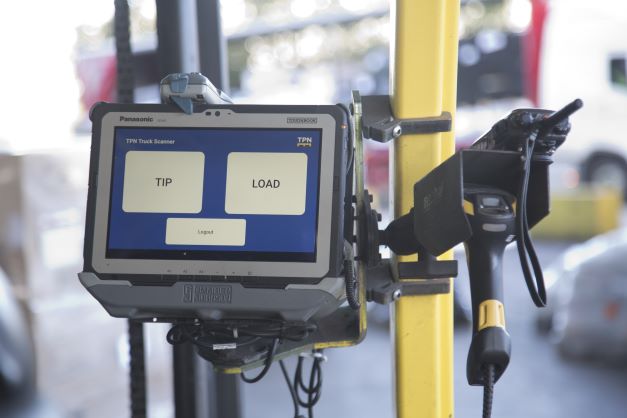
Working with trusted IT services partner Jade Solutions, the company set about evaluating options. It  looked at all the leading industry providers alongside Panasonic TOUGHBOOK and its rugged Android A3 tablet. TPN required 150 new devices, with 130 deployed on forklifts at any one time.

“The Panasonic device immediately stood out as different,” said Haigh. “It was a much more polished and complete package in terms of design and robustness. In our environment, we knew we needed a tough device, but it’s a bit of minefield selecting a product that is rugged, carries the right features and is future proof enough to last us at least five years. Although we were actively involved in the hardware selection process, we really relied on Jade’s team to help us navigate and choose the right solution for our business.”

The critical factors in choosing the new devices were their ruggedness and reliability in the challenging working environment and the ability to run TPN’s in-house developed software application for managing and moving the pallets. In addition, ease of management and long-term support for the devices were other important considerations.

“We knew that Panasonic TOUGHBOOK devices had a reputation for being rugged to a military-grade but operating on our forklifts they needed to be TPN-grade rugged,” joked Haigh. In the past most damage to the old devices had been caused by the buckles on the seatbelts of the forklifts springing back when unclipped and smashing the device screen.

“We tested the Panasonic device by lassoing the device with the belt and there wasn’t a scratch,” explained Haigh. The TOUGHBOOK A3 is designed to help mobile workers combat the toughest tasks. It is water and dust resistant (IP65) and drop tested to 1.5 metres.

Another important factor in the choice of device was the large 10.5-inch screen and bright outdoor readable display, which enables the drivers to see quickly and easily which pallets must be moved next and where.

The third critical element of the offering was Panasonic’s long-term and regular updates and support for the Android operating system through its COMPASS offering and its ProTect Warranty.

Panasonic COMPASS offers everything TPN needs to configure, deploy and manage their new tablets securely. It’s designed to give organisations the confidence to take advantage of the flexibility offered by the Android operating system with the reassurance that Panasonic’s devices are always business-ready for applications, management and security.

TPN also took advantage of Panasonic’s 5-year ProTect Warranty to provide complete peace of mind throughout the lifecycle of the devices. “When you rely on technology as much as we do in our business, you need to know that your hardware is reliable and that when things go wrong it is going to be taken care of immediately,” said Haigh. “That allows us to concentrate on developing our software and continuing to improve the efficiency of service we offer our customers.”

Lastly, TPN chose SOTI to secure, manage and support their mobile operations after seeing the close working relationship between Panasonic and SOTI partners and how intuitively the SOTI ONE Platform worked with Panasonic devices. SOTI Assist makes it easy and efficient for technicians to analyse, troubleshoot and resolve mobile device and app issues from anywhere, at any time. Rolling out regular application updates to the new devices is also much more efficient using SOTI MobiControl.

“Reducing downtime is critical for us,” explained Haigh. “Using SOTI as the deployment tool, we have updated our software four or five times with tweaks and improvements and it’s very simple. As soon as we decide to deploy the update, it is on the devices in minutes.

“In addition, we have never had visibility of our mobile assets in the past. Now we can log on and see exactly what’s happening with each device. It’s easy remote management, visibility and control. For example, we can see if a device battery is running low, or if the device hasn’t been switched on properly.”

Positive feedback

The new forklift devices have been positively received by the drivers. “The feedback has been really positive,” said Haigh. “They immediately noticed how quickly the new devices work and that the connectivity is much better than with the old devices. There are practically no connectivity blackspots any longer, which has really saved us time and increased the productivity of our drivers.

“Importantly, we also didn’t need to spend any time or money to train the drivers to use the devices. It is all very intuitive. They just went to the forklifts and started using the new solution straight away.”

Having a true partnership approach to tackling the problem was equally as important to the TPN team, as Haigh confirmed: “Because the deployment of technology is so important to our business, we can be quite particular about what we want and sometimes even come across as a bit stubborn, but I was impressed with the pragmatism and support offered by Jade and Panasonic from day one. It really felt like a three-way partnership where we were all going to benefit from getting it right.

“We want to work with organisations that are creative with their solutions, deliver on their promises and that go above and beyond to meet our needs. I can say without doubt that Jade Solutions do that.”

Moving forward, TPN plans to extend the use of the devices for additional purposes at the hub, by undocking the devices from the forklifts and using them for supervisor checks, yard management and door control.

“Ultimately, we now have a solution that is ideal for our working environment and that we can rely upon to do the job, allowing us to concentrate on delivering and fast, transparent and competitive service to our customers,” concluded Haigh.

Waitrose expands warehouse with AR Racking

The renowned supermarket chain brand Waitrose & Partners has increased its storage capacity with the extension of its facilities in Magna Park (Milton Keynes, UK) to consolidate its position as a leader in its sector in the British market. To do so, it has relied on AR Racking, a European benchmark in storage systems.

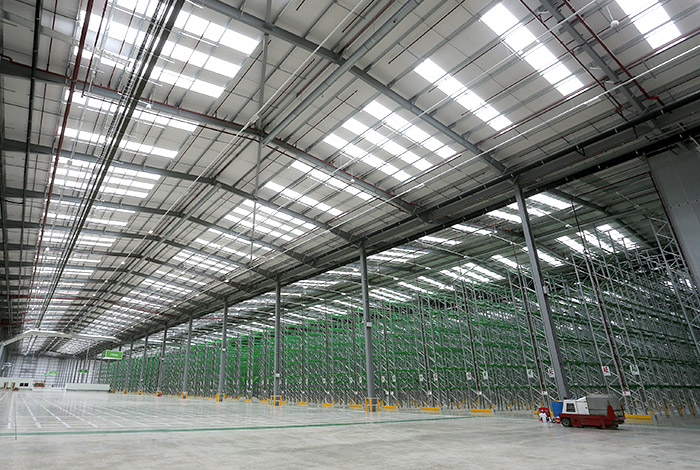
The new extension consists of an intralogistics solution with AR Racking’s adjustable pallet racking that achieved an added storage capacity for 13,604 UK pallets. It is a storage system that will provide the warehouse with great agility in loading and unloading operations, with direct and immediate access to the goods. A solution perfectly adapted to the increase in demand for consumer goods and the demand on delivery times.

Waitrose is owned by the John Lewis Partnership retail group, the largest example of an employee-owned business in the UK with over 80,000 members. “Our aim is for Waitrose to remain the supermarket chain most valued by the British people and to do that we need a logistics infrastructure that allows us to hold more stock of products that can be delivered in less time,” explained Lawrence Ireson, Project Manager of the John Lewis Partnership. “We knew that AR Racking would meet their promises on this strategic extension.”

“This is a project that is tailored to the client’s needs and characteristics,” said Mike Smyth, UK Key Account Manager at AR Racking. “The racks have a paint finish in Waitrose’s corporate green colour.”

“We have strictly adhered to the delivery and installation schedules agreed with Waitrose, whose standards are exacting,” added Jim Albans, AR Racking’s UK Project Manager.

AR Racking, based in Maidenhead, has a well-established presence in the UK thanks to a service tailored to customers’ needs and the ability to deliver large projects to tight deadlines.

New vision brand launched

Industrial automation is based on detecting the presence, position or quality of an object in any part of the production or logistics process.

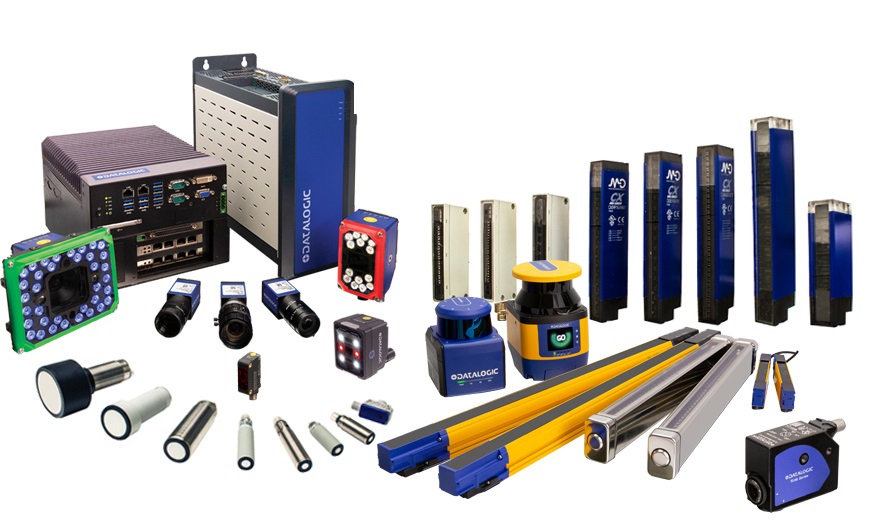
The DATASENSING brand has been launched to innovate in this area and facilitate the transition to industry 4.0. It will combine the Sensor & Safety and Machine Vision Business unit of Datalogic, a world leader in automatic data acquisition, with M.D Micro Detectors, a company operating in the design, production and sale of industrial sensors.

DATASENSING will strengthen its presence in industrial automation through a complete offering of sensors in various technologies, optoelectronic devices for the safety of machines and production plants, automated vehicles guidance and machine vision for Smart Manufacturing.

CEO Cosimo Capuzzello said: “DATASENSING starts from solid foundations and I am sure it will reach important milestones as early as 2021, with an expected turnover of €76m. Thanks to the agreement with Datalogic, we will create an industrial player with a hundred years of experience, merging two realities that have made the history of sensors in our country since the early 1970s: M.D. Micro Detectors with its pioneering product and production process technology, and Datalogic with an innovative product portfolio and a consolidated presence on a global level.”

Research: Customer relationships grow stronger despite challenges

Most Board-level executives believe that customer relationships have grown stronger during the pandemic, despite significant supply chain disruption, according to research* conducted by management consultancy, Vendigital.

54% of the C-Suite executives surveyed at UK-based businesses said that their customer relationships are stronger now than they were before Brexit and the onset of the pandemic, despite the significant disruption that these events have caused. Most believe that this positive change is due to their focus on continuous improvement and their agile response in adapting their operating models to meet unexpected shifts in customer demand and behaviour.

Jeff Kennelly, a director and industrial engineering sector specialist at management consultancy, Vendigital, said: “When consumer and/or customer behaviours changed at the start of the pandemic, businesses had little choice but to stop what they were doing and rethink ways to adjust to meet new areas of demand. Those that responded quickly have been able to strengthen customer relationships as a result.

“Not all businesses were able to do this however, and when supply backlogs accumulated as demand levels bounced back earlier this year, some customer relationships felt the strain. Despite the positive outcome for most businesses, one in five (21%) of C-Suite executives believe their customer relationships have suffered during the pandemic due to the knock-on effect of missed deadlines and demand unpredictability.”

Against a backdrop of rising energy costs and ongoing supply shortages, which are affecting a host of vital components and raw materials, most Board-level executives are aware that the year ahead will test their customer relationships further. 84% of C-Suite executives said managing customer relationships, while keeping a close eye on costs, will be key to the survival of their business in the year ahead. To nurture their customer relationships, 71% of C-Suite executives are intending to invest in customer relationship management and most see this as a long-term investment.

Balancing customers’ needs and cost constraints is going to be more difficult for some businesses than others. The research revealed that businesses that had reported a dip in revenues during the pandemic were more likely to be prioritising cost control, whereas those that reported an increase in revenues were more likely to be focused on investing in innovation to meet customers’ current and future demands.

Kennelly said: “During times of uncertainty, businesses know how important it is to stay close to their customers and suppliers. This will involve staying agile and continuing to innovate to meet customers’ demands, but managing costs remains a critical part of this process.

“Balancing customer demands and cost constraints will be easier to achieve if there are strong relationships in place, allowing accurate availability and demand data to be shared openly across the supply chain. Accurate real-time customer data is now a Boardroom essential.”

To support businesses in balancing customer needs and costs on the road to recovery, Vendigital has produced guidance for Board-level decision makers, which has been published in a report, entitled Redefining Customer Relationships in a Changing Market. The guidance covers 15 critical questions designed to help businesses review each stage of their operating model through a customer-focused lens.

CLICK HERE to download a copy of Vendigital’s report about redefining customer relationships.

* Vendigital’s research has been conducted with 151 C-Suite executives at UK-based businesses. 


Briggs enhances safety at Port of Liverpool

As part of the ongoing partnership between Briggs Equipment and Peel Ports Group (PPG), a new JCB machine equipped with innovative safety technology and telemetry has recently been delivered to the Port of Liverpool. The new truck is having an immediate impact with positive feedback from operators and management teams alike.

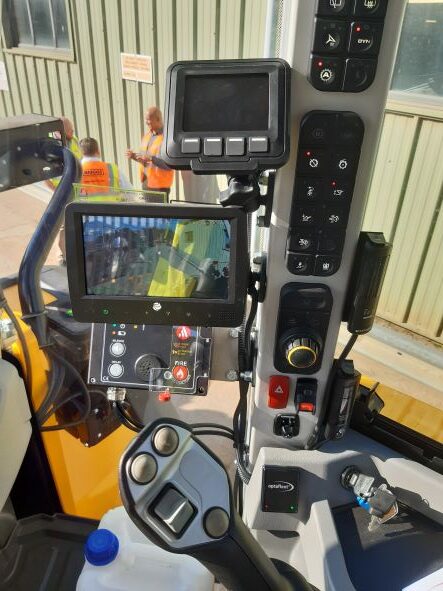
The machine has been fitted with a unique telemetry system, developed in conjunction with FTC, including an artificial intelligence-powered reversing camera that intuitively picks up whether a person is in the vicinity and alerts the driver in real-time.

Peel is also trialling a real-time, secure cloud portal that provides operational and safety data that can be viewed and interpreted much quicker and with greater accuracy. To highlight the effectiveness of the partnership between the two companies, and the joint focus on safety, Peel were benchmarked as the number one port in the UK for safety, as judged by Port Skills and Safety. They also recorded the lowest rate of significant injuries measured by lost time incidents (LTIs) in 2020/21.

Tony Worrall, Briggs Equipment’s National Account Manager, said: “The new JCB truck will help deliver real benefits to Peel’s efficiency, productivity and of course on-site safety. This investment in cutting edge technology and telemetry underlines Peel’s business wide safety focus and a clear ambition to remain at the forefront of the industry. It also demonstrates the strength of our Contract Management support.

“We’ve worked closely with our partners at FTC to deliver a telemetry solution that meets the demands of a modern work environment. The system is fully integrated with cloud-based technology and artificial intelligence to help provide real time data and instant safety alerts.

“We have an extremely strong partnership with Peel Ports and they remain committed to implementing a safety first culture across their business with our expert assistance and guidance.”

Phil Hall, Port Director – Mersey Division at Peel Ports, said: “We are delighted to be working with Briggs, a key strategic partner. This supports Peel Ports objective to stay at the forefront of innovation and our joined up approach contributes to delivering industry leading safety management systems.”

DHL makes senior management changes

DHL Supply Chain has made significant changes to its senior leadership team as part of its future growth strategy. Current Chief Executive Officer DHL Supply Chain UK & Ireland, José F. Nava, moves to a new global role as Head of Next Generation Services program, DHL Supply Chain. Saul Resnick, currently Chief Executive Officer DHL Supply Chain Australia & New Zealand, replaces him as CEO, DHL Supply Chain, UK & Ireland.

The changes will be effective from 1st January 2022, with both reporting directly to Oscar de Bok, CEO, DHL Supply Chain and member of the global DHL Supply Chain Board.

Nava was appointed CEO, DHL Supply Chain UK&I in 2018 and in this time has been responsible for refocusing the business, strengthening core operations and achieving considerable productivity and profit growth. In his new role, Nava will take on responsibility for seeking out future growth opportunities and helping define the business strategy beyond 2025.

His successor, Resnick, joined DHL Supply Chain in 2005 as Director, Healthcare Australia. In 2016 he stepped into his current role as CEO Australia & New Zealand and also assumed responsibility for the Life Sciences & Healthcare business within the APAC region.

In this role, Resnick was responsible for the impressive growth of both revenue and profitability for the Australian and New Zealand businesses for the past 5+ years.

Nava said: “Over the past three-and-a-half years we have accelerated our investment on a number of fronts to consolidate our leadership position in the UK&I. These include cutting edge warehousing and fleet that lead the way in sustainability and technology, to the latest warehouse and transportation management systems.

“I’ve also learned a lot from our customers and built some great relationships; but what I’m most proud of is our expert team of colleagues who are all committed to go the extra mile for our customers while keeping each other safe day in and day out.  It’s been an amazing experience that will stay with me forever, with many great memories.”

Commenting on his appointment, Resnick added: “I’m excited to be taking on the role of CEO UK&I and building on the excellent platform created by José and his team. I look forward to the UK&I business growing its market share, and creating even more opportunities for our colleagues to develop into. We have a fantastic reputation, not just globally, but within the UK&I, and I consider it a great honour to lead our business at this time. I would like to thank José for all the effort he has put into the role, and for placing us in the strong position we find ourselves in today.”

UK shoppers unmoved by Black Friday

A poll* by intralogistics innovator Dematic has found that while many people are planning early Christmas purchases in response to warnings of supply chain delays, 3 out of 4 (76%) online shoppers are not planning to take advantage of this year’s ‘Black Friday’ event.

Despite being billed as one of the biggest shopping dates in the diary, the majority of UK and Irish consumers say they will not be tempted by the promise of ‘unbeatable deals’ on November 26. This is likely the result of a difficult year as many people have been forced to count the cost of living through the COVID-19 pandemic.

Concerns raised by shoppers who responded to the poll included money troubles, the validity of the bargains when compared to historical pricing, and the excessive consumerism represented by the event.

However, the poll revealed that there are still bargain hunters to be found in the run-up to the festive season which will be a relief to retailers. More than one in six respondents (16%) admitted that they were planning to shop online during Black Friday and spend even more than last year.  A further 7% said they would be taking part but would be taking a more cautious approach by spending less than 2020.

Steffen Thierfelder, Managing Director of Northern Europe, Dematic, commented: “It is clear from the survey that people are more wary about spending during the Black Friday event this year. This may be in response to the tough year that many have experienced in the wake of the pandemic.

“However, Black Friday will still place enormous demands on retailers to service those consumers who are planning to shop for a bargain. This is yet another time of the year when demand can surge, so retailers should be thinking about integrating innovative automated logistics solutions. This will ensure that orders get to where they are needed as fast as possible.”

Dematic designs, builds and implements automated system solutions for warehouses, distribution centres, and production facilities.  As part of its intralogistics solution, Dematic uses an industrial engineering approach to deliver process improvements, material flow automation and performance optimising software.

  • * The poll was conducted on Twitter between November 5 and 11, 2021, in the United Kingdom and Ireland and attracted 10,279 respondents.

Subscribe

Get notified about New Episodes of our Podcast, New Magazine Issues and stay updated with our Weekly Newsletter.