Council Boosts Fleet Efficiency with New Tyres

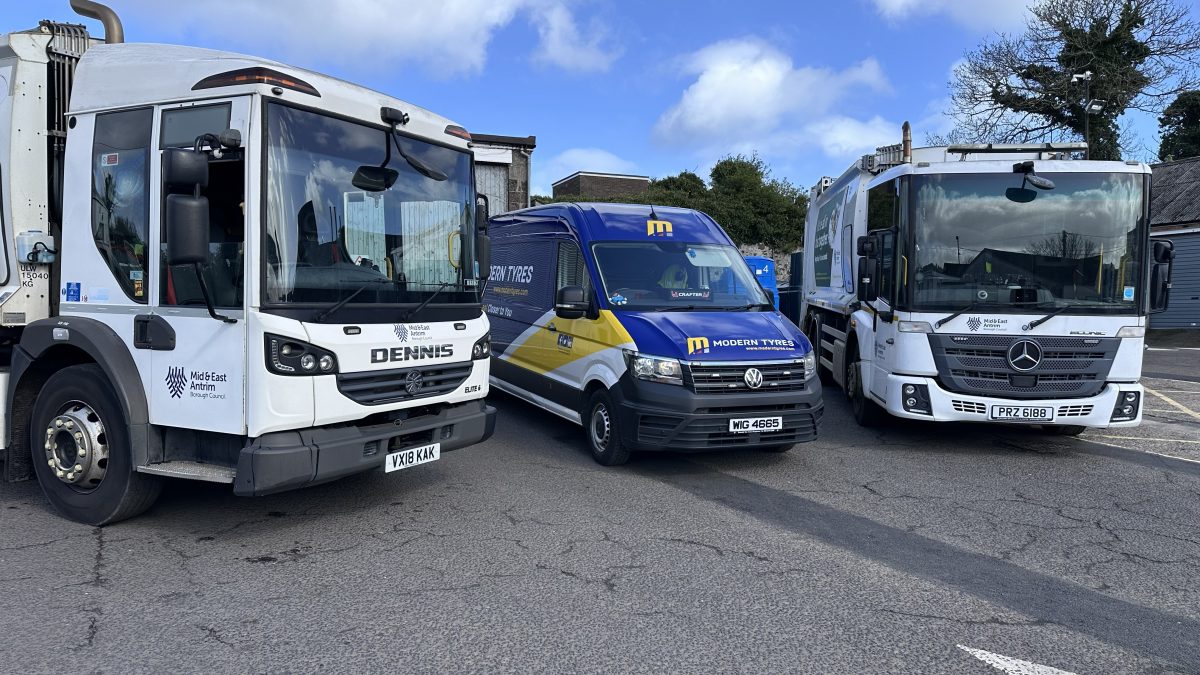
Northern Ireland’s Mid and East Antrim Borough Council has significantly improved the efficiency of its 160-strong vehicle fleet, cutting CO² emissions by 27.7 tonnes over three years, thanks to its switch to Michelin tyres.

Since 2021, the council has equipped its vans and trucks exclusively with Michelin tyres, after previously using a mix of brands, and continues to work with the company through the UK Government’s CCS framework.

A council spokesperson said: “I think it’s the best thing we’ve ever done. Opting for Michelin tyres through the CCS guaranteed that we were engaging with a quality provider from the start. We’re now more than four years into our relationship, and by adopting a multi-life Michelin tyre policy for our HGVs, and the general improvement seen in the longevity of the tyres across our fleet, we’ve demonstrated strong lifecycle value, boosted efficiency and delivered sustainability savings.”

The council’s fleet includes 100 vans providing services from dog wardens to medical and welfare checks, as well as parks maintenance, and 60 HGVs, including 32-tonne hook loaders and 26-tonne refuse collection vehicles. The fleet operates 24/7 in all weather, with performance, safety, and compliance key priorities.

By adopting a multi-life policy for its truck tyres, the council regrooves them once tread depth reaches 3–4mm and retreads them at the Michelin factory in Stoke-on-Trent, extending the life of each casing. Between 2023 and 2025, this approach diverted 10.2 tonnes of waste from landfill, reduced raw material use by 13.2 tonnes, and cut CO² emissions by 27.7 tonnes.

The spokesperson added: “While premium tyres cost more upfront, there was a powerful value for money argument with retreads and significant qualitative benefits too. Our use of Michelin tyres has resulted in a reduction of the number of punctures we experience across the fleet each year. Fewer punctures mean less downtime and helps us deliver a timelier service. It also means our drivers are happier because their vehicles aren’t off the road.”

The council also uses Michelin Connected Fleet services to monitor fuel use, track harsh braking for driver coaching, enhance safety, and achieve further CO² reductions, while day-to-day tyre servicing is handled locally by Modern Tyres in Ballyclare.

The CCS framework provides local authorities with a transparent, trusted route to quality suppliers like Michelin, helping councils deliver better services, reduce costs, and meet sustainability goals.


Industry Pushes Toward Zero-Emission Logistics

Saint-Gobain is accelerating the decarbonisation of its UK transport operations with the introduction of six new Volvo FM Electric heavy goods vehicles, deployed in partnership with XPO Logistics as part of the UK Government’s Zero Emission HGV & Infrastructure Demonstrator (ZEHID) programme.

The move marks a significant milestone in large-scale zero-emission construction logistics, with the fleet expected to remove almost 800,000kg of CO₂e annually, according to XPO Logistics’ proprietary emissions intelligence platform. Over the five-year ZEHID trial period, the deployment is projected to eliminate more than 3,530 tonnes of CO₂e, equivalent to the emissions produced by 2,353 UK households.

The six-vehicle electric fleet-comprising five tractor units and one rigid truck will enter service between April and June 2026, supporting customer deliveries across the Midlands from Saint-Gobain’s logistics hub at Gotham, Nottinghamshire.

Dedicated supercharging hub at Gotham

To support the rollout, Saint-Gobain and XPO Logistics have partnered with GRIDSERVE to install a back-to-base supercharging solution at the Gotham logistics hub.

The dedicated infrastructure includes six high-capacity charging points, capable of recharging each vehicle to 80% in 90 minutes, with a full charge achievable in under two hours. The charging facility will underpin daily delivery flows serving both British Gypsum East Leake and the Saint-Gobain Midlands distribution centre.

Operationally, the programme is targeting two delivery cycles per vehicle per day, enabling the fleet to complete more than 12,000 customer deliveries over the five-year trial.

Real-world zero-emission logistics at scale

The electric HGV initiative has been in development for more than 18 months, with Saint-Gobain and XPO Logistics collaborating closely to create a real-world testbed for scalable zero-tailpipe-emission freight operations.

The project forms part of the Government-backed ZEHID scheme, launched in 2023 with £200 million in funding to accelerate zero-emission HGV adoption and supporting infrastructure across the UK.

With HGVs accounting for around 20% of UK domestic transport emissions, the trial is seen as an important blueprint for the wider heavy freight sector.

Dean O’Sullivan, CEO of Saint-Gobain UK & Ireland, said the deployment represents another practical step in the company’s wider net-zero roadmap.

Trialling six zero-exhaust emission HGVs across the Midlands is another step forward for us. The extended operational trials of the all-electric vehicles are part of our wider journey to reduce the impact of our business and ultimately meet our goal to be a net-zero carbon business.

He added that the business will use the trial to gather direct operational feedback from both customers and drivers to assess how electric HGVs can be integrated into the company’s long-term logistics model at scale.

Volvo deepens zero-emission fleet partnership

The six vehicles will be supplied by Volvo Trucks, extending the OEM’s long-term strategic partnership with XPO Logistics.

Abdi Ali, National Key Account Manager at Volvo Trucks UK & Ireland, said the order demonstrates growing market confidence in battery-electric heavy truck technology for demanding logistics operations.

The addition of the six new Volvo FM Electric trucks marks another step forward and demonstrates XPO Logistics’ confidence in the technology.

Dan Myers, Senior Vice President, Supply Chain – Europe, XPO Logistics, described the rollout as a major step in the shared sustainability ambitions of both businesses.

This is the latest effort in our joint goal of doing business in a responsible way, working towards our shared target of reducing our emissions to zero with Saint-Gobain.

Wider European decarbonisation strategy

The UK deployment sits within a broader European decarbonisation partnership between Saint-Gobain and XPO Logistics, spanning France, Spain, Portugal, Morocco and other markets across Central and Southern Europe and Africa.

The two companies collaborate on end-to-end logistics for a broad portfolio of construction materials, including glass, insulation, construction chemicals, fibres, ceramics and refractory products.

In France, the partnership is already delivering measurable carbon savings, with XPO’s decarbonisation solutions helping Saint-Gobain avoid 1,900 tonnes of CO₂ by 2025, based on ADEME-standard calculations comparing diesel with HVO fuel use.

The next phase of that programme will see the first electric truck join Saint-Gobain Building Glass operations at its Gennevilliers site.

Report Reveals UK Fleet Compliance Gap

Growing compliance demands, rising reporting costs and tighter sustainability regulations are placing increasing pressure on UK fleet operators, according to new industry benchmark research released this week by Jaama, the fleet management software specialist.

Based on an industry-wide survey, the report examines compliance maturity, operational resilience and cost efficiency, revealing a sector under growing strain as fleets respond to tighter sustainability rules, increased safety obligations and rising reporting costs.

The findings suggest that compliance is rapidly evolving from a regulatory requirement into a core commercial strategy, with operators increasingly turning to automation and system integration to protect margins and improve resilience.

Among the report’s key findings, 48% of fleets plan further investment in driver risk management and behavioural training over the next 12 months, focusing on coaching programmes, incident reviews and licence checking. A further 48% aim to strengthen system integration strategies, with compliance software and reporting platforms identified as priority areas.

Sustainability also remains high on the agenda, with 38% of respondents expecting major improvements in emissions and sustainability compliance during the next year.

However, the report also uncovers a significant operational weakness: only 34% of fleets currently use automated alerts for incorrect or missing data, leaving nearly two-thirds still dependent on manual checks and oversight.

This is despite 72% of fleets already integrating fuel card data with HR and driver records, suggesting that many businesses have yet to unlock the full value of their connected systems.

According to Jaama, this gap is creating a hidden financial burden across the sector. Fleets relying on manual intervention are not only increasing their exposure to compliance failures, but are also absorbing unnecessary administrative costs.

The research points to a widening divide between operators that see compliance as a strategic performance lever and those that continue to treat it purely as a regulatory obligation. Businesses that have invested in automation and integrated compliance systems are reporting stronger cost control and greater operational resilience.

To help fleet operators benchmark their own performance, Jaama has also launched a digital Fleet Compliance Scorecard – a 10-question self-assessment tool designed to measure compliance maturity and generate tailored improvement recommendations.

Commenting on the findings, Richard Evans, Sales Director at Jaama, said:

Compliance is no longer a nice-to-have, it’s a commercial strategy. Our research clearly shows that fleets investing in automation, integration and proactive risk management are gaining a measurable advantage in cost control and resilience… As regulatory pressure intensifies and margins tighten, operators that continue to rely on manual processes risk falling behind. The opportunity for 2026 and beyond is to treat compliance as a performance driver, not just an obligation.

The Fleet Compliance and Cost Benchmark Report 2026 is now available for download, enabling UK fleet operators to benchmark their compliance performance against the wider market.

Commercial Vehicle Driver Communication

A communication tool called ‘Connect Driver Link’ has been launched by German software supplier Soloplan. With this tool, dispatchers can easily exchange digital information with drivers – even if the drivers work for subcontractors. The new development is part of the current version 3.06 of the transport management system (TMS) CarLo.

The organisation of transports is the core competency and one of the central fields of action of forwarders and logisticians. The planning and execution processes are often not clear and transparent enough as every company and every subcontractor uses different communication channels. But different contact persons and scattered information complicate the process and may cause delays.

Direct communication with drivers

With that in mind, Soloplan has implemented a new communication feature in the latest version 3.06 of the TMS CarLo. With Connect Driver Link, dispatchers have the possibility to communicate directly with drivers or others involved in the order. Connect Driver Link serves as a link between the order overview and the in-house chat tool Connect.

So far, Connect is mainly used as an integrated messenger service between dispatchers who work with CarLo. A direct communication with drivers was only possible via the telematics app inTOUCH or similar telematics systems or chat services.

The new Connect Driver Link simplifies and consolidates the contact process by collecting tour-related data and providing it via a one-time link. This type of link creation is called tunnel link. It is used to send tour data to the receiver in a secure way, just as in a tunnel tube. It is thus an uninterrupted and interface-free link.

Gap closer between planning and driver

A Connect Driver Link can be created very easily: The dispatcher selects the relevant order in CarLo and, with a single click, creates a Driver Link which is then sent to the driver or subcontractor. The receiver can open the link with any internet-capable device – without needing a Connect account, registration or app. The link directly opens in the Web browser and opens a Connect chat with the dispatcher.

To protect personal data, anonymous use is possible. The transmitted tour data is displayed as a message in the chat. The driver thus receives a compressed version of the order including times, location information and other relevant data. Additionally, you can send status queries that the receiver can answer with one click on previously programmable buttons.

This transmission in both directions is called bidirectional communication. Using the text entry, the receiver can send questions or general messages. A special highlight is the automatic translation of texts. Depending on the language that has been set, messages are correspondingly translated automatically. Misunderstandings can be reduced and manual transfer to the translation tools is not necessary. This allows for a fast and efficient exchange of knowledge.

High-performance Flat Belts

In today’s fast-moving logistics environment, every minute of downtime costs money. Ammeraal Beltech’s RAPPLON® flat belts are engineered to keep your operations running at peak efficiency — from receiving and order picking to sortation, consolidation, and storage.

Maximum uptime with roller drive belts

The RAPPLON® roller drive belts are designed for reliability across both heavy and light-duty applications. The heavy duty roller drive belts are made with a strong aramid tensile member that combines exceptional flexibility with dimensional stability, making them well suited to handling heavy loads. Their unique construction keeps the belt lying flat and adds rigidity along the tensile member, while the high flexibility of the material contributes to low energy consumption. The belts are also universally compatible with major heavy-duty live roller OEM equipment, simplifying integration into existing systems. For lighter applications, the light roller drive belts feature fabric tensile members and a polyurethane cover, available in standard thicknesses. These belts are impervious to moisture and offer excellent dimensional stability, ensuring consistent performance and a long service life.

Elastic belts for segmented conveyors and robots

The RAPPLON® elastic belts deliver reliable, low-maintenance performance across a wide range of intralogistics and robotics applications. They are the ideal solution for slider bed applications or segmented belt-over-roller conveyors. The new elastic segmented belts can run bi-directionally and are highly energy efficient, making them particularly well suited to AGV robot load-carriers and next-generation logistics robots operating in advanced fulfilment centres or warehouses.

Manufactured entirely from extruded polyurethane with no fabric reinforcement, these belts eliminate the risk of edge fraying and are easy to clean. The high-elastic polyurethane construction also reduces load on shafts and bearings and simplifies tracking. High-grip top surface options and anti-static coatings are available to meet specific application requirements.

Quick installation and global support

Both product lines are compatible with the QuickSplice joining method, allowing simple and reliable belt installation in under 15 minutes. For customized solutions or expert advice, Ammeraal Beltech operates a global service network with more than 150 contact points worldwide.

Ready for an Electric Vehicle Revolution?

Earlier this month the British Government announced a £1 billion investment to help businesses make the switch to electric vans and trucks, in an attempt to combat the effects of fuel price uncertainty amidst ongoing turbulence in the Middle East. Eddie Richards, Partner, and Sadie Pitman (pictured below), Associate, both in the Real Estate team of international law firm Charles Russell Speechlys discuss.

During its General Election campaign Labour promised to make Britain a clean energy superpower and, since coming into power, it has enacted the Great British Energy Act 2025 to establish a publicly owned clean power company. The Government has therefore long been aware of the need for Britain to become independent from other nations and to accelerate investment in renewable energy technologies – but whether we are now ready to encourage reliance on electric vehicles (EVs, including commercial vehicles in logistics such as eHGVs and electric vans, is another question entirely.

Quite simply, the UK does not currently have the right infrastructure to meet an increased demand for EVs, commercial or personal. For every 24 EVs registered last year, only one public charging device was added. (China has more than one charger for every 10 EVs).

This is not a new issue. The previous Conservative Government set itself a target for every motorway service station to have a minimum of six rapid chargers (with rapid chargers adding up to a 100 miles of range for an electric vehicle), however by the end of 2023 less than half of all stations had the required number – no doubt contributing to the Government pushing back its target date for phasing out petrol cars by 2030. The Labour Government seems keenly aware of the issue – reinstating the 2030 phase-out target (albeit allowing hybrid vehicles until 2035). There is no shortage of EV charging companies with substantial capital investment behind them looking to expand into a potentially lucrative market but the lack of infrastructure and the hurdles in installing the same make it difficult to create scale. The proposed reforms to the National Planning Policy Framework that would include a new requirement for local development plans to identify areas suitable for electricity network infrastructure could go some way to solving this issue.

Industrial road users therefore face a dilemma – do they invest in EVs now or ride out the storm until UK infrastructure is where it needs to be? Marks and Spencer set itself a Net Zero target of 2040 and is therefore continuing to invest in its fleet of EVs yet many automakers are scaling back their EV production due to a lack of uptake – with less than a quarter of UK road users expecting their next car to be electric. But who can blame them when even in London (where there is one of the highest concentrations of electric chargers in the UK) users now face the added cost of a congestion charge? The conflict in the Middle East and the resulting rising fuel prices have created a surge of interest in EV vehicles but these spikes are often followed by dramatic falls when the market stabilises and so it’s unlikely to be enough for automakers to perform another U turn and start ramping their EV production back up.

Some companies are turning to biofuel as a low-carbon alternative – the Royal Mail used 27 million litres of hydrotreated vegetable oil between 2024 and 2025. Again, there is difficulty with scale. Hydrogen was at one point being touted as a credible alternative fuel for vehicles (as well as the more obvious uses in industry) but a lack of funding and mature market has led to a number of high profile schemes being withdrawn or mothballed recently in the UK with other European countries attracting significant investment instead. The Government’s reluctance to back these schemes together with their substantial investment in EV from the government suggests that they are all in on the electric horse.

The Government needs to find the correct balance of incentives and policy to drive up usage and facilitate EV reliance. Elsewhere in Europe, charge point operators can claim credits for the clean energy it sells – perhaps one measure the UK Government will consider introducing. Indeed, some of its European neighbours are leading the field – Norway has the highest per-capita number of EVs, which has evolved through a mixture of consumer incentives (low taxes, free parking, use of bus lanes etc), consistent Government policies and an impressive charging network. The UK has some way to go.

WEBINAR: What Does Physical AI Mean for Logistics

The Physical AI Revolution in the Warehouse: Why Now is the Time to Invest Robotic Automation

Warehouse automation is rapidly changing due to the fusion of advanced robotics and AI. Once seen as rigid, robotic systems are becoming increasingly flexible. Driven first by decades of improvements in robot hardware, sensing, and industrial cameras, the most recent breakthroughs come from the surge in sophisticated AI models, and raw processing power.

The state of physical AI in logistics has been radically transformed in the last 18 months, and systems that worked only semi-reliably two years ago are now boasting extremely high uptime. AI powered robots can now handle ever-changing SKUs, mixed totes, and messy environments, learning new items autonomously. Major investments by leaders like Zalando and ASOS indicate that advanced physical AI will soon be the industry norm.

Typical blockers to emerging technology such as ‘fear of obsolescence’ are now less relevant. Robotic hardware and vision systems are mature and robust, and the AI brains that give robots intelligence get more capable every day, receiving updates remotely based on global learning. In other words, companies investing today will benefit from the AI brainpower of tomorrow. After much hype, deployment of robotic warehouse automation is now less risky than ever.

Artificial Intelligence is rapidly reshaping logistics, but beyond software and analytics, a new wave of Physical AI is bringing intelligence directly into the warehouse. From autonomous robots to AI-driven manipulation and decision-making, logistics operations are entering a new era of automation.

In this webinar, join our expert guest from Nomagic to explore what Physical AI really means for logistics and how it’s transforming warehouse operations today. We’ll break down how advances in robotics, perception, and machine learning are enabling systems that can see, pick, sort, and adapt in real-world environments, helping fulfilment centres increase efficiency, reduce costs, and address labour challenges.

You’ll learn:

  • What Physical AI is and how it differs from traditional automation
  • How AI-powered robotics are changing warehouse picking and fulfilment
  • The practical challenges of deploying intelligent robots in logistics environments
  • Real-world use cases and lessons from operational deployments
  • What the future of AI-driven logistics could look like

Whether you’re exploring warehouse automation, scaling e-commerce fulfilment, or simply curious about the next frontier of AI in supply chains, this session will provide practical insights into how Physical AI is moving from concept to reality.

Who should attend:

Supply chain leaders, warehouse and fulfilment operators, logistics innovators, automation specialists, and anyone interested in the future of AI-powered operations.

8 Ways Fleet Operators Can Boost Performance

For businesses running delivery fleets, especially those managing multi-drop routes, route optimisation software is a necessity. Even for companies managing to get by with their current processes, with the rising pressures of fuel prices, amid global conflicts overseas, ongoing driver shortages and sustainability commitments, even the slightest change to the last-mile ecosystem can have a huge knock-on effect on a business’s bottom line. Therefore, it’s more important than ever to offset these challenges before they even occur by improving fleet efficiency.

Businesses that constantly aspire to improve route efficiency, increase delivery capacity and provide reliable service are better positioned to control costs more effectively while maintaining customer satisfaction. For this reason, organisations are increasingly turning to transport optimisation technology. Andrew Tavener (pictured, below), Head of Fleet Marketing EMEA, Descartes, explains how and where transport optimisation software can help businesses improve fleet performance.

1. Cost Savings from Smarter Planning
With roads in the UK currently blighted by potholes, increasing vehicle wear and maintenance costs for fleet operators, transport efficiency has become even more critical. Add in fuel and labour costs, and things can start adding up very quickly. Fleet optimisation software can be the solution to this problem by helping plan routes that reduce miles driven, increase delivery density and require less time per delivery. Not only this, but this technology can also aid drivers in adhering to promised time windows and comply with drivers’ hours regulations.

    The result is that businesses can reduce costs by cutting fuel spend, overtime, and maybe even the fleet size needed. Some strategic route planning systems even allow you to run “what-if” planning scenarios to explore how changing delivery time windows or fleet composition can impact costs, a valuable tool when you’re under pressure to do more with less.

    2. Removing Guesswork
    Last-mile delivery is arguably one of the most important parts of the supply chain, especially for a customer. It’s also one of the most expensive for many operators, so there’s no room for guesswork. This means managers need to know if routes are being executed in line with the optimised plan. To do this, it’s essential to have optimisation technology that integrates with GPS and telematics solutions to offer real-time tracking and status updates. This way, managers are constantly in the loop. They know where a vehicle is, what it’s carrying and if it’s on schedule. This oversight empowers transport managers to respond to issues like delays or missed deliveries as they happen, not after the fact when they become a potential problem.

    3. Greener Routes, Lower Emissions
    Route optimisation is also a critical sustainability tool. It allows businesses to reduce mileage, decrease vehicle idle time and reduce failed first-time deliveries. Some solutions even include carbon calculators and sustainability dashboards, allowing businesses to track their environmental impact. In 2026, many customers are now on the lookout for environmentally friendly delivery options and, by offering sustainable options, a business may stand out from the competition. Businesses can even incentivise customers with lower-priced deliveries if they choose “green” delivery windows at checkout.

    4. AI and Predictive Analytics
    AI is now also playing a pivotal role in route optimisation. In this instance, it is helping businesses learn from operational data over time. For example, it assesses how long a drop usually takes at specific locations. Using AI and actual route execution data, businesses can produce more accurate routing plans than ever before. These capabilities also enable forecasting and exception handling. This means that if a certain area is prone to congestion on Friday afternoons, for example, the system can proactively reroute or adjust schedules to avoid delays.

    5. Intelligent Depot Selection
    An underrated benefit of route optimisation technology is that it can help businesses select the best depot to dispatch deliveries from. An average system may factor in capacity, proximity and delivery demand. A great system helps a business decide where the journey should start by factoring in customer returns and collections or second visits to different depots. This is invaluable for businesses operating regional hubs or facing tight service level agreements (SLAs).

    6. Seamless Integration with Existing Systems
    It’s important to remember that a good transport optimisation tool doesn’t work in isolation. It also must connect with your transport management system (TMS), enterprise resource planning (ERP) platform, warehouse management system (WMS), and/or driver mobile apps. The reason for this is to ensure fleet data flows smoothly throughout your operations. It also ensures minimal rekeying and an accurate view of fleet operations from planning to proof of delivery and even customer satisfaction surveys. The more connected your tech stack, the easier it is to scale, automate, and adapt to evolving future needs.

    7. Increasing Operational Resilience
    Change in logistics is constant today; however, effective fleet optimisation software allows a business to stress test its operation by simulating different conditions and evaluating how its fleet performs. This kind of resilience planning helps a business be much more proactive in the face of challenges instead of reactive.

    8. Happier Drivers and Customers
    When a solid plan is in place, drivers have a better experience behind the wheel. This means that route optimisation software can help alleviate driver stress, even at the busiest times of the year. This enables better driver retention for a business, which is a big internal benefit while, externally, customers also get the benefit of tighter delivery windows, better estimated time of arrival (ETA) accuracy, and more transparency.

    With delivery networks more complex than ever before and customer expectations on the rise, proven and effective route optimisation technology is now crucial for any business looking to stay ahead of the curve. Not only can this technology enable better planning and execution, but it also enhances visibility. Ultimately, this gives businesses better control of fleet costs and the ability to meet sustainability targets while maintaining, if not improving, the quality of service. With more uncertainty ahead in 2026, this technology is no longer a nice-to-have; it’s a strategic priority.

    Full Occupancy at Alligator Park

    Logicor has signed a new lease agreement with one of Hungary’s leading IT distribution companies for 5,580 sqm of warehouse space at Logicor Alligator Budaörs, bringing the property to 100% occupancy. Acquired by Logicor in December, 2025, the latest lease signed in quick succession demonstrates the strength of demand in the Budaörs area.

    CHS, a nationwide IT distribution company headquartered in Budaörs, selected the facility to support its growing operations and expanding inventory. The proximity of Logicor Alligator to the company’s headquarters made the location particularly attractive, allowing it to increase its storage capacity while maintaining efficient logistics operations close to its main office.

    The logistics park comprises approximately 28,000 sqm of warehouse and office space and is located within the M0 Budapest ring road, around 12 kilometres from Budapest city centre. The property benefits from excellent connectivity, with immediate access to the M1 motorway towards Western Europe, the M7 motorway towards the Croatian border, and the M0 ring road, making it ideally suited for both national and international distribution.

    Domonkos Joó, Senior Director and Head of Hungary & Austria at Logicor, said:

    “This transaction highlights the continued strong demand for well-located logistics space in the western Budapest submarket, despite a more competitive market environment, particularly amongst those focussed on efficient distribution operations. The fact that Logicor Alligator Park has reached full occupancy shortly the acquisition demonstrates both the attractiveness of the location and our customer-centric approach.”

    The deal also reflects the evolving role of Budaörs, which has gradually transformed from a traditional industrial area into a mixed-use commercial and logistics hub as the city has expanded around it. Today, the area remains one of the most competitive logistics locations in Hungary due to its proximity to Budapest and its direct access to the country’s key motorway network.

    Logicor has been active in Hungary for nearly a decade, managing a major part of its domestic portfolio in and around Budaörs. The company operates 172,000 sqm of space across eight parks located along Budapest’s main transport corridors, providing flexible and well connected facilities for domestic and regional distribution.

    Hydrogen Fuel Cell Powered Warehouse Trucks

    Hydrogen fuel cell developer Intelligent Energy is supporting the ‘Lighter than Aire’ (LtA) Hydrogen Valley project by powering a fleet of up to 40 warehousing trucks across two major logistics hubs in Yorkshire and Humber.

    Backed by the EU through the Clean Hydrogen Partnership, the €20 million LtA project aims to accelerate large-scale hydrogen adoption across logistics, industry and mobility. Centred around the River Aire between Bradford and Leeds and positioned along a key transport route connecting Liverpool and Hull, the project focuses on real world deployment in one of the UK’s busiest logistics corridors.

    As a programme partner, Intelligent Energy – working alongside Briggs Equipment UK Ltd, a UK distributor for Hyster-Yale Materials Handling – will deploy fuel cell powered forklift trucks equipped with its IE LIFT™ battery box replacement (BBR) units. The trucks will enter operation from June 2028 and will support warehousing across two major logistics hubs in the valley.

    IE-LIFT is a drop-in replacement for traditional industrial battery tanks, integrating a fuel cell, buffer battery and hydrogen storage into a single compact unit. Refuelling takes around three minutes, eliminating long charging cycles while retaining the quiet, zero-emission operation of electric drive. IE’s systems are already in commercial use in demanding environments, including BMW’s manufacturing sites in Germany.

    Each IE-LIFT system offers more than 30,000 hours of service life and integrates seamlessly into a wide range of standard forklift classes without compromising payload capacity or manoeuvrability. David Fields, Head of Product Line, IE-POWER at Intelligent Energy, said:

    “The US market has set the pace in hydrogen intralogistics, with fuel cell-powered forklift trucks operating at Walmart, Amazon and other major organisations over the past decade. Our fuel cells are proven to be robust, durable and efficient, following a successful deployment at BMW’s Leipzig plant since 2023. This project gives us the opportunity to deploy our IE-LIFT technology on home soil, and to demonstrate its value to operators across Europe.”

    The LtA Hydrogen Valley aims to remove barriers to hydrogen adoption by linking production, distribution and end use within a single regional ecosystem. In addition to material handling, the project will support the rollout of more than 150 hydrogen passenger transport vehicles, with the aim of achieving near- diesel operating cost parity through centralised supply.

    By embedding hydrogen-powered equipment within active logistics sites, the project will demonstrate hydrogen’s potential to cut emissions while improving operational efficiency. For Intelligent Energy, the deployment marks a step towards wider adoption of hydrogen fuel cells in UK warehousing and intralogistics – sectors where fast refuelling, predictable duty cycles and high utilisation make hydrogen a strong operational fit.

    Subscribe

    Get notified about New Episodes of our Podcast, New Magazine Issues and stay updated with our Weekly Newsletter.