Logistics Industry Calls for Urgent Review of EU CO₂ Rules

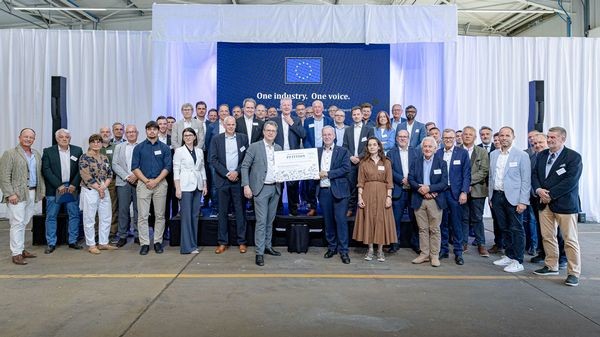
The CEOs of 30 leading European trailer manufacturers have signed a joint declaration and petition calling on the European Commission and European Parliament to review and adjust Regulation (EU) 2024/1610.

The industry supports the EU’s climate goals but warns that the current VECTO methodology could raise emissions, cost jobs and lead to further deindustrialization.

The manufacturers met in Koningshooikt near Lier last week, signing the declaration in the presence of Members of the European Parliament Kris Van Dijck of Belgium and Jens Gieseke of Germany. Companies that normally compete for the same customers and contracts spoke with one voice, arguing that the rules as designed could increase CO₂ emissions rather than cut them.

Concerns over trailer CO₂ methodology

Regulation (EU) 2024/1610 extends CO₂ standards to trailers, despite trailers emitting no CO₂ directly. Manufacturers are held responsible for simulated emissions calculated by the VECTO tool, which uses standardised reference loads and duty cycles.

The signatories say the methodology does not reflect the operational realities of European road transport, including the diversity of trailer applications, real payload and loading requirements, and the rapid rise of zero-emission tractor units.

Their central warning is that meeting the targets could push manufacturers towards design changes that reduce usable loading capacity. This could result in more trips, more empty runs and more vehicles on the road to move the same volume of goods — and therefore more CO₂, rather than less.

From 2030, an exceedance premium of €4,250 per gCO₂/tkm above target, multiplied by each registered vehicle, would expose manufacturers to annual penalties in the millions. Around 70,000 jobs across Europe depend on an economically viable trailer industry.

Five requests

The petition sets out five requests:

  1. Bring the Article 15 review forward from 2027 to 2026, publish the reference values immediately after monitoring, and lower fleet targets to achievable levels, for example 5% from 2030, phased in.
  2. Phase in fleet targets from 1 July 2030 to avoid market distortions and foreseeable job losses.
  3. Introduce a moratorium on penalties and adjust the penalty level, which the manufacturers say is out of all proportion to the market price of the vehicles.
  4. Overhaul the VECTO tool for trailers so that vehicles with comparable purposes are compared fairly and the growing share of zero-emission tractors is taken into account. Targets and levies should fall in line with the market penetration of zero-emission tractors and disappear entirely once these reach a 70% market share.
  5. Recognise that the planned credit-and-debit system is largely ineffective within the current timeframe because the necessary trailer technologies cannot reach the market at scale fast enough.

Decarbonization must not become deindustrialization. The answer is not to abandon climate ambition. It is to make sure our policies are based on reality, on technology that exists, and on outcomes that can actually be achieved. That is why I support a serious review of the current methodology, not because we want weaker rules, but because we want rules that reduce emissions and strengthen European industry,

said MEP Kris Van Dijck.

European industry cannot be told to lead the green transition while we make it impossible to compete. The trailer sector is ready to deliver, but the targets have to be technically achievable. We need an evidence-based review now, in 2026 — not in 2027, when the damage may already be done,

said MEP Jens Gieseke.

Today thirty competitors put their rivalry aside to send Brussels a single message. We are not asking for less climate protection. We are asking for rules that cut emissions instead of penalizing manufacturers for a flawed simulation. The Article 15 review must be brought forward — every month of delay costs investment, jobs, and credibility,

said Gero Schulze Isfort, spokesman for the German coalition of eight leading European trailer manufacturers.

The joint declaration and petition were signed by the CEOs of 30 European trailer manufacturers.

Logistics Pressure Rises as Burnham Proposes Warehouse Rate Increase

Prime Minister-in-waiting Andy Burnham has indicated that large warehouses could face higher business rates under plans designed to fund relief for pubs and smaller high street businesses, adding a further potential cost pressure for logistics operators.

The proposal would form part of a wider reform of business rates, with Burnham drawing a distinction between town-centre businesses and major out-of-town developments. For the logistics sector, however, the key question is whether the measure would apply only to the largest warehouse assets or more broadly across distribution and industrial property. Details on the properties affected, the scale of any increase and the proposed implementation date have yet to be confirmed.

The potential rates increase comes after another challenging year for warehouse and logistics operators on energy costs. In our recent Logistics Business Conversations episode with Wattstor, we examined new energy base rates for medium- and high-energy users, which could also affect logistics warehouses and other energy-intensive facilities. Together, the two developments highlight how property and energy costs are becoming increasingly important considerations for warehouse occupiers.

Large distribution centres, automated facilities and temperature-controlled warehouses may be particularly focused on the outcome, given their significant property footprints and energy requirements. Any changes could influence operating costs, investment decisions and the economics of new logistics developments.

Warehouses remain central to retail, manufacturing, food distribution, healthcare supply chains and e-commerce. The sector will now be watching for clarity on whether proposed business-rates changes will be limited to the largest assets or extend more widely across logistics and industrial property.

Berlin Logistics Market Defies the Odds

The Berlin logistics and industrial property market remained resilient in the first half of 2026, reflecting continued occupier demand for well-located, modern space. Market activity was supported by several large-scale transactions, while stable rents and limited availability in sought-after locations underlined the ongoing importance of quality logistics and industrial properties for businesses.

REALOGIS Unternehmensgruppe recorded take-up of 211,000 sq m in the Berlin logistics and industrial property market in H1 2026. Warehouse space accounted for 192,500 sq m or 91%, office space for 13,300 sq m (7%) and mezzanine space for 5,200 sq m (2%).

Warehouse take-up increased by 33,500 sq m or 21% year on year. While still 31% below the current five-year average of 277,180 sq m, the shortfall was significantly smaller than in H1 2025, when it stood at 46%.

The five largest lease transactions—JD Logistics with 41,430 sq m, ASML with 27,000 sq m, acut fulfillment with 11,520 sq m, Capital Baustoffe with 11,400 sq m and FST Industrie with 11,200 sq m—together accounted for 49% of the Berlin letting and owner-occupier market.

Alexander Ego, Managing Director of REALOGIS Immobilien Berlin GmbH, comments: “Take-up over the past six months was shaped to a significant extent by a handful of large-scale deals, with owner-occupiers in particular making an exceptionally strong contribution. At the same time, demand for modern business parks remains at a high level, although suitable space is often not available in sufficient quantities in the locations in demand.”

Rents stable at a high level

Prime rent remained unchanged at €10.50/sq m in H1 2026, temporarily halting the upward trend seen since records began in 2016. It remained 10% above the current five-year average of €9.55/sq m. Average rent also remained stable at €8.10/sq m, 7% above the five-year average of €7.60/sq m.

Existing space ahead of brownfield developments

Existing properties dominated market activity with 110,400 sq m, or 52% of total take-up. Lettings in new builds on former brownfield sites reached 91,200 sq m, or 43%, with JD Logistics and ASML accounting for three quarters of this volume. New builds on greenfield sites accounted for 9,400 sq m, or 5%.

By building type, big-box spaces led with 143,900 sq m, or 68%, followed by other properties with 34,100 sq m (16%) and business parks with 33,000 sq m. Lettings accounted for 166,600 sq m, or 79%, while owner-occupiers contributed 44,400 sq m (21%).

Berlin urban area was the strongest region

The Berlin urban area recorded the highest take-up with 93,500 sq m, or 44%. Berlin South led within the urban area with 47,900 sq m, followed by Berlin West with 22,600 sq m, Berlin North with 14,400 sq m and Berlin East with 8,600 sq m.

The surrounding area south of Berlin ranked second with 87,800 sq m, or 42%, followed by the surrounding area west of Berlin with 15,300 sq m and north of Berlin with 14,400 sq m. No take-up was recorded east of Berlin.

Logistics/Distribution leads ahead of retail and manufacturing

Logistics/Distribution ranked first with 78,100 sq m, or 37%, driven largely by JD Logistics and acut fulfillment. Retail/Wholesale followed with 56,900 sq m (27%), split almost evenly between e-commerce and traditional retail. Manufacturing ranked third with 51,000 sq m (24%), with ASML and FST Industrie accounting for 75% of this total. Supply/Others reached 25,000 sq m (12%).

Large-scale segment driven by five lease transactions

Large-scale units from 10,001 sq m remained market-defining, reaching 102,550 sq m, or 49% of total take-up. This volume was generated entirely by the five largest lease transactions of the first half of the year.

Manifest Europe to Launch in Lisbon in 2027

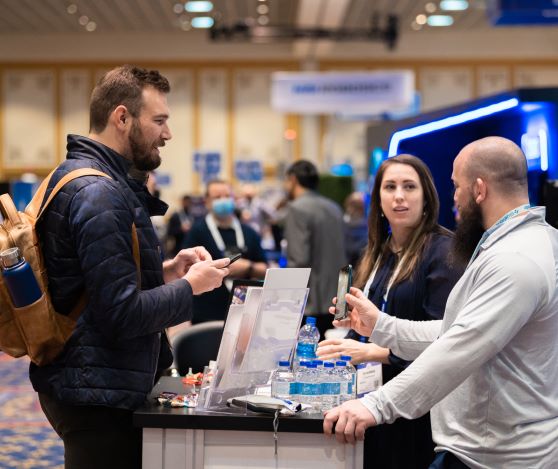
Hyve Group has announced the launch of Manifest Europe, marking the expansion of the recently acquired Manifest brand into the European market. The inaugural event will take place 19–21 October 2027 at FIL, Lisbon.

Building on the success of Manifest in Las Vegas, Manifest Europe will bring together the full supply chain and logistics ecosystem, including shippers, freight forwarders, 3PLs, carriers, ports and terminals, technology providers, startups, and investors. The event is designed to create a high-quality platform for connection, collaboration, and commercial growth.

Manifest Europe has already secured strong early momentum, with DHL confirmed as Presenting Sponsor alongside more than 120 Launch Partners across sponsor companies, investors, shippers, and media partners – demonstrating clear market demand for a dedicated European platform.

Europe sits at the intersection of global trade, regulation, sustainability, and rapid innovation, creating a clear need for a high-quality, curated meeting place for the industry.

“Following our acquisition of Manifest, expanding the brand into Europe is a natural next step. The supply chain and logistics sector continues to evolve rapidly, and Europe is a critical part of that landscape. Manifest has built strong momentum in the U.S., and we’re already seeing clear demand for a European edition of the brand. Manifest Europe allows us to bring a proven format into a new market while building an event tailored specifically to the needs of the European industry.” Mark Shashoua, CEO, Hyve Group

Manifest Europe is designed to reflect the unique dynamics of the region, combining the strength of the Manifest brand with a European-focused approach to audience development, content, and commercial engagement. The event will focus on core verticals such as retail and e-commerce, FMCG, automotive and industrial, and pharma and life sciences from key regions including the UK, Germany, the Netherlands, France, and Iberia.

A key point of differentiation is the event’s focus on both the supply chain and logistics sector and the broader technology and innovation ecosystem, bringing together established industry leaders alongside high-growth startups and investors helping to shape the future of global supply chains.

Jay Weintraub, Founder, Manifest, added:

“Manifest was always designed as a global platform. Launching Manifest Europe accelerates and helps fulfill our vision bringing together the most dynamic, innovative, and diverse leaders in the market under one roof, in an experience unlike any other.”

Spanning two halls at FIL, Lisbon, Manifest Europe will feature exhibitors, activations, curated networking, hosted buyer programmes, and multiple conference stages. The event places a strong emphasis on audience quality, enabling meaningful conversations and commercial outcomes.

Sophie Ahmed, President, Manifest Europe, said:

“Europe is one of the most complex and dynamic supply chain markets in the world, with significant innovation. That is exactly why Manifest Europe is needed. Our focus is on bringing together the right mix of shippers, logistics leaders, investors and technology innovators to create the connections, ideas and partnerships that will help shape the future of the supply chain.”

Subscribe

Get notified about New Episodes of our Podcast, New Magazine Issues and stay updated with our Weekly Newsletter.