

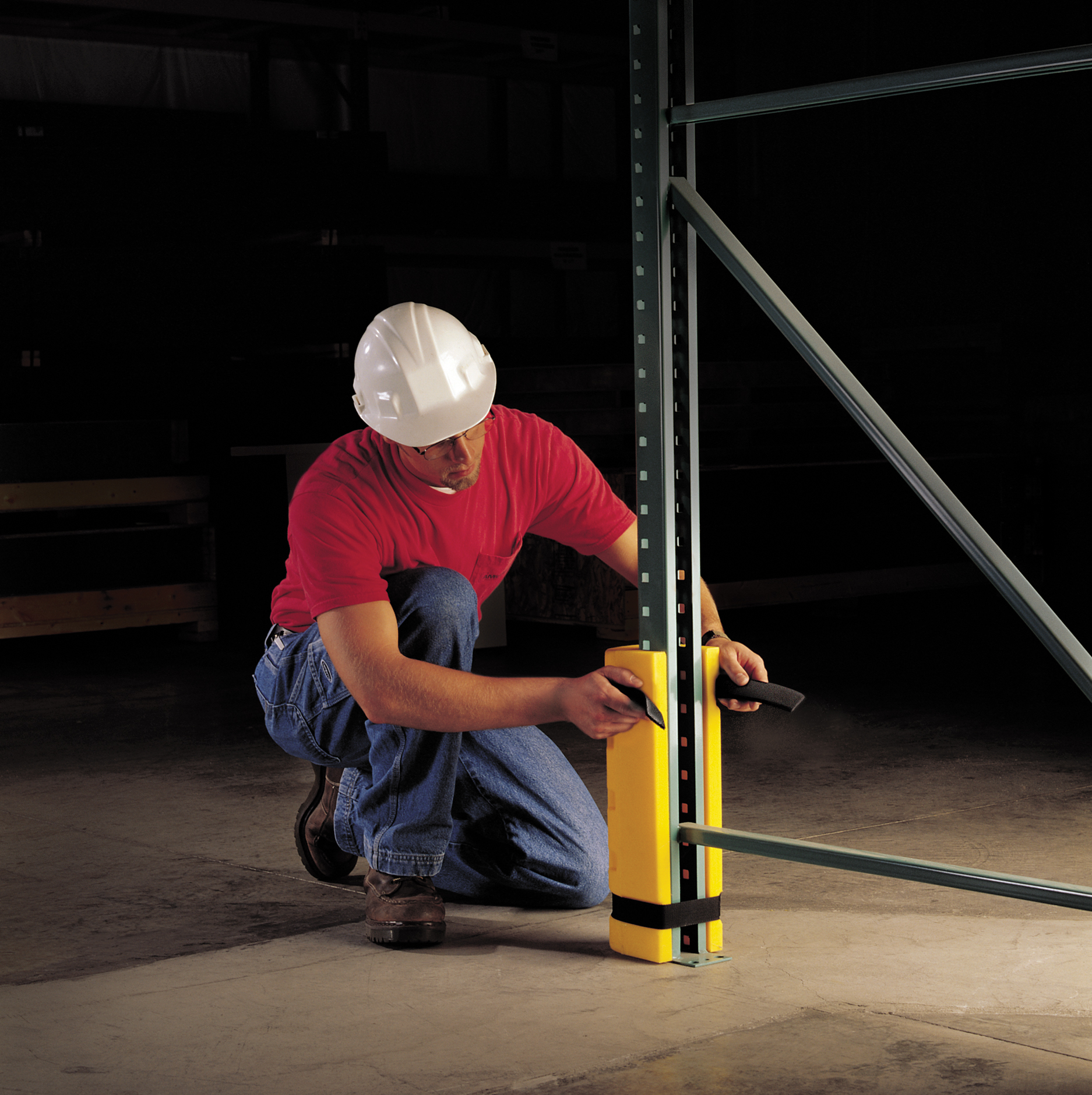
Research and testing by Sentry Protection Products shows that when it comes to warehouse safety, absorbing an impact is far more important than resisting it, writes Peter MacLeod.
If you ask any warehouse manager what they think makes a good rack protector, they would probably say ‘strength’. On the face of it, that’s a perfectly reasonable assumption. After all, the tougher and more rigid the protector, the better it must be at shielding valuable warehouse infrastructure from the inevitable knocks and scrapes of everyday operations, right?
According to Sentry Protection Products, however, that assumption overlooks one of the most important principles in warehouse safety. “The first reaction is always to think that harder must be better,” says Jim Ryan, founder of Sentry Protection Products. “But that’s not how physics works. The job of a rack protector isn’t simply to stop an impact – it’s to absorb it.”
The distinction may appear subtle, but it has significant implications for the long-term protection of pallet racking. With warehouses operating under ever-increasing pressure to maximise throughput, and despite the highest standards of driver training and advances in vehicle technology, accidental forklift impacts remain an unavoidable reality. The question is not whether those impacts will happen – that, unfortunately, is pretty much a given – but what happens to the energy generated when they do.
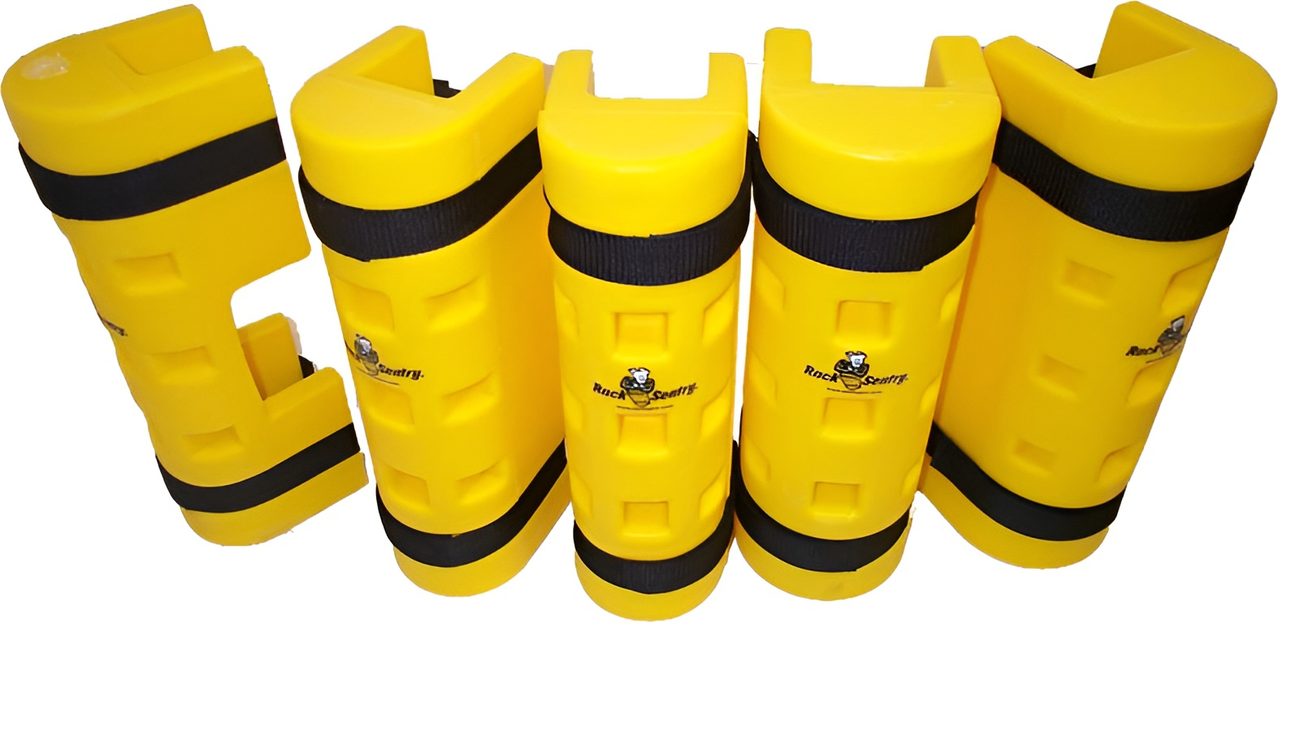
“If all that energy is transferred directly into the rack upright, the rack still takes the hit,” Ryan explains. “A protector that simply resists the impact isn’t necessarily protecting the rack behind it.”
Managing the Energy
Instead, the ideal rack protector behaves much like a spring. Think of a spring; compress it and it stores energy before gradually releasing it as it returns to its original shape. The same principle applies to rack protection. The more energy a protector can absorb before transferring the remaining force into the rack upright, the greater the protection it provides.
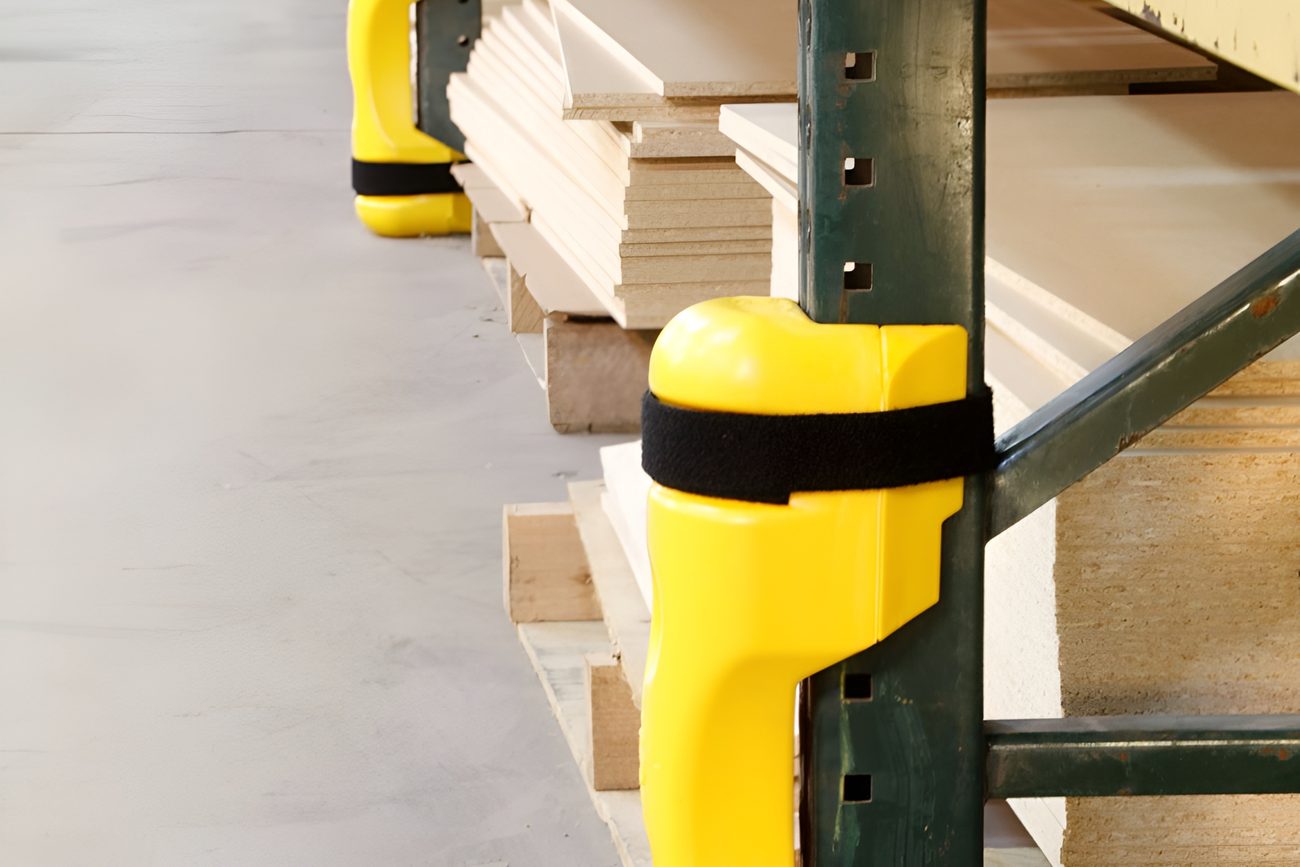
The challenge lies in achieving the right balance. A protector that is too soft may compress completely and become ineffective. One that is too rigid may transmit much of the impact directly into the rack structure. Effective protection lies somewhere between those two extremes.
The ‘Goldilocks’ Balance
“We often describe it as finding the Goldilocks point,” says Ryan. “Not too soft, not too hard – just right. That’s where the protector is doing the maximum amount of work before the rack has to.”
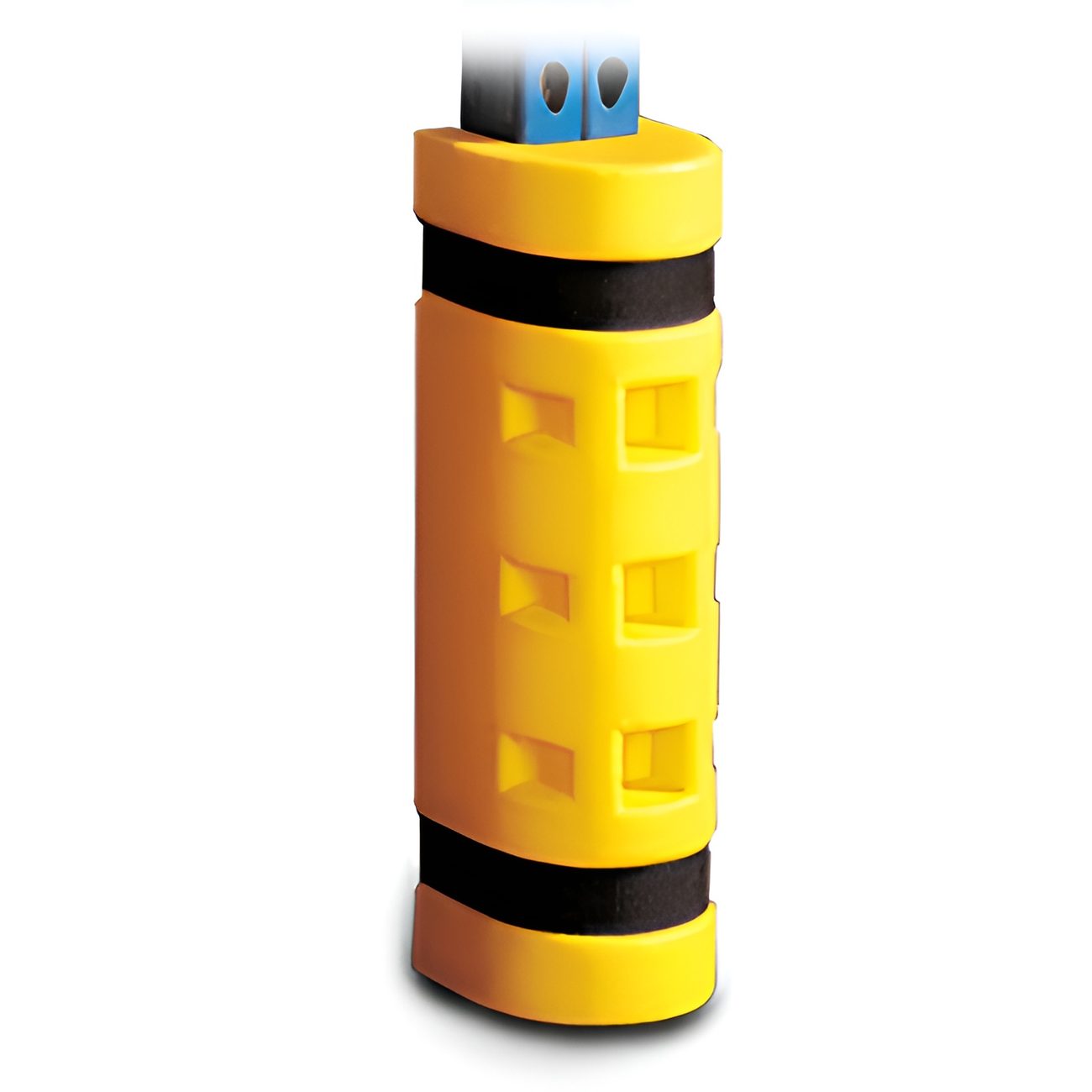
That philosophy has shaped the engineering behind Sentry’s Rack Sentry and Rack Sentry CONTOUR products. Manufactured from specially formulated impact-resistant materials and incorporating a series of carefully engineered internal air chambers, the products are designed to deform in a controlled manner before returning to their original shape, ready to absorb the next impact. Rather than simply making the protector as thick or as rigid as possible, Sentry’s engineers focused on how energy flows through the product during a collision.
“It’s really about managing energy,” Ryan explains. “The longer you can absorb that force before it reaches the rack, the better the outcome. That’s why engineering is so important. Two products can look almost identical from the outside yet behave completely differently when they’re struck.”
Engineering To Deliver Results
Of course, elegant engineering is only valuable if it delivers measurable real-world performance. That philosophy has been validated through independent compression testing, which compared Rack Sentry and Rack Sentry CONTOUR with several competing products under identical conditions. Both Sentry products demonstrated superior energy absorption before reaching the point at which they were no longer effective.
For warehouse operators, the science behind the product ultimately translates into better protection for the infrastructure that is essential to keep their business moving. “As warehouse operations become faster, busier, and more demanding, there’s less margin for error than ever before,” concludes Ryan. “You need products that don’t just look strong – you need products that genuinely protect the assets behind them.”