Long loads, heavy loads – think Hubtex. Paul McNally, MD of Hubtex UK, tells Paul Hamblin about the company’s ethos and the reasons for its continuing success.
German-founded Hubtex is a big beast in global logistics, both for the capability of its long load specialist sideloader trucks, and for the reliability and durability of its machines. “Clients are looking for more than just a truck with us, they are looking for something they will use for 10, 15 years, even longer,” points out UK MD Paul McNally (pictured, below). “We have trucks still running with clients in the UK that have been in place for over 30 years, which is even older than Hubtex UK. They came from Germany and they’re still doing great service to this day.”
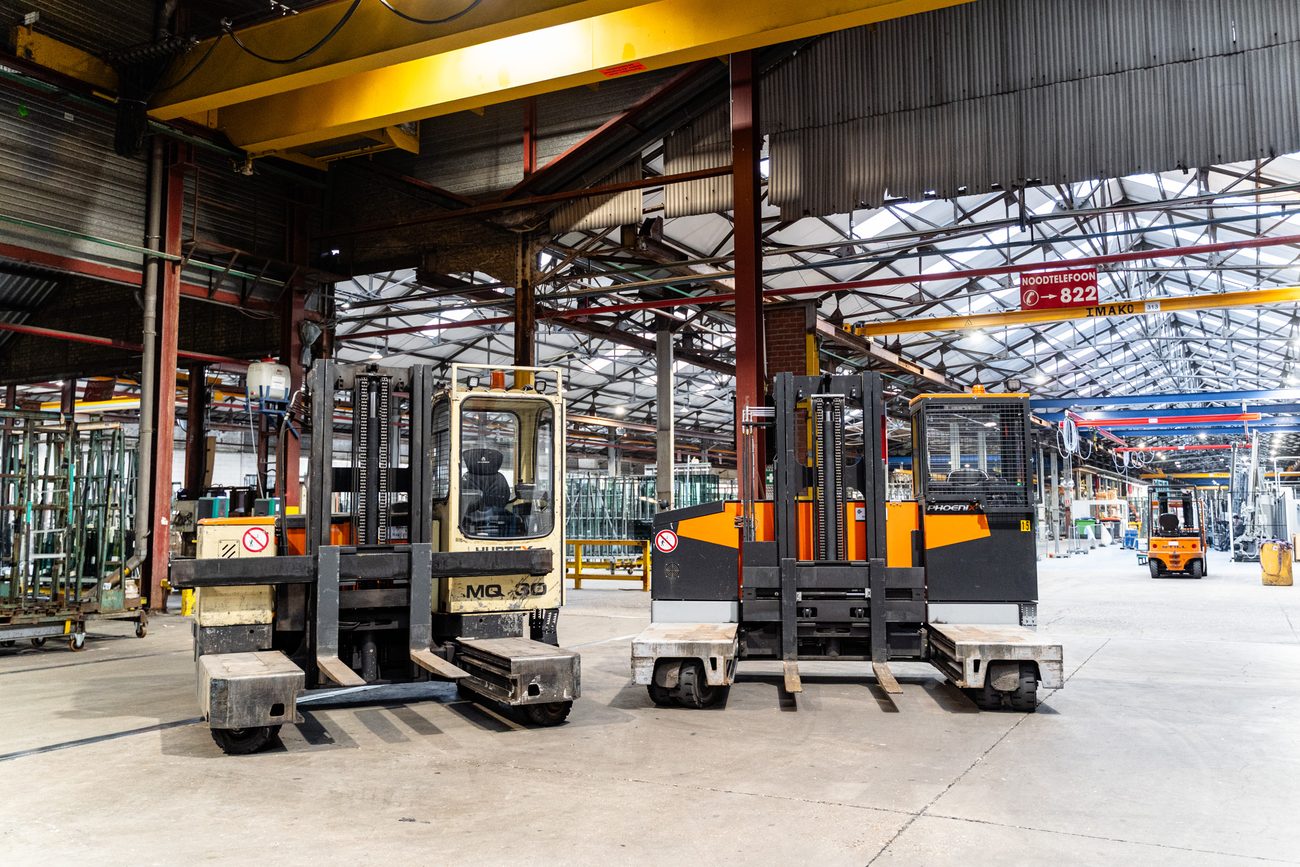
It’s a neat illustration of one core Hubtex strength – proven engineering reliability. Other qualities highlighted by Paul McNally include premium quality, safety and technical innovation, encapsulated by its hugely successful embrace of electric battery technology, no mean feat when your brief is to manufacture trucks that need the power and range to perform 24/7 shifts in heavy-duty environments, such as the timber, glass and steel sectors. Sceptics used to say that electric would never have the ‘oomph’ to cover such needs.
Our basis is electric and has been for many years.
The Hubtex magic is the company’s ability to meet specific customer needs, he says. It is about much more than picking a truck out of the catalogue.
We’re focused on a whole solution rather than selling a unit,” he explains. “We look at the complete warehouse. We’ll work with the client to explore how they can improve operational efficiencies across the board. That might include picking, or movements, safety, training times. It’s our forward-thinking in terms of the innovation embedded in systems and solutions that gives us that extra edge.
Return on investment
Hubtex customers need trucks that can answer tougher questions, for longer; 24/7 requirements are increasingly common. He agrees that this can make the trucks more expensive than competitors he regards as less versatile. “We’re not focused on volume, so the ROI has a different profile. Our units last longer, with more uptime and run time. That’s where the wins come from for our customers.”
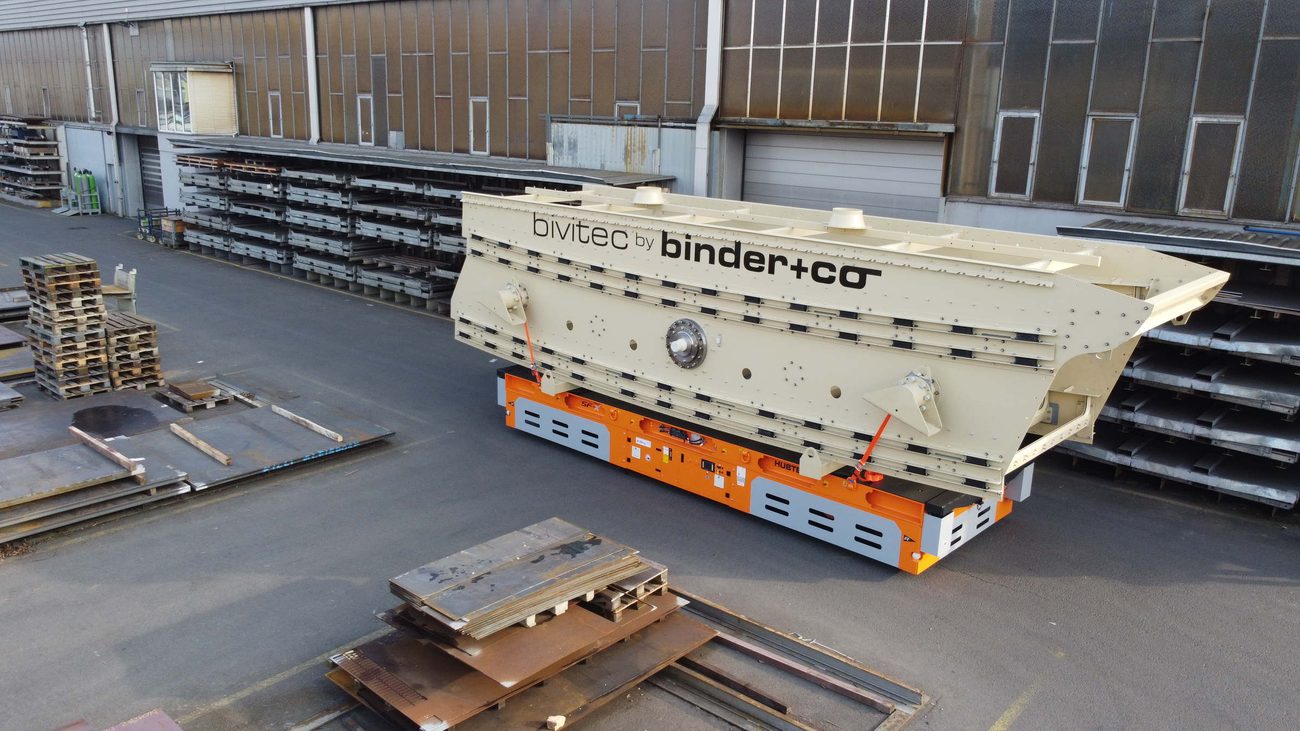
Key markets for the company in the UK are those with obvious long-load needs – fenestration (glass), plastic extrusion, and steel are typical. Automotive, aerospace and their feeder supply chains are all part of the picture. A recent success in the timber industry answered the needs of a client wishing to move deeper loads in a reduced working space area. A high-precision, highly manoeuvrable truck from Hubtex made all the difference.
We are more like consultants than sellers of product… What can the units do for you that allow you to improve your business operations as a whole?
The process is about working through current processes with the client.
The first thing we look at is what they are doing today. A customer might come to us asking for a 3 or 5 ton machine; we say, ‘Don’t look at the machine in isolation, let’s look at what you’re doing day to day.
A recent example involved a client with which the Hubtex team was already familiar. Changing customer circumstances meant that the client was lacking the extra capacity to increase outputs.
“It was a fixed warehouse, everything was already in place and they needed to improve that. So we started to look at the trucks, then we introduced new systems, such as aids to help operators drive into racking systems; they press a button and the truck drives into an area more quickly and easily.” The result is more output, more speed. He adds that the solution is a good example of an innovation developed with colleagues in Germany on another project then expanded and migrated to other markets.
Guidance Systems
What matters to the client in these discussions? “Cost is always a factor, of course, then the size of the operation, the envelope they have to work with. Can we reduce the space and therefore increase the amount of racking? Are they open to using additional tech, such as guidance systems, safety systems? We’ve done a lot of work with the truck’s intelligence to take things away from the operator. He or she can then concentrate solely on the movement of materials, whereas the truck as a unit has greatly increased ability to support the operator. Guidance to automatically adjust steering when required is one example.”
Staff resource headaches are successfully addressed with this approach, he says.
It means that training time is reduced, safely and fairly. We know that resource is an issue for our customers, just as it is across the logistics industry. Now, where it used to take a customer three months to progress an operator to the right level of ability and confidence, that process can now be completed in only three weeks. It means clients can recruit from a much larger pool of people, because the skill set now required is less onerous. And that small difference can make a much larger difference later on, in the increased uptime of trucks, powered by very sophisticated, very large lithium batteries and charging system, enabling 24/7 ops. So output is boosted. We were already running a very efficient system, but we found ways to squeeze more out. It brings us back to that core ethos – the question is not about trucks, its about the customer programme and their business needs.
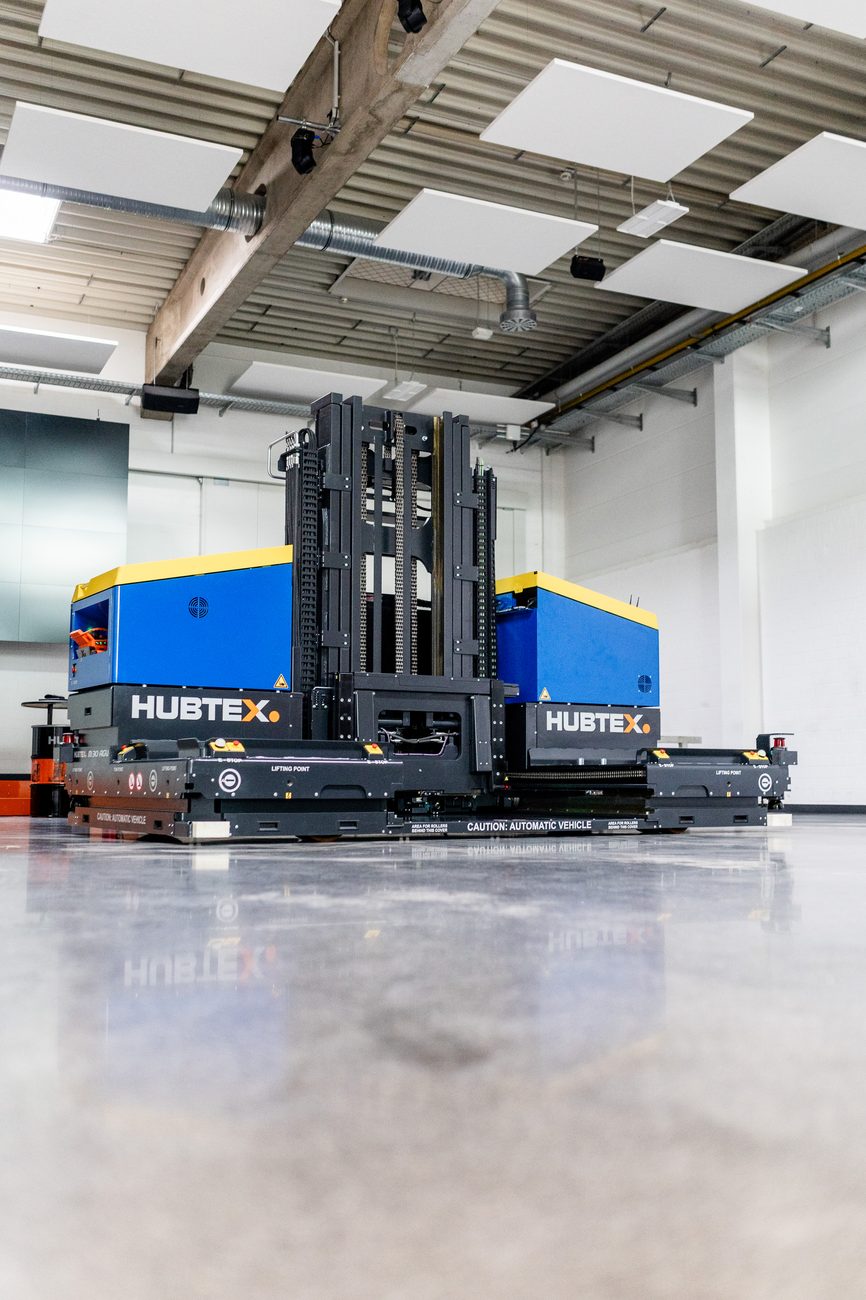
The truck has a lot more to do in today’s logistics, and for longer. “Customers need the trucks to integrate into their wider infrastructure, linking to the WMS and providing continuous data. It’s much more than a forklift.”
New markets with hyper-stringent testing requirements, such as renewable energy and the nuclear sector, are also now coming to Hubtex. “They are coming to us not only because we have the skills and expertise to a very advanced level, but also because our unmatched level of detail and reliability supports their rigorous testing needs. Customers with a challenge of that nature know we have the knowledge to work with them successfully.”