Yard Management Deployed at Auto Logistics Site

Logistik Schmitt is strengthening its long-standing collaboration with Infios with the deployment of the cloud-native Infios Yard solution at its Rastatt site. The Yard Management System (YMS) project represents an extension of a successful partnership spanning multiple Logistik Schmitt operations, where Infios Warehouse Management (WM) supports critical logistics processes at other facilities.

Headquartered in Bietigheim, Germany, Logistik Schmitt is a specialist in transport and contract logistics, delivering tailored solutions for complex manufacturing environments. The company supports leading industrial customers, particularly within the automotive sector, through services such as production supply, sequencing, warehousing and distribution. Across a network of sites, Logistik Schmitt enables synchronized material flows to assembly lines, ensuring reliability and efficiency in time-critical production settings.

At the Rastatt site, Infios is helping Logistik Schmitt optimize yard operations on the premises of a car manufacturer. The YMS provides real-time visibility and control over incoming and outgoing trailer and swap body movements, improves slot allocation, reduces wait times, ensures process stability and coordinates traffic between staging areas, loading docks and local suppliers. A key highlight is the tailored self-service functionality for dock management, which enables Schmitt to manage gate processes efficiently and independently, including by external service providers. Supporting approximately 450 daily trailer and swap body movements across 150 gates, the solution enables more efficient and transparent yard execution.

“Through our partnership with Infios, we continue to enhance the digital capabilities that support our customers’ demanding automotive logistics requirements,” said Rainer Schmitt, Managing Partner at Logistik Schmitt.

“The deployment of Infios Yard at Rastatt gives us greater visibility and control over yard operations, helping us manage complex material flows with increased efficiency and precision. Infios understands the operational challenges of automotive logistics and provides solutions that support our continued evolution.”

The Rastatt deployment builds on Logistik Schmitt’s broader experience with Infios solutions across other locations. At multiple sites, Logistik Schmitt relies on Infios Warehouse Management (WM) to support production-synchronous automotive logistics, managing complex processes for the supply of engines, transmissions and axles. Infios WM provides the visibility and control needed to coordinate just-in-time and just-in-sequence (JIS) deliveries, optimize replenishment and sequencing processes and synchronize operations across multiple locations, suppliers and manufacturing partners.

“The expansion of our relationship with Logistik Schmitt demonstrates the value of a trusted technology partnership that can evolve as operational needs change,” said Dirk Teschner, SVP and Managing Director Germany at Infios. “While the Rastatt project focuses specifically on Yard Management, it builds on the confidence Logistik Schmitt has developed in Infios through our successful Warehouse Management deployments at other sites. Our modular approach enables customers to select and scale the capabilities they need to optimize specific areas of their supply chain execution.”

With the successful go-live at the Rastatt site, Logistik Schmitt and Infios will continue collaborating to enhance operational performance and support the evolving requirements of automotive manufacturing, including the increasing complexity driven by electrification and new production models.

Why Customs Delays Are 100% Avoidable

Customs delays are often treated as an unavoidable part of international trade.

According to Patrick Frith of Avalara, they don’t have to be.

In the latest episode of Logistics Business Conversations, host Paul Hamblin explores the increasingly complex world of cross-border trade, tariffs, customs and compliance — and discovers where businesses are most likely to get caught out.

With tariffs changing rapidly, trade lanes shifting and governments demanding more detailed information on the goods entering their markets, the risks of getting international trade wrong are growing. But some of the biggest problems may come down to just a handful of details.

The Mistakes That Can Stop a Shipment

From incorrect HS classification and country of origin to declared value and unexpected duties, seemingly small errors can quickly lead to higher costs, delays and potential compliance problems.

Frith explains why one of the biggest hidden costs in cross-border trade is a tariff a business failed to anticipate — and why getting product classification wrong can have much more serious consequences than many companies realise.

Perhaps the biggest claim of the episode, however, is this:

Customs delays can be 100% avoidable.

But only if the right work is done before the shipment ever leaves.

Can Technology Keep Up With Global Trade?

The discussion also looks at how automation and AI are beginning to change customs compliance, from classifying products to tracking regulatory changes in real time.

With millions of tariff and regulatory updates taking place across global markets, can technology really keep businesses one step ahead?

And as geopolitics becomes more volatile, will international trade become easier over the next five years — or significantly harder?

Listen to the full episode below to find out.

Future Ports: Beyond Diesel

Under the motto ‘from diesel to digital’, Vahle is powering the next generation of container ports. Peter MacLeod spoke to its Director Business Unit Port, Jarosław Warzecha.

With container terminals expected to increase throughput, reduce emissions, improve safety, and attract a new generation of skilled workers, the pressure they are under has never been greater. And they have to achieve all this while maintaining operational resilience. According to Jarosław Warzecha of Vahle, whom I interviewed at the TOC Europe event in Hamburg, the answer lies in treating electrification, automation and digitalisation as parts of the same journey rather than separate initiatives.

Warzecha explained to me how the German family-owned company has evolved beyond its traditional role as a supplier of power systems to become an enabler of intelligent port operations. “We are manufacturing all the elements you need to automate your processes,” he explained.

Modular Approach

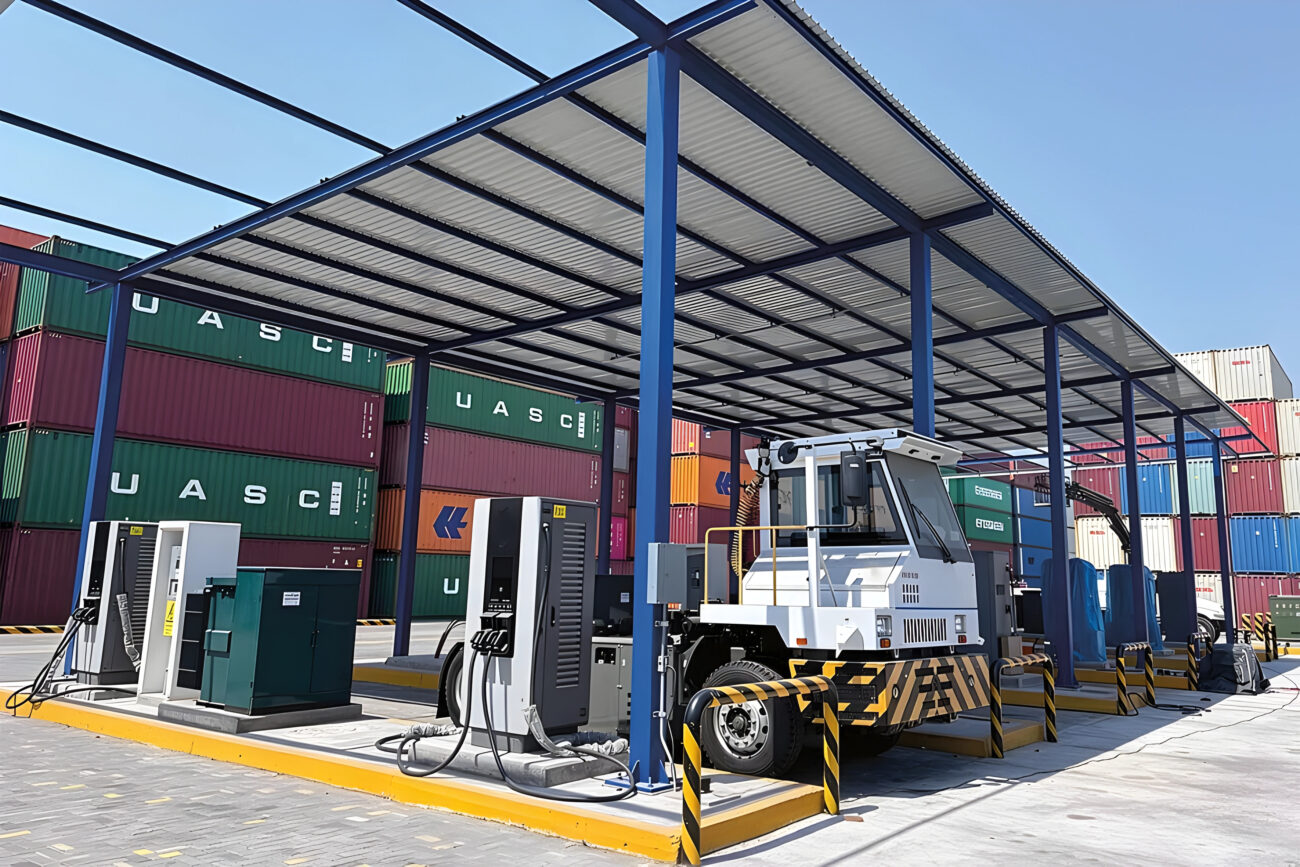
Rather than offering a single solution, Vahle’s approach is modular. Terminals can begin by replacing diesel-powered equipment with electrified systems before progressively introducing positioning technology, data communications and remote operation. This staged investment allows operators to realise returns at each stage while preparing for increasing levels of automation.

“For example, in a container terminal, first of all, you want to decarbonise your equipment,” said Warzecha. “Then later on, after the first return on investment, you can continue to add positioning… and we also provide data communication so that you can even allow operators to work remotely.”

Remote operation offers benefits beyond productivity. Moving crane operators from the equipment itself into office-based control rooms creates a safer and more attractive working environment, helping ports address one of their biggest long-term challenges – recruiting and retaining skilled personnel.

The ideal terminal, however, is not simply one with the highest level of automation. Warzecha believes successful greenfield developments should be designed holistically from the outset, combining electrified rubber-tyred equipment, battery technology and intelligent energy management to minimise infrastructure requirements while maintaining operational flexibility.

“We can have a full zero-emission terminal,” he said. “It can be automated or semi-automated… you can be very flexible.”

AI is becoming an increasingly important part of that evolution. Rather than replacing operational expertise, Vahle is applying AI to improve maintenance planning by analysing equipment data that would previously have required manual interpretation. “We took all these messages out of the PLC,” explained Warzecha. “Now we put some artificial intelligence behind it so that it doesn’t need to be looked into manually.”

The result is predictive maintenance rather than reactive servicing. Instead of waiting for failures or relying on routine inspections, the system identifies developing issues and alerts maintenance teams before breakdowns occur. “The crane will tell you, ‘In three weeks you need to do this job’,” he said. “Then you can combine more activities, prepare maintenance and reduce downtime.”

Energy Security

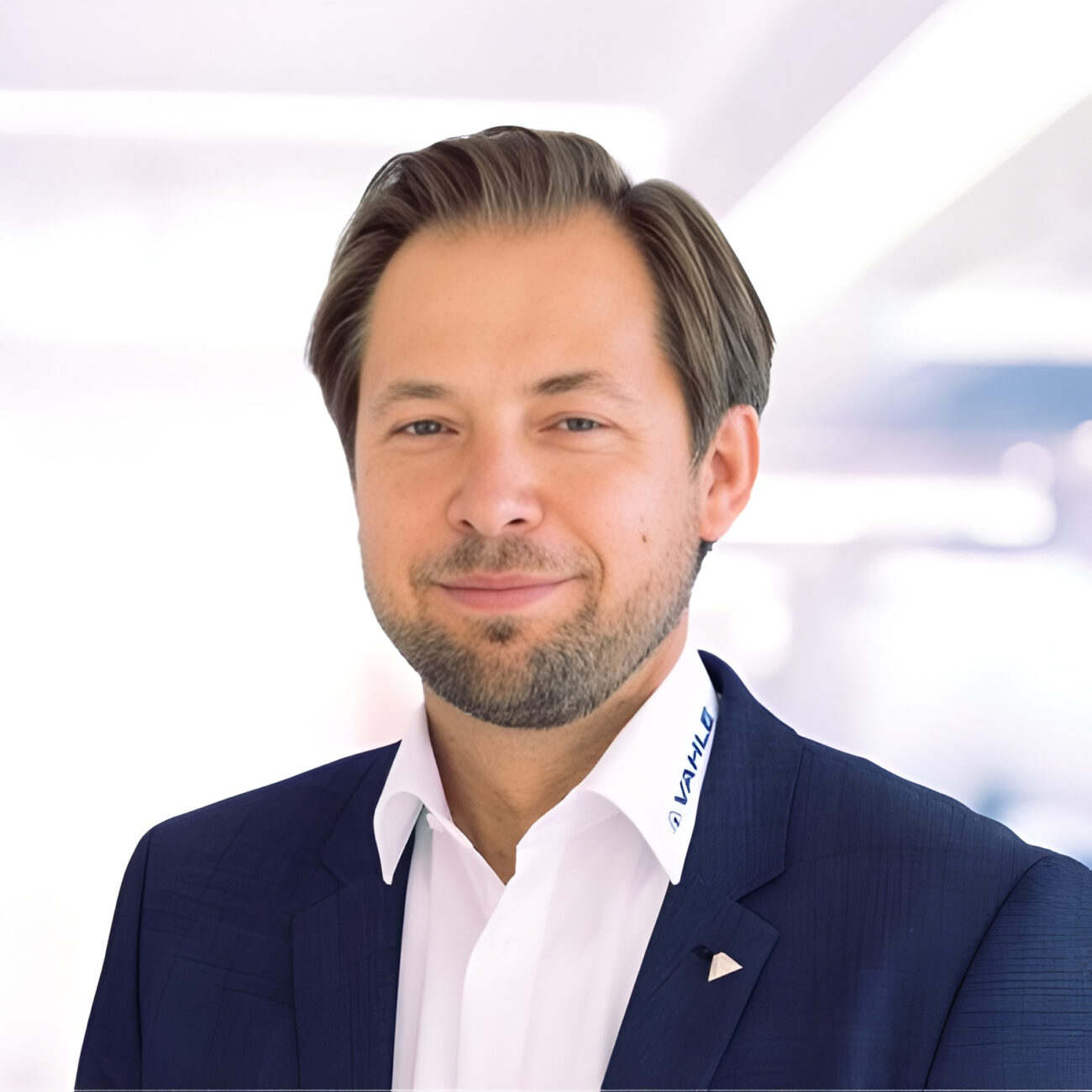
Energy security has also become a growing concern for port operators, extending beyond simple fuel costs. “Our motto here is ‘from diesel to digital’ – not only from diesel to electric,” Warzecha (pictured, below) explained. Electrification reduces dependence on diesel supplies while enabling terminals to incorporate battery storage and renewable energy into their operations. In some markets, he noted, the ability to continue operating during power interruptions is becoming just as important as reducing emissions.

Safety remains another key driver behind automation. Vahle’s charging systems are designed to eliminate accidental contact, while automated steering systems assist operators by keeping rubber-tyred gantry cranes accurately aligned, reducing the risk of structural damage and operational incidents. “It’s about protecting personnel as well as equipment,” said Warzecha.

Despite the increasing role of automation, he does not foresee fully autonomous ports operating without human oversight. “I think the port of the future will be completely green. It will also be automated, but… you still should be able to supervise and maybe bypass if it’s required.”

As an active member of FEMA, Vahle also sees industry collaboration as essential to accelerating innovation. Working alongside equipment manufacturers, technology suppliers and terminal operators helps identify emerging requirements while ensuring that new solutions address genuine operational challenges.

Subscribe

Get notified about New Episodes of our Podcast, New Magazine Issues and stay updated with our Weekly Newsletter.