Sustainability in Freight Transport

How can freight operators cut emissions without compromising efficiency, service levels or competitiveness?

Our latest Logistics Business panel session, Sustainability in Freight Transport, is now available to watch on demand, bringing together experts from across the industry to discuss the practical steps businesses can take to make freight operations cleaner, smarter and more transparent.

The discussion features Mat Jobson of Europa, Tyler Chaffo of Blue Yonder, Chris Ashley of the RHA and Logistics Business Editor Peter MacLeod, exploring some of the biggest sustainability challenges facing transport and logistics businesses today.

From identifying emissions hotspots and reducing unnecessary miles to improving routing, operational decision-making and the quality of sustainability data, the panel looks at where organisations can make meaningful improvements across their transport operations.

The conversation also examines the growing pressure around ESG reporting and how technology, better data and smarter planning can help businesses balance sustainability targets with the realities of running an efficient freight operation.

Watch the full Sustainability in Freight Transport panel session on demand below.

Fleet Renewal with 900 Mercedes-Benz Trucks

Girteka is accelerating its fleet renewal with an order for 900 new Mercedes-Benz Actros L ProCabin trucks, agreed during IAA Transportation in Hannover. The agreement continues the long-standing partnership between Girteka and Daimler Truck and forms part of the company’s ongoing fleet renewal programme.

During 2026, 500 Mercedes-Benz Actros L ProCabin trucks have already joined Girteka’s fleet, with a further 900 scheduled for delivery in the first half of 2027.

“Our cooperation with Mercedes-Benz Trucks goes back many years, and this agreement is another important step in that partnership. Working with leading manufacturers allows us to continuously introduce newer technologies into our fleet, improve the working environment for our drivers and maintain the level of reliability our customers expect from us. For temperature-controlled and high-value cargo, this consistency is especially important,” says Edvardas Liachovičius (pictured, below), CEO of Girteka Group.

Girteka currently operates approximately 6,500 owned trucks, Europe’s largest asset-based road transport fleet. At this scale, continuous fleet renewal is essential to maintaining reliability, safety, efficiency and high service standards across European operations.

Renewing the fleet means investing in drivers and road safety

For professional drivers, the truck is both a workplace and a place where they spend a significant part of their time. Modern vehicles therefore play an important role not only in operational efficiency, but also in working conditions, ergonomics and everyday comfort.

“With the Actros L ProCabin, we provide our customers with a truck that sets new standards in efficiency, safety, and driver comfort for long-haul transportation. I would like to thank Girteka for the continued trust they place in Mercedes-Benz Trucks. Their decision to add another 900 vehicles to their fleet goes far beyond a significant order. It is a strong endorsement of our long-standing partnership and our shared ambition to make long-haul transport more efficient, safer, and more sustainable for the future“, says Achim Puchert, CEO Mercedes-Benz Trucks.

According to A. Puchert, this agreement also highlights the critical role that innovative vehicle technology, reliable service, and a strong sales and support network play in helping large fleets succeed and grow.

The vehicles feature a range of safety assistance systems designed to support drivers within their system limits. These systems can help detect potential hazards, monitor the vehicle’s surroundings and assist the driver in critical situations. For Girteka, renewing the fleet is therefore also an investment in road safety – for its professional drivers and for everyone sharing European roads with heavy transport.

Transporeon unveils agent-ready logistics platform

Transporeon is upgrading its transportation technology portfolio to support AI agents and automate more of the manual work that still connects logistics operations.

The Trimble-owned company has introduced a series of new products and capabilities spanning freight procurement, transport planning and execution, visibility, dock and yard management and freight settlement.

Together with Trimble Arc Agent, its enterprise AI agent, the new capabilities are designed to connect fragmented workflows and allow routine tasks to be executed through Transporeon’s platform, email and back-office systems.

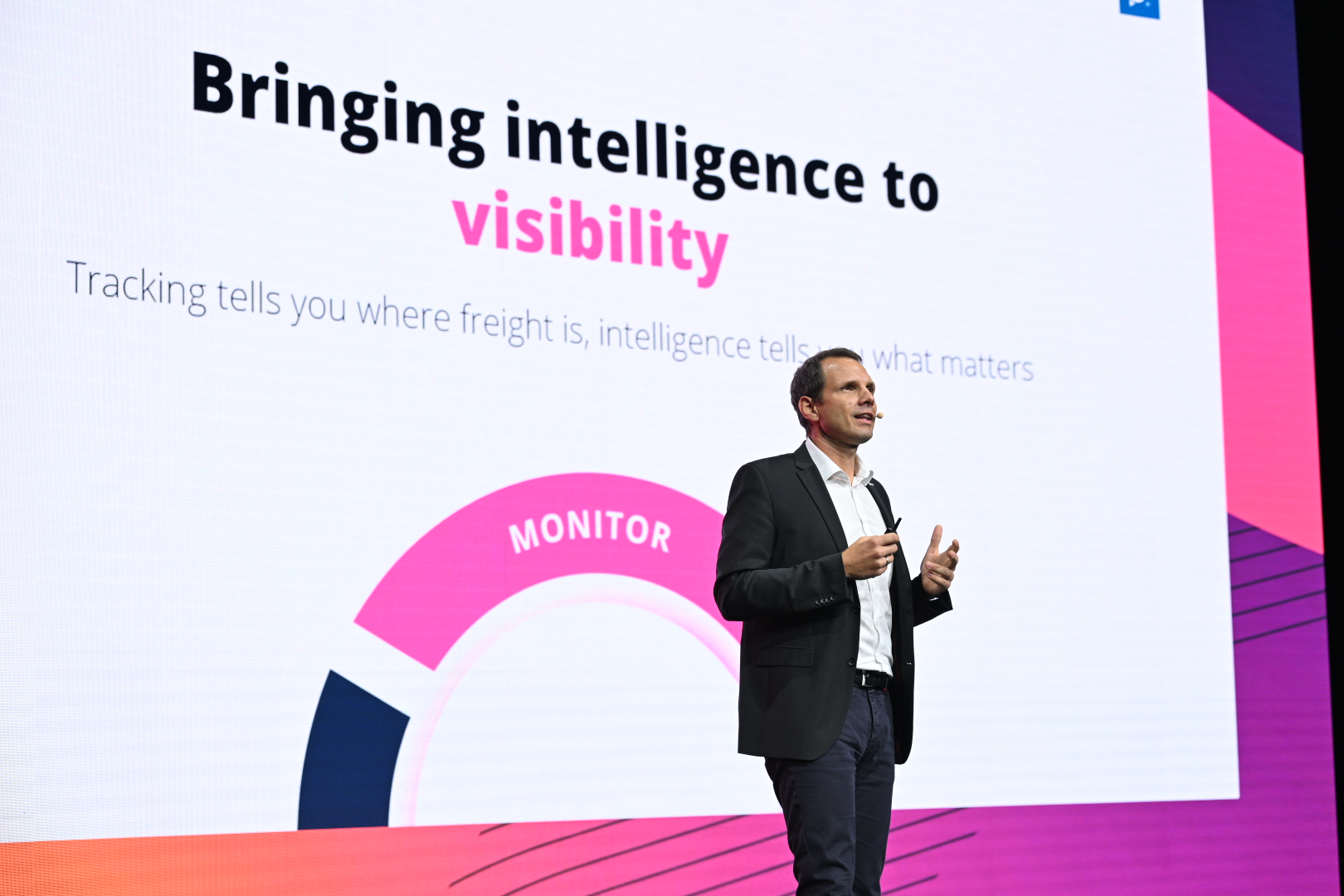
Bernhard Schmaldienst (pictured), associate VP, Transporeon products at Trimble, said:

AI in transportation only works when AI understands your products, your people and your data… Trimble Arc Agent is designed to bring that context into logistics operations, connecting products, workflows and data across the transportation lifecycle

Automating procurement and planning

The new Market Insights Spot Rate on Demand capability expands freight benchmarking across standard and specialised equipment. A natural-language assistant can also create draft lane briefs and market summaries for review.

NextGen Freight Procurement for Road is designed to replace spreadsheet-heavy full truckload and less-than-truckload tendering with a structured digital workflow. AI-assisted RFQ preparation can turn lane and pricing data into a draft tender setup, while flexible bid sheets support more complex LTL pricing.

Enhanced Autonomous Procurement adds another layer of automation by combining quote collection with AI-driven offers across a shipper’s trusted carrier network.

On the planning side, a new standalone Transport Planner is designed to handle high-volume and more complex transport plans, including milk runs and multiple capacity constraints.

AI moves into transport execution

Transporeon’s execution products can now work with AI agents such as Trimble Arc Agent, allowing users to retrieve, update and act on transport data using natural language.

The new Autonomous Execution capability can support recurring tasks such as following up carriers and requesting missing documents, extending automation beyond planning into day-to-day execution.

Maritime Intelligence adds real-time risk signals to Ocean Visibility, using information from maritime, port, weather and geopolitical data sources to help identify potential disruption earlier.

Connecting the dock, yard and settlement

Transporeon is also targeting the gaps between transport execution and physical logistics operations.

Supplier Collaboration introduces “Living Purchase Orders”, allowing supplier changes to flow into transport and yard plans before a truck leaves.

Advanced Trailer Orchestration replaces manual yard tracking with a live yard map and prioritised work queues, while eDelivery Note digitises delivery records to help accelerate invoicing.

Freight Audit SelfService uses execution data to reconcile e-invoices and AI-assisted discrepancy review, helping shippers manage freight settlement as European requirements evolve.

From digital workflows to autonomous operations

Trimble Arc Agent, launched in August 2026, is designed to connect these capabilities through an enterprise AI agent. The system includes AI guardrails and human-in-the-loop controls for tasks requiring confirmation, with visibility into AI-assisted workflows and support for explainable and auditable decision-making.

Most of the newly announced capabilities are already available to customers, including Transport Planner, Transport Execution, Supplier Collaboration, Freight Audit SelfService, Autonomous Procurement, NextGen Freight Procurement for Road, and Market Insights.

Maritime Intelligence is available in its first version, with additional port and weather capabilities planned for the end of 2026. Advanced Trailer Orchestration and eDelivery Note are scheduled for commercial rollout through October.

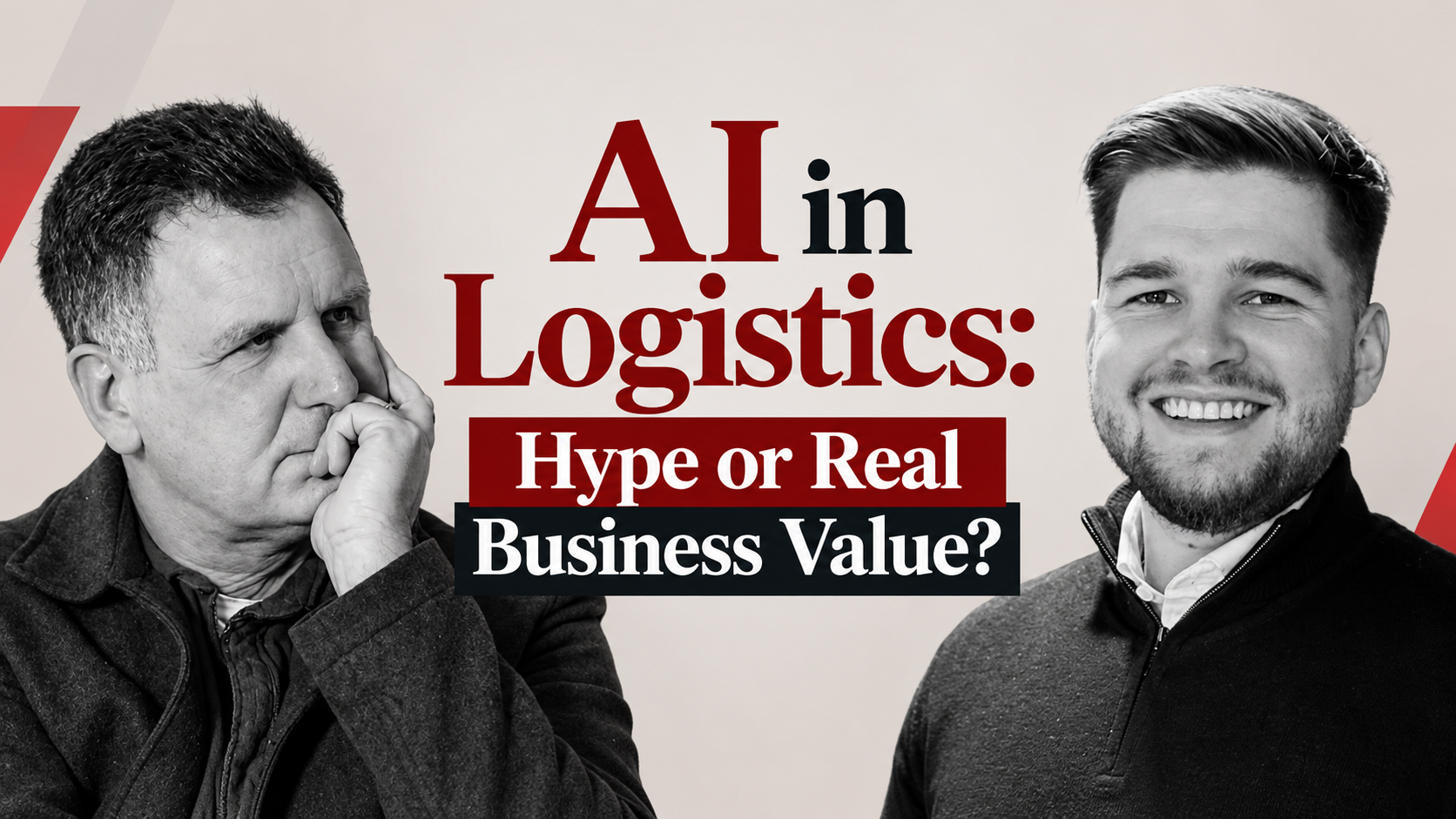
AI in Logistics: Hype or Real Business Value?

Artificial intelligence is becoming impossible to ignore in logistics, but beyond the headlines and hype, where is it actually delivering measurable value?

In the latest episode of Logistics Business Conversations, host Paul Hamblin speaks with Conor Baker of Descartes to explore how AI and machine learning are already being applied across transport planning, fleet performance and driver safety.

One of the key areas discussed is route planning. Rather than relying on fixed averages, AI can learn from historical delivery data to build a more accurate picture of how long individual stops should actually take. Factors such as the type of goods being delivered, the vehicle, the customer and previous delivery performance can all help create more realistic plans and improve on-time delivery performance.

The conversation also looks at the growing role of AI in driver safety and compliance. Fleet operators can be faced with huge volumes of information from telematics, cameras, compliance systems and spreadsheets. Descartes is using AI and machine learning to help identify patterns within that data, highlight which drivers may benefit from coaching and monitor whether that coaching is producing an improvement.

Rather than focusing on isolated incidents, the technology can provide transport managers and drivers with greater context, helping distinguish genuine behavioural patterns from one-off events. The aim is to make driver coaching more meaningful while helping fleets reduce accidents, compliance issues and operational risk.

Paul and Conor also discuss what could come next, including the potential for agentic AI to support transport planners, learn how planning teams work and take on more routine tasks. But Conor argues that businesses should start with the problem they actually need to solve rather than investing in technology simply because it carries an AI label.

Watch or listen to the full episode of Logistics Business Conversations below to find out where AI is already making a difference in transport operations — and where the technology could be heading next.

Episode player embedded below.

The Platform Paradox

Why growing companies keep buying technology they will outgrow, by Martin Lockwood, Senior Director, Manhattan Associates.

Ask any operations director who has lived through an enterprise software rollout what they would do differently, and the answer is rarely ‘buy something bigger.’ It is usually ‘buy something that could have grown with us.’ That distinction between scale and adaptability is where most supply chain technology decisions quietly go wrong.

The pattern is familiar: a retailer, distributor or manufacturer reaches a point where legacy systems can no longer keep pace with order volumes, warehouse complexity or channel sprawl. Two options present themselves: buy for today’s needs and risk an expensive migration in three years, or buy ahead of the business and absorb unnecessary cost and complexity before it is justified.
That is the platform paradox. Manhattan Associates’ answer is Manhattan Active® Editions, comprising Essentials, Enterprise and Enterprise Premier. Built on a single cloud-native foundation using the same engine industry leaders rely on, Editions ensures growing businesses no longer have to choose between right-sizing and future-proofing.

Why the old trade-off exists

Supply chain software has historically been sold in discrete increments, such as a warehouse system here and a transportation tool there, with each bringing a new vendor, data model and integration project. For a fast-scaling company, this creates compounding technical debt as every new capability entrenches a slightly different architecture that must eventually be reconciled.

Editions removes that compounding effect by keeping the underlying architecture constant. It offers the full platform, right-sized: the same codebase with a narrower starting scope. As operations scale, Enterprise expands workflow and configuration options, while Enterprise Premier targets high-volume, complex networks where orchestration becomes the binding constraint.

The case for boring infrastructure

Cloud-native architecture and AI-assisted configuration tools, such as Solution Design Studio, have dramatically reduced the effort required to stand up enterprise software. For ActiveOrder and ActiveStore, 100-day go-live benchmarks show what this means in practice. For ActiveWarehouse, AI-assisted configuration and automation enable up to a 50% reduction in standard implementation timelines.

Furthermore, a zero-infrastructure delivery model removes hardware layers, while continuous cloud delivery replaces multi-year upgrade cycles with incremental updates and zero version debt. Infrastructure decisions rarely announce their consequences immediately; instead, they surface years later as either smooth expansion or an expensive rebuild. For a finance chief underwriting a platform purchase, growth rarely follows a straight line. A model that reduces the financial and operational cost of being wrong about the pace of growth offers genuine strategic value.

What ‘grow into it’ actually requires

A platform a company grows into rather than out of requires more than good intentions. It demands that the data model, APIs, security architecture and innovation cadence are genuinely shared. Moving from Essentials to Enterprise should be a capability unlock rather than a forced migration, giving businesses flexibility to expand without re-implementation, data migration, retraining or operational disruption.

The real decision is about timing, not size

Buying the biggest system ‘to be safe’ mistakes size for security. A platform that outpaces an organisation’s operational maturity drains budget and focus. Equally, a platform chosen only for today’s scale with no clear growth path becomes tomorrow’s migration project.

The critical question for technology leaders is not ‘how big a system can we justify,’ but ‘how much of this decision will we have to make again?’ One cloud-native architecture with adjustable capability is a hedge against the central uncertainty every growing business faces: not whether it will change, but how fast and in which direction.

Bakery Supply Chain Efficiency

Cimcorp has announced the successful go-live of its advanced bakery order fulfilment solution for leading third-party logistics provider Penske Logistics in Illinois, US. By automating its customer’s order-picking process, the 3PL is managing the flow of baked goods from production to retail shelves in a way that improves order accuracy, boosts processing capacity, enhances operational safety and speeds up store deliveries.

From manual handling to automated bakery fulfilment

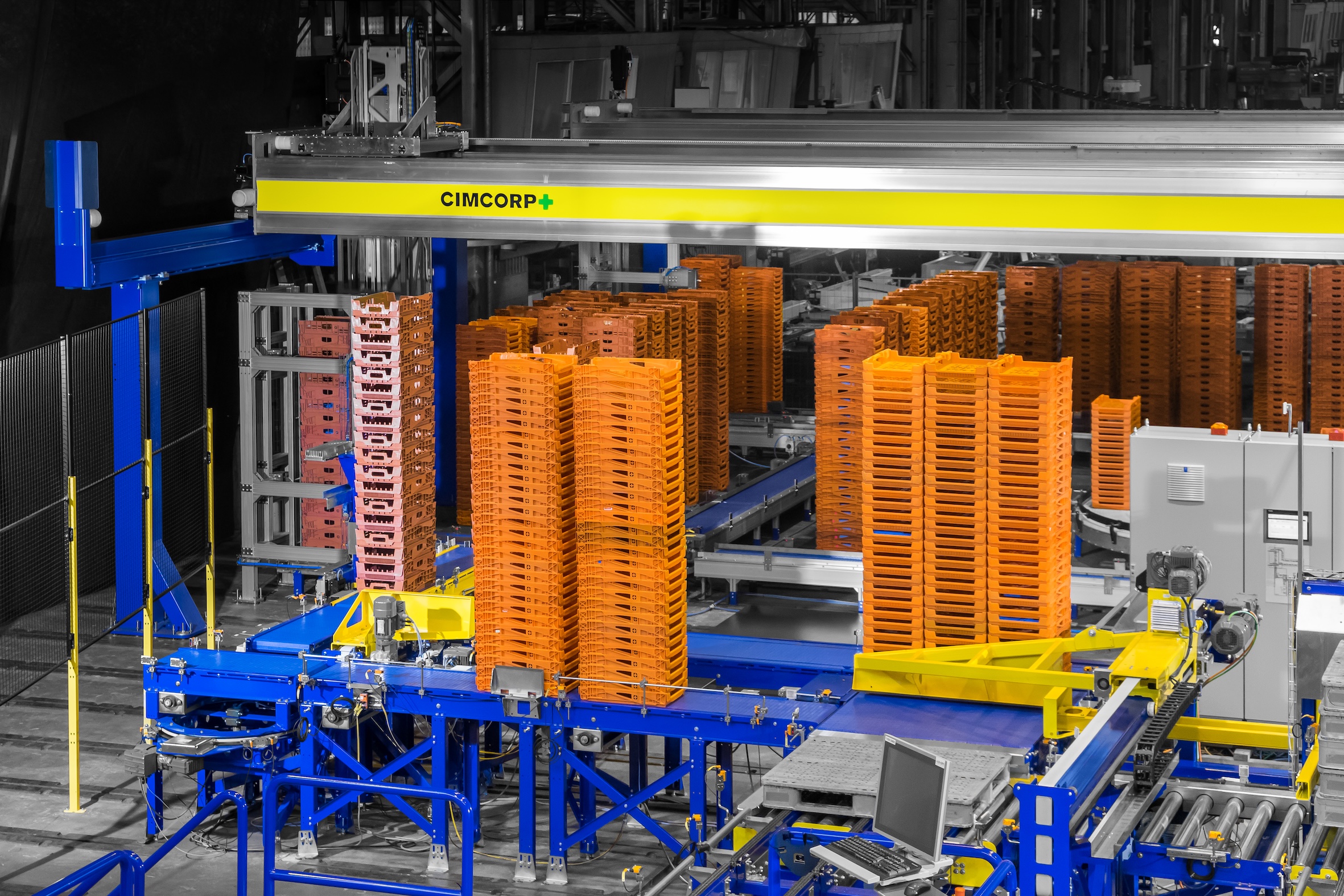
The collaboration with Cimcorp marks a pivotal shift from traditional manual operations to a data-driven, highly automated distribution model. Previously, Penske’s bakery distribution operation relied entirely on manual handling. Bread trays were unloaded, stored and selected by hand, with stacks exceeding two metres (7ft) in height. This process presented significant ergonomic challenges and safety risks related to overhead picking, while also increasing the potential for order inaccuracies.

Cimcorp’s solution integrates its MultiPick gantry robot technology and intelligent Warehouse Control System (WCS) to optimise the flow of fresh bread and rolls through the distribution process. Buffer storage and order picking are combined into one seamless operation to meet high processing volumes, while ensuring consistent performance and precision. Now, all orders are selected at tray level and assembled by Cimcorp’s solution with 100% order accuracy.

“Automated systems like this one help Penske accelerate supply chain performance for its customers,” says Steve Chambers, Vice President of Operations, Distribution Centre Management for Penske Logistics, “as these systems augment the capabilities of our highly trained workforce. By implementing this system, we expect to see increased throughput efficiency and order-picking accuracy as well as safety benefits from eliminating the manual handling of tray stacks.”

Greater efficiency and scalability for bakery distribution

Other benefits include accelerated order processing – which results in fresher deliveries and extended shelf life for bakery products – and labour requirements being reduced by 50%, allowing for more strategic resource allocation. The latter is a key lever for competitive advantage, given the labour availability issues currently experienced across the logistics industry.

The modular design of Cimcorp’s solution enables the automation to scale with demand peaks and long-term business growth, while the real-time insights provided by the system support continuous supply chain optimisation. “Cimcorp’s experience and data-driven approach directly support our goal of continuously strengthening our customers’ supply chains,” confirms Chambers.

Penske selected Cimcorp as its automation partner based on the company’s extensive experience and proven technology tailored for high-volume bakery operations. Cimcorp has delivered its award-winning bakery automation for Martin’s Famous Pastry Shoppe, Inc.®, Kwik Trip and Fazer Bakeries, with other fresh food customers including Alimerka, Mercadona, Netto and REWE.

“This project reflects Penske’s forward-thinking approach to logistics,” says Adam Gurga, Sales Director at Cimcorp North America, “and commitment to investing in technology to drive customer success. By working together to implement an automated solution that improves performance today and supports growth tomorrow, we’ve set a new standard for bakery distribution.”

Right-size is Transforming Transit Packaging

Until fairly recently, the way retail goods were packed for shipment had little impact on business costs and performance, merchandise was simply bulk-packed for store replenishment. That was, until the boom in internet sales and the supercharged use of transit packaging for direct-to-consumer orders.

Fulfilling thousands of individual small orders a day, all of varying sizes and each requiring appropriately sized protective packaging, has changed the dynamics and relative costs of transit packaging, impacting margins. For many years the high costs of labour-intensive packing lines, using a fixed range of box-sizes, were seen by many businesses as ‘absorbable’, but now as online order volumes continue to grow an inflexion point has been reached where companies are now eagerly looking for ways to radically trim costs and boost performance.

According to the ONS Retail Sales Index, online sales consistently captured 27.4% of all UK retail spending across 2025, rising to 29.9% in Q4 2025. And giving an idea of what this means in terms of volume of packages carried, Ofcom’s 2025 Annual Parcel Report found that 4.2 billion parcels were sent and received by UK consumers in 2024.

Businesses faced with this significant shift to ecommerce orders have been challenged by the need to find efficient processes for picking, packing and dispatching orders of single and small-number items at great speed, creating as little material wastage as possible, all within the major constraints of scarce labour availability, rising labour costs and the fast-paced introduction of environmental legislation that has significant implications for process, material usage and costs.

What has become clear is that the most obvious way to minimise material usage and cost is to make sure that each box used to protect an order during transit is exactly the right size needed for that particular order – and this needs to be repeated for each and every order processed for dispatch. This is why automated right-size boxing solutions are being adopted by both large and smaller enterprises worldwide.

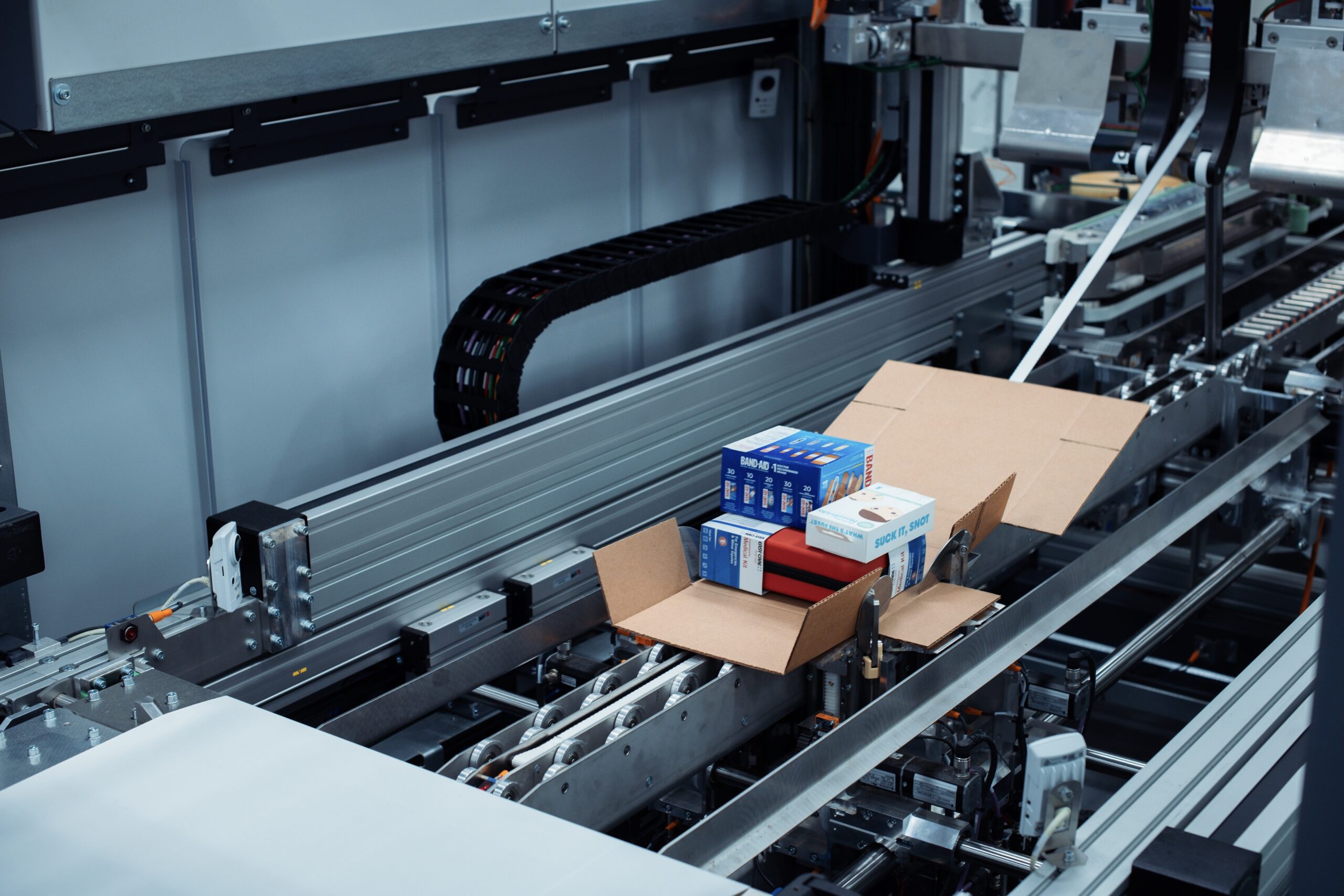
The business leading the ‘right size’ revolution is Packsize. The company has built an international reputation for cutting-edge ‘right-size’ technology, offering a complete range of fully- and semi-automated on-demand packaging solutions, capable of producing robust and sustainable corrugated boxes for transit, each tailored to be exactly the ‘right-size’ for the product or order – saving an average of 40% of empty space per package.

Scalable solutions are available to suit every size of business, from those with low volume needs – and yet with a wide diversity of product sizes and shapes – to fast-moving, high-volume ecommerce brands with a requirement to cope with strong peaks and fast throughput of a wide profile of goods, as well as single and multi-item orders. Versatility, speed and precision are brought together in automated systems capable of producing perfectly formed and sealed right-size boxes at speeds of up to 1300 packages per hour.

Packsize’s innovative technology can also provide a continuous, integrated solution for picking and fulfilment operations, with box-first or box-last formats – and even flexing between both on the fly. Creating a right-size tray for each order, then picking to the tray and lidding after, eliminates the need for plastic pick-totes and offers complete flexibility for multi-functional picking and packing operations.

According to Packsize, across their solutions customers see average corrugated material savings of around 30%, package volume reductions of up to 40% and approximately 80% less void fill is used. Fully automated systems can also commonly deliver the equivalent output of around 20 manual packing stations, creating significant labour efficiencies. These results vary depending on the customer’s products, order profile and their existing operation.

As average box size reductions of 40% are regularly experienced by customers, it’s possible to load many more packages onto a single vehicle, offering a potential to reduce the number of vehicles used, saving fuel and carbon emissions – all, important, cost saving factors with significant environmental gains.

When it comes to installation, Packsize supports both brownfield and greenfield projects. The company is highly proficient at integrating solutions into existing infrastructure and warehouse processes, and when engaging in a greenfield project, involving Packsize early on allows packaging to be considered as part of the overall system design – creating greater opportunities to optimise the complete material flow and overall efficiency of the operation.

Although the company’s top-end systems are highly sophisticated, they are essentially plug-and-play, with straightforward integration into existing warehouse operations and seamless connectivity to the customer’s WMS.

AI App Builder Added to Warehouse Platform

AutoScheduler.AI has announced the ‘AI App Builder’, a new capability within its Warehouse AI Platform. The AI App Builder lets warehouse planners, supervisors, and site leaders create, deploy, and use AI-powered applications tailored to their operations in days, without waiting on IT or a software vendor’s roadmap.

AI App Builder marks AutoScheduler.AI’s evolution from warehouse orchestration pioneer to the Warehouse AI Platform: one platform that orchestrates everything inside the building and now empowers site teams to solve the problems that fall between the cracks of their systems of record, including warehouse management, labour management, yard management, and automation systems.

“Warehouses run on massive systems that are expensive and slow to customize, so operators fill the gaps with spreadsheets, business intelligence tools, homegrown tools, and tribal knowledge,” said Keith Moore, AutoScheduler.AI CEO.

“The AutoScheduler AI App Builder closes that gap. The people who see the problems every day can now fix them, building applications on live warehouse data, backed by real optimization math, in days. We still orchestrate all the systems inside the building; now we also hand the floor the tools to solve everything in between.”

The AI App Builder runs on AutoScheduler.AI’s semantic layer of warehouse knowledge, live warehouse data, and a library of production-grade optimization algorithms. Users describe what they need in plain language, and the AI App Builder creates an application that can inform, monitor, and automate the process.

From warehouse orchestration to Warehouse AI

AutoScheduler.AI remains the orchestration layer that sits above a warehouse’s existing systems of record. The AI App Builder extends that same platform, letting teams address site-specific needs that fall outside their core software’s capabilities.

Applications already built and deployed by AutoScheduler customers include: Labour forecasting and planning; OTIF predictive monitoring; Replenishment monitoring; Gamification; Wave and workflow optimization; Inventory-flow analysis and tracking; Production planning; Inbound Crossdock Prioritization; Dock Door Schedule Compliance; Site-specific operational dashboards and alerts.

Unlike generic AI or low-code application builders, AI App Builder is purpose-built for warehouse operations. Six years of experience across nearly 100 sites has created a semantic layer that understands warehouse data across connected systems, paired with a library of warehouse-specific optimization solvers. Applications built with it draw on normalized warehouse data and optimization math developed for real-world warehouse operations, not generic AI-generated logic.

“Anyone can point AI at a warehouse,” said Kunj Pandya, Head of Product and Customer Success at AutoScheduler.AI.

“The difference is that our semantic layer already knows what the data means across the WMS, ERP, and labor systems, and every app built can call on optimization solvers proven across nearly 100 sites.”

Apps built in days, not months

Instead of filing a request with IT or waiting on a vendor’s roadmap, warehouse teams build the applications themselves. In a recent customer’s working session, an application was stood up in less than 15 minutes. Existing customer sites are already building multiple applications on their own, evidence the capability is built for production use, not as a beta or prototype.

In another case, a site planner discovered AI App Builder independently and built a replenishment-monitoring application. The savings were large enough that the site budgeted six figures for it annually. The build, deployment, validation and savings commitment all happened within two weeks.

A planner at a global food and beverage company described the experience this way:

“The AutoScheduler App Builder feature is one of the best integrations of software and AI that I’ve seen so far. It helps bridge one of the biggest challenges in software development: the gap between understanding a business problem and turning that knowledge into a practical digital solution. Using the App Builder, we’ve been able to bring important data directly into our decision-making venues, change workflows, close information gaps, and significantly speed up the flow of information between different stakeholders.”

AI App Builder runs on the same integration that powers AutoScheduler.AI’s orchestration, so customers do not need separate data infrastructure for each application. Applications live inside the existing AutoScheduler.AI platform alongside tools such as Daily Plan, Wave Planner, Network Scoreboard, and Warehouse AI Agent. Where appropriate, they can write tasks back into the WMS for execution on the warehouse floor.

Included in the AutoScheduler Warehouse AI Platform

AI App Builder is generally available now as part of the AutoScheduler Warehouse AI Platform, available to customers who want a warehouse-ready AI toolbox, or who want AutoScheduler’s forward-deployed experts to help guide them while building their first applications.

The result is a new model for warehouse technology: AI that runs the warehouse and AI that lets the people running the warehouse build what they need next.

“AutoScheduler.AI was the first to fully orchestrate all labor, resources, and inventory in the warehouse six years ago,” said Moore. “We created the category. Our expertise as AI leaders, along with our access to normalized warehouse data and our unique optimization algorithms, led to the creation of the AI App Builder for warehouse floor leaders to build and deploy solutions that meet their specific needs.”

Geopost puts delivery skills in the spotlight

Geopost has brought together 32 delivery professionals from 24 business units in Warsaw for the fifth edition of its Delivery Excellence Challenge, putting the practical skills behind safe and sustainable parcel delivery under the spotlight.

Held on 16 and 17 September, the international competition is designed around real-life situations faced by delivery professionals every day. Participants were assessed on everything from vehicle checks and precision driving to route management, emergency response and customer experience.

Since its launch in 2022, the event has developed into a Group-wide competition bringing drivers from across Geopost’s international network together to share experience and good practice.

Safety starts before the journey

Health and safety remain at the heart of the Challenge, with participants completing physical warm-ups and pre-departure vehicle checks before taking to the road.

The competition also tests drivers’ ability to respond to unexpected situations, while precision driving and route management exercises focus on the practical skills needed to deliver safely and reliably.

Marie-Ange Debon, Chairwoman and CEO of La Poste Groupe, attended the Warsaw event alongside Yves Delmas, Executive Vice-president of La Poste Groupe and CEO of Geopost.

Marie-Ange Debon said:

“Their professionalism and commitment are remarkable, but what matters above all is that they can carry out their work safely and look after their physical and mental well-being. At Geopost, we are working to make prevention part of everyday operations, through training, safer working practices, vehicle checks and initiatives designed to reduce physical strain.”

Electric vehicles put to the test

Sustainability is also built into the competition. Drivers were assessed on eco-driving techniques including smooth acceleration and braking and anticipating road conditions, all of which can help reduce energy consumption while supporting safer driving.

All pickup and delivery challenges were carried out using electric vehicles. For the first time in 2026, an electric truck was also used in the competition.

Geopost says the exercises demonstrate the connection between driver behaviour, operational efficiency and lower-emission delivery as it works towards its target of Net Zero by 2040.

Ireland and Germany take top honours

Phil Coulter from DPD Ireland won the Pickup and Delivery category, while Mathias Klingebiel from DPD Germany took the Long-distance Transport title.

Coulter and Klingebiel also shared the Sustainability Special Award for their respective categories.

The Safety Special Awards went to Marek Janák and Marek Škorvánek, both from DPD Slovakia.

For Geopost, the Challenge provides more than a competition. It gives delivery professionals from across its international network an opportunity to compare practices and demonstrate the skills that underpin safer, more reliable and more sustainable operations.

Geopost operates in more than 50 countries through delivery brands including DPD, Chronopost, SEUR, BRT, Speedy, Jadlog and Asendia. The group employs 55,000 people and delivered 2.2 billion parcels worldwide in 2025.

DHL expands Colombia operations with Open Market deal

DHL Supply Chain has agreed to the acquisition of logistics and transport operator Open Market, adding significant warehousing, transport and temperature-controlled capabilities to its network in Colombia.

The deal will bring 21 warehouses covering a combined 120,000m², 13 cross-docking platforms and an owned transport fleet into DHL’s Colombian operation. Around 4,100 Open Market employees will also join DHL Supply Chain.

The acquisition is part of DHL Group’s Strategy 2030 and is intended to strengthen its presence in Latin America, with a particular focus on life sciences, healthcare and other specialised supply chains.

Hendrik Venter, CEO of DHL Supply Chain, said:

“This step reflects our strategic focus on strengthening our capabilities in regions and sectors that show sustained, long-term growth. By expanding our presence here and integrating Open Market’s expertise, particularly in managing complex supply chains for pharmaceuticals, medical products and personal care, we further advance our global DHL Health Logistics capabilities.”

Adding specialist capabilities

Open Market brings capabilities spanning transportation, packaging and temperature-controlled operations, alongside its warehousing and cross-docking network.

The business serves sectors including life sciences and healthcare, consumer goods, engineering and manufacturing. DHL says the combination will strengthen its ability to manage more specialised supply chains across Colombia and the wider Latin American region.

Agustín Croche, CEO Latin America at DHL Supply Chain, added:

“Open Market’s experience strongly complements our existing offering in Latin America. Their transport network with cross-docks and temperature-controlled warehouses, combined with its experience supporting dynamic sectors such as life sciences and healthcare, consumer, and engineering and manufacturing enhances the quality and reliability of the services we provide.”

DHL has also recently expanded its Constellation Distribution Center in Cota, near Bogotá, adding further capacity for specialised supply chains.

Open Market employees join DHL

The acquisition will also bring Open Market’s workforce into DHL Supply Chain.

“At DHL Supply Chain, people are central to our success,” said Robinson Vasquez, CEO of DHL Supply Chain Colombia. “By welcoming Open Market’s employees into our organisation, we gain colleagues with extensive experience, deep market knowledge and strong customer relationships.”

The transaction remains subject to customary closing conditions.

Open Market’s chairman Anibal Wadih said the sale forms part of the company’s strategy to focus investment and capabilities on Brazil, adding that the priority is to maintain continuity and service quality during the transition.

The deal follows DHL’s recent expansion elsewhere in Latin America, including its acquisition of Aero Cargas in Uruguay, as the group continues to build its regional logistics network.

Subscribe

Get notified about New Episodes of our Podcast, New Magazine Issues and stay updated with our Weekly Newsletter.