Four signs your business has outgrown its 3PL

A good third-party logistics provider (3PL) can be the backbone of a growing business. But as a supply chain expands across markets, carriers and systems, the problem may no longer be the performance of the 3PL. It may be that the logistics model itself has reached its limits.

That is the argument made by Paul Lockwood, UK and Ireland Group Managing Director at SEKO Logistics, who identifies four signs that a business may have outgrown its existing 3PL model.

The distinction is important. A 3PL manages one or more logistics services, while a fourth-party logistics provider, or 4PL, manages multiple logistics providers and takes on a broader orchestration role.

The visibility gap widens

Growth can bring new markets, carriers and regional partners, each with different systems, service levels and reporting formats. Individual providers may perform well, but the business can lose its ability to see inventory, orders and performance across the network as a whole.

The 2026 30th Annual Third-Party Logistics Study found that 90% of shippers consider technological capabilities critical when selecting a 3PL, while only 57% say they are satisfied with their provider’s technology capabilities. Lockwood said:

“There’s a real gap between what businesses expect from technology and what they’re getting. Selecting a provider on technology capability is one thing; actually being satisfied with it once you’re in the relationship is another.”

Growth outpaces the network

A provider that works well in one region may not have the network needed when its customer expands into new markets.

According to the study, half of shippers and 62% of 3PLs report that shippers are actively consolidating the number of 3PL partners they use.

“We’re seeing this consolidation play out with our own clients,” Lockwood said. “Once a business is managing four or five separate provider relationships across different markets, adding another one rarely solves the problem.”

Instead, the requirement may become one of network-level management, with a single party coordinating multiple providers.

The relationship becomes strategic

As a business grows, the role expected of its logistics partner can change. What starts with reliable execution can develop into questions around inventory strategy, landed costs, resilience and market entry.

The 2026 study found that 81% of shippers cite supply chain disruption and complexity, while 76% cite cost optimisation through collaboration, among their reasons for pursuing more strategic logistics partnerships.

That does not necessarily mean moving to a 4PL model. It does, however, suggest that logistics relationships can evolve beyond straightforward execution.

Systems stop talking

Multiple logistics providers can also create multiple WMS, TMS and EDI environments. Data that should flow through the supply chain can instead become fragmented across different systems, requiring separate reconciliation and management.

A 4PL model can address this by providing an orchestration layer across multiple providers and systems.

Not every business needs a 4PL

Moving to 4PL is not automatically the answer. It can mean greater transfer of control, a more involved transition and a different cost structure.

For a business still operating within one or two markets, strengthening its existing 3PL relationship may be more appropriate than adding another layer of management.

Lockwood concluded:

“None of this means a business’s 3PL has failed. Outgrowing a model is usually a sign of success.”

The key question, therefore, is not whether 4PL is the next inevitable step. It is whether the complexity of the supply chain has reached the point where managing individual logistics providers is itself becoming a problem.

Hyster delivers hydrogen ReachStacker to UK port

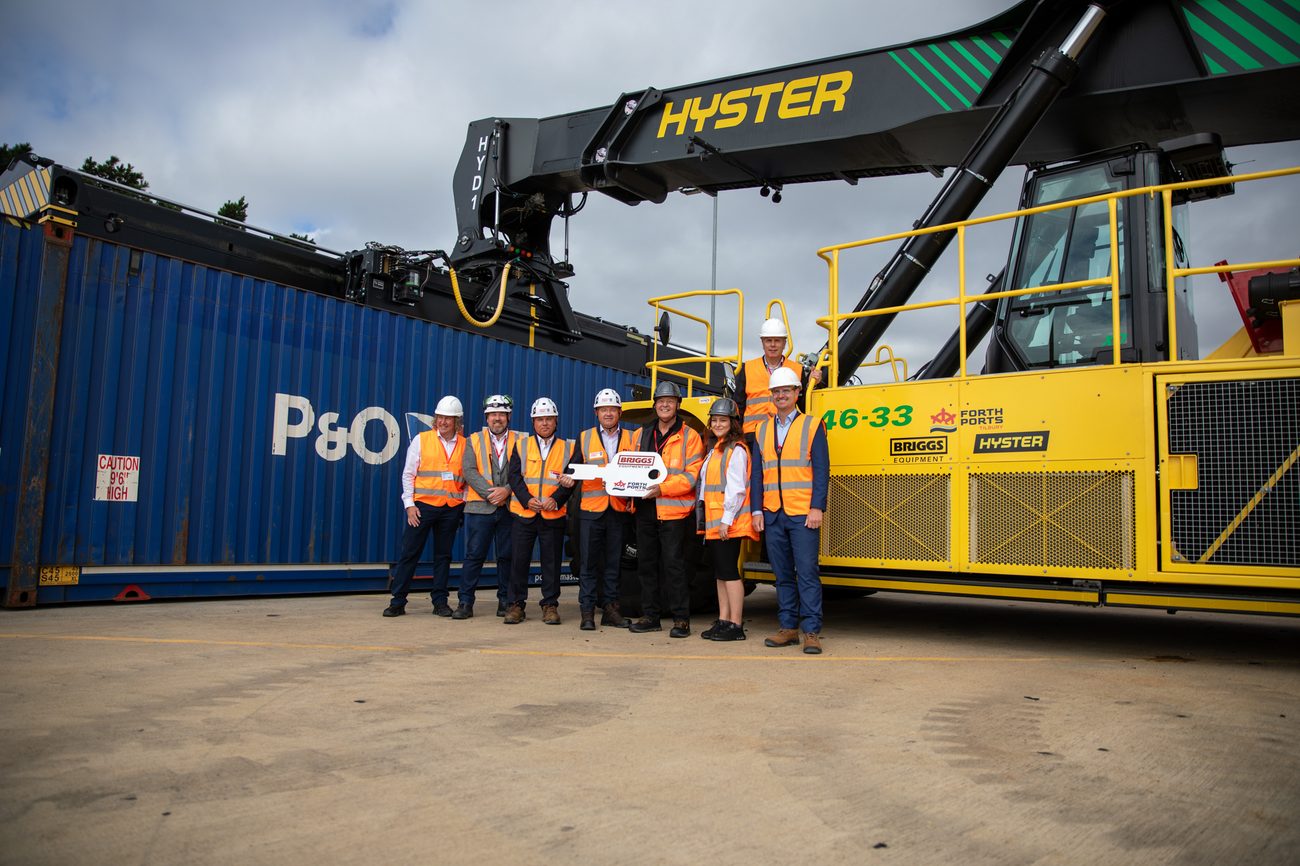
The UK’s first hydrogen fuel cell-powered ReachStacker has entered operational service at the Port of Tilbury in Essex, marking a step forward in the use of hydrogen for heavy-duty container handling.

Hyster has delivered the machine in partnership with local dealer Briggs Equipment UK. The pre-production ReachStacker will operate on green hydrogen produced on site, allowing the Port of Tilbury to trial hydrogen fuel cell technology in demanding port operations.

David Housden, Head of Engineering & Procurement at the Port of Tilbury, said:

“Today is an important milestone in the history of the Port of Tilbury as we welcome the UK’s first hydrogen fuel cell ReachStacker into our busy container operations. We are now delivering 100% green hydrogen-powered heavy lifting capability for our customers.”

The machine is expected to reduce the port’s carbon footprint by more than 107,000kg of CO2 per year, based on the diesel consumption of an equivalent machine.

Built for a full shift

The ReachStacker uses a 60kW Nuvera fuel cell engine to generate electricity, supported by a 130kWh lithium-ion battery.

Its high-pressure hydrogen tanks hold 32kg of fuel, providing the capacity to operate across a full 12-hour shift. Refuelling takes less than 30 minutes.

The fuel cell system has been developed using experience from previous pilot projects, including Hyster’s ReachStacker trial in Valencia, which concluded last year. Hyster says the system has been optimised and right-sized for the application.

“While eliminating tailpipe emissions has been the core driver of this pioneering collaboration, it was also critical to develop a solution that was up to the job and delivers performance and toughness comparable to an ICE-powered machine”

said Lucien Robroek, President of Global Big Trucks at Hyster.

The machine also incorporates Hyster’s standard software architecture used across its electric products.

Hydrogen for heavy-duty handling

For the Port of Tilbury, the project is intended to demonstrate whether hydrogen can provide the combination of zero tailpipe emissions, productivity and operational resilience required for intensive container handling.

The port is part of the Forth Ports Group, which has a target of achieving net zero greenhouse gas emissions by 2042.

“This pre-production trial marks a landmark moment for our business as we introduce leading alternative clean energy solutions into our port operations,” added Housden. “The project is supported by on-site green hydrogen production, supply, and refuelling infrastructure from GeoPura.”

Green hydrogen for the ReachStacker will be produced using an electrolyser supplied by GeoPura, with on-site production, supply and refuelling infrastructure supporting the project.

Briggs Equipment will provide frontline service and maintenance, while Hyster will provide specialist technical support for the fuel cell and high-voltage systems.

Mike Parkin, Ports and Big Truck Director at Briggs Equipment UK, said:

“We are thrilled to be part of this milestone and to welcome the UK’s first hydrogen fuel cell ReachStacker to the Port of Tilbury. This innovative hydrogen project shows what is possible when sustainability and innovation combine.”

The project follows two years of collaboration between the Port of Tilbury, Hyster and Briggs Equipment, with the partners now evaluating hydrogen technology under real operating conditions.

Gartner identifies four AI trends reshaping warehouses

Artificial intelligence is moving from experimentation towards operational deployment in warehousing, according to Gartner, which has identified four AI trends set to transform warehouse operations.

Gartner says three forces are driving the shift: ongoing labour constraints, changes in capital models that provide lower-risk entry points for automation, and the increasing operational maturity of AI and autonomous technologies.

The four trends span different levels of AI maturity and application, ranging from enhanced optimisation through to physical AI agents capable of carrying out warehouse tasks.

Enhanced optimisation

The first trend is the evolution of traditional AI-based optimisation. Rather than relying primarily on rules and statistical models, newer systems can work with richer real-time data and more sophisticated algorithms.

Applications such as demand forecasting, labour planning, route optimisation and inventory management can continuously adapt to changing warehouse conditions.

The aim is to improve resource utilisation and operational performance while retaining the transparency and repeatability that have made traditional AI useful in warehouse environments.

Generative AI moves into operations

Gartner’s second trend is operational-driven generative AI, which uses machine learning models to turn unstructured and semi-structured data into operational content, plans and insights.

Potential applications include dynamically generated standard operating procedures, work instructions, exception-handling protocols and decision-support tools.

Rather than existing as a separate layer, these capabilities can be embedded directly into warehouse processes to support faster decision making.

AI agents keep humans in the loop

Suggestive and semiautonomous agents sit between manual operations and full autonomy.

These systems analyse operational data and can recommend or partially execute multistep workflows while maintaining human oversight. Gartner highlights applications including task assignment, exception handling, resource allocation and operational responsiveness.

This approach allows warehouses to introduce greater automation without immediately handing complete control of operational decisions to AI systems.

Physical AI takes action

The fourth trend brings AI into the physical warehouse through the combination of artificial intelligence, robotics and advanced sensing technologies.

Physical AI agents can perform activities including picking, packing, sorting and material handling. Gartner says these systems can improve throughput and consistency while also supporting workplace safety and addressing persistent labour constraints.

Gartner advises supply chain leaders to take a pragmatic approach, beginning with proven applications such as labour forecasting and slotting before expanding into generative AI and agent-based systems.

Maintaining human oversight while evaluating new applications will remain important as AI moves further into day-to-day warehouse operations.

Loadsmart launches Opendock in Brazil

Loadsmart is expanding its operations in Brazil and has launched its Opendock freight scheduling and yard management platform in the country at Intra-Log Expo South America in São Paulo.

The move brings a platform already used across international logistics operations to a market where truck waiting times and yard congestion remain significant challenges.

Opendock connects more than 4,000 warehouses and 230,000 carriers globally, processing more than 14 million appointments each year. The platform is designed to coordinate truck arrivals and departures, providing greater visibility across gatehouse, yard and dock operations.

Loadsmart says its US operations provide evidence of the potential impact. Between 2022 and 2024, operations using Opendock recorded a 62% reduction in wait times, a 31% increase in dock turnover and an 88% improvement in punctuality, according to company data. The number of contacts required to confirm appointments also fell by 45%.

From scheduling to yard visibility

Opendock combines dock scheduling with gatehouse and yard management, allowing logistics operators to manage vehicle movements and appointments through a single cloud-based platform.

The system is designed to replace fragmented processes based around emails, telephone calls and spreadsheets. These can make it difficult to coordinate arrivals, create congestion at the gatehouse and limit visibility of what is happening elsewhere in the yard.

The platform also includes SmartGate, Loadsmart’s AI-powered computer vision technology. Cameras automatically record vehicle arrivals and departures and link visual evidence to scheduled appointments.

Other functions include real-time asset tracking, yard layout configuration and two-way communication with drivers.

Loadsmart says the platform is designed for rapid implementation, allowing customers to introduce the technology without a lengthy deployment programme.

A focus on Brazilian operations

The company sees Brazil as a strategic market for its expansion in Latin America. Loadsmart was founded in 2014 by Ricardo Salgado and Felipe Capella and has established its business primarily in North America.

According to figures presented by Capella, average waiting times at large Brazilian logistics centres can reach 11 hours, compared with less than two hours in the US. He also cited logistics costs equivalent to around 15.5% of Brazilian GDP, compared with 8.8% in the US.

The company says Opendock is intended to help operators turn these operational bottlenecks into measurable improvements in productivity and service levels.

At Intra-Log, Loadsmart demonstrated the platform at Booth 807, with its sales and product teams available to discuss applications with manufacturers, warehouses, distribution centres, logistics operators, carriers and shippers.

The company is also using the event to establish its presence in the Brazilian logistics technology market as it expands its operations in the region.

GXO automates Guess fashion fulfilment

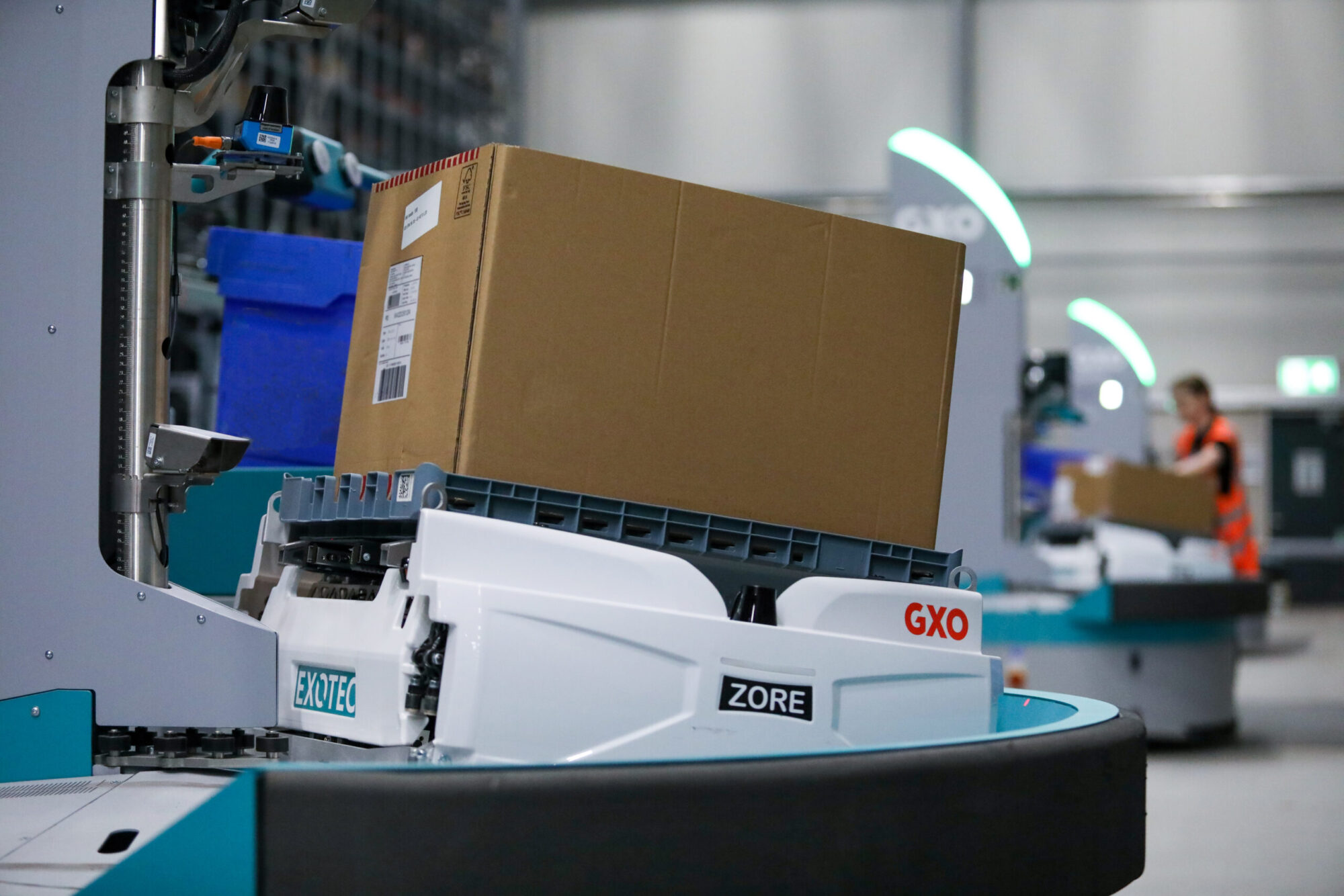
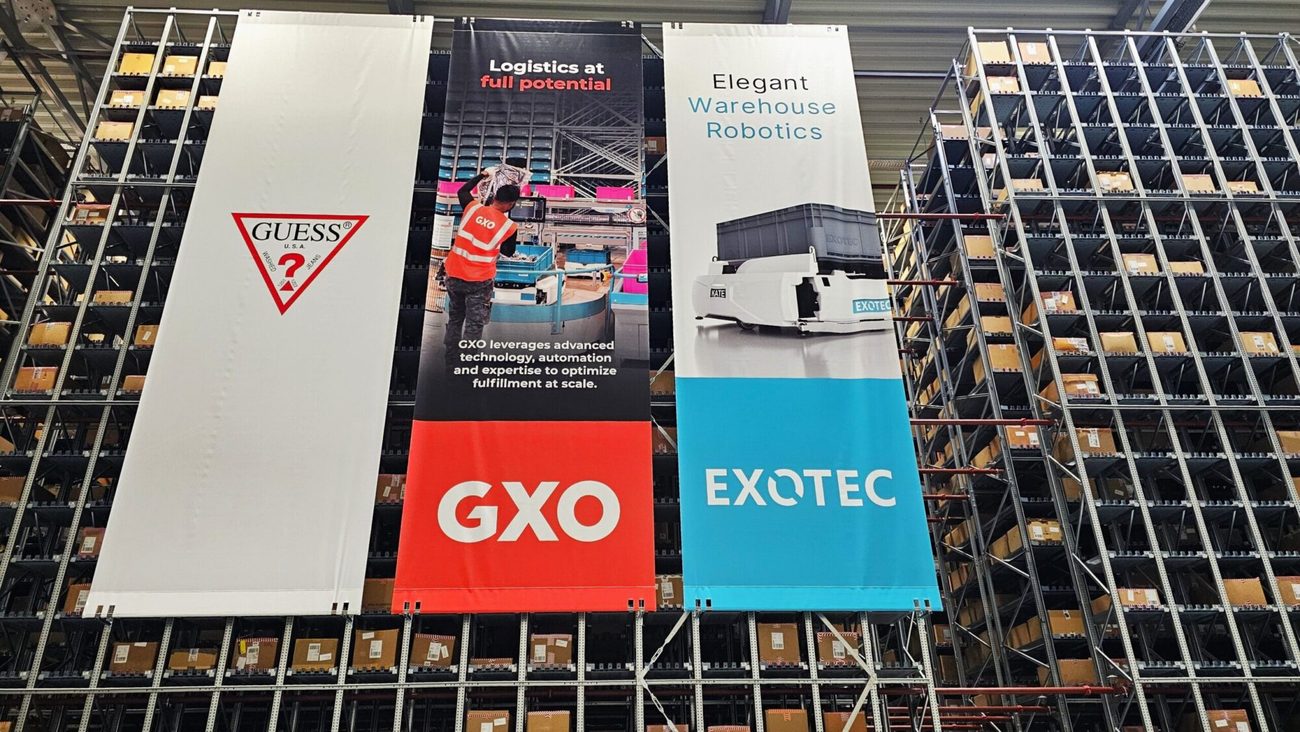
GXO has deployed Exotec’s Skypod robotic system at its Venlo facility in the Netherlands, automating fulfilment operations for global fashion brand Guess.

The system is designed to handle the particular demands of fashion logistics, including high SKU counts, seasonal fluctuations and changing customer requirements. It can process between 40,000 and 70,000 pieces per day, with peak throughput of up to 2,200 order lines per hour.

The installation comprises 127 robots, 60,000 rack locations, eight goods-to-person picking stations and 200 metres of conveyor.

GXO manages inbound logistics and value-added services for Guess at the site, including quality control and garment conditioning, as well as outbound distribution to retail stores across EMEA and Asia. E-commerce fulfilment for the Benelux market is also being added.

One system for a complex operation

GXO and Exotec worked together to design the automation around Guess’s specific operational requirements rather than simply installing a standard system.

Exotec acted as the system integrator, bringing the different elements together under a single automation platform. The Skypod system provides automated storage and retrieval, while the goods-to-person stations bring products to operators for picking.

The installation also incorporates a 200-metre conveyor network linking storage, picking and dispatch areas, alongside specialised equipment for handling different stages of the process.

The objective is to reduce manual picking effort while providing the capacity to absorb future growth without requiring a complete redesign of the operation.

Scaling with seasonal demand

Fashion fulfilment presents a particular automation challenge because product ranges can change rapidly and demand can vary significantly between seasons.

At the Venlo site, the system can scale from around 40,000 pieces a day to 70,000 during peak periods. GXO says the operation has also become more predictable and streamlined since the system went live.

The installation is intended to support Guess’s retail distribution across EMEA and Asia while providing additional capacity for e-commerce volumes.

For GXO, the project demonstrates how warehouse automation can be configured around the operational characteristics of a specific customer rather than treating automation as a one-size-fits-all solution.

Ferrovalle brings AI optimisation to Mexico City rail hub

Ferrovalle is taking its digital transformation further into terminal operations at its Mexico City intermodal hub, selecting Inform’s Syncrotess Optimization Plus platform to support a new Smart Yard initiative.

The software will provide an optimisation layer across yard, equipment and train operations, working alongside Ferrovalle’s existing in-house Terminal Operating System (TOS). Go-live is planned for June 2027.

Ferrovalle’s intermodal division handled around 550,000 TEUs in 2025, making it one of Latin America’s largest inland intermodal operations. Planning container storage, equipment deployment and train loading and discharge currently relies significantly on manual criteria and dispatcher experience.

Syncrotess will use data from Ferrovalle’s existing systems to improve operational visibility and generate continuously updated recommendations across the terminal.

The initial optimised fleet will include eight RTG cranes, four reach stackers and 14 terminal tractors. Ferrovalle aims to increase equipment throughput, improve the ratio of billable moves to total handling volume, and meet service-level targets for truck handling, train loading and train discharge.

The solution combines Inform’s Yard Optimizer, Crane Optimizer, Vehicle Optimizer and Train Load Optimizer.

Working with existing systems

A key feature of the project is its hybrid architecture. Rather than replacing Ferrovalle’s existing TOS, Syncrotess will operate as an additional optimisation layer, exchanging train consist data, load plans, container status, clearance information and operational updates.

The approach is particularly important given the complexity of Ferrovalle’s customs environment. The project covers both customs-cleared and customs-controlled yards, while also accounting for different processes for maritime and cross-border containers.

Dedicated inspection and loading areas will be incorporated into the workflow through automated tractor assignments and status exchanges with the TOS.

Integration with the terminal’s Equipment Control System will also enable automatic weight verification during routine crane lifts, removing separate weighing stops from the process.

Customs clearance built into planning

Customs clearance will form part of the optimisation process. Before a container is assigned for train loading, Ferrovalle’s TOS will confirm that the required customs and documentation clearance has been granted. Only cleared containers can then be released for loading.

The Train Load Optimizer will also automate a planning process that is currently largely manual. It will generate optimised train load plans based on available containers, train configurations, operational restrictions and clearance status.

Planners will retain the ability to review and adjust proposed plans when required.

The contract was signed in early September 2026, with the system scheduled to go live approximately nine months later in June 2027.

Packaging reduction has its limits

There is only so far companies can go by using less packaging material. Once that point is reached, reuse offers another way to reduce the environmental impact of e-commerce shipments.

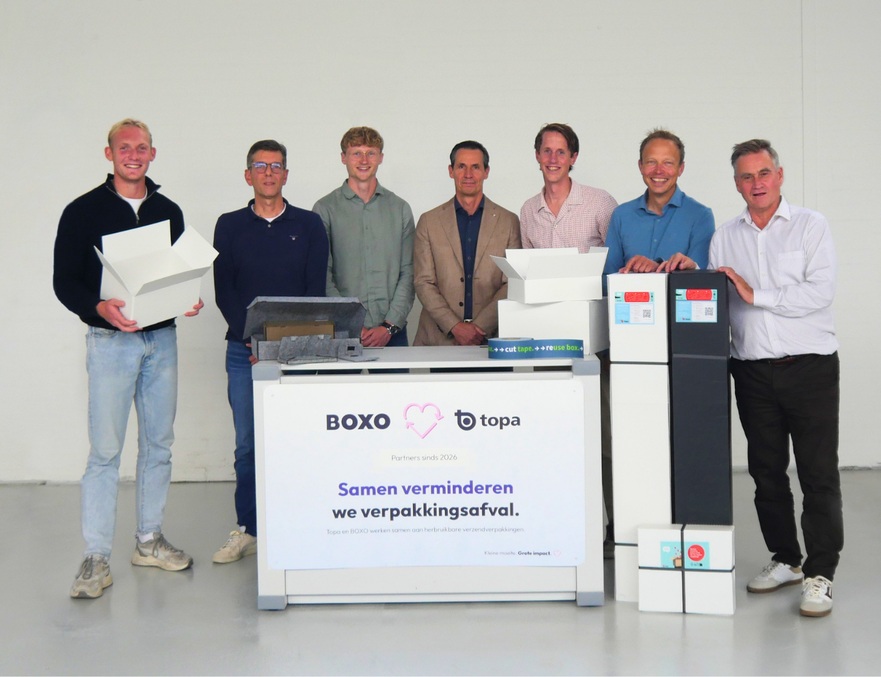
That is the thinking behind a new partnership between packaging specialist Topa and system operator Boxo. The companies have formalised their collaboration to make reusable shipping packaging easier to deploy at scale.

The underlying logistics challenge is straightforward. Packaging must protect goods throughout the delivery journey while minimising waste. Reducing packaging material is important, but if lighter or smaller packaging results in damaged products, the environmental and financial costs quickly outweigh the savings.

The two companies argue that once the lower limit for single-use material has been reached, reusing the same packaging multiple times is the next step in reducing its overall footprint.

Building the return infrastructure

The partnership combines Topa’s packaging expertise with Boxo Return, a system designed to manage the return logistics, deposits and data associated with reusable e-commerce packaging.

Boxo acts as the neutral system operator, managing both the digital and physical elements of the return process. This includes software integrations, collection through return points and the cleaning of returned packaging.

Topa, meanwhile, is developing high-quality shipping packaging that is compatible with the Boxo network.

The aim is to remove one of the biggest barriers to reusable packaging: the logistics required to get the packaging back.

Rather than individual e-commerce businesses having to create their own collection network, they can use the existing Boxo infrastructure. Customers receive their order in a reusable package, return it through an established collection network and the packaging can then be prepared for another shipment.

Making circular shipping easier

For e-commerce businesses, the model is intended to make the move towards reusable packaging considerably simpler.

Instead of building and operating their own return infrastructure, webshops can connect to an existing network and offer customers a reusable packaging option.

The partnership comes as European packaging rules place greater emphasis on reducing waste and increasing circularity. For businesses already reviewing their packaging strategies, reuse provides another option alongside material reduction, recyclability and more efficient packaging design.

The bigger shift is that packaging is increasingly being viewed not simply as something that protects a product on its journey to the customer, but as an asset that can make multiple journeys through the supply chain.

Nabuurs cuts cleaning labour with autonomous scrubber

Dutch logistics service provider Nabuurs Supply Chain Solutions has reduced the labour requirement for routine warehouse cleaning by an estimated 60 to 70% after introducing an autonomous Tennant T16AMR floor scrubber.

The machine has been operating at Nabuurs’ 60,000m² logistics facility in Oosterhout since July 2025, providing autonomous cleaning alongside conventional operations.

The move followed a trial and return-on-investment analysis carried out by Nabuurs and cleaning equipment specialist Tennant. The objective was to maintain cleaning standards while reducing the number of hours employees needed to operate a conventional floor scrubber.

Before the project, Nabuurs used a Tennant M17 ride-on scrubber. While the machine delivered the required cleaning results, it required a dedicated employee to operate it for several hours each day.

The challenge was therefore not cleaning performance, but the amount of labour required to maintain that performance across a large and busy logistics operation.

Automation tackles labour challenge

Following an operational evaluation and trial, Nabuurs selected the autonomous T16AMR.

The machine was considered suitable for the site because of its ability to clean large warehouse areas autonomously, its cylindrical brush configuration and its co-bot functionality, which allows it to be operated either autonomously or manually.

It also incorporates navigation and safety functions powered by BrainOS.

The trial included a detailed ROI analysis comparing the existing M17 cleaning operation with the expected long-term operational savings from the T16AMR.

Screenshot

Preparing the robot for daily operations

Nabuurs also took an active approach to preparing its workforce for the introduction of autonomous cleaning.

During the trial, an internal cleaning team was responsible for training and optimising the T16AMR. This allowed the team to programme and test all cleaning routes before the final investment decision, optimise routes and schedules, and familiarise employees with the machine’s operation.

As a result, all the cleaning routes had already been programmed and tested when the machine was purchased, allowing it to be integrated quickly into daily cleaning activities.

Because all routes had already been implemented during the trial, the machine was effectively ready for use from day one

said Harrie Gijsbers and Dave Goedkeure of Nabuurs Supply Chain Solutions.

Safety in a busy warehouse

Safety was another important consideration, given the level of vehicle and warehouse traffic at the site.

Recent BrainOS software updates introduced functions that allow operators to set specific points where the robot can briefly stop in busy traffic areas, issue warning signals when approaching junctions or crossings, and support navigation on busy warehouse routes.

According to Nabuurs, these functions increased confidence in using autonomous equipment within an active logistics environment.

60,000m² cleaned autonomously

Since entering service on 1 July 2025, the T16AMR has become a permanent part of the cleaning operation at Oosterhout.

During its first 333 days, the machine delivered consistent autonomous cleaning performance across the 60,000m² warehouse. The project team reports reduced reliance on employees for routine floor cleaning, consistent cleaning results and improved operational efficiency, without disrupting daily operations.

Usage data shows that the T16AMR cleans an average of 1,774m² per day, equivalent to 12,420m² per week and more than 54,000m² per month.

The machine operates autonomously for an average of 5.57 hours per week and more than 24 hours per month. This allows Nabuurs to maintain its cleaning standards without requiring a dedicated operator throughout the process.

The machine now operates autonomously for almost 63% of its total usage time. Tennant estimates that its introduction has reduced the labour requirement for routine floor cleaning by approximately 60 to 70%.

Looking beyond the pilot

Nabuurs and Tennant have worked together for around six years, and the relationship is continuing to develop as Nabuurs explores further opportunities to improve operational efficiency and standardise cleaning across its logistics network.

The results at Oosterhout have already led to discussions about a possible future rollout of autonomous cleaning to other Nabuurs sites in the Netherlands.

The project demonstrates how autonomous cleaning technology can move beyond a pilot project and become part of a routine operational process in a busy warehouse.

For Nabuurs, the T16AMR has reduced the labour burden associated with floor cleaning while maintaining cleaning standards across a 60,000m² logistics facility. The company is now considering whether the approach can be extended across its wider network.

Ian Wright Takes on Tanzania for Transaid

There are plenty of ways to raise money for charity. Our Logistics Business colleague Ian Wright has chosen one of the more challenging options: cycling more than 450km across Tanzania in just five days.

Ian is setting off this week as part of Team Transaid for the charity’s Kilimanjaro to Coast Cycle Challenge, which will take riders from the foothills of Mount Kilimanjaro to the Indian Ocean.

Along the way, they’ll face more than 2,700m of climbing, as well as the heat, terrain and inevitable physical exhaustion that come with a five-day cycle ride of this magnitude.

In other words, this isn’t going to be a gentle Sunday morning spin. But it is all for a very worthwhile cause.

A cause close to home

Transaid works across sub-Saharan Africa to transform lives through safe, available and sustainable transport. Its programmes include improving road safety, strengthening transport systems and helping people access vital healthcare – work that has a very direct and tangible impact on people’s lives.

Ian’s colleague, Peter MacLeod, is a Transaid Ambassador, and so this is a cause particularly close to his heart. Peter says:

“I have also had the privilege of travelling through Tanzania myself, around 10 years ago. It was a genuinely life-enhancing experience, but also an eye-opening one. Seeing the country first-hand – its communities, roads, distances and often incredibly demanding terrain – gave me a much greater appreciation of the practical challenges faced by people who rely on transport to access healthcare, education, employment and essential services.

“That makes Ian’s challenge particularly meaningful to me. The kilometres he and his fellow riders will cover are not simply numbers on a cycling computer; they represent the kind of environment in which Transaid is working every day.”

The final push

As Ian makes his last-minute preparations – making sure his pack is under-weight, checking his lube supplies (no-one wants any chafing!), and completing his final training to get him in top shape – he is still just a fraction short of his fundraising target.

So, before he tackles the first kilometre, we’re asking you to help him get over that particular finishing line. If you’d like to or are able to help Ian reach his fundraising target, you can support his Kilimanjaro to Coast Cycle Challenge here:
https://www.justgiving.com/page/ian-wright-logistics-business

A huge thank you to everyone who has already supported Ian and helped him get this far. Your generosity has already made a real difference, so a big shout-out to main sponsor Europa Warehouse, as well as generous donors GenieGrips, PALLITE Group Ltd, and Prologis UK. It would be fantastic to see his existing supporters joined by a few more members of the Logistics Business community.

A big Logistics Business cheer

We’d also like to give a special shout-out to BIFA, the headline sponsor of the challenge, and Chelsea Group, supporting sponsor, for helping to make the event possible.

And to Ian: from all of us at Logistics Business, good luck – and good fortune and fortitude! You’ve got 450km, 2,700m of climbing and five days between Kilimanjaro and the Indian Ocean. That’s quite a logistics operation in itself. We’ll be cheering you on – as well as all your other intrepid co-cyclists – all the way.

Click here to listen to Ian talking about his upcoming ride with Transaid CEO Caroline Barber on a special episode of Logistics Business Conversations.

LogiMAT to stay in Stuttgart until 2031

LogiMAT will remain at Messe Stuttgart until at least 2031 after organiser EUROEXPO Messe- und Kongress-GmbH and Messe Stuttgart extended their long-standing partnership.

The agreement means the leading intralogistics and process management trade show will continue to be held at the Stuttgart exhibition centre, where it has taken place since 2003.

The next edition will run from 16 to 18 March 2027 and will mark LogiMAT’s 25th anniversary at the Stuttgart venue.

Christoph Huss, Managing Director of EUROEXPO Messe- und Kongress-GmbH, said the organisation was pleased to continue its partnership with Messe Stuttgart.

LogiMAT is one of the most important events in our portfolio… The Stuttgart location is ideal for LogiMAT – thanks to its modern infrastructure, excellent transport links and proximity to numerous major industrial and technology centres

Record attendance in 2026

The decision to extend the partnership follows a record-breaking LogiMAT in March 2026.

According to EUROEXPO, the event achieved new records for exhibiting companies, net exhibition space, international participation and trade visitors.

A total of 69,856 trade visitors attended the three-day event at Messe Stuttgart, reinforcing LogiMAT’s position as an international meeting point for the logistics and intralogistics sector.

The exhibition brings together companies from across the intralogistics value chain, with automation, digitalisation, material flows and supply chain resilience among the key areas of interest.

Developing the show

Michael Ruchty, Exhibition Director of LogiMAT in Stuttgart, said the aim was to continue developing the event while strengthening its position as a platform for logistics innovation and practical solutions.

The partnership between EUROEXPO and Messe Stuttgart also extends beyond the German event, with both organisations highlighting their cooperation on LogiMAT China as evidence of the development of their international relationship.

Stefan Lohnert, President of Messe Stuttgart, said the extension was a sign of the trust and shared success built up between the two organisations.

LogiMAT has established itself as a key meeting point for the logistics sector… We are proud to continue hosting this influential trade show at Messe Stuttgart

The exhibition centre’s location, with direct links to Stuttgart Airport, the motorway network and local public transport, is also cited as an important factor in its suitability for the international event.

The next LogiMAT will take place at Messe Stuttgart from 16 to 18 March 2027.

Subscribe

Get notified about New Episodes of our Podcast, New Magazine Issues and stay updated with our Weekly Newsletter.