Kave Home automates new Spanish logistics hub

Furniture and home décor retailer Kave Home has selected TGW Logistics to automate its new logistics hub in Tordera, near Barcelona, Spain.

The highly automated fulfilment centre is scheduled to go live at the end of 2028 and will combine miniload technology, high-bay automated storage, autonomous mobile robots (AMRs) and automated palletising. The system will support Kave Home’s e-commerce, retail and B2B operations.

The new facility is part of Kave Home’s international expansion strategy and is intended to increase its operational capacity as demand grows across its sales channels.

A key challenge for the project is the wide range of product sizes handled by the furniture and home décor business. The system will accommodate products ranging from packages measuring 400 x 300mm to bulky items measuring up to 2,400 x 1,200mm.

Automation handles different product sizes

TGW Logistics has designed the system to manage the different product dimensions within a single automated solution.

Goods will be consolidated from three areas – the miniload system, pallet warehouse and double-pallet warehouse – before being brought together in a single palletising zone.

The solution includes conveyor technology, Cartesian palletising and depalletising robots, Quba mobile robots for pallets and roll cages, automated warehouses up to 25 metres high, and ergonomic picking stations with automatic palletising and wrapping.

The combination is designed to provide a scalable logistics operation capable of handling Kave Home’s varied product range while improving throughput and picking accuracy.

93,000 pallet positions

Once operational, the new logistics platform will provide capacity for up to 21,000 packages per day and 93,000 pallet positions — more than double Kave Home’s current storage capacity.

The increased capacity is expected to support faster deliveries, higher picking accuracy and a more consistent omnichannel experience for consumers and professional customers.

Kave Home CEO Francesc Julià said TGW Logistics was proving to be an important partner in the development of the project.

The companies have been working together on the solution for several months, according to Anselm Bolea, Sales Project Manager at TGW Ibérica. Albert Vidal, CEO Customer Unit South Europe at TGW Logistics, said the project would support Kave Home’s continued development and operational efficiency.

Kave Home, headquartered in Girona, operates in more than 80 countries through e-commerce, physical stores, marketplaces and B2B channels. Its network includes more than 100 points of sale.

BYD unveils electric truck range

BYD Commercial Vehicles has unveiled an expanded range of electric trucks at IAA Transportation 2026, including a new heavy-duty tractor offering more than 1,000hp and a claimed range of 600km.

The ETT 44 4×2 tractor is the flagship of the expanded range, which extends BYD’s European commercial vehicle offering from 3.5 to 44 tonnes.

The company is also introducing new heavy rigid, 26-tonne swap body and hooklift models, alongside vehicles for regional distribution, last-mile delivery, municipal applications and yard operations.

BYD says the expanded portfolio is part of its strategy to establish itself in Europe’s heavy-truck market, supported by an integrated ecosystem covering vehicles, batteries, charging, energy storage, fleet management and financial services.

ETT 44 targets long-haul

The ETT 44 is built as a dedicated electric platform and uses BYD’s Blade Battery technology. Its 651kWh battery provides a claimed 600km range, while the powertrain delivers more than 1,000hp (750kW).

The truck supports charging at up to 1.5MW. BYD says its Flash Charging technology can increase range by up to 400km in around 20 minutes, with charging from 20% to 80% in that time.

The ETT 44 also features driver-focused ergonomics and safety systems, including what BYD describes as a five-star Euro NCAP rating and an on-board advanced driver assistance system.

The company says the truck has been designed to maximise productivity, with the aim of making it suitable for long-haul operations currently served by diesel vehicles.

Charging forms part of the package

BYD is positioning its commercial vehicle offering as more than a range of electric trucks, with charging and energy infrastructure forming part of the overall proposition.

Its approach combines vehicle technology with Flash Charging, energy distribution and storage, intelligent energy management and financing and leasing services.

The company says the aim is to reduce the operational complexity associated with fleet electrification and maximise vehicle uptime.

Stella Li, Executive Vice President of BYD, said the company was bringing its Flash Charging technology, already used in its passenger vehicles, to commercial vehicles.

With 1.5 megawatts of charging power, it can charge from 20% to 80% in about 20 minutes – delivering up to 400 kilometres of range

Wider electric range

The ETT 44 is being presented alongside a wider range of electric commercial vehicles designed for different applications.

The EYT 2.0's smart cabin

These include the T020 and T028 rigid trucks for regional distribution and specialist applications, as well as vehicles for last-mile delivery, sanitation and municipal operations.

BYD is also highlighting its electric yard tractors, a segment it says is well suited to electrification because of the operating profile of yard vehicles.

The different models share the same technology foundations and are supported by BYD’s expertise in vehicle development, battery technology, charging infrastructure, energy storage and energy management.

The company says the expanded portfolio, together with a dedicated sales and technical team for commercial applications, reinforces its commitment to becoming a major supplier of sustainable commercial transport in Europe.

Jadlog opens automated hub in Brazil

Jadlog has opened a new automated hub in São Paulo, Brazil, featuring a high-performance sorting system supplied by Fives.

The new facility represents an investment of more than R$200 million and is designed to increase Jadlog’s processing capacity as e-commerce volumes continue to grow. It can handle peak volumes of up to 16,500 parcels per hour.

The hub features Fives’ GENI-Belt sorter, with six induction lines and almost 300 destinations. The system can handle both parcels and small items on a single sorter, allowing Jadlog to make efficient use of the available space while maintaining high throughput.

The facility was officially inaugurated on 7th May 2026, with representatives from Jadlog, Geopost and Fives attending the ceremony. The project is intended to strengthen Jadlog’s operational capacity and service quality across Brazil.

R$200m investment

The new hub covers approximately 20,000m² and includes 87 loading docks, around 2,000m² of mezzanine space for offices and 5,000m² of support areas.

The investment follows substantial growth in Jadlog’s operations since its acquisition by Geopost. According to Jadlog CEO Bruno Tortorello, volumes have increased tenfold since Geopost acquired the company.

“Our new headquarters allows us to operate with high intralogistics standards, strengthening the operation of our national distribution network,” said Tortorello.

Jadlog’s Brazilian network includes more than 500 franchises, 17 branches and more than 4,000 PUDOs (Pick Up Drop Off).

The hub has also been designed with Jadlog and Geopost’s sustainability strategy in mind, with infrastructure intended to minimise environmental impacts, optimise resources and reduce emissions.

First Geopost installation in Latin America

The project extends the relationship between Fives and Geopost, following the success of an earlier project with DPD Portugal.

Paolo Stefano Bielli, Head of LATAM Application Center at Fives Intralogistics, said the São Paulo installation demonstrated the scalability of Fives’ automation systems and marked an important step in the company’s development in the region.

The installation is described by Fives as Geopost’s first in Latin America and is expected to support further opportunities for the automation specialist in the region.

Fernando Gasparini, COO at Jadlog, said the sorter was a strategic step towards increasing automation, capacity and predictability within the operation.

He added that Fives’ technical expertise and collaboration with Jadlog had been important in delivering an integrated solution capable of supporting the company’s future growth.

Jadlog is one of Brazil’s largest logistics and express parcel transport companies, with more than 20 years in the market. Its network includes more than 2,300 trucks and trailers and 4,700 utility vehicles, alongside its franchise and PUDO networks.

Why the Best Automation Isn’t Always More Automation

Automation is everywhere in logistics. But according to Intralox, many businesses are starting the conversation in the wrong place.

Instead of asking which machine, conveyor or sorting system they should buy, companies should first ask: what problem are we actually trying to solve?

That is one of the key messages from Antonio DiCarlo of Intralox in the latest episode of Logistics Business Conversations. Drawing on 30 years in the industry, Antonio explains why the most impressive technology is not always the solution that delivers the greatest operational benefit.

A manual sorting process, for example, may look like an obvious candidate for full automation. But those same workers may also be managing parcel flow, straightening items and carrying out other tasks. Automating one part of the process without understanding the whole operation can simply create problems elsewhere.

For Antonio, automation is “just a tool in a toolbox”. The real goal should be measurable improvements in productivity, ergonomics, maintenance and total cost of ownership.

He also compares buying automation to buying a car. A vehicle capable of 200km/h may sound impressive, but comfort, reliability and how it performs every day can matter far more than its headline speed.

The conversation also explores how e-commerce has transformed parcel logistics, why operators are increasingly optimising existing facilities rather than building new ones, and why the next generation of automation needs to be simpler and easier to operate.

Antonio also reveals work underway on technology designed to automate the induction of bulk parcels into existing loop sorters, with field pilots expected around late 2026 or early 2027.

So are logistics businesses automating the right problems – or simply buying more technology?

Listen to the full conversation with Antonio DiCarlo of Intralox in the player below.

ADM expands electric HGV fleet

ADM has expanded its electric HGV fleet to five vehicles across three UK sites, following a pilot with Voltloader that demonstrates how charging infrastructure can be integrated into demanding, multi-shift logistics operations.

Electrifying heavy transport is about more than replacing diesel trucks with electric alternatives. For ADM, the transition involved integrating vehicle technology, charging infrastructure, route planning and vehicle utilisation without disrupting the movement of around 800,000 tonnes of wheat through its UK milling operation each year.

Single-vehicle pilot

The food and agricultural products company began working with electric transport specialist Voltloader with a pilot involving a single electric HGV at ADM’s Corby facility. The vehicle was initially supported by a mobile charging solution, allowing the companies to assess how electric HGVs could operate within ADM’s logistics network.

Following the trial, Voltloader installed an ultra-rapid charger at Corby. The charger was designed to support double-shift operations while reducing vehicle downtime, and is also available to third-party commercial vehicle operators.

The successful pilot subsequently led ADM to invest in additional electric HGVs and extend the programme to its facilities at Knottingley and Avonmouth. The resulting network of charging infrastructure now supports five electric HGVs across ADM’s UK operations.

375 tonnes of CO2 savings

According to ADM’s emissions calculations, the programme is estimated to reduce transport-related CO2 emissions by approximately 375 tonnes a year compared with the previous diesel fleet configuration.

Importantly, the transition was completed without disruption to customer deliveries or day-to-day operations. The charging infrastructure also supports vehicle utilisation and double-shift operations, while drivers have reported a more comfortable working environment because of reduced noise and vibration.

Ashley Fuller, Managing Director of ADM Milling, said the original objective of the partnership was to establish whether an electric HGV could operate effectively within the fleet.

“However, the team quickly proved that this was not just possible, but a significant opportunity.”

Fuller added that ADM had worked with Voltloader over the past two years, combining operational experience and shared insight to introduce electric trucks into the fleet.

Measurable operational benefits

The result, he said, is an electric fleet delivering measurable operational benefits while helping prepare ADM’s transport network for future requirements.

For Voltloader CEO Dave Rose, the project demonstrates the importance of combining electric vehicles with the supporting infrastructure and operational expertise required to run them effectively.

He said the two companies had created an operational model that could be replicated across ADM’s wider operations, drawing on Voltloader’s experience in electric haulage, charging network services and site infrastructure.

From pilot to wider fleet strategy

The companies are now looking at applying the model beyond the initial outbound operations, with potential applications in inbound agricultural transport and downstream food distribution.

The experience gained at Corby, Knottingley and Avonmouth gives ADM an operational framework for expanding electric transport while maintaining the service levels expected across its food supply chain.

The project illustrates that the vehicle itself is only one part of the transition, and that charging capacity, vehicle utilisation, shift patterns and operational continuity all need to be considered together if fleet electrification is to work at scale.

Air Traffic Disruption Exposes Supply Chains

Following the recent air traffic control disruption at UK airports, what does this kind of disruption reveal about the fragility of time-sensitive cargo and supply chains?

Karin Strom, VP at Proxima, tells us: “Every day, thousands of tonnes of cargo move through UK airports, often in the holds of passenger aircraft. When flights are grounded, that capacity disappears, often leaving businesses scrambling to source stock from alternative suppliers.

“Whether it’s specialist medical equipment, engineering replacements or electrical components, many of the shipments that depend on reliable air links are innately time sensitive. The healthcare sector is particularly vulnerable, with its reliance on aircrafts to transport human organs, blood products, specialist biological materials and certain cancer diagnostics that use radioisotopes. These shipments operate on narrow clinical windows that, if disrupted, can have a real impact.

“Businesses are increasingly holding less stock and becoming more reliant on just-in-time supply chains, which can often hamper resilience. When a major international cargo hub shuts down, factories, hospitals and laboratories across the global can feel the impact in a matter of hours – this was made clear in our Global Supply Chain Resilience Outlook, which found half (51%) of global businesses could not maintain day-to-day operations uninterrupted for over three weeks following a major supply chain shock.

“While the investigation into the issue will help to understand what caused the technical fault, the lesson for businesses is already clear. To boost resilience, businesses must demand full transparency from suppliers around where their critical dependencies lie. This will allow procurement teams to develop a holistic understanding of the business’ vulnerabilities, and develop detailed crisis response plans that can maintain stock levels should the worst happen.”

The Logistics Business App Is Back

The Logistics Business app is back, giving readers an easier way to access the latest logistics news, podcasts, magazines and eBooks across multiple devices.

Available at logisticsbusiness.com/app, the relaunched Logistics Business Media app brings our digital content together in one streamlined, mobile-friendly experience. Simply follow instructions on the app homepage to add to your home screen.

Readers can browse the latest industry news, listen to episodes of the Logistics Business Conversations podcast, access current and previous magazine issues, and explore our growing library of eBooks.

A key feature of the app is the Saved tab, allowing users to save articles, podcast episodes, magazines and eBooks to come back to later.

Saved content is linked across devices, so you can save something on your phone and access it again later from your laptop or tablet.

Podcast listening progress is also synced across devices. Start an episode on your phone, continue listening on your laptop at work, then pick it up again later on your iPad from the same point.

The app can also be added directly to your phone or tablet home screen, giving you quick access to Logistics Business without needing to search for the website each time.

The relaunched app is designed to make it easier to keep up with Logistics Business content wherever you are and whatever device you are using.

Open the Logistics Business app here

Advanced Distribution Centre for Skechers

Global lifestyle and performance brand Skechers has selected Knapp as technology partner for one of Europe’s largest fashion and footwear automated logistics projects, with a footprint of around 230,000 m² (2,475,699 sq ft) and a planned capacity of more than 3.3 million storage locations.

Opening in stages that will be complete by mid-2030, the logistics centre in Liège, Belgium will start to supply the European market from a single location at the close of 2028 and will be designed to allow future growth. The new facility, which will handle up to 10 million pairs of shoes per month, represents one of the largest automation projects in the history of European fashion and footwear logistics.

The answer to growing capacity requirements

The existing European distribution centre (EDC) in Milmort in the province of Liège is reaching its capacity limits due to Skechers’ continued growth. The central objectives behind the new EDC are twofold: ensuring the distribution capacities for the long term in Europe and reducing manual processes to enable Skechers to stay competitive and take action flexibly.

“For more than 23 years, Skechers has placed its trust in Wallonia as a strategic base for its European operations – and this new phase is the next chapter of our growth,” says David Weinberg, COO at Skechers. “This massive, automated and sustainable building puts us at the forefront of distribution to Europe and makes us fit for the future.”

The new tech standard for Europe’s footwear logistics

Knapp is implementing an integrated process that handles all material flows from goods-in to goods-out in a single solution. At its heart is one of the largest Evo Shuttle systems in the world, which stores Skechers’ cartons across more than 3 million storage locations. Additional advancements include a shuttle system for replenishment and buffering, as well as goods-to-person workstations, an automatic pallet storage system and extensive conveyor and sorting systems.

All processes are interlinked thanks to the intelligent KiSoft software suite by Knapp, maximising transparency, efficiency and scalability along the entire supply chain. The automation makes it possible to process a growing number of orders while keeping availability and service quality high. It has been designed to handle different carton and product sizes flexibly and supports Skechers’ future growth.

“This next-generation logistics centre was developed in close collaboration with Skechers’ teams and represents a huge technological milestone,” explains Oliver Lehner, Vice President Partner & Products Solutions at Knapp. “The solution combines a high degree of integration and performance to efficiently handle large volumes and provide excellent service to end customers.”

Long-standing partnership as the success factor

The technical concept behind the solution was one of the key factors convincing Skechers to award the commission to Knapp, along with the companies’ shared years of partnership, the innovative design of the technologies and Knapp’s comprehensive service concept. Knapp is not only helping Skechers implement the new EDC but will also support its ongoing operation with a Smart Maintenance approach. It unites predictive maintenance with a Resident Engineering team on site to ensure maximum system availability.

For Knapp, the project is one of the most significant commissions in the fashion and lifestyle sector in recent years. The highly automated distribution centre that will be built in Belgium together with Skechers will set new standards with regard to scalability, performance and supply reliability.

Ultra-Low Trailer Refrigeration Tech for Tesco

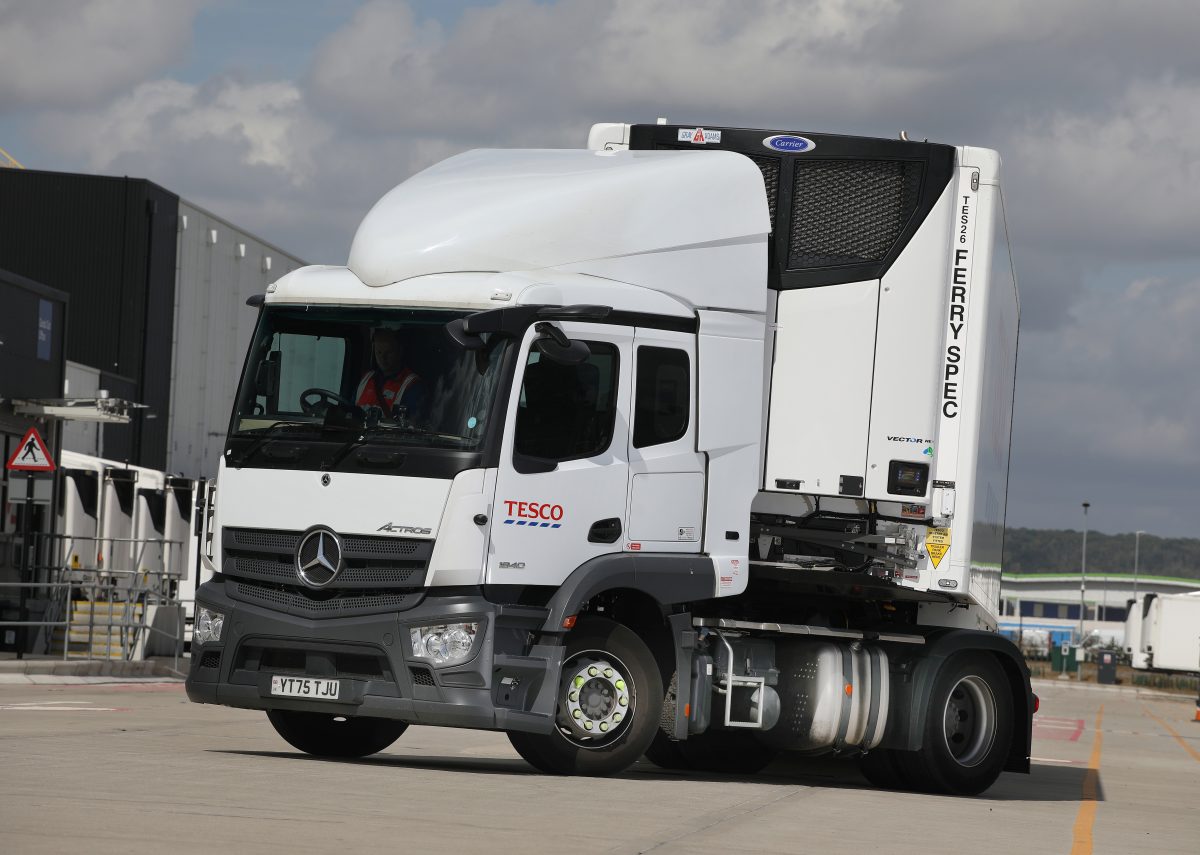
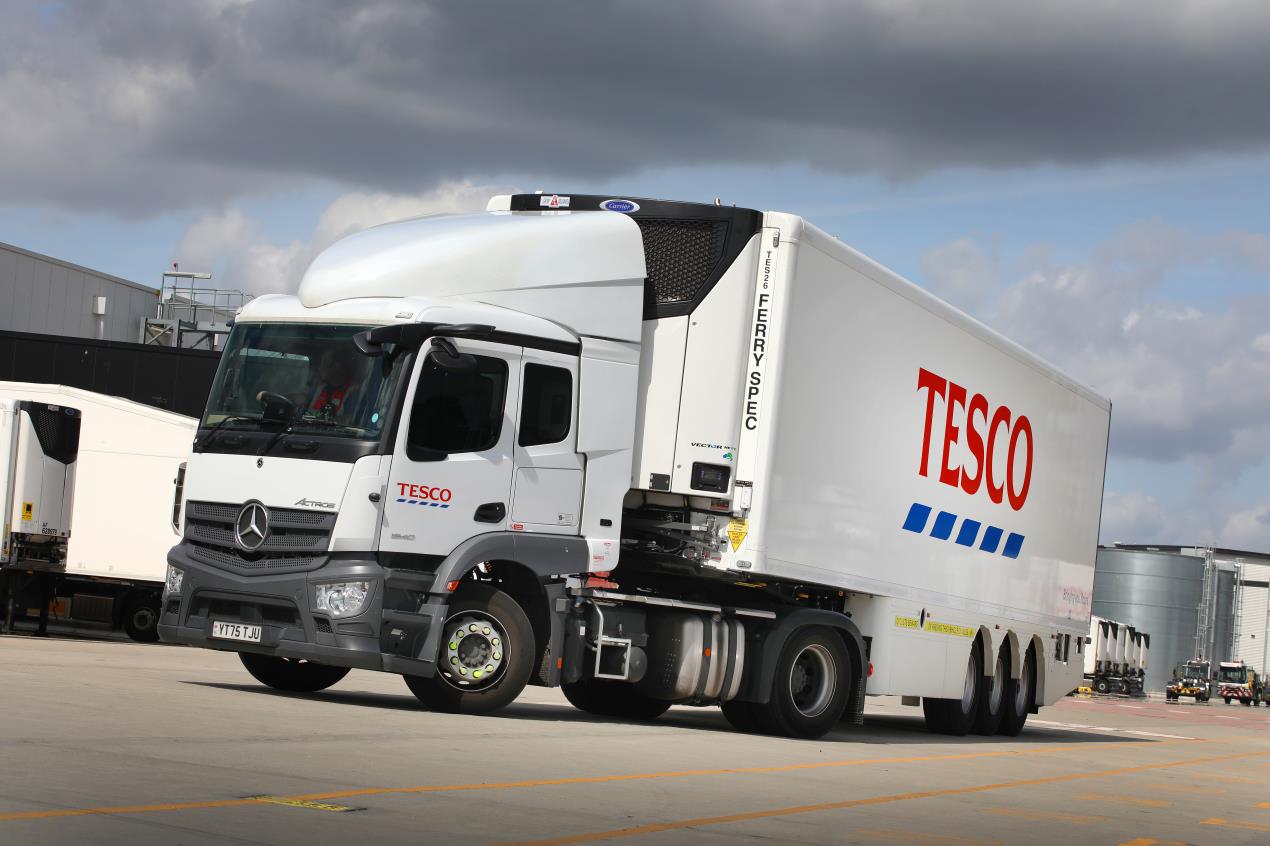
Carrier Transicold has delivered five Vector HE 19 Low CO2 Emissions Multi-Temperature trailer refrigeration units to Tesco, supporting the retailer’s transition to lower emissions refrigerated transport and cold chain logistics operations.

Mounted on 13.6-metre Gray & Adams trailers, the units are charged with R454A refrigerant, which has a certified Global Warming Potential (GWP) of 239. Compared with R452A, a refrigerant commonly used in trailer refrigeration systems with a GWP of 2,140, R454A reduces GWP by nearly 90% while maintaining equivalent cooling performance.

“Working with Carrier Transicold allows us to take meaningful steps towards reducing emissions across our fleet,” said Cliff Smith, Fleet Engineering Manager, Tesco.

The Vector HE 19 Low CO2 Emissions units support our strategy to transition away from carbon-intensive solutions, without sacrificing reliability or efficiency. This investment demonstrates how we are embedding sustainability into every part of our supply chain.

The deployment comes as refrigerated fleet operators across Europe increasingly explore lower-GWP refrigeration technologies as part of broader efforts to reduce emissions from temperature-controlled distribution and support evolving environmental goals.

The Vector HE 19 Low CO₂ Emissions system has undergone a comprehensive internal redesign to accommodate the ultra-low GWP refrigerant while maintaining the familiar user experience and performance of the standard Vector platform. The system includes leak-detection sensors and a pump-down system that automatically recovers refrigerant in the event of a leak, helping to reduce the potential release of fluorinated greenhouse gases (F-gases).

To support the rollout, Carrier Transicold and its service partners have established a comprehensive support framework, including dedicated technician training on the handling of ultra-low GWP refrigerant and associated technologies, as well as specialised maintenance tools and equipment. Carrier Transicold also provides ongoing operational guidance and technical support to help ensure long-term reliability.

Fleet operators are looking for practical ways to reduce the environmental impact of refrigerated transport without compromising operational performance…This deployment demonstrates how ultra-low GWP refrigerant technology can be integrated into large-scale temperature-controlled distribution operations while maintaining high-performance expectations

said Tony Biggs, UK National Sales Manager, Carrier Transicold.

Tesco operates more than 2,900 stores in the UK and will use the new trailers to transport ambient, chilled and frozen goods throughout its national distribution network seven days a week. The five refrigeration units are supported by Carrier Transicold’s BluEdge fixed-cost full-service maintenance package, which includes annual temperature-control testing and certification, regulatory inspections and access to the company’s oneCALL™ 24/7 incident management system.

Explosion-protected Electric Forklifts Get Intelligent

Linde Material Handling has updated its portfolio of explosion-protected electric forklifts and now offers the new Linde E14–E20 EX and Linde E16–E20 P EX models. These three- and four-wheeled electric counterbalanced forklifts are certified for use in ATEX zones 1/21 and 2/22. The series’ wide variety of models has been retained, and all new features and driver-assistance functions have been incorporated into the explosion-protected versions. There are 14 models in total, featuring different chassis sizes and load capacities of up to two tons.

Some industries, such as electric motor and battery manufacturing, are currently experiencing a boom. The European Chips Act promotes the construction of semiconductor factories in Europe in order to reduce dependence on Asian suppliers. Consequently, large semiconductor manufacturing facilities are being built in various locations. These factories use hazardous and highly flammable substances. Companies are also setting up ATEX-certified areas for recycling electronic waste and batteries. Explosive atmospheres can develop in these areas, too, so the use of appropriately protected industrial trucks is required. Linde MH’s compact three-wheeled electric forklifts are especially well suited for use in confined warehouse and production environments, while its four-wheeled electric forklifts offer high maneuverability and maximum stability, even on uneven surfaces.

Look & Feel

Safety is paramount for explosion-protected vehicles. Linde MH leverages its position as an original equipment manufacturer in this sector and others. For instance, converting takes place in close proximity to the company’s series production facility in Aschaffenburg. This physical and conceptual proximity is why Linde MH can bring explosion-protected versions to market more quickly. “We order the first prototypes right from the pilot series. We have access to all the development documents and can therefore quickly present the explosion-protected model for the more demanding zone 1/21 to our customers,” explains Elke Karnarski, Product Manager EX-Proof Trucks & Safety Solutions at Linde MH. Flame-proof housings containing electronic components are installed in such a way that they do not alter the vehicle’s contours. This ensures that the forklift operator’s visibility and legroom are not obstructed by an additional housing mounted on the rear of the vehicle or in the footwell. “Operators benefit from the same look and feel, as well as the many new comfort features they’re familiar with from series-production vehicles,” Karnarski says.

Double safety

“Maximum safety with highest performance,” is the motto that sums up the guiding principle of Linde MH developers. The intralogistics specialist does not use standard motors in its explosion-protected models. According to Karnarski, the engineers and product developers have ‘gone the extra mile’ when it comes to safety in zone 1/21. Production areas where hazardous substances are mixed or transferred have a higher probability of developing an explosive atmosphere. Therefore, it is crucial to precisely monitor the temperature of all heat-generating components. Two measures ensure that the temperature limit is maintained while keeping the motor’s performance on par with that of a standard vehicle. Karnarski explains,

“For zone 1/21, we have installed motors with special windings and higher insulation classes to meet the stringent safety requirements for these ATEX zones. In addition, we have integrated the sensors directly into the motor winding. This enables us to continuously measure the temperature right where it is generated.”

Safety first, even when reversing

Upon request, Linde MH’s explosion-protected models can be equipped with either a Reverse Assist Camera or a Reverse Assist Radar. Both systems enhance safety during reversing. The camera has been trained using AI to distinguish between people and objects. However, the system’s true intelligence is revealed in the way the forklift responds. As Karnarski explains,

“The vehicle detects how far away a pedestrian is and initiates braking accordingly. Additionally, the driver receives an audible warning, enabling them to react quickly. This buys valuable seconds to prevent an accident.”

The Reverse Assist Radar reduces the vehicle’s speed and can even bring it to a complete stop. “The radar takes into account the vehicle’s speed, the load on the forks, the steering angle and the distance to the object – whether it’s a mesh box, a person walking behind the vehicle, or another forklift crossing the rear area. The system calculates the braking distance and applies the appropriate amount of braking force,” says the product manager and explosion protection expert.

Additionally, the Linde Safety Guard assistance system facilitates the creation of different speed zones. When the forklift enters a defined ATEX zone, its speed is reduced automatically. Once the forklift exits the zone, the operator can accelerate back to a higher speed. In zone 2/22, the Linde Safety Guard can also be used to implement mutual warning signals for intersecting forklifts. The combination of automatic speed reduction and audible and visual warning signals further mitigates the risk of accidents.

Linde MH also offers a variety of lighting solutions that enhance safety in narrow, poorly lit and confusing warehouse and production facility aisles by illuminating the surroundings and alerting other employees to an approaching forklift truck. These solutions include VertiLights, LED stripes and red warning lines projected to the sides of the vehicle. All of these solutions are available for explosion-protected vehicles as well.

Extra comfort feature: Heated driver’s cabin

Maintaining a high level of attention at all times is paramount for employees who handle hazardous substances. A comfortable cabin climate and clear windows both contribute to employees’ well-being and safety. The new explosion-protected electric forklifts are equipped with a special blower heating system featuring eight nozzles for the windshield, interior and footwell. This fully integrated system is certified for zones 2/22 and 1/21 and has been designed to provide optimal comfort and safety. On top the vehicle is equipped with a preheating function that ensures the cabin is warm for the driver as soon as they enter.

Subscribe

Get notified about New Episodes of our Podcast, New Magazine Issues and stay updated with our Weekly Newsletter.