
Warehouse Safety Without Sacrificing Productivity

Protecting warehouse infrastructure shouldn’t come at the expense of operational efficiency.

Warehouse managers face a daily balancing act. They are expected to improve safety, increase storage density, speed up throughput, reduce operating costs, and maintain productivity all within the same four walls. However, in the real world those objectives cannot and do not always appear to sit comfortably together.

Take rack protection, for example. Protecting warehouse infrastructure from forklift impacts is widely recognised as good practice, yet some operators remain reluctant to install rack protectors because they fear they will reduce valuable aisle space, restrict manoeuvrability, or simply become another obstacle for forklift drivers to negotiate.

Sentry Protection Products believes that doesn’t have to be the case.

There has always been this perception that adding protection somehow means compromising efficiency… People think they’re giving something up. In reality, well-designed protection should allow a warehouse to operate more confidently, not less.

says Jim Ryan, founder of Sentry Protection Products.

Modern warehouses are operating under greater pressure than ever before. Driven by rising customer expectations, operators are processing more orders, handling greater inventory volumes, and making increasingly efficient use of every square metre of available space. Narrower aisles, higher racking, and faster vehicle movements all contribute to improved productivity, but they also increase the likelihood of accidental impacts. The question therefore becomes not whether protection is required, but how to provide it without creating new operational constraints.

The best safety products shouldn’t get in the way of the job… If a rack protector takes up unnecessary space or creates new hazards, you’ve simply replaced one problem with another.

Ryan continues.

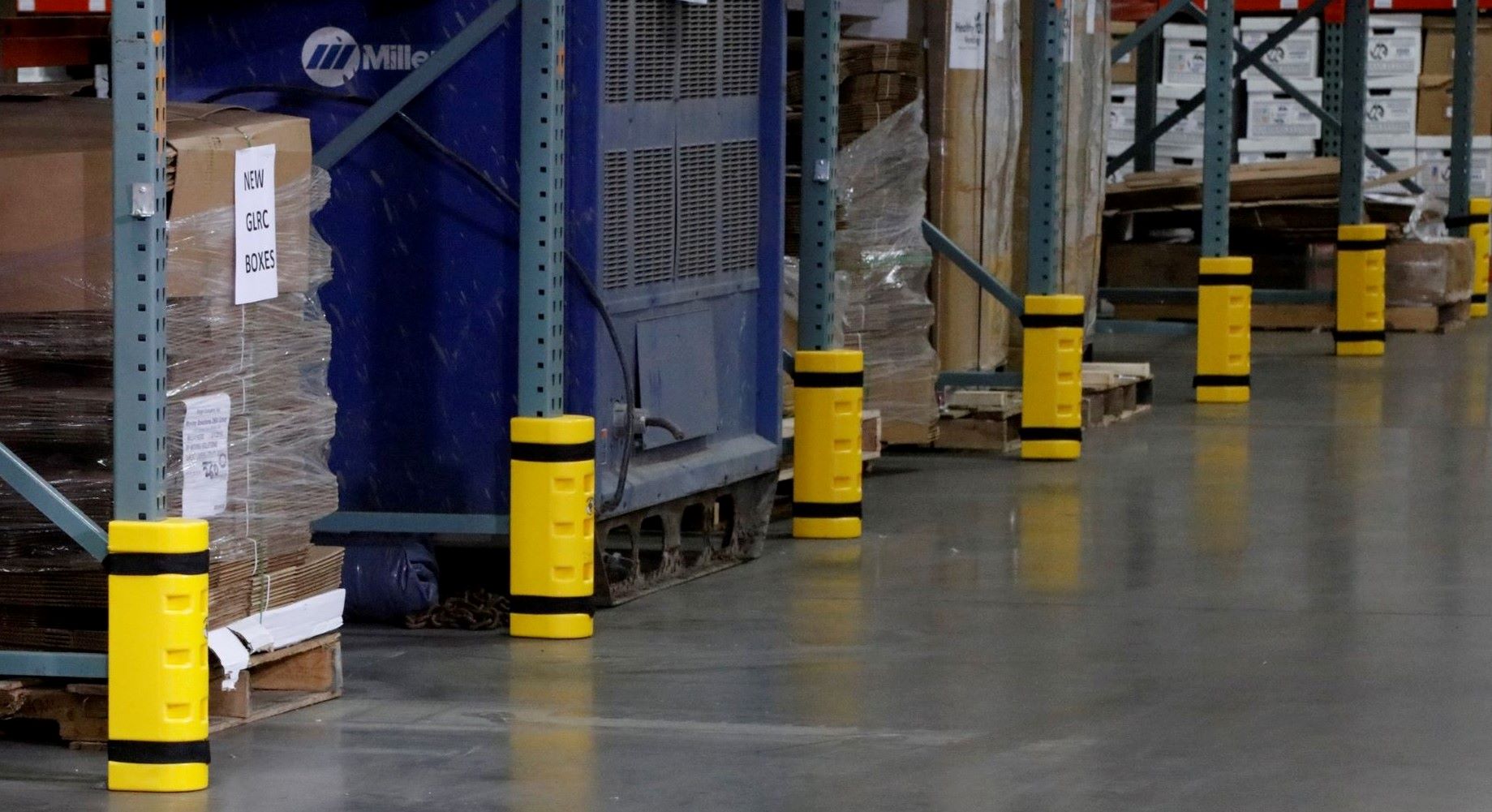
That philosophy has shaped the development of Sentry’s Rack Sentry CONTOUR system. Designed with a slimmer profile than conventional rack protectors, it increases the clearance available to forklift drivers operating in confined spaces while continuing to provide effective impact protection for vulnerable rack uprights.

CONTOUR also incorporates a dedicated cut-out to accommodate horizontal rack beams, allowing the protector to sit neatly around the upright without compromising installation or performance. Every design decision, says Ryan, was driven by the realities of warehouse operations, rather than simply producing another variation of an existing product.

“We spend a lot of time talking to customers about how they actually use their warehouses,” he says. “The people driving the trucks every day understand where the

challenges are. If we can make their job just a little easier while improving safety at the same time, everybody benefits.”

That approach reflects a broader shift, whereby warehouse operators are recognising that protecting infrastructure actually contributes directly to operational performance, whereas before they tended to view safety more as a cost centre or a ‘box-ticking’ compliance exercise.

Every avoided rack repair means less disruption. Every prevented collision reduces maintenance costs. Every protected upright helps preserve the integrity of the storage system and reduces the likelihood of expensive downtime.

“Productivity and safety aren’t competing priorities,” Ryan says. “Done properly, they support one another. A safer warehouse is usually a more efficient warehouse because people can work with greater confidence and fewer interruptions.”

As warehouses continue to evolve, the industry will undoubtedly continue searching for ways to maximise capacity while maintaining the highest possible safety standards. The most successful solutions will be those that complement the operation rather than complicate it.

“Nobody wants to choose between protecting their people and protecting productivity,” concludes Ryan. “The goal should always be to achieve both.”

Cool Corridor network expands temperature-sensitive healthcare logistics

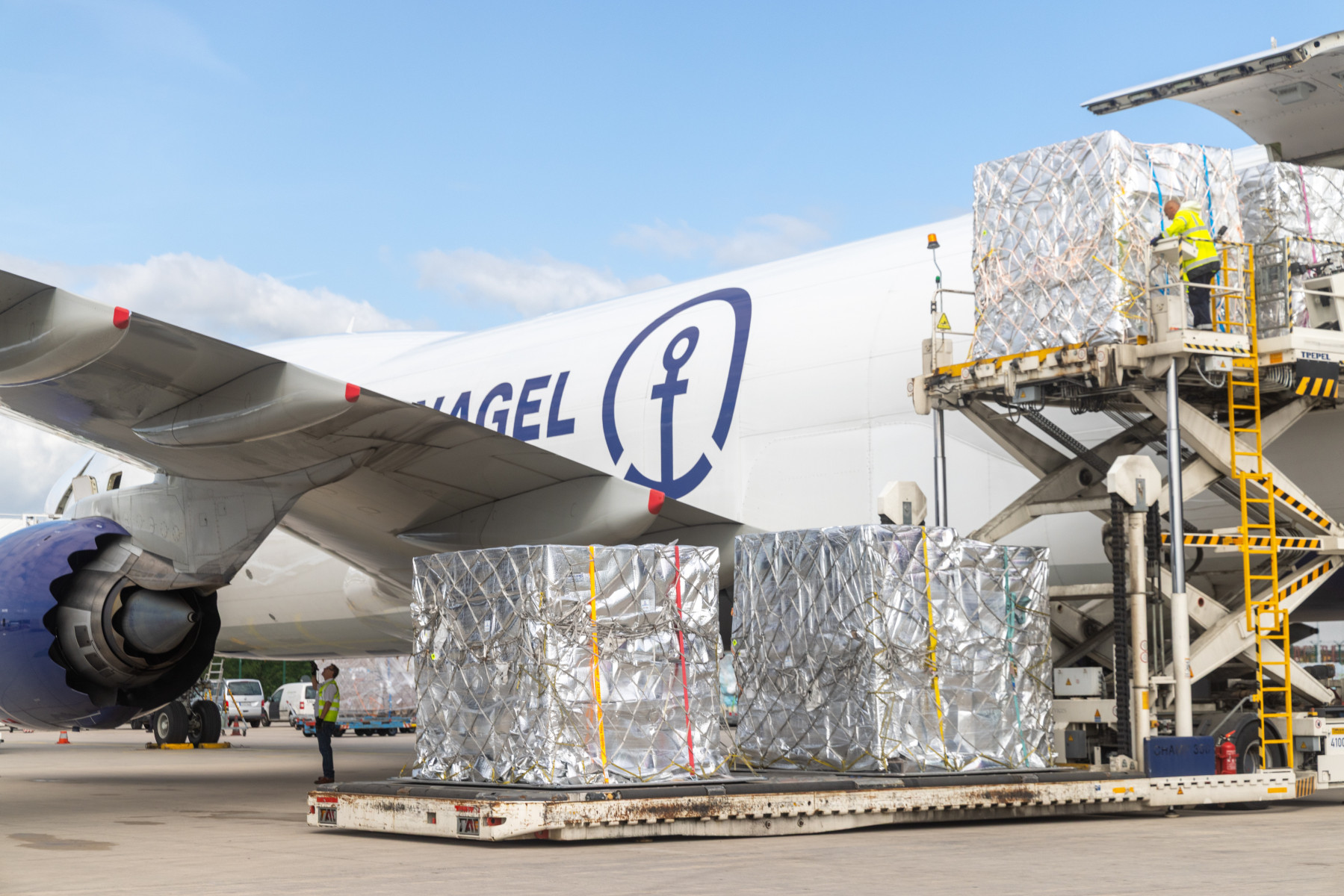
Kuehne+Nagel has expanded its Cool Corridor network for temperature-sensitive healthcare logistics, adding four new routes between Frankfurt and Atlanta, Chicago and Narita, Brussels and São Paulo, and Chicago and São Paulo. The expansion increases the global reach of its network to 12 airfreight lanes connecting major healthcare and pharmaceutical hubs across Europe, North America, Asia-Pacific, and Latin America. The Frankfurt to Atlanta route strengthens the network with dedicated weekly capacity on Kuehne+Nagel’s own Boeing 747-8 freighter, Inspire.

Designed for vaccines, peptides, biologics and other temperature-sensitive pharmaceuticals, Cool Corridors are dedicated transport routes that combine GDP-compliant handling with tightly controlled transfer processes to minimise Time Out of Range (ToR) throughout the shipment journey.

Traditional cold chain shipments often depend on active containers with built-in cooling systems to manage the risk of temperature excursions. Cool Corridors take a different approach by establishing GDP-compliant, temperature-controlled airfreight lanes where Kuehne+Nagel, airlines, and ground handlers follow strict protocols and handling procedures to keep healthcare shipments within defined temperature ranges.

Healthcare customers are looking for ways to maintain product quality while improving efficiency and sustainability across their supply chains. Cool Corridors provide greater control across the shipment journey, helping protect temperature-sensitive products. With more confidence in shipment conditions, customers can use lighter passive packaging, creating opportunities to reduce logistics costs and transport emissions without compromising product integrity,

says Dorothee Becher, VP Global Air Logistics Healthcare at Kuehne+Nagel.

This development reflects Kuehne+Nagel’s strategic focus on strengthening healthcare logistics. Through close collaboration with leading airlines and ground handling partners, the company continues to expand its Cool Corridor network in response to customer demand while providing reliable, GDP-compliant end-to-end transportation.

New logistics solution debuted to streamline US imports

Maersk has launched an integrated cold chain solution connecting origin operations in Chile with ocean transport, U.S. port handling, fumigation, inland logistics and cold storage, creating a scalable model for regulated produce moving into the U.S. Mid-Atlantic and Southeast.

Developed in collaboration with fresh produce supplier Oppy and the Port of Wilmington, the solution addresses a longstanding challenge in perishables logistics: constrained fumigation capacity at key U.S. gateways. By coordinating services across the value chain, Maersk improves speed to market, transparency and reliability for temperature-sensitive cargo.

Solving a long-standing fumigation challenge

For regulated commodities such as grapes, fumigation is required for entry into the United States. Traditionally performed at origin or congested gateway ports, fumigation can introduce delays, longer dwell times and increased risk to cargo quality. By shifting fumigation to destination and integrating it with downstream cold chain operations, the new setup reduces bottlenecks and enhances supply chain predictability.

An integrated approach from origin to destination

This solution was built end to end—from origin handling in Chile to delivery in the U.S. By coordinating ocean, port, fumigation, storage and inland logistics, we are able to provide customers with greater visibility and control, enabling them to move regulated produce, specifically grapes, more efficiently and at scale.

Le Harlin, Head of Growth Enablement – Cold Chain, Maersk North America

The solution was developed through close collaboration across Maersk’s teams in Latin America and North America, alongside port partners and regulators. Over a six-month period, fumigation capacity at the Port of Wilmington was expanded through additional permits and infrastructure upgrades. This enables cargo to move seamlessly from vessel discharge through fumigation and onward distribution, supported by Maersk’s integrated cold storage facility in Wilmington.

Proven during the 2026 Chilean grape season

The solution was piloted during the 2026 Chilean grape season, with weekly sailings supported by coordinated destination fumigation and inland distribution via Wilmington. The pilot demonstrated faster cargo availability and reduced transportation costs compared with alternative routings, while establishing a repeatable model for future growth.

Creating a scalable gateway for regulated produce

In addition to grapes, the expanded fumigation capability enables handling of other regulated commodities, including asparagus, blueberries and citrus. With continued population growth across the Mid-Atlantic and Southeast, Wilmington provides a complementary gateway to larger ports, offering efficient access to regional markets while helping to alleviate congestion at major hubs.

Maersk and Oppy were recognised by the Port of Wilmington with a Pioneer Award for their collaboration on the project.

Subscribe

Get notified about New Episodes of our Podcast, New Magazine Issues and stay updated with our Weekly Newsletter.