In Inzersdorf ob der Traisen, Austria, Netz Niederösterreich has commissioned a newly equipped central warehouse. In doing so, the grid operator for electricity and gas in Lower Austria is responding to increasing requirements for storage capacity, availability and efficient logistics processes. At the heart of the site is a high-performance storage concept with storage solutions from META, designed for maximum space utilization, clear material flows and a high degree of flexibility.
Netz Niederösterreich is the grid operator for electricity and gas in Lower Austria. The company ensures a secure and reliable supply – from house connections to regional distribution networks. As part of the EVN Group, Netz NÖ is a key enabler of the energy future through the integration of renewable energies, the expansion and digitalization of the grids and the safeguarding of supply quality.
In short: Netz NÖ creates the technical basis for ensuring that energy reaches Lower Austria safely at all times – today and in the future. 850,000 customer installations are supplied via our 56,400 km electricity grid, and 255,000 customer installations are connected to the gas grid.
These are impressive figures that clearly show how strongly Netz NÖ focuses on security of supply. This requires a well-organized and well-equipped central warehouse to ensure spare parts logistics in the most efficient way possible.
This is the case in Inzersdorf ob der Traisen, where META-Lagertechnik Austria implemented the customized storage solution in the central warehouse for Netz NÖ. Since as early as 1972, META-Lagertechnik Ges.m.b.H has been an expert partner for the Austrian market and has developed into a leading supplier of innovative storage solutions and state-of-the-art technology for efficient warehouse management and logistics.
Perfect system combination
In the Netz Niederösterreich central warehouse, all materials required for operations are stored, picked and quality-checked, including the calibration of meters for electricity, gas, water and heat. For the storage technology, the grid operator for electricity and gas in Lower Austria opted for a well-conceived system that is precisely tailored to the various stored goods from the electricity, gas, water and heat sectors and the associated requirements.
META MULTIPAL pallet racks are used for the optimum storage of palletized goods and heavier stored goods. A wide variety of goods are stored here. An additional part of the project was the rack location labelling.
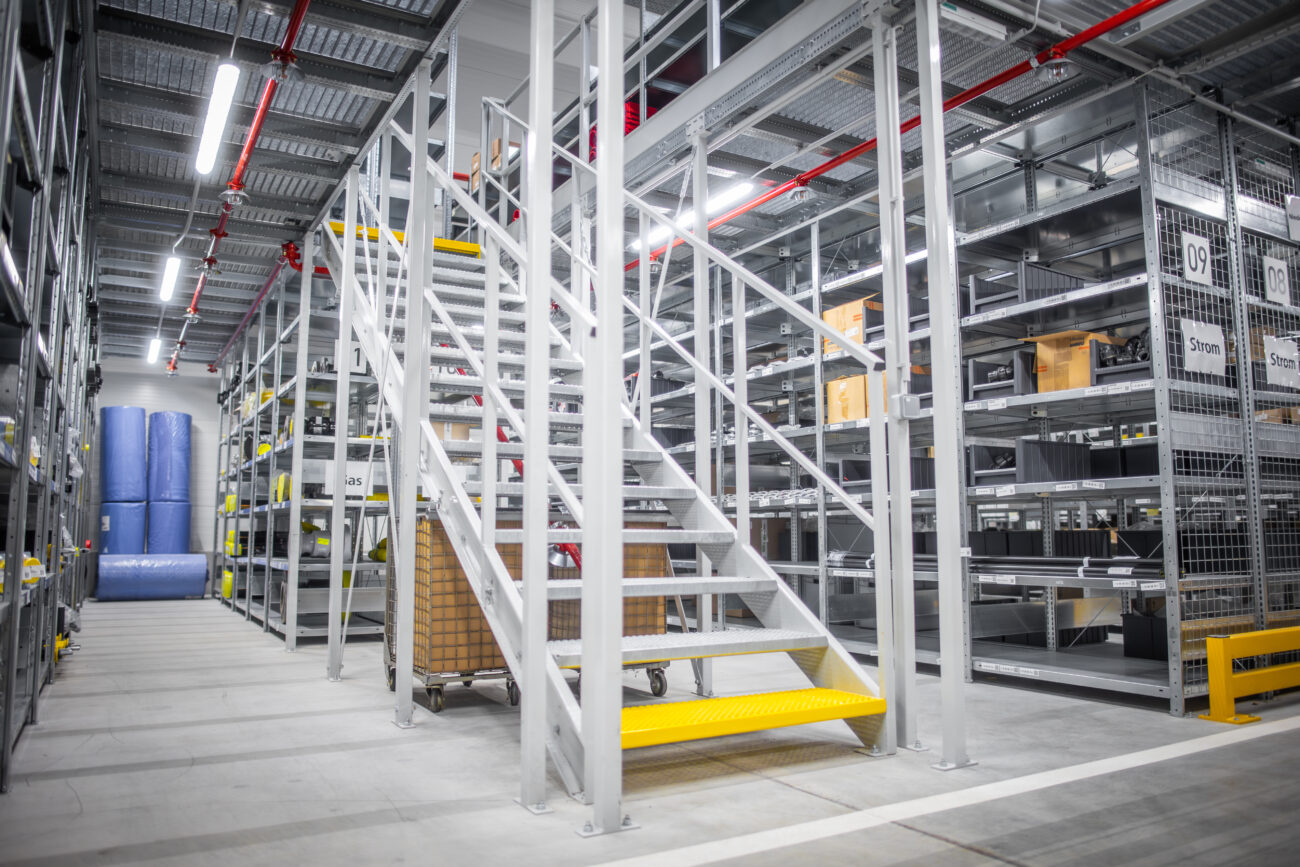
Small parts and spare parts are stored predominantly in the two-storey META CLIP shelving system, where they find their organized place in plastic crates, cartons or as bulk goods. Combined with the META steel construction solution and the optimally positioned staircase, the second level and every storage location are quickly accessible. The pivot gate installed by META at the pallet transfer point is characterized by unrestricted safety. Whether the gate is open, allowing loading from the outside, or closed, making the goods accessible from the platform side, comprehensive personal protection is ensured at all times.
This diversity of systems enables efficient use of the available space while ensuring clear storage structures and well-organized material flows.
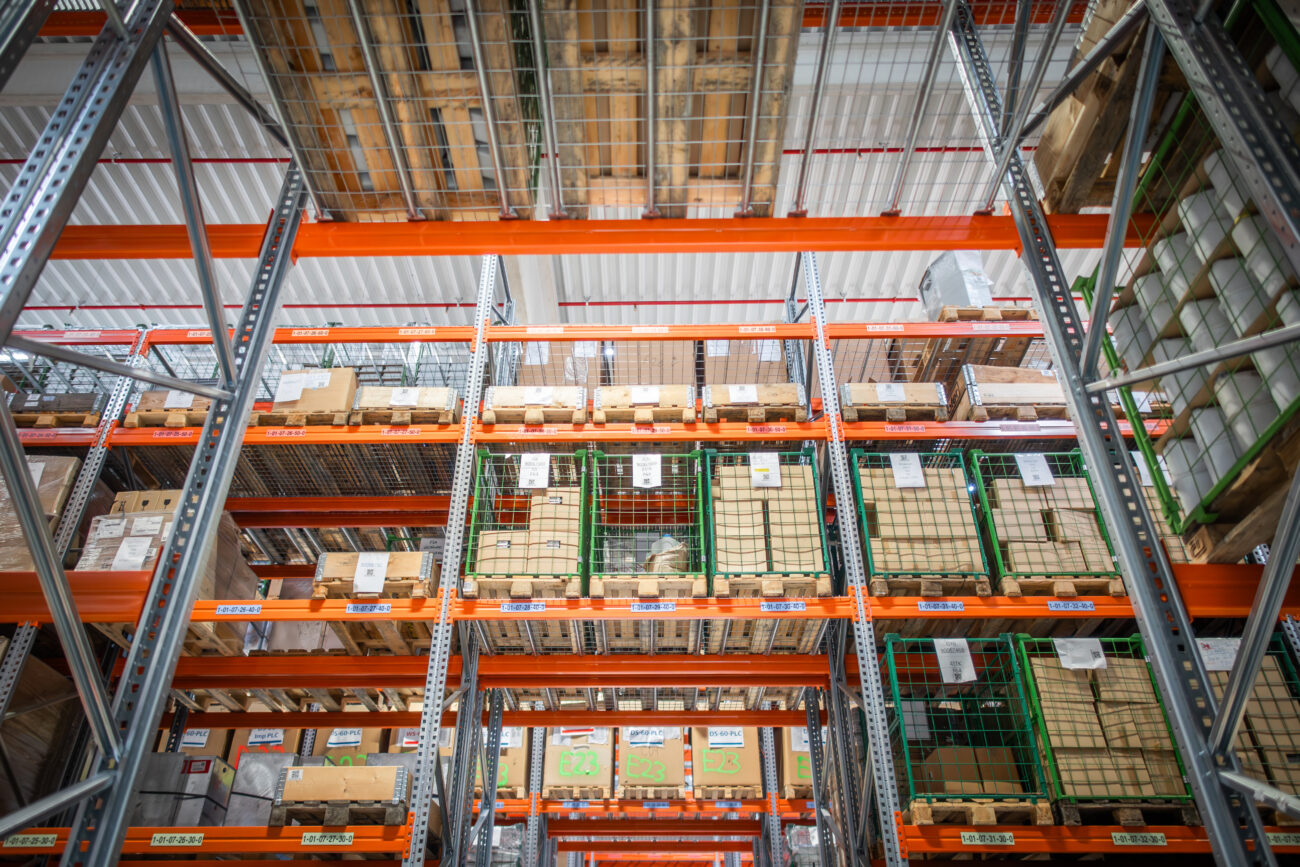
The entire storage concept was developed jointly by Netz NÖ and META at an early planning stage and consistently designed for future viability, flexibility and economic efficiency. One particularly important aspect was the option of relocating to a new warehouse in the future, as the current facility is a rented warehouse. Another key point was the QR code solution for simplifying bookings in the warehouse management system – every storage location is equipped with a QR code.
“The collaboration is excellent. We have short communication channels and fast response times, especially when it comes to expansions. The quotation phase usually takes only a few days, we quickly reach agreement, place orders promptly and installation is completed just as quickly. Quality is equally important: talking to each other, providing advice and finding solutions together. If something stands out, questions are asked and corrections are made. It is not simply a matter of implementing exactly what the customer wants; instead, ideas are actively contributed, including during the planning phase,” explains Stefan Mandl, Head of Materials Management at Netz NÖ. “That is how it should be, and that is how it should remain. We are currently also converting many decentralized warehouses, and fast responses are crucial for us.”
A particular challenge and, at the same time, an exciting change of pace for the storage technology expert META was the integration of the lighting as well as the joint development of a new rack location labeling system with the customer. Creative brainstorming was required here to ensure the best possible service and smooth processes.
“It was a genuine all-round carefree package. We took care of the complete planning, organized the delivery of goods, unloaded the trucks and were responsible for the entire installation through to processing and acceptance,” says Ronaldo Prade, Technical Sales at META Austria. “Even the label stickers and electrical work were part of our scope of responsibility. We were also technically involved in the sprinkler system, while the execution was carried out by specialized companies.”